Strabismus: An Evidence-Based Guide for Patients

Strabismus means the eyes are misaligned and may turn inward, outward, upward, or downward. It can occur in children or adults and may cause double vision, poor depth perception, or suppression of vision in one eye.
Key Takeaways
- Strabismus means the eyes are misaligned and may turn inward, outward, upward, or downward.
- It can occur in children or adults and may cause double vision, poor depth perception, or suppression of vision in one eye.
- Diagnosis usually includes a full eye examination, alignment testing, and an assessment of visual acuity and eye movement.
- Treatment depends on the cause and may involve glasses, prism lenses, patching, vision therapy, injections, or surgery.
- Sudden-onset strabismus, especially with double vision or neurological symptoms, needs prompt medical assessment.
Strabismus is a condition in which the eyes do not point in the same direction at the same time. It is often treatable, and early evaluation can help protect vision, improve eye alignment, and reduce eye strain or double vision.
Overview
Strabismus is a condition in which the eyes are not aligned with each other. One eye may look straight ahead while the other turns inward, outward, upward, or downward. This misalignment can be constant or intermittent, and it may affect one eye more than the other. Although many people think of strabismus as a childhood problem, it can also begin in adulthood.
Strabismus is more than a cosmetic concern. Normal binocular vision depends on both eyes pointing at the same target so the brain can combine the two images into one clear picture. When alignment is off, the brain may receive two different images. In children, the brain may adapt by ignoring input from one eye, which can lead to amblyopia, also called lazy eye. In adults, the more common result is double vision.
There are several patterns of strabismus. Eyes that turn inward are described as esotropia, outward as exotropia, upward as hypertropia, and downward as hypotropia. Some forms are present from infancy, while others develop later due to refractive errors, muscle imbalance, nerve problems, trauma, or other medical conditions.
The good news is that strabismus is often manageable and sometimes fully correctable. Treatment is tailored to the person’s age, symptoms, cause, and visual needs. Because outcomes are usually best when care is timely, a professional eye examination is important whenever eye misalignment is suspected.
Symptoms and how strabismus affects vision
The most obvious sign of strabismus is that one eye appears to drift or turn. The turn may be noticeable all the time or only when a person is tired, ill, daydreaming, or focusing on near or distant objects. In some cases, family members notice the eye turn before the person affected is aware of any visual symptoms.
Symptoms vary by age and by how the brain responds to the misalignment. Young children may not complain of double vision because the brain can suppress the image from one eye. Instead, they may develop reduced vision in that eye or have trouble with depth perception. Adults are more likely to report double vision, eye strain, headaches, difficulty reading, or a sense that the eyes are not working together.
Some people adopt a head tilt or turn to reduce double vision or to use their eyes more comfortably. Others may squint one eye in bright light, especially with intermittent outward turning. Depth judgment may also be affected, which can make sports, driving, using stairs, or fine hand-eye tasks more difficult.
- Visible turning of one eye inward, outward, upward, or downward
- Double vision
- Eyestrain or headaches
- Difficulty reading or focusing
- Poor depth perception
- Head tilt or face turn to compensate
Causes and risk factors

Strabismus develops when the eyes and brain do not coordinate eye position normally. This can involve the eye muscles themselves, the nerves that control those muscles, or the brain centers that manage eye movement. In many children, no serious underlying disease is found, but the condition still requires treatment because it can affect visual development.
One common cause in childhood is a focusing problem, especially farsightedness. Some children over-focus to see clearly, and this extra effort can pull the eyes inward. In other cases, there may be a family history of strabismus, prematurity, developmental differences, or associated eye disorders such as cataract or reduced vision in one eye. Children with neurological or genetic conditions may also be at increased risk.
In adults, strabismus may result from a long-standing childhood misalignment that becomes more noticeable over time, but it can also appear suddenly. Causes include thyroid eye disease, diabetes-related nerve palsy, stroke, head injury, muscle restriction, previous eye surgery, or other neurological conditions. Some adults develop strabismus after vision loss in one eye, because the normal mechanisms that keep the eyes aligned are disrupted.
Because adult-onset strabismus can sometimes signal an underlying medical problem, a new eye turn or new double vision should not be ignored. In selected cases, a clinician may evaluate for related conditions such as thyroid eye disease or cataract if symptoms or examination findings point in that direction.
How strabismus is diagnosed
Diagnosis begins with a detailed eye examination by an ophthalmologist or orthoptist, often with input from a pediatric eye specialist or neuro-ophthalmologist when needed. The clinician asks when the eye turn started, whether it is constant or intermittent, whether there is double vision, and whether there are associated symptoms such as headaches, trauma, eyelid changes, or neurological complaints.
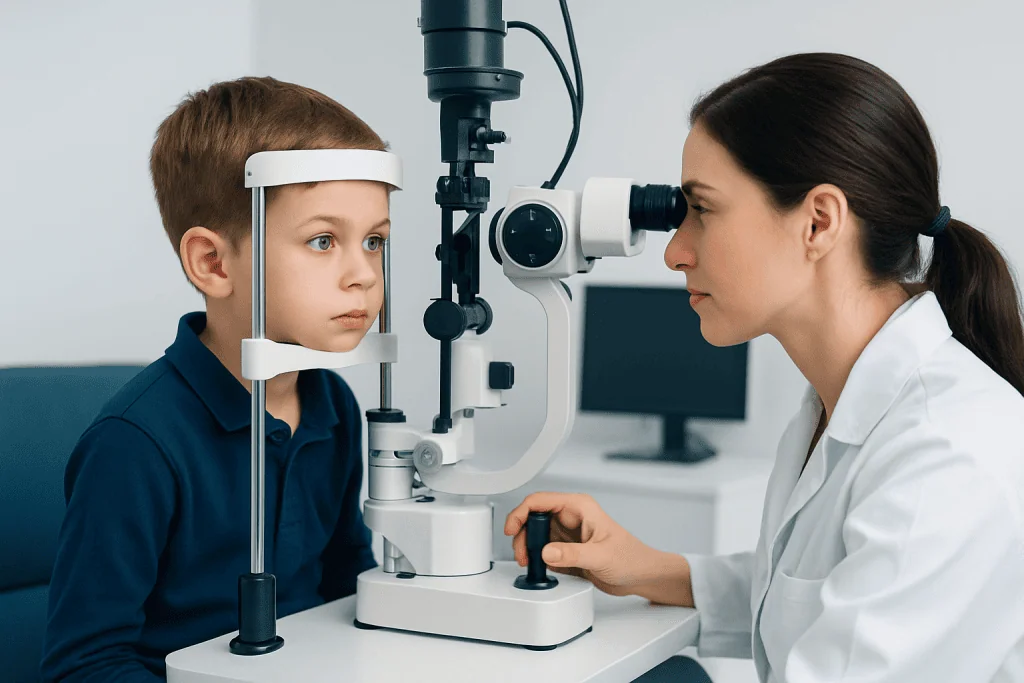
The examination usually includes visual acuity testing, a refraction test to check for glasses needs, and a careful assessment of eye alignment and movement in different directions of gaze. Cover tests are commonly used to measure how much the eyes are misaligned. The doctor may also examine binocular vision, depth perception, eye health, and the back of the eye after dilation.
Children are assessed not only for alignment but also for amblyopia, because one eye can become weaker if the brain suppresses it. Adults with recent double vision may need further testing to identify the cause. Depending on the findings, clinicians may request blood tests or imaging if there is concern about nerve palsy, orbital disease, or a neurological disorder.
Accurate diagnosis matters because treatment is based on the type of strabismus, the size of the deviation, the presence of refractive error, and whether vision in one eye has been affected. It is also important to distinguish true strabismus from pseudostrabismus, a harmless appearance of crossed eyes caused by facial features such as a broad nasal bridge.
Treatment options
Strabismus treatment aims to align the eyes, improve how they work together, relieve symptoms, and protect visual development. The approach depends on the cause, the person’s age, and whether there is amblyopia or double vision. In many cases, more than one treatment method is used over time.
Glasses may be the first step, especially when farsightedness contributes to inward turning. Prism lenses can help some adults with double vision by shifting images so they align more comfortably. If amblyopia is present in a child, treatment may include patching the stronger eye or using medicated drops to encourage use of the weaker eye. Some patients also benefit from supervised orthoptic exercises or vision therapy designed for specific types of eye coordination problems.
Botulinum toxin injections may be useful in selected cases, usually to weaken an overacting eye muscle temporarily. When non-surgical methods do not provide adequate alignment, strabismus surgery may be recommended. During surgery, the surgeon adjusts the position or strength of one or more eye muscles to improve alignment. The exact plan is individualized, and some people need more than one procedure over a lifetime.
Treatment can still help even if strabismus has been present for years. Adults often seek care to relieve double vision, improve visual function, or correct a long-standing eye turn. Children may also need treatment for related eye conditions, including amblyopia treatment or cataract surgery if another eye problem is contributing to poor alignment. A specialist will explain realistic goals, expected recovery, and the need for follow-up after treatment.
Daily management, prevention, and self-care
There is no single way to prevent all forms of strabismus, because causes vary widely. However, early eye screening and prompt evaluation of visual concerns can help identify problems before they affect vision more significantly. In children, regular eye checks are especially important if there is a family history of strabismus, premature birth, developmental delay, or noticeable eye turning.
For people who wear glasses, using the correct prescription consistently may improve alignment and reduce visual strain. Following patching schedules, exercise programs, or follow-up plans as advised is also important, because treatment success often depends on regular practice over time. Parents may find it helpful to build treatment into a routine so it feels manageable rather than stressful.
Adults with double vision can reduce discomfort by avoiding visually demanding tasks when symptoms are strong and by discussing temporary coping strategies with their doctor. These may include prisms, occlusion of one lens, or adjustments in reading or screen setup. Self-treatment without diagnosis is not recommended, because sudden double vision can have many causes.
Near the end of the care pathway, some people benefit from multidisciplinary support, particularly when strabismus is linked to neurological, endocrine, or pediatric conditions. Acibadem International’s multidisciplinary specialists and JCI-accredited hospitals diagnose and treat strabismus for international patients when coordinated specialist care is needed.
When to seek medical care
Medical evaluation is appropriate whenever an eye looks misaligned, even if vision seems normal. In babies younger than a few months, occasional drifting can be part of normal visual development, but persistent or worsening turning should still be assessed by a clinician. In older children, any eye turn, frequent squinting, head tilt, or concern about poor depth perception deserves an eye examination.
Adults should seek care if they develop new eye misalignment, especially if it comes with double vision. Prompt assessment is particularly important when symptoms start suddenly, follow an injury, or occur with drooping eyelid, severe headache, facial weakness, numbness, imbalance, or other neurological symptoms. These features can point to a problem that needs urgent attention.
People already diagnosed with strabismus should return for review if symptoms change, glasses no longer seem effective, or treatment is difficult to follow. Follow-up is also important after surgery, patching therapy, or prism fitting so the care plan can be adjusted based on results.
Seeking help early is reassuring as well as practical. Even when the cause is not serious, professional evaluation can clarify what type of strabismus is present, whether vision is at risk, and which treatment options are most likely to help.
Frequently asked questions
Is strabismus the same as lazy eye?
No. Strabismus means the eyes are misaligned, while lazy eye usually refers to amblyopia, reduced vision in one eye because normal visual development did not occur. Strabismus can lead to amblyopia in children, but the two conditions are not identical.
Can adults develop strabismus?
Yes. Adults can have strabismus that begins in childhood or develops later because of nerve problems, thyroid eye disease, trauma, muscle restriction, or other medical conditions. New strabismus in an adult should be assessed by a doctor, especially if it causes double vision.
Does strabismus always require surgery?
No. Some people improve with glasses, prism lenses, patching, or other non-surgical treatments. Surgery is considered when alignment remains problematic, symptoms persist, or a specialist thinks it offers the best chance of improvement.
Can a child outgrow strabismus?
A true persistent eye turn should not be assumed to go away on its own. Some intermittent drifting in very young infants can be normal, but ongoing or noticeable misalignment needs evaluation. Early treatment may help protect vision and reduce the risk of amblyopia.
What causes double vision in strabismus?
Double vision happens when the eyes point in different directions and the brain cannot combine the two images into one. Children often suppress one image, but adults are more likely to notice two separate images. Treating the misalignment or using prisms can sometimes reduce this symptom.
How is strabismus diagnosed in children who are too young to describe symptoms?
Eye specialists use observation, cover tests, light reflex tests, and age-appropriate vision assessments to check alignment and visual function. They also examine whether a glasses prescription or amblyopia is present. Parents' observations are often an important part of the evaluation.
References
- American Academy of Ophthalmology
- American Association for Pediatric Ophthalmology and Strabismus
- National Eye Institute
- Mayo Clinic
- National Health Service
This article is for general information only and is not a substitute for professional medical advice. Please consult a qualified doctor about your individual situation.
Explore treatments in Turkey — costs, top hospitals & a free quote
JCI-accredited · board-certified surgeons · reply within 24h
Add us as a Preferred Source to see more of our trusted health content across Google Search, AI Overviews and Discover.