Atrophy: An Evidence-Based Guide for Patients

Atrophy refers to shrinkage or wasting of tissue, such as muscle, brain, skin, or an organ. Common causes include disuse, nerve damage, aging, malnutrition, reduced blood flow, and chronic illness.
Key Takeaways
- Atrophy refers to shrinkage or wasting of tissue, such as muscle, brain, skin, or an organ.
- Common causes include disuse, nerve damage, aging, malnutrition, reduced blood flow, and chronic illness.
- Symptoms depend on the affected tissue and may include weakness, loss of function, memory changes, or visible thinning.
- Diagnosis focuses on identifying the underlying cause through history, examination, imaging, and other tests.
- Treatment aims to address the cause and may involve exercise, rehabilitation, nutrition support, medications, or specialist care.
- New, worsening, or unexplained atrophy should be assessed by a qualified doctor.
Atrophy means a body tissue or organ becomes smaller or weaker than normal. It is not a disease by itself, but a clinical sign that may develop with aging, inactivity, nerve problems, poor nutrition, reduced blood supply, or underlying medical conditions.
Overview: what atrophy means
Atrophy is the medical term for shrinkage or wasting of a tissue, organ, or body part. In simple terms, the affected area becomes smaller, thinner, or less functional than expected. This can happen in muscles after a limb is not used, in the brain with certain neurological conditions, or in other tissues when blood supply, hormones, or nutrition are reduced.
Atrophy is best understood as a sign rather than a single disease. It tells doctors that cells in a tissue have decreased in size, number, or both. Sometimes this is part of normal aging, but in many cases it reflects an underlying problem that may be treatable, such as nerve injury, chronic inflammation, endocrine disorders, or prolonged bed rest.
Different types of atrophy affect people in different ways. Muscle atrophy may cause weakness and loss of stamina. Brain atrophy may be linked with memory or movement changes. Skin, reproductive organs, and other tissues may also become thinner or more fragile over time. Because the causes vary widely, medical evaluation focuses on the pattern of symptoms and the person’s overall health.
Types and common symptoms
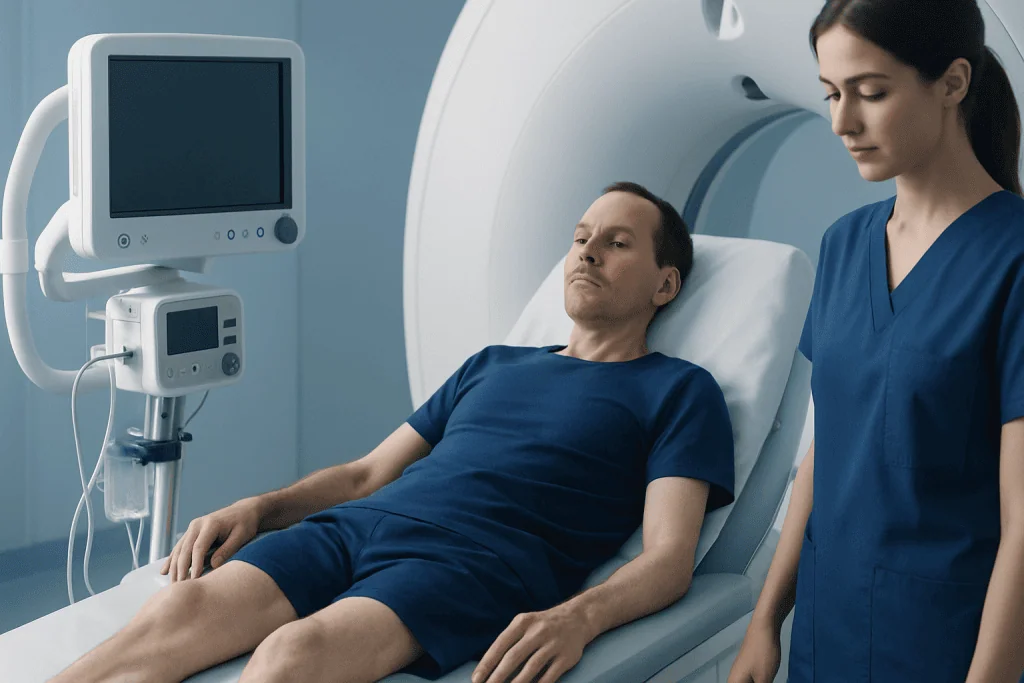
The symptoms of atrophy depend on which tissue is affected and how quickly the change develops. Some people notice visible thinning or shrinking, while others first become aware of weakness, clumsiness, or reduced function. Symptoms may appear gradually over months or years, or more suddenly after injury or illness.
Muscle atrophy is one of the most common forms. It can happen after immobilization, inactivity, nerve problems, or certain long-term diseases. People may notice one arm or leg looks smaller than the other, tires more easily, or feels less steady. In more widespread cases, daily tasks such as climbing stairs, lifting objects, or rising from a chair become harder.
When atrophy affects the nervous system or brain, symptoms can be broader. Depending on the area involved, there may be memory problems, personality changes, balance issues, speech difficulty, tremor, or slowed movement. In some patients, doctors may evaluate for neurological conditions such as Parkinson's disease or other disorders that can be associated with loss of tissue over time.
- Visible wasting or thinning of a body part
- Muscle weakness or reduced endurance
- Numbness, tingling, or loss of coordination
- Joint stiffness after inactivity
- Memory, concentration, or movement changes
- Reduced function of an organ or tissue
Why atrophy happens: causes and risk factors

Atrophy can develop when tissues are not used enough, when nerves no longer stimulate muscles properly, or when blood flow and nutrients do not adequately support normal cell function. A simple example is a leg that becomes smaller after weeks in a cast. In that case, the main cause is disuse. If activity resumes and rehabilitation begins, some or much of the lost muscle can often be regained.
There are also many medical causes. Nerve compression, spinal cord disorders, stroke, chronic lung or heart disease, severe infection, autoimmune illness, and cancer can all contribute to tissue loss. Malnutrition, low protein intake, and digestive conditions that reduce nutrient absorption may worsen the problem. Hormonal changes, including low estrogen or testosterone in some settings, can also influence tissue volume and strength.
Aging itself can contribute, especially in muscles, where age-related loss of mass and strength becomes more common over time. This is sometimes called sarcopenia, and it may overlap with general atrophy. Risk is higher in people who are sedentary, hospitalized, living with chronic disease, or recovering from major surgery. In neurological practice, doctors may also investigate conditions such as multiple sclerosis if symptoms suggest central nervous system involvement.
- Prolonged bed rest, casting, or inactivity
- Nerve injury or neurological disease
- Poor nutrition or unintended weight loss
- Reduced blood supply to a tissue
- Chronic illness, inflammation, or severe infection
- Age-related loss of tissue mass and function
How doctors diagnose atrophy
Diagnosing atrophy begins with a careful history and physical examination. A doctor will ask when symptoms started, whether they are getting worse, and whether there was an injury, surgery, period of inactivity, weight loss, or another illness beforehand. They will also look for clues such as asymmetry between limbs, changes in reflexes, reduced strength, balance problems, or signs of poor nutrition.
Tests are chosen based on the suspected cause. Blood tests may help assess inflammation, vitamin levels, hormone status, muscle damage, infection, or metabolic problems. Imaging such as X-rays, ultrasound, CT, or MRI can show changes in muscle, nerves, joints, brain, or internal organs. If a neurological cause is possible, nerve conduction studies or electromyography may be used to examine how nerves and muscles are working.
In some cases, specialized imaging is important to understand the extent of tissue loss or to identify a condition that needs prompt care. Depending on symptoms, doctors may recommend MRI to evaluate the brain, spine, muscles, or soft tissues in more detail. The main goal is not just to confirm atrophy, but to identify the underlying reason so treatment can be directed appropriately.
Treatment options and recovery
Treatment for atrophy depends on the cause, the tissue involved, and how advanced the changes are. In general, the first step is to address the reason the tissue is shrinking. That may mean improving mobility after an injury, treating a nerve problem, correcting nutritional deficiencies, or managing a chronic disease more effectively. When the cause is reversible or partly reversible, early treatment usually offers the best chance of improvement.
For muscle atrophy, rehabilitation is often central. A tailored program of physical therapy, resistance exercise, balance training, and gradual return to activity can help rebuild strength and function. Some patients also benefit from physical therapy and rehabilitation after surgery, prolonged hospitalization, stroke, or orthopedic injury. Adequate protein intake and overall nutrition are also important, especially in older adults.
If atrophy is related to a structural problem, treatment may involve a specialist. For example, doctors may investigate a pinched nerve, a spinal condition, or a joint disorder that limits use of a limb. In selected cases, orthopedic, neurological, or neurosurgical care may be appropriate, and treatment could include options such as neurosurgery when there is a clear surgical indication. Brain-related atrophy is managed by treating the underlying neurological disorder, supporting daily function, and using therapies that preserve quality of life as much as possible.
Recovery varies. Some forms of disuse atrophy improve substantially over weeks to months with exercise and consistent care. Other forms, especially those linked to progressive neurological disease, may not be fully reversible. Even then, symptom management, rehabilitation, mobility support, and regular follow-up can make a meaningful difference in independence and comfort.
Prevention and self-care
Not all forms of atrophy can be prevented, but many people can lower their risk by staying physically active, eating well, and addressing health problems early. Regular movement helps preserve muscle mass, joint flexibility, circulation, and nerve-muscle coordination. This is especially important after illness, surgery, or periods of reduced mobility, when deconditioning can happen quickly.
A balanced diet with enough calories, protein, vitamins, and minerals supports tissue repair and maintenance. Older adults and people with chronic disease may need extra attention to nutrition, particularly if appetite is poor or weight loss is unintentional. Good sleep, smoking cessation, and management of conditions such as diabetes or vascular disease also support healthier tissues over time.
Self-care should be practical and safe. People should avoid intense exercise or supplements without medical guidance if they have sudden weakness, severe pain, or suspected nerve injury. If atrophy is already present, a clinician or therapist can help set realistic goals and guide safe strengthening, stretching, and mobility strategies. Near the end of the care journey, some international patients may choose evaluation at centers such as Acibadem International, where multidisciplinary specialists in JCI-accredited hospitals diagnose and treat conditions associated with atrophy.
When to seek medical care
Medical advice is important if atrophy is new, progressive, painful, or unexplained. A person should arrange an assessment if they notice one limb becoming smaller, persistent muscle weakness, repeated falls, memory decline, changes in speech, or loss of coordination. These symptoms do not always signal a serious condition, but they deserve proper evaluation.
Urgent care is needed if atrophy or weakness develops suddenly, especially with facial drooping, severe headache, chest pain, loss of bladder or bowel control, shortness of breath, or inability to walk. These symptoms may point to an emergency such as stroke, spinal cord compression, or another acute neurological problem. Prompt diagnosis can be critical.
People living with chronic illness should also seek review if they have rapid weight loss, worsening fatigue, swallowing difficulty, or reduced ability to perform daily activities. Early attention often helps identify reversible causes and can prevent further loss of strength and independence.
Frequently asked questions
Is atrophy a disease?
Atrophy is usually not a disease on its own. It is a medical finding that means a tissue or organ has become smaller or weaker, often because of disuse, aging, nerve problems, or another underlying condition.
Can atrophy be reversed?
Some forms can improve, especially disuse-related muscle atrophy after immobilization or inactivity. Recovery depends on the cause, how long the atrophy has been present, and whether treatment begins early.
What is the difference between muscle atrophy and weakness?
Muscle atrophy refers to actual loss of muscle size or mass. Weakness means reduced force or performance, which can occur with or without obvious loss of muscle bulk.
Does aging always cause atrophy?
Aging can contribute to loss of muscle mass and tissue volume, but it is not the only reason atrophy happens. Significant or fast changes should not be assumed to be normal aging and should be discussed with a doctor.
How is atrophy diagnosed?
Doctors diagnose atrophy through a medical history, physical examination, and tests directed at the suspected cause. These may include blood tests, imaging, nerve studies, and assessments of strength, balance, memory, or organ function.
When should someone worry about atrophy?
A person should seek medical advice if atrophy is new, worsening, one-sided, or linked with pain, numbness, weakness, memory changes, or falls. Sudden weakness, trouble speaking, or loss of walking ability needs urgent medical attention.
This article is for general information only and is not a substitute for professional medical advice. Please consult a qualified doctor about your individual situation.
Explore treatments in Turkey — costs, top hospitals & a free quote
JCI-accredited · board-certified surgeons · reply within 24h
Add us as a Preferred Source to see more of our trusted health content across Google Search, AI Overviews and Discover.
Check your numbers in seconds
BMI, calories, due date, blood pressure and 30+ more clinical calculators — free, instant, doctor-reviewed ranges.

More from the Health Library

Beet Chews: A Complete Medical Overview

Internal Bleeding — Explained by Medical Evidence, Not Myths

Rapid Cycling Bipolar: What Patients Need to Know

Dermatologist Recommended Shampoo for Hair Loss — Explained by Medical Evidence, Not Myths

Gas After an Operation: Recovery Tips and Warning Signs