Fracture: What Patients Need to Know

A fracture is a broken or cracked bone and can happen after trauma, overuse, or weakened bone. Common signs include pain, swelling, bruising, tenderness, deformity, and difficulty using the affected area.
Key Takeaways
- A fracture is a broken or cracked bone and can happen after trauma, overuse, or weakened bone.
- Common signs include pain, swelling, bruising, tenderness, deformity, and difficulty using the affected area.
- Diagnosis usually includes a physical exam and imaging such as X-rays; some fractures need CT or MRI.
- Treatment may involve splints, casts, braces, pain control, rehabilitation, or surgery depending on the type of fracture.
- Urgent medical care is important for severe pain, visible deformity, open wounds, numbness, or suspected head, spine, hip, or pelvic injury.
A fracture is a break or crack in a bone, ranging from a small stress injury to a complete break after trauma. Most fractures heal well with timely diagnosis, proper stabilization, and follow-up care tailored to the bone involved and the person’s overall health.
Overview
A fracture is a break in a bone. It may be a tiny crack, a partial break, or a complete separation of the bone into two or more pieces. Fractures can happen suddenly after a fall, sports injury, or car accident, but they can also develop gradually from repeated stress or because bone has become weak over time.
Patients often think of all broken bones as the same, but fractures vary widely in severity and treatment. A simple fracture may heal with a brace or cast, while a displaced or unstable fracture may need a procedure to realign and stabilize the bone. The location matters too: a finger fracture is managed differently from a hip, wrist, or spinal fracture.
A practical way to understand fracture is to think about three questions: how the bone broke, whether the pieces stayed aligned, and whether nearby tissues were affected. These details help doctors decide how urgently the injury needs attention, what imaging is needed, and whether treatment should focus on protection, repositioning, surgery, or rehabilitation.
Symptoms and Types of Fracture
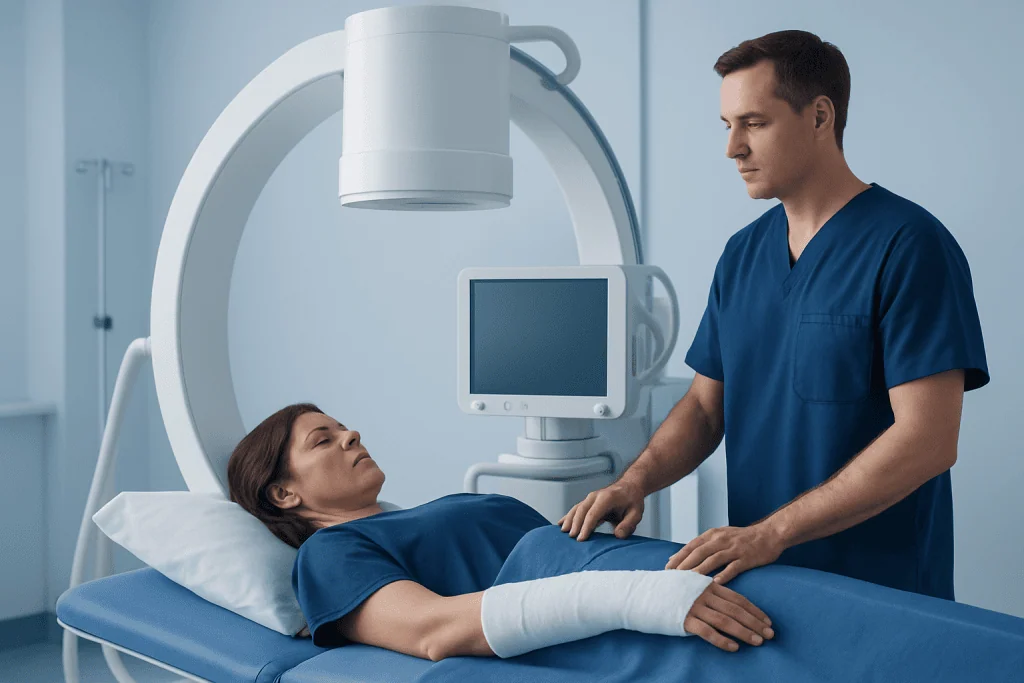
The most common fracture symptoms are sudden pain, swelling, tenderness, bruising, and trouble moving or putting weight on the injured area. Some people hear or feel a snap at the time of injury. In other cases, especially stress fractures, symptoms start gradually and worsen with activity.
Visible changes can also occur. The affected limb may look crooked, shortened, or out of place if the bone is displaced. In an open fracture, bone may break through the skin or there may be a wound over the injury site. Numbness, tingling, pale skin, or a weak pulse below the injury can suggest damage to nerves or blood vessels and should be treated as urgent.
Doctors describe fractures in several ways. Common examples include:
- Closed fracture: the bone is broken but the skin is intact.
- Open fracture: the bone break is associated with a skin wound; infection risk is higher.
- Displaced fracture: bone fragments have moved out of normal alignment.
- Nondisplaced fracture: the bone is cracked or broken but remains aligned.
- Comminuted fracture: the bone is broken into several pieces.
- Stress fracture: a small crack caused by repeated strain, often in the foot or lower leg.
- Compression fracture: a bone, often in the spine, collapses partly under pressure, sometimes related to osteoporosis.
Children can also develop fractures involving the growth plate, the area of developing tissue near the ends of long bones. These injuries need careful follow-up because they may affect future bone growth if not treated appropriately.
Causes and Risk Factors
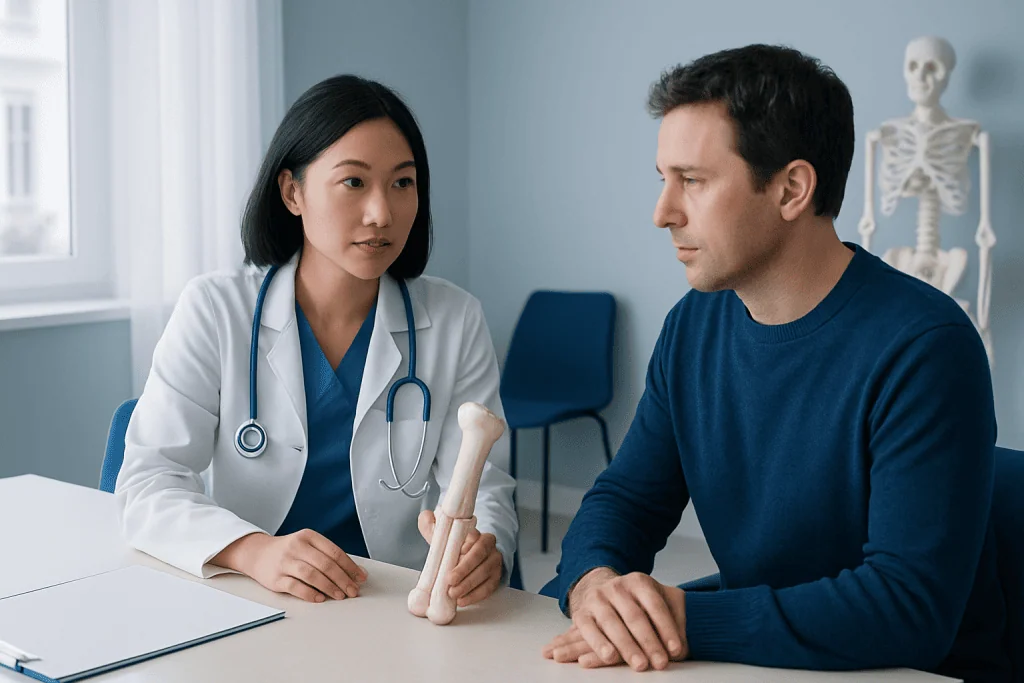
Many fractures happen because more force is applied to a bone than it can absorb. Falls are a very common cause, especially in older adults and young children. Sports injuries, traffic accidents, direct blows, and twisting injuries also frequently lead to fractures. In healthy bone, a significant impact is often required, but this is not always the case.
Some fractures happen with relatively minor force because the bone is already weakened. Bone thinning from age-related loss, osteoporosis, certain long-term medications, poor nutrition, smoking, heavy alcohol use, hormonal conditions, and some cancers can all reduce bone strength. In these situations, even a simple stumble can cause a wrist, hip, or spine fracture.
Repetitive strain is another important cause. Runners, dancers, military recruits, and people who suddenly increase training can develop stress fractures from repeated loading without enough recovery time. Poor footwear, biomechanical issues, and low energy intake may increase the risk. Conditions affecting balance, vision, or nerve function can also indirectly raise fracture risk by making falls more likely.
How Fractures Are Diagnosed
Diagnosis begins with a medical history and physical examination. A doctor asks how the injury happened, where the pain is, whether the person could move the limb or bear weight, and whether there are symptoms such as numbness or weakness. The examination looks for swelling, tenderness, deformity, skin injury, and signs that blood flow or nerve function may be affected.
X-rays are usually the first imaging test because they quickly show many fractures and help assess alignment. However, not every fracture appears clearly on the first X-ray. Stress fractures, small wrist injuries, and some fractures around joints may need repeat imaging or other tests if symptoms strongly suggest a break despite a normal initial X-ray.
CT scans can provide a more detailed view of complex fractures, especially those involving joints, the face, pelvis, or spine. MRI is useful for stress fractures, bone bruising, and soft tissue injuries around the fracture. In some cases, doctors also evaluate bone health if a fracture happened after a low-impact event, because this can reveal an underlying condition such as bone loss.
Careful diagnosis matters because the treatment plan depends not only on whether a bone is broken, but also on whether the fracture is stable, how far it extends, and whether nearby ligaments, tendons, skin, or nerves have also been injured.
Treatment Options
Fracture treatment aims to control pain, protect the bone, restore alignment, and support safe healing. Initial care often includes resting the area, applying ice, elevating the limb if possible, and using a splint to reduce movement until formal assessment is completed. Patients should avoid trying to force a deformed limb back into place.
Many fractures heal with nonsurgical treatment. A splint, cast, boot, brace, or sling may be used to keep the bone stable while it repairs itself. If the bone pieces have shifted but can be repositioned without an operation, a doctor may perform a reduction and then apply immobilization. Follow-up imaging helps confirm that alignment remains acceptable during healing.
Some fractures need surgery, especially if they are open, displaced, unstable, involve the joint surface, or cannot be held in place with a cast alone. Surgical care may include plates, screws, rods, pins, or external fixation. In selected situations, patients may be evaluated for orthopedic surgery or a structured physical therapy and rehabilitation plan to restore strength, balance, and movement after immobilization.
Recovery does not end when pain improves. Bones often heal over weeks to months, and the surrounding muscles and joints may become stiff or weak during this time. Good nutrition, avoiding tobacco, controlling long-term conditions, and following activity restrictions can support healing. If a fracture is related to poor bone strength, doctors may also investigate and treat the underlying cause, including osteoporosis treatment when appropriate.
Healing, Prevention, and Self-care
Bone healing is a gradual process. The body first forms a blood clot and inflammation at the injury site, then creates a soft and later a harder repair tissue, and finally reshapes the bone over time. The speed of healing depends on the person’s age, general health, the bone involved, blood supply, and whether the fracture is stable and well aligned.
Patients can help recovery by following cast or brace instructions, keeping follow-up appointments, and avoiding activities that stress the healing bone too early. A balanced diet with enough protein, calcium, vitamin D, and overall energy intake supports tissue repair. Smoking is especially important to avoid because it can delay bone healing.
Prevention focuses on both bone strength and injury reduction. Helpful measures include regular weight-bearing exercise, strength and balance training, safe sports technique, protective equipment when needed, and fall prevention at home. Older adults may benefit from vision checks, medication review, and bone health assessment if they have had a low-trauma fracture. Persistent back pain, height loss, or recurrent fractures may need assessment for conditions such as osteoporosis.
Rehabilitation is often part of self-care as healing progresses. Gentle movement of nearby joints, once approved by a clinician, can reduce stiffness. Formal rehabilitation may be recommended after major injuries, surgery, or prolonged immobilization to rebuild confidence and function safely.
When to Seek Medical Care
Medical assessment is recommended whenever a fracture is suspected. Even if the injury seems minor, persistent pain, swelling, tenderness, or inability to use the limb normally can indicate a break that needs imaging and stabilization. Early diagnosis may lower the risk of poor alignment, delayed healing, or ongoing pain.
Urgent care is needed if there is severe deformity, a bone or deep wound visible through the skin, heavy bleeding, numbness, loss of sensation, pale or cold skin below the injury, or inability to move fingers or toes. Immediate evaluation is also important after high-impact trauma or if the person may have injured the head, neck, back, hip, or pelvis.
Children, older adults, and people with known bone fragility deserve particular attention, because some fractures can be subtle at first. Ongoing pain after a fall, especially in the wrist, hip, or ankle, should not be ignored even if the person can still walk or move the area. If symptoms worsen rather than improve over a day or two, medical review is wise.
Near the end of recovery, patients should contact a doctor if pain suddenly increases, the cast feels too tight, there is fever or drainage from a wound, or movement remains very limited. Acibadem International’s multidisciplinary specialists in JCI-accredited hospitals diagnose and treat fractures for international patients, including imaging, surgery when needed, and rehabilitation planning.
Frequently asked questions
What is the difference between a fracture and a broken bone?
There is no real difference in everyday use. Fracture is the medical term for a broken or cracked bone, whether the injury is small or severe. Doctors use the word fracture because it can describe many patterns of bone injury more precisely.
Can a fracture heal on its own?
Bone can repair itself, but a suspected fracture should still be assessed by a doctor. The bone may need to be aligned and protected with a splint, cast, brace, or surgery so it heals in the correct position. Without proper treatment, there is a higher risk of pain, poor healing, or loss of function.
How long does a fracture take to heal?
Healing time varies by age, bone location, fracture type, and overall health. Some simple fractures improve in several weeks, while larger or more complex injuries may take months and need rehabilitation. A doctor monitors healing with follow-up visits and sometimes repeat imaging.
Is it possible to walk on a fractured bone?
Sometimes yes, especially with certain stress fractures or small fractures, but walking on it may worsen the injury. The ability to move or bear weight does not rule out a fracture. If pain, swelling, or tenderness persists after an injury, medical evaluation is important.
Do all fractures need surgery?
No. Many fractures heal well with nonsurgical treatment such as a cast, splint, boot, or brace. Surgery is more likely when the fracture is displaced, unstable, open, involves a joint, or cannot be kept aligned without internal support.
What should a patient do right after a suspected fracture?
The injured area should be kept as still as possible until medical help is available. Ice and elevation may help with swelling, and any visible wound should be covered with a clean dressing if possible. A person should not try to straighten a deformed limb or continue normal activity on the injured area.
References
- American Academy of Orthopaedic Surgeons
- National Institute of Arthritis and Musculoskeletal and Skin Diseases
- Mayo Clinic
- MedlinePlus
- World Health Organization
This article is for general information only and is not a substitute for professional medical advice. Please consult a qualified doctor about your individual situation.
Joint and spine care in Turkey — expert assessment & treatment
JCI-accredited · board-certified surgeons · reply within 24h
Add us as a Preferred Source to see more of our trusted health content across Google Search, AI Overviews and Discover.