What Causes Acne? A Doctor-Reviewed Answer

Acne usually starts when hair follicles become blocked with oil and dead skin cells. Hormones, genetics, stress, and certain skin or hair products can make acne more likely.
Key Takeaways
- Acne usually starts when hair follicles become blocked with oil and dead skin cells.
- Hormones, genetics, stress, and certain skin or hair products can make acne more likely.
- Acne is common and often harmless, but nodules, scarring, sudden severe breakouts, or emotional distress should be assessed by a doctor.
- A doctor diagnoses acne mainly by examining the skin and identifying the type and severity of lesions.
- Treatment depends on the cause and severity and may include skin-care changes, topical medicines, oral medicines, or procedural options.
What causes acne? In most people, acne happens when pores become blocked by excess oil and dead skin, then inflammation develops with the help of normal skin bacteria and hormonal changes. It is very common and often manageable, but persistent, painful, or scarring acne deserves medical review.
Overview: what causes acne?
Acne is usually harmless and very common, especially during the teenage years, but it can affect people of any age. In simple terms, acne develops when tiny openings in the skin called pores become clogged with oil and dead skin cells. Once a pore is blocked, inflammation can follow, and the skin’s normal bacteria can contribute to pimples, blackheads, whiteheads, or deeper tender lumps.
Several factors often work together rather than one single cause. Hormonal changes can increase oil production, inherited tendencies can make some people more prone to clogged pores, and certain cosmetics, skin products, or medications may worsen breakouts. Stress does not directly create acne on its own, but it can aggravate acne in people who are already susceptible.
Most acne is not dangerous, but some situations deserve medical attention. Painful deep cysts, rapidly worsening acne, visible scarring, acne that begins suddenly in adulthood, or breakouts paired with irregular periods or excess facial hair may signal a need for a fuller evaluation. A doctor will usually diagnose acne by examining the skin, asking about symptoms, products, hormones, and medicines, and deciding whether there may be related conditions such as polycystic ovary syndrome or other hormone-related concerns.
How acne forms in the skin
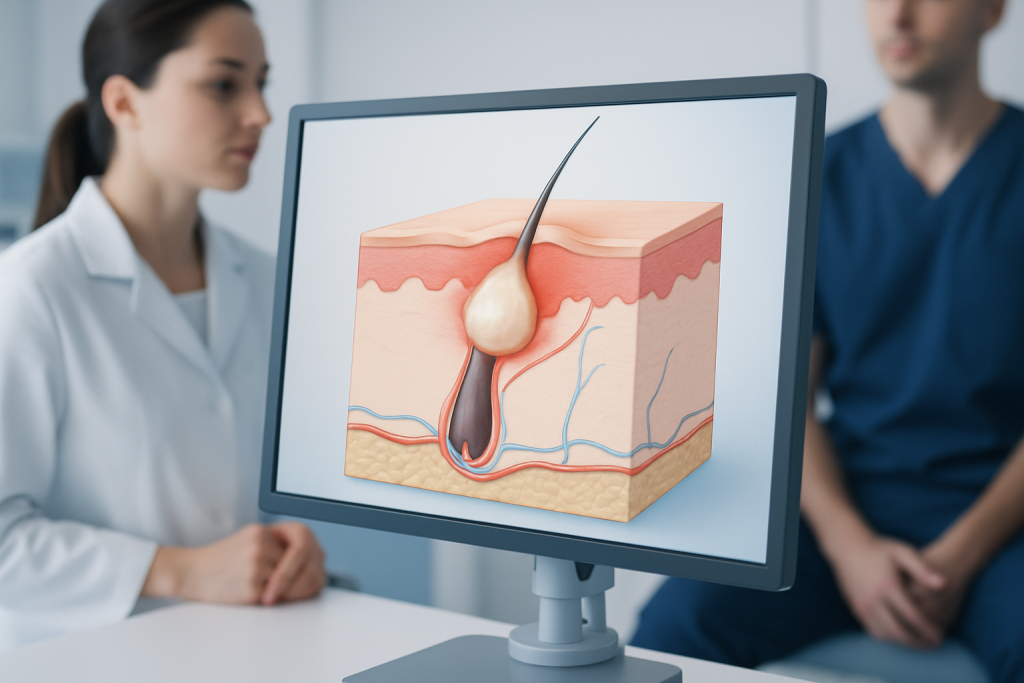
Each pore opens into a hair follicle and an oil gland. These oil glands produce sebum, a natural substance that helps protect and moisturize the skin. Acne begins when sebum production increases, dead skin cells do not shed normally, and the follicle becomes blocked. This blockage creates the setting for a comedo, which may appear as a whitehead or blackhead.
Blackheads are not caused by dirt. Their dark color comes from material in the pore reacting with air. If the blocked pore becomes inflamed, red bumps and pus-filled pimples can appear. If inflammation extends deeper into the skin, larger nodules or cyst-like lesions may develop, and these are more likely to leave marks or scars.
A bacterium that normally lives on the skin, Cutibacterium acnes, can multiply within clogged follicles and promote inflammation. This does not mean acne is caused by poor hygiene or that it is contagious. In fact, harsh scrubbing can irritate the skin and make acne worse rather than better.
Main causes and common triggers
The main biological causes of acne are excess oil production, abnormal buildup of dead skin cells, inflammation, and the activity of normal skin bacteria within blocked pores. Hormones are a major driver because they influence how much oil the glands produce. This is why acne often starts during puberty and may flare before menstrual periods, during pregnancy, or with some hormone-related conditions.
Genetics also matter. If close family members had acne, especially moderate or severe acne, the chance of developing it may be higher. Some people naturally have more reactive oil glands or a stronger inflammatory response in the skin, which can make breakouts more persistent.
Other triggers may not cause acne by themselves but can worsen it:
- Oily or pore-clogging skin-care, makeup, or hair products
- Friction or pressure from helmets, tight collars, masks, or sports gear
- Stress, which may intensify inflammation and habits like touching the face
- Certain medications, including some steroids, lithium, and some hormone-related medicines
- Hot, humid environments that increase oil and sweat on the skin
Food is often discussed, but the relationship is more complex than many people think. Acne is not simply caused by eating greasy foods. For some individuals, diets high in rapidly absorbed carbohydrates or certain dairy products may be associated with worse acne, but this varies from person to person and should be considered alongside the bigger picture.
Who is more likely to get acne?
Acne can affect adolescents, adults, and sometimes younger children. Teenagers are especially prone because puberty increases androgen hormones, which stimulate oil glands. Adult acne is also common, particularly in women, and may be linked to menstrual cycles, pregnancy, menopause transitions, or underlying hormonal imbalance.
People with naturally oily skin, a family history of acne, or a history of early severe breakouts may have a higher risk. Athletes and workers who wear tight equipment or spend long periods in humid settings may notice acne where the skin is under pressure or rubbing. Heavy occlusive moisturizers, certain sunscreens, and pomades or hair oils can also contribute, especially along the forehead, jawline, chest, or back.
It is also important to distinguish acne from other skin conditions that can look similar. Rosacea, folliculitis, perioral dermatitis, and some rashes may resemble acne but need different treatment. That is one reason persistent or unusual skin changes are worth discussing with a qualified clinician, especially if over-the-counter products are not helping.
Symptoms and when to seek medical care
Acne can appear as blackheads, whiteheads, small red bumps, pus-filled pimples, or deeper lumps under the skin. It most often affects the face, but it can also appear on the chest, shoulders, upper arms, and back because these areas have many oil glands. Some spots may be tender, while others are mainly a cosmetic concern.
Medical review is sensible if acne is leaving dark marks or scars, causing significant pain, spreading widely, or not improving after several weeks of appropriate self-care. A person should also seek care if acne begins suddenly and severely in adulthood, if there are signs of hormone imbalance such as irregular periods or increased facial hair, or if breakouts are affecting mood, confidence, or daily life.
Urgent medical attention is needed if a skin product triggers swelling of the lips or tongue, difficulty breathing, severe dizziness, or widespread hives, as those symptoms suggest an allergic reaction rather than ordinary acne. Even without an emergency, deep cystic acne is best assessed early because timely treatment may reduce the risk of permanent scarring.
How doctors diagnose acne
Doctors usually diagnose acne by looking at the skin and asking about a person’s age, symptom pattern, menstrual history if relevant, current skin-care routine, medications, and family history. They examine the type of lesions present, where they appear, and whether there are signs of inflammation, infection, pigmentation changes, or scarring. This helps classify acne as mild, moderate, or severe.
Testing is not always necessary. However, if acne appears unusually severe, starts suddenly, or is accompanied by symptoms of hormonal imbalance, a doctor may recommend blood tests or referral to a specialist. Women with acne plus irregular periods, scalp hair thinning, or unwanted facial hair may be evaluated for endocrine causes including PCOS.
When the diagnosis is uncertain, a dermatologist may consider whether the lesions are due to folliculitis, rosacea, medication side effects, or another skin disorder. In difficult or scarring cases, specialist review can be especially helpful because early, targeted treatment may prevent longer-term skin changes.
Treatment options and practical self-care
Treatment depends on what is driving the acne and how severe it is. Mild acne may improve with non-comedogenic cleansers, moisturizers, and sunscreens, along with over-the-counter ingredients such as benzoyl peroxide, salicylic acid, or adapalene where appropriate. These work best when used consistently and patiently, since improvement often takes several weeks.
For more inflamed or persistent acne, doctors may prescribe topical retinoids, topical antibiotics in selected cases, hormone-related treatment for some women, or oral medicines for moderate to severe disease. Deep nodules, widespread acne on the trunk, or acne causing scarring may need specialist-led care such as dermatology treatment and follow-up.
Procedural care may also help selected patients, especially when acne has left marks or scars after the active inflammation settles. Depending on the skin type and the problem being treated, options may include chemical peels, light-based therapies, or laser treatment for post-acne texture and discoloration. If breakouts or scars are affecting self-image, some people benefit from a more comprehensive skin care and cosmetic dermatology plan tailored by a specialist.
At home, gentle habits matter. Washing the face twice daily with a mild cleanser, avoiding aggressive scrubs, removing makeup before sleep, choosing non-comedogenic products, showering after heavy sweating, and not picking lesions can all reduce irritation and lower the chance of scars. Acne is not caused by being unclean, so harsher cleansing is not better.
Prevention, long-term outlook, and support
Acne cannot always be prevented completely, especially when hormones and genetics play a strong role, but flare-ups can often be reduced. Consistent use of suitable skin-care products, avoiding heavy oils on the face and hairline, and sticking with treatment long enough to judge results are all important. Frequent switching between products can irritate the skin and make it harder to tell what is helping.
People who notice a pattern with menstrual cycles, stress, sports equipment, or particular cosmetics may find it useful to track triggers. A doctor can then help identify whether the issue is ordinary acne, hormone-related acne, or another condition that needs a different approach. Because scarring and pigment changes can become harder to treat over time, early review is worthwhile if acne is deep, painful, or recurrent.
The outlook is generally good. Many cases improve with age or with the right combination of topical treatment, lifestyle adjustments, and medical care when needed. Near the end of the care pathway, some patients may also seek advice on residual marks or scarring; multidisciplinary specialists at Acibadem International and its JCI-accredited hospitals diagnose and treat acne and related skin concerns for international patients.
Frequently asked questions
Is acne caused by poor hygiene?
No. Acne is mainly caused by clogged pores, excess oil, inflammation, hormones, and skin bacteria that normally live on the body. Over-washing or harsh scrubbing can irritate the skin and may actually worsen breakouts.
Can stress cause acne?
Stress is not usually the sole cause of acne, but it can make existing acne worse in some people. It may increase inflammatory signals and contribute to habits such as touching or picking the skin.
Does diet cause acne?
Diet is not the only cause of acne, and the effect varies from person to person. Some individuals notice worse breakouts with high-glycemic foods or certain dairy products, but many other factors such as hormones, genetics, and skin care are also important.
Why do adults still get acne?
Adult acne is common and may be linked to hormones, genetics, stress, cosmetics, or medications. In women, flares around the jawline or before periods may suggest a hormonal pattern that a doctor can assess.
When should someone see a doctor for acne?
A doctor should be consulted if acne is painful, deep, leaving scars or dark marks, spreading across large areas, or not improving with suitable over-the-counter care. Medical review is also wise if acne starts suddenly in adulthood or is accompanied by irregular periods, excess facial hair, or significant emotional distress.
Can acne scars be prevented?
The best way to reduce scarring risk is to treat inflamed acne early and avoid picking or squeezing spots. Deep cystic lesions and repeated inflammation are more likely to scar, so timely medical treatment can make an important difference.
References
- American Academy of Dermatology
- National Institute of Arthritis and Musculoskeletal and Skin Diseases
- Mayo Clinic
- National Health Service
- Merck Manual
This article is for general information only and is not a substitute for professional medical advice. Please consult a qualified doctor about your individual situation.
Acne in Turkey — costs, top hospitals & a free quote
JCI-accredited · board-certified surgeons · reply within 24h
Add us as a Preferred Source to see more of our trusted health content across Google Search, AI Overviews and Discover.