Proprioception — Explained by Medical Evidence, Not Myths

Proprioception is different from balance alone; it is the brain’s awareness of body position and movement. Healthy proprioception depends on signals from muscles, tendons, joints, skin, nerves, and the brain.
Key Takeaways
- Proprioception is different from balance alone; it is the brain’s awareness of body position and movement.
- Healthy proprioception depends on signals from muscles, tendons, joints, skin, nerves, and the brain.
- Poor proprioception may cause clumsiness, repeated ankle sprains, unsteadiness, or difficulty with precise movements.
- Doctors evaluate proprioception through a physical examination and, when needed, imaging, nerve studies, or vestibular testing.
- Treatment focuses on the underlying cause and often includes targeted rehabilitation and balance training.
- New or rapidly worsening weakness, numbness, falls, or severe dizziness should be medically assessed.
Proprioception is the body’s built-in sense of where its parts are and how they are moving, even without looking. It supports balance, coordination, posture, and safe movement, and it can change with injury, nerve problems, joint disease, or aging.
What proprioception is and why it matters
Proprioception is the body’s sense of position and movement. It allows a person to know where an arm, leg, foot, or hand is in space without constantly watching it. This sense works quietly in the background and helps with everyday tasks such as walking, buttoning clothes, climbing stairs, typing, reaching for a cup, or standing on one leg.
Medical evidence shows that proprioception is not a single organ or one simple reflex. It is a networked function that depends on sensors in muscles, tendons, joints, and skin sending information through the nerves to the spinal cord and brain. The brain then combines these signals with vision and the inner ear balance system to create smooth, coordinated movement.
Because of this, proprioception is often confused with balance, but they are not exactly the same. Balance is the ability to stay stable. Proprioception is one of the key inputs that makes balance possible. A person may have trouble with proprioception because of an ankle injury, nerve damage, or a neurological condition, even if the inner ear is normal.
How the body creates a sense of position
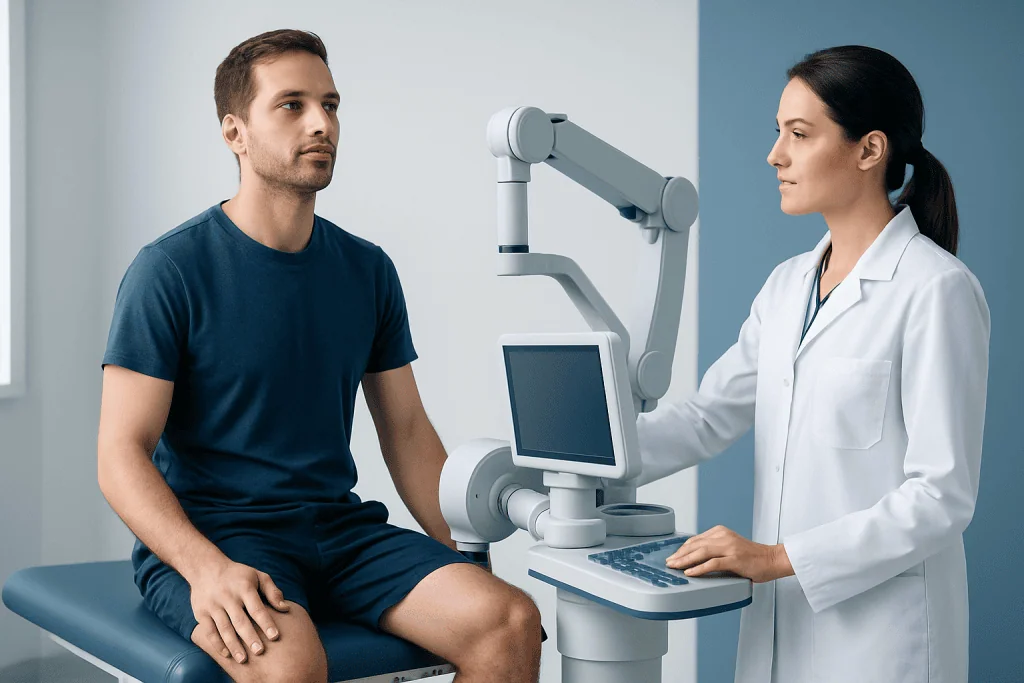
The body uses specialized receptors to detect stretch, pressure, and movement. Muscle spindles sense how much a muscle is lengthening, while Golgi tendon organs detect tension where muscles connect to tendons. Receptors in joints and skin add further information about angle, pressure, texture, and contact with the ground.
These signals travel through peripheral nerves to the spinal cord and upward to the brain, especially areas involved in sensory processing and movement planning. The brain compares incoming sensory information with intended movement, allowing rapid corrections. This is why a person can adjust posture almost instantly when stepping on an uneven surface.
Vision and the vestibular system in the inner ear also contribute. If one input becomes less reliable, the brain may rely more heavily on the others. For example, someone with reduced sensation in the feet may watch the ground more closely to compensate. When multiple systems are affected at the same time, unsteadiness becomes more noticeable.
Signs that proprioception may be reduced

Reduced proprioception can feel different from one person to another. Some describe it as clumsiness or a sense that the feet are not landing where expected. Others notice frequent tripping, difficulty walking in the dark, repeated ankle sprains, or trouble with tasks that need precise hand control.
Common signs include poorer balance on uneven ground, swaying when standing with eyes closed, delayed reactions when changing direction, and a feeling of instability during sports or exercise. Some people also feel less aware of joint position after an injury, especially in the ankle, knee, or shoulder.
Symptoms may occur on their own or alongside numbness, tingling, weakness, pain, dizziness, or visual dependence. These added symptoms can provide clues to the cause. For example, a person with diabetic nerve damage may have reduced awareness of foot position, while someone with an inner ear problem may mainly report dizziness and imbalance.
- Frequent stumbling or falls
- Repeated sprains, especially at the ankle
- Difficulty standing on one leg
- Trouble using the hands without looking
- Feeling less steady in the dark or with eyes closed
- Needing to watch the feet while walking
Common causes and risk factors
Proprioception can be affected anywhere along the pathway from receptors to the brain. Musculoskeletal injuries are a common cause. After an ankle sprain, knee ligament injury, shoulder instability episode, or spinal problem, the sensory feedback from tissues may become less accurate for a time. This is one reason rehabilitation often includes position and balance retraining, not only strengthening.
Nerve and brain conditions can also interfere with proprioception. Peripheral neuropathy, including neuropathy related to diabetes, may reduce sensory input from the feet and legs. Conditions affecting the spinal cord, brain, or cerebellum can change position sense and coordination. In some cases, poor proprioception is part of a broader neurological picture, such as Parkinson’s disease or multiple sclerosis.
Joint disease and age-related changes may contribute as well. Osteoarthritis, reduced muscle mass, previous surgeries, foot deformities, and reduced physical activity can all affect movement awareness and stability. Certain medications, alcohol use, and fatigue may temporarily worsen coordination. Vision problems and vestibular disorders can magnify symptoms because the body has fewer reliable sensory cues to work with.
How doctors assess proprioception
Assessment starts with a medical history and physical examination. A clinician will ask when symptoms began, whether they follow an injury, whether there are falls, numbness, dizziness, or weakness, and what activities are affected. The pattern matters: symptoms after a twisted ankle differ from symptoms that gradually spread in both feet.
During the examination, the doctor may test joint position sense by moving a finger or toe slightly up or down with the patient’s eyes closed and asking them to identify the direction. Balance, gait, reflexes, muscle strength, vibration sense, and coordination are also checked. Simple tests, such as tandem walking or standing with feet together and eyes closed, can help show how the sensory systems are working together.
Additional tests depend on the suspected cause. Imaging may be useful after trauma or when spinal or brain conditions are considered. Nerve conduction studies can help evaluate neuropathy, and vestibular testing may be helpful when dizziness is prominent. If structural problems in the brain or spine are being evaluated, MRI scanning may be part of the work-up. When symptoms are complex, doctors may also assess for related conditions such as vertigo.
Treatment and rehabilitation options
Treatment aims at the underlying cause and the resulting functional problem. If reduced proprioception follows an injury, the focus is often on restoring movement quality, joint stability, and confidence in the affected limb. If the cause is neuropathy, vestibular dysfunction, arthritis, or a neurological condition, care is tailored accordingly.
Rehabilitation is central for many patients. Exercises may include single-leg stance, controlled weight shifts, gait drills, reaching tasks, resistance training, and work on unstable or variable surfaces when appropriate. Programs usually progress from simple to more challenging tasks and are safest when guided by a qualified professional, especially if the person has had falls or significant weakness. Physical therapy and rehabilitation can help improve sensory-motor control, balance strategies, and daily function.
Depending on the cause, treatment may also include pain management, orthotics or bracing, medication review, diabetes care, vision correction, or treatment for an inner ear disorder. For selected cases involving persistent joint instability or major structural injury, orthopedic management may be needed. When dizziness or vestibular dysfunction is involved, targeted balance retraining through balance and coordination assessment and therapy may support recovery.
Self-care, prevention, and daily strategies
Evidence-based self-care focuses on building strength, mobility, and sensory awareness rather than relying on myths or quick fixes. Regular movement, lower-limb strengthening, and safe balance practice can support proprioception over time. Supportive footwear, home fall-prevention measures, and gradual return to sport after injury are also important.
People recovering from sprains or surgery often benefit from supervised exercises before resuming high-demand activities. Rushing back too soon may increase the chance of reinjury because confidence can improve before sensory control fully returns. Warming up well, training on suitable surfaces, and using prescribed braces or supports can lower risk in some situations.
General health matters too. Managing chronic conditions such as diabetes, protecting foot health, keeping vision up to date, limiting alcohol, and discussing sedating medicines with a clinician can all help. If symptoms have a neurological cause, a structured program through neurological rehabilitation may improve function and safety. Near the end of care planning, some patients may choose to consult centers such as Acibadem International, where multidisciplinary specialists in JCI-accredited hospitals evaluate and treat international patients with balance, nerve, orthopedic, and neurological concerns.
When to seek medical care
A medical review is appropriate when poor coordination, repeated sprains, numbness, unsteadiness, or falls interfere with daily life or keep returning. Evaluation is also sensible if symptoms follow a head injury, significant joint injury, or back or neck problem, or if they are getting worse over time.
Urgent assessment is important when reduced body awareness appears suddenly or is accompanied by new weakness, facial drooping, severe headache, difficulty speaking, loss of bladder control, chest symptoms, or inability to walk safely. These signs can suggest a more serious neurological or medical problem and should not be attributed to simple clumsiness.
Children, older adults, and athletes may all show proprioceptive problems in different ways. In children, concern may arise through unusual motor delay or frequent falls. In older adults, the focus is often fall prevention and medication review. In athletes, repeated joint injuries or a persistent sense of instability deserves proper diagnosis rather than self-treatment alone.
Frequently asked questions
What is proprioception in simple terms?
Proprioception is the body’s sense of where its parts are and how they are moving without needing to look. It helps a person walk, reach, balance, and coordinate movements smoothly.
Is proprioception the same as balance?
No. Proprioception is one of the sensory systems that supports balance, along with vision and the inner ear vestibular system. A person can have balance problems because of reduced proprioception, but balance itself is a broader function.
What causes loss of proprioception?
Common causes include joint injuries, especially ankle or knee injuries, peripheral neuropathy, neurological disorders, aging-related changes, and some inner ear or vision problems. The cause can range from temporary and localized to more systemic, so persistent symptoms deserve evaluation.
Can proprioception improve with exercise?
Often, yes. Targeted rehabilitation can help many people improve joint position sense, movement control, and confidence after injury or with certain chronic conditions. The best exercise plan depends on the cause, the person’s fitness, and fall risk.
How do doctors test proprioception?
Doctors usually begin with a neurological and musculoskeletal examination. They may test whether a person can tell the direction a toe or finger has been moved with the eyes closed, and they often assess gait, balance, reflexes, strength, and sensation.
When is poor proprioception serious?
It becomes more concerning when it starts suddenly, worsens quickly, causes falls, or appears with weakness, numbness, severe dizziness, or speech changes. Those features can point to a neurological or systemic problem that needs prompt medical attention.
References
- World Health Organization
- National Institute of Neurological Disorders and Stroke
- National Institute on Aging
- American Academy of Neurology
- American Physical Therapy Association
This article is for general information only and is not a substitute for professional medical advice. Please consult a qualified doctor about your individual situation.
Joint and spine care in Turkey — expert assessment & treatment
JCI-accredited · board-certified surgeons · reply within 24h
Add us as a Preferred Source to see more of our trusted health content across Google Search, AI Overviews and Discover.

More from the Health Library

Novacaine — Explained by Medical Evidence, Not Myths

Formula Milk for Constipation: What Patients Need to Know

Asymmetric Asymmetrical: A Complete Medical Overview
Diaphoretic: A Complete Medical Overview

Hirsutism: A Complete Medical Overview