Parietal Lobe: A Complete Medical Overview
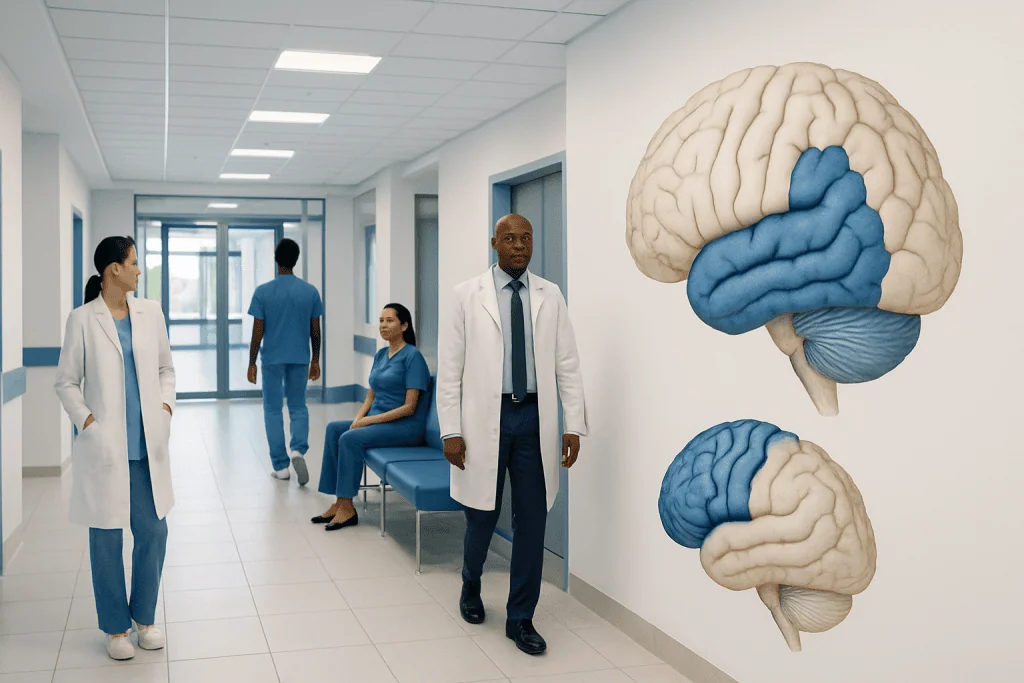
The parietal lobe integrates touch, pain, temperature, pressure, and body-position information. It also supports spatial awareness, attention, reading, writing, and some aspects of calculation.
Key Takeaways
- The parietal lobe integrates touch, pain, temperature, pressure, and body-position information.
- It also supports spatial awareness, attention, reading, writing, and some aspects of calculation.
- Parietal lobe problems may result from stroke, head injury, tumors, seizures, infection, or neurodegenerative disease.
- Symptoms vary by the exact area involved and may include numbness, neglect, difficulty with hand use, or trouble with language-related tasks.
- Diagnosis usually combines a neurological exam with brain imaging and other tests based on the suspected cause.
- Prompt medical evaluation is important for sudden neurological symptoms.
The parietal lobe is a region of the brain that helps a person feel touch, understand body position, process parts of language and math, and navigate space. When it is affected by injury or disease, symptoms can range from numbness and poor coordination to trouble reading, writing, or recognizing where objects are in relation to the body.
Overview: what the parietal lobe does
The parietal lobe is one of the major regions of the brain. It sits near the top and back of each cerebral hemisphere and plays a central role in how the brain receives and interprets sensory information from the body. In simple terms, it helps a person understand touch, pressure, pain, temperature, and where different body parts are in space.
Its work goes beyond basic sensation. The parietal lobe helps combine sensory input with vision and movement so a person can reach for a cup, button a shirt, read a line of text, or judge left from right. Some parts also contribute to attention, calculation, spelling, and understanding the relationship between the body and the surrounding environment.
Because the parietal lobe is involved in several complex networks, symptoms of dysfunction can look very different from one person to another. A small problem may affect only sensation in one area of the body, while a larger or more specific injury may interfere with awareness, coordination, language-related tasks, or spatial judgment.
Key functions of the parietal lobe
The front part of the parietal lobe contains the primary somatosensory cortex. This area receives signals from the skin, muscles, and joints and helps identify where a sensation is coming from and what it feels like. It is essential for recognizing whether something is sharp, warm, rough, vibrating, or touching one side of the body.
Other parietal regions help with sensory integration. This means the brain combines touch, vision, and body-position information to guide movement and orientation. Thanks to these networks, a person can judge distances, avoid obstacles, find objects in space, and use the hands accurately without looking at them every moment.
The dominant parietal lobe, which is usually the left side in right-handed people, often supports reading, writing, naming fingers, and simple arithmetic. The non-dominant parietal lobe, often the right side, is especially important for spatial attention and awareness of the body and environment. This difference helps explain why right- and left-sided parietal injuries can cause different symptom patterns.
- Sensation: touch, pain, temperature, vibration, and body position
- Spatial awareness: understanding where the body is in relation to objects
- Motor guidance: helping movements become accurate and purposeful
- Language-related skills: reading, writing, and parts of word processing
- Higher cognition: attention, calculation, and constructional skills
Symptoms of parietal lobe problems
Symptoms depend on the exact location, the side of the brain involved, and the underlying cause. Common sensory symptoms include numbness, tingling, reduced ability to recognize touch, or difficulty knowing the position of an arm or leg without looking. Some people describe clumsiness because the brain is not processing sensory feedback normally.
When spatial processing is affected, a person may bump into objects, misjudge distances, have difficulty dressing, or struggle to copy shapes and assemble items. A right parietal problem may cause neglect, in which a person pays little attention to the left side of the body or space. This is not a vision problem alone; it is a disorder of attention and awareness.
When the dominant parietal lobe is involved, difficulties may include reading, writing, calculation, distinguishing right from left, or identifying fingers. Some people develop problems coordinating learned movements despite having normal strength, a condition called apraxia. In other cases, parietal irritation can contribute to seizures, headaches, or broader changes in thinking depending on the underlying condition.
These symptoms can overlap with other neurological disorders. For example, sudden one-sided numbness or neglect may occur with stroke, while progressive spatial or cognitive changes may be seen in certain degenerative brain conditions. This is why a medical assessment is important when symptoms are new, worsening, or unexplained.
Causes and risk factors
Parietal lobe dysfunction is not a disease by itself. It is a clinical sign that can arise from several conditions affecting the brain. One of the most important causes is stroke, which can interrupt blood flow to parietal brain tissue and lead to sudden changes in sensation, awareness, or coordination. Bleeding in the brain can cause similar symptoms.
Other causes include head trauma, brain tumors, infections, inflammation, epilepsy, and lack of oxygen to the brain. Disorders that slowly affect brain cells, such as some dementias, may also involve the parietal lobe and lead to gradual problems with spatial judgment, dressing, calculation, or complex daily tasks. Depending on the presentation, doctors may also consider brain tumor or seizure-related conditions in the differential diagnosis.
Risk factors depend on the underlying cause. For stroke, common risks include high blood pressure, diabetes, high cholesterol, smoking, heart rhythm problems, and older age. For injury-related causes, falls, sports trauma, and accidents are relevant. For tumors, infections, and inflammatory conditions, the risk profile is more variable and often requires individualized evaluation.
Because the same symptom can come from very different causes, self-diagnosis is not reliable. A person with new neurological symptoms should seek professional advice, especially if the change was sudden or follows an injury.
How doctors diagnose parietal lobe disorders
Diagnosis begins with a careful medical history and neurological examination. The clinician asks when symptoms started, whether they appeared suddenly or gradually, and whether there are associated problems such as headache, weakness, seizures, confusion, fever, or recent injury. During the exam, the doctor may test sensation, attention, spatial awareness, balance, coordination, reading, writing, and the ability to follow commands or copy shapes.
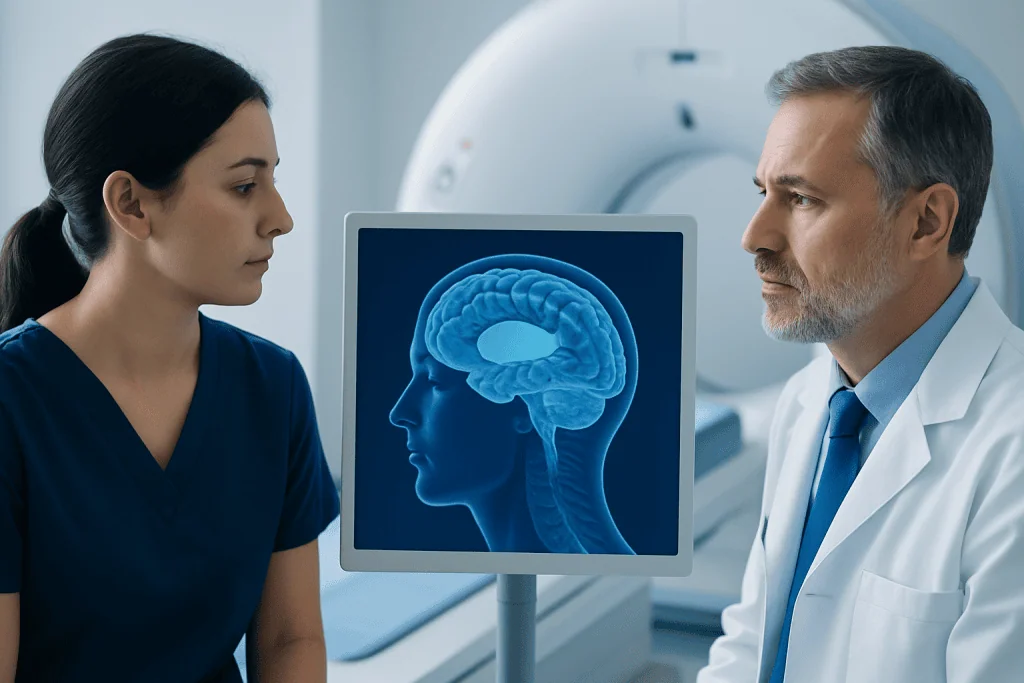
Brain imaging is often the next step. A computed tomography scan may be used urgently to look for bleeding or major structural changes, especially in emergency settings. Magnetic resonance imaging gives more detailed information about brain tissue and is commonly used to evaluate strokes, tumors, inflammation, infection, or subtle injuries. In appropriate cases, doctors may recommend MRI scanning to better define the area involved.
Additional tests depend on the suspected cause. Blood tests may look for infection, inflammation, clotting issues, or metabolic problems. If seizures are a concern, an electroencephalogram may help assess electrical activity in the brain. Neuropsychological testing can be useful when symptoms are subtle or involve cognition, attention, or visual-spatial skills more than basic strength or sensation.
Diagnosis is often a stepwise process. The main goal is not only to confirm that the parietal lobe is involved, but also to identify the exact condition causing the problem so treatment can be tailored appropriately.
Treatment options and rehabilitation
Treatment depends entirely on the cause. Sudden symptoms from stroke require urgent hospital care, where doctors may use time-sensitive therapies and supportive measures. Tumors may be managed with observation, surgery, radiation therapy, medication, or a combination of approaches. Infections, inflammation, and seizures are treated according to their specific cause and severity.
When a structural lesion needs further evaluation or treatment, care may involve advanced neurology, neuroradiology, and neurosurgery teams. In some situations, surgery is appropriate to remove a tumor, relieve pressure, obtain a diagnosis, or address complications. Not every parietal lobe problem requires an operation, and many conditions are managed medically.
Rehabilitation is often a major part of recovery. Occupational therapy can help retrain practical tasks such as dressing, writing, reaching, and hand use. Physical therapy may improve balance and body awareness. Speech and language therapy can support reading, writing, and communication-related challenges when the dominant parietal lobe is affected.
Recovery varies widely. Some people improve quickly after the underlying cause is treated, while others need longer-term therapy to adapt to sensory or spatial difficulties. A multidisciplinary plan is often most helpful because parietal lobe problems can affect movement, attention, daily activities, and cognition at the same time.
Living with parietal lobe symptoms: self-care and prevention
Self-care is most effective when it matches the underlying diagnosis and is guided by a healthcare professional. At home, practical strategies may include keeping rooms well lit, reducing clutter, placing frequently used items in consistent locations, and using visual reminders or checklists. If spatial awareness is impaired, supervised safety planning may help reduce falls and accidents.
For people recovering from stroke or injury, regular therapy exercises and structured routines can support progress. Family members may be taught cueing techniques, such as reminding the person to scan both sides of a page or environment. When reading, writing, or calculation is affected, short practice sessions with rest breaks are often more useful than long, tiring efforts.
Prevention focuses on reducing the risk of conditions that can damage the brain. This includes managing blood pressure, cholesterol, blood sugar, and heart health; avoiding tobacco; wearing seat belts and appropriate protective equipment; and seeking treatment for seizures or persistent neurological symptoms. If advanced care is needed, Acibadem International’s multidisciplinary specialists and JCI-accredited hospitals diagnose and treat neurological conditions for international patients.
When to seek medical care
Immediate medical attention is needed for sudden numbness, confusion, difficulty speaking, loss of awareness of one side of the body, severe headache, new seizures, or abrupt problems with balance or vision. These can be signs of a medical emergency such as stroke or bleeding in the brain and should not be observed at home.
A prompt non-emergency evaluation is also important if symptoms develop gradually, keep returning, or interfere with reading, writing, dressing, navigation, work, or daily activities. Persistent headaches, personality changes, or new clumsiness should also be discussed with a doctor, especially if they are worsening over time.
Medical care may involve neurological examination and brain imaging, and in selected situations a person may be referred for brain tumor surgery or other specialized treatment if a structural cause is found. Early assessment often leads to faster diagnosis, safer planning, and more effective rehabilitation.
Frequently asked questions
What is the parietal lobe responsible for?
The parietal lobe helps the brain process touch, pain, temperature, pressure, and body position. It also contributes to spatial awareness, hand use, attention, and some aspects of reading, writing, and calculation.
What happens if the parietal lobe is damaged?
Parietal lobe damage can cause numbness, trouble locating sensations, poor coordination, or difficulty understanding where the body is in space. Depending on the side involved, a person may also have neglect, trouble reading or writing, or difficulty with arithmetic and learned movements.
Can parietal lobe symptoms be temporary?
Yes, some symptoms can be temporary, especially if they are related to a transient event such as a seizure, migraine-related phenomenon, or a reversible metabolic problem. However, sudden or repeated symptoms still need medical evaluation because they can also signal stroke or another serious brain disorder.
Is the parietal lobe linked to memory?
The parietal lobe is not the brain's main memory center, but it supports attention and integration of information that can affect how a person uses memory in daily tasks. Problems in this area may make it seem like memory is impaired when the main issue is spatial processing, attention, or sensory integration.
How do doctors test parietal lobe function?
Doctors assess parietal lobe function through a neurological examination that checks sensation, body awareness, spatial attention, coordination, reading, writing, and related tasks. Imaging tests such as CT or MRI are often used to look for the cause of dysfunction.
Can someone recover from a parietal lobe injury?
Many people improve after treatment and rehabilitation, but recovery depends on the cause, the size and location of the injury, and how quickly care begins. Occupational, physical, and speech therapy can all play important roles in helping a person regain function and adapt to any lasting symptoms.
This article is for general information only and is not a substitute for professional medical advice. Please consult a qualified doctor about your individual situation.
Explore treatments in Turkey — costs, top hospitals & a free quote
JCI-accredited · board-certified surgeons · reply within 24h
Add us as a Preferred Source to see more of our trusted health content across Google Search, AI Overviews and Discover.

More from the Health Library

Ototoxicity — Explained by Medical Evidence, Not Myths
Capsaicin Allergy: An Evidence-Based Guide for Patients

Powassan Virus — Explained by Medical Evidence, Not Myths
Somogyi Effect: A Complete Medical Overview
Braces on Back: An Evidence-Based Guide for Patients