Tourniquet: A Complete Medical Overview

A tourniquet is mainly used for severe limb bleeding in emergencies. It should be applied only to arms or legs, not the neck, chest, or abdomen.
Key Takeaways
- A tourniquet is mainly used for severe limb bleeding in emergencies.
- It should be applied only to arms or legs, not the neck, chest, or abdomen.
- Direct pressure is often tried first unless bleeding is immediately life-threatening or unsafe to control manually.
- The application time should be noted, and urgent medical care is always needed after use.
- Improvised tourniquets are less reliable than commercial devices and should be used only if nothing else is available.
A tourniquet is a tight band or medical device placed around an arm or leg to help stop life-threatening bleeding when direct pressure is not enough or is not possible. Used correctly, it can be a lifesaving emergency measure, but it also needs timely medical follow-up because prolonged use may harm tissues.
Overview: what a tourniquet is and when it is used
A tourniquet is a device or tightly applied band placed around an arm or leg to stop heavy bleeding by compressing blood vessels. In modern emergency care, it is used for serious limb bleeding that could quickly become life-threatening. This may happen after road traffic injuries, workplace accidents, deep cuts, machinery injuries, or major trauma.
A tourniquet is not meant for minor bleeding, small cuts, or nosebleeds. In many cases, firm direct pressure with a clean cloth or dressing is enough to control bleeding. However, if the bleeding is severe, spurting, rapidly soaking bandages, or occurring in a dangerous setting where continuous pressure cannot be maintained, a tourniquet may be the safest option.
Current first-aid and trauma practice recognizes tourniquets as an important emergency tool when used correctly. They are most effective on arms and legs and should be applied as part of a broader emergency response that includes calling for medical help, monitoring the person, and arranging urgent transfer to hospital care.
How a tourniquet works
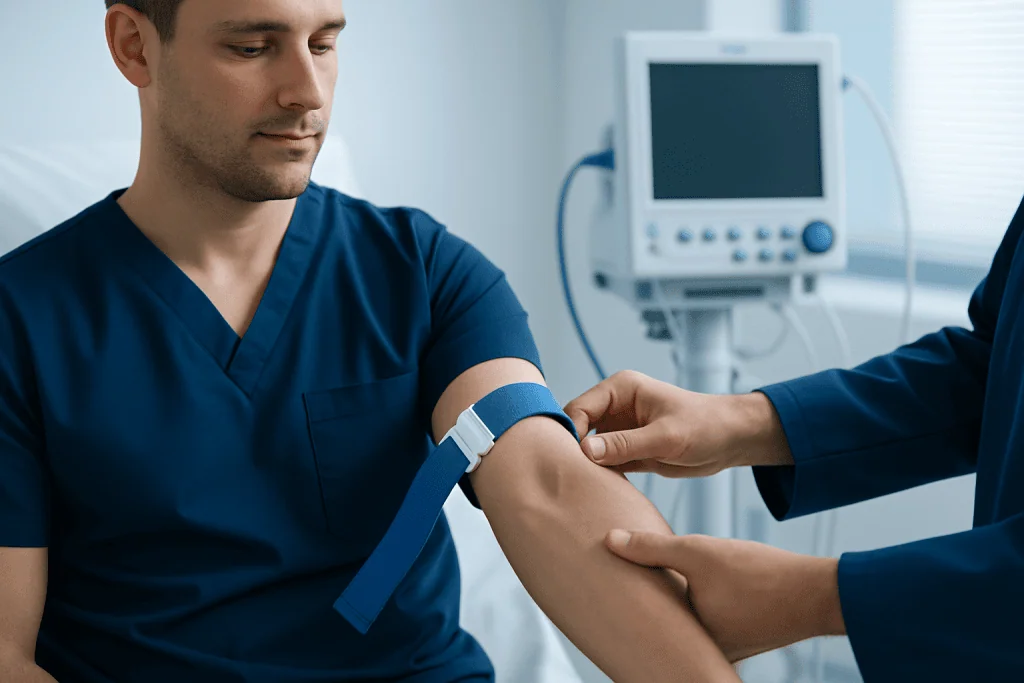
A tourniquet works by tightening around a limb strongly enough to reduce or stop blood flow to the injured area below it. This helps prevent further blood loss and can buy time until professional treatment is available. The aim is not comfort but bleeding control, so a properly placed tourniquet is often painful.
Commercial tourniquets are designed to create reliable pressure and usually include a strap and a tightening mechanism, such as a windlass. These are generally preferred over improvised devices because they are easier to secure and more likely to stop bleeding effectively. A loose or poorly positioned tourniquet may slow venous flow without stopping arterial bleeding, which can worsen blood loss.
Although tourniquets can be lifesaving, they are temporary measures. The longer a limb remains without normal blood flow, the greater the risk of tissue damage, nerve injury, and other complications. For this reason, anyone with a tourniquet in place needs urgent professional assessment and treatment as soon as possible.
When a tourniquet may be needed

A tourniquet may be needed when bleeding from an arm or leg is so severe that it threatens life or cannot be controlled quickly with direct pressure. This includes major cuts, traumatic amputations, crushed limbs, penetrating injuries, or situations where blood is pooling or spurting heavily. In these emergencies, rapid blood loss can lead to shock.
There are also practical situations where a tourniquet may be appropriate right away. Examples include scenes that are unsafe, multiple casualties, or cases where the rescuer cannot maintain pressure continuously. In some severe injuries, especially with visible limb destruction, using a tourniquet early may be more effective than repeated attempts with dressings alone.
It is important to remember where a tourniquet should not be used. It is not suitable for bleeding from the head, neck, chest, abdomen, or groin. Bleeding in these areas needs other emergency measures and urgent hospital care. Severe trauma may involve damage to bones, muscles, nerves, and vessels, and some people later need specialist care such as orthopedic rehabilitation after the immediate emergency is treated.
Basic first-aid steps for safe tourniquet use
If severe limb bleeding is present, the first step is to call emergency services or ask someone nearby to do so. If available, put on gloves or use another barrier if this can be done quickly. Apply the tourniquet above the bleeding site on the upper part of the limb, avoiding placement over a joint if possible. Follow the manufacturer instructions if using a commercial device.
The tourniquet should be tightened until the bleeding stops. If blood continues to flow heavily, it may need to be tightened further or a second tourniquet may need to be placed above the first. Once it is in place and the bleeding is controlled, it should not be loosened intermittently by a layperson, because this can restart dangerous bleeding.
Important first-aid points include:
- Use a commercial tourniquet if one is available.
- Apply it only to an arm or leg.
- Do not cover it completely; healthcare professionals should be able to see it.
- Note the time it was applied.
- Keep the person lying down if possible and watch for signs of shock, such as pale skin, weakness, confusion, or rapid breathing.
Improvised tourniquets are less dependable and may cause harm if used incorrectly. If no commercial device is available and the bleeding is life-threatening, emergency dispatchers may guide first-aid steps until paramedics arrive.
Risks, complications, and common misconceptions
A tourniquet can cause complications, especially if it is used incorrectly or left on for too long. Possible problems include pain, bruising, nerve compression, muscle injury, skin damage, and reduced blood supply to the limb. In serious cases, prolonged interruption of circulation may lead to tissue death. These risks are one reason prompt hospital care is essential after application.
One common misconception is that a tourniquet should never be used because it automatically causes limb loss. Modern evidence does not support that view. In true life-threatening limb bleeding, a correctly used tourniquet can save life, and the immediate priority is to stop the blood loss. Another misconception is that a tourniquet should be loosened every few minutes; this is not recommended for lay responders because it can trigger renewed hemorrhage.
Tourniquets are also used in controlled medical settings, such as some surgical procedures, where specialists monitor timing, pressure, and limb condition carefully. That medical use is different from emergency first aid at the scene of an injury. In trauma cases, doctors may evaluate related circulation problems, including blood vessel damage or, later, conditions such as deep vein thrombosis if symptoms suggest a clotting complication during recovery.
Hospital evaluation and treatment after tourniquet use
After a tourniquet has been applied, hospital teams assess far more than the bleeding itself. They look for the source of hemorrhage, the amount of blood lost, the condition of the limb, and whether there are injuries to arteries, veins, nerves, muscles, tendons, or bones. Monitoring may include blood pressure, pulse, oxygen levels, blood tests, and imaging when needed.
Treatment depends on the injury. Doctors may use wound cleaning, stitches, pressure dressings, fracture stabilization, blood transfusion, vessel repair, or surgery. If there is concern about blood vessel injury, specialist evaluation may be required, including vascular surgery. Some trauma patients may also need orthopedics and traumatology care if there are fractures or crush injuries.
Recovery varies with the severity of the injury and how long circulation was reduced. A person may need pain control, wound follow-up, physiotherapy, and checks for infection, nerve recovery, or tissue healing. Near the end of the care pathway, multidisciplinary centers such as Acibadem International can support international patients with diagnosis and treatment through JCI-accredited hospitals and specialist teams when complex trauma follow-up is needed.
Prevention, preparedness, and self-care after an injury
The best way to reduce the need for a tourniquet is to prevent severe injuries where possible. This includes using seat belts, following workplace safety rules, wearing protective equipment, storing sharp tools safely, and learning basic first aid. In high-risk settings such as remote travel, industrial work, or outdoor sports, carrying a commercial tourniquet and knowing how to use it may be helpful.
After an injury, self-care should focus on following medical advice closely. Dressings should be kept clean and dry as instructed, medications taken only as prescribed, and activity restrictions respected. People should avoid removing or changing advanced wound materials unless a clinician has shown them how. Depending on the injury, some patients may later benefit from physical therapy and rehabilitation to restore movement and strength.
Emotional recovery also matters. A severe bleeding event can be frightening for the injured person and for witnesses. If anxiety, sleep disturbance, or intrusive memories continue after the event, discussing these symptoms with a doctor can be useful. Recovery often improves when physical healing and emotional support are addressed together.
When to seek medical care
Emergency care is needed immediately for any severe bleeding that does not stop with firm pressure, any bleeding that is spurting or rapidly soaking dressings, and any injury involving partial or complete amputation. Call emergency services right away if the person feels faint, becomes confused, has trouble breathing, or shows signs of shock. A tourniquet should be considered only in major limb bleeding emergencies.
Medical review is also important after any tourniquet use, even if the bleeding seems controlled. The injured limb may have hidden damage to blood vessels, nerves, muscles, tendons, or bones. Ongoing symptoms such as numbness, increasing pain, swelling, coolness, pale skin, weakness, fever, wound redness, or drainage should all be assessed promptly.
People taking blood thinners or those with bleeding disorders may need especially careful evaluation after an injury because bleeding can be harder to control. If there is any uncertainty about the severity of an injury, it is safer to seek urgent medical advice rather than wait.
Frequently asked questions
What is a tourniquet used for?
A tourniquet is used to help stop severe bleeding from an arm or leg in an emergency. It is most appropriate when bleeding is life-threatening or cannot be controlled quickly with direct pressure.
Should direct pressure be tried before a tourniquet?
In many cases, yes, because direct pressure can control a large number of bleeding injuries. However, if the bleeding is massive, the scene is unsafe, or pressure cannot be maintained, a tourniquet may need to be applied immediately.
Can a tourniquet be used on any part of the body?
No. Tourniquets are designed for arms and legs only. They should not be used on the neck, chest, abdomen, or groin, where different emergency techniques are required.
How painful is a tourniquet?
A properly tightened tourniquet is often painful because it must compress blood vessels firmly enough to stop severe bleeding. Pain alone does not mean it is being used incorrectly, but the person still needs urgent medical attention.
Is it dangerous to leave a tourniquet on too long?
Yes, prolonged use increases the risk of nerve, muscle, skin, and circulation-related injury. That is why a tourniquet is considered a temporary emergency measure and should always be followed by prompt hospital care.
Are improvised tourniquets safe?
Improvised tourniquets are generally less reliable than commercial devices and can be ineffective or harmful if poorly applied. They should be considered only when bleeding is life-threatening and no proper tourniquet is available.
Does using a tourniquet always mean surgery will be needed?
Not always. Some injuries can be treated with wound care, dressings, and observation, while others may need vessel repair, fracture treatment, or other procedures. The need for surgery depends on the type and severity of the underlying injury.
References
- World Health Organization
- American College of Surgeons
- American Red Cross
- Centers for Disease Control and Prevention
- National Health Service
This article is for general information only and is not a substitute for professional medical advice. Please consult a qualified doctor about your individual situation.
Explore treatments in Turkey — costs, top hospitals & a free quote
JCI-accredited · board-certified surgeons · reply within 24h
Add us as a Preferred Source to see more of our trusted health content across Google Search, AI Overviews and Discover.