Adductor Muscles: What Patients Need to Know
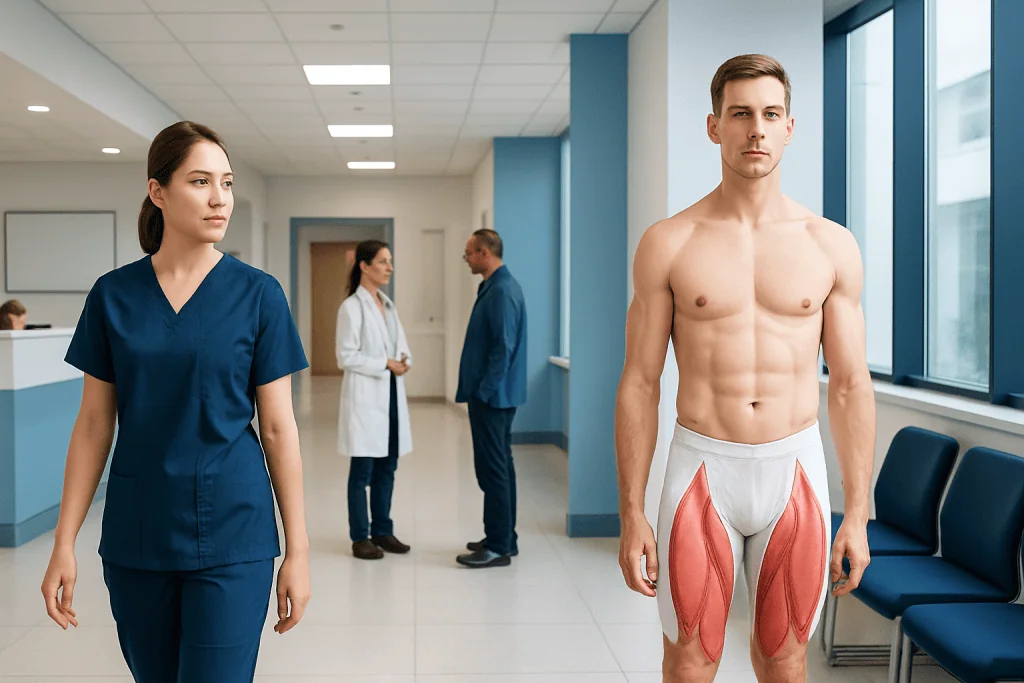
Adductor muscles are located in the inner thigh and help pull the leg toward the midline. They also support the pelvis and hip during walking, standing, turning, and exercise.
Key Takeaways
- Adductor muscles are located in the inner thigh and help pull the leg toward the midline.
- They also support the pelvis and hip during walking, standing, turning, and exercise.
- Overuse, sudden twisting, poor conditioning, and inadequate warm-up can lead to adductor strain or groin pain.
- Most mild injuries improve with rest, activity modification, and guided rehabilitation.
- Persistent pain, swelling, weakness, or trouble walking should be assessed by a qualified doctor.
Adductor muscles are the group of inner-thigh muscles that move the leg inward and support balance, walking, and pelvic stability. Patients usually notice them when pain, tightness, weakness, or a groin strain affects daily movement or sports activity.
Overview: what the adductor muscles do
The adductor muscles are a group of muscles on the inner side of the thigh. Their main job is to bring the leg toward the center of the body, a movement called adduction. They also help steady the hip and pelvis during walking, climbing stairs, changing direction, and standing on one leg.
This muscle group includes the adductor longus, adductor brevis, adductor magnus, gracilis, and pectineus. Although they are often discussed mainly in sports medicine, adductor muscles matter in everyday life as well. They contribute to balance, posture, and smooth lower-body movement, especially when a person steps sideways, turns, or shifts weight.
Patients often search for adductor muscles because they feel inner-thigh pain, groin tightness, or discomfort during exercise. In many cases, symptoms come from a strain or overload rather than a serious problem. Still, the area can also be affected by hip joint conditions, tendon irritation, or nearby soft-tissue injuries, so an accurate assessment is helpful when symptoms do not settle.
Where they are located and why they matter
The adductor muscles run from the pelvis down to the femur, and in the case of the gracilis, to the lower leg. Because they cross the hip region, they influence not only inner-thigh movement but also how the pelvis and trunk are controlled. This is one reason pain in the adductors can sometimes feel like groin pain rather than isolated thigh pain.
These muscles work together with the abdominal muscles, gluteal muscles, hamstrings, and hip flexors. If one group becomes weak, tight, or overworked, the adductors may have to compensate. That can increase strain during running, kicking, skating, lunging, or sudden side-to-side movement.
In practical terms, healthy adductor muscles help a person stay steady when getting out of a car, stepping off a curb, carrying loads, or changing direction quickly. They are also important in sports that involve sprinting, cutting, pivoting, or repeated kicking. Because of this role, adductor symptoms may affect both athletes and non-athletes.
Common symptoms of adductor muscle problems

The most common symptom is pain on the inner thigh or in the groin area. Some people feel a sudden sharp pain during sport or exercise, while others notice a gradual ache that worsens with activity. The discomfort may be mild at first and then become more noticeable during walking, running, squeezing the legs together, or lifting the knee.
Other symptoms can include stiffness, tenderness to touch, weakness, reduced range of motion, and muscle tightness. If the injury is more significant, there may be swelling or bruising. Patients may also feel pain when turning in bed, getting into a car, stepping sideways, or trying to return to sport too soon.
Because the groin is a complex area, symptoms do not always come only from the adductor muscles. Hip joint conditions, hernias, tendon injuries, and other causes of groin pain can feel similar. In some cases, doctors may consider whether pain is related to hip pain or another musculoskeletal problem rather than an isolated adductor strain.
Causes, risk factors, and how strains happen
Adductor muscle problems usually develop from overstretching, sudden forceful contraction, or repeated overload. This often happens during sprinting, rapid changes of direction, kicking, sliding, or losing footing. A strain may occur when the muscle is lengthened and contracting at the same time, especially if the movement is fast or unprepared.
Several factors can increase risk. These include poor warm-up, muscle fatigue, reduced hip flexibility, weakness in the hips or core, previous groin injury, and a sudden increase in training intensity. Tightness in nearby muscles or poor movement mechanics may also place extra demand on the inner thigh.
Not every case begins with sports. Some people develop adductor pain from repetitive work tasks, prolonged deconditioning, or a return to activity after illness or inactivity. Less commonly, the symptoms may be related to tendon irritation or ongoing overload of the tendon attachment at the pubic bone, which can require a more structured evaluation and rehabilitation plan.
- Sudden twisting or side-stepping
- Kicking sports or sprinting
- Inadequate warm-up
- Weak hip, glute, or core muscles
- Returning to exercise too quickly after a prior injury
How doctors diagnose adductor injuries
Diagnosis starts with a medical history and physical examination. The doctor will ask when the pain began, what movements trigger it, whether there was a specific injury, and how symptoms affect daily activities or sport. During the examination, they may gently press on the inner thigh and groin, assess range of motion, and test muscle strength.
A common part of the exam is checking whether pain appears when the patient squeezes the legs together against resistance. The clinician also looks for signs that another problem may be involved, such as hip joint disease, abdominal wall issues, or lower back pain. This step is important because groin pain can come from several structures in the same region.
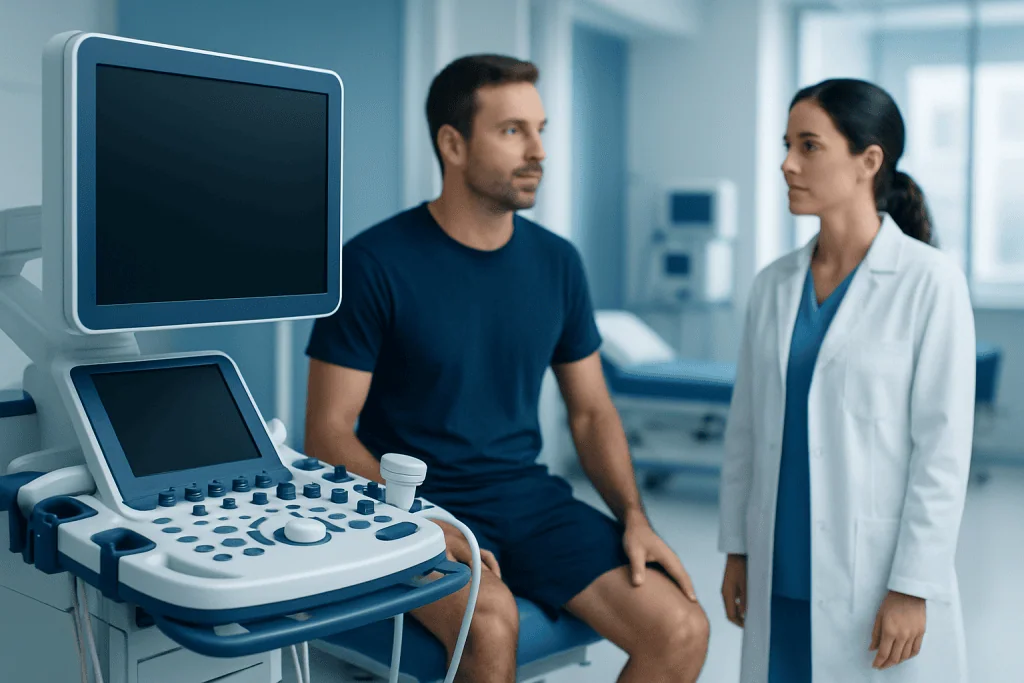
Imaging is not always needed for mild strains that are improving as expected. However, ultrasound or MRI may be used when symptoms are severe, the diagnosis is uncertain, or recovery is taking longer than expected. In selected cases, doctors may also use physical therapy and rehabilitation assessments to identify movement patterns, strength deficits, and flexibility issues that contributed to the problem.
Treatment options and recovery
Treatment depends on the severity of symptoms and the underlying cause. For many mild to moderate adductor strains, early care includes relative rest, avoiding painful activity, and gradually resuming movement as tolerated. Short-term use of cold packs may help with soreness or swelling in the first phase, while gentle mobility work is often introduced once sharp pain settles.
Rehabilitation is usually the most important part of recovery. A structured program may focus on pain-free range of motion, progressive strengthening of the adductors, and improved control of the hips, pelvis, and core. As symptoms improve, exercises typically progress to balance work, directional changes, and activity-specific drills so that the muscle can safely handle daily tasks or sports demands again.
Some patients need more evaluation if pain persists, returns repeatedly, or limits normal movement. If the problem is not a simple strain, care may involve assessment by specialists in orthopedics, sports medicine, or rehabilitation. When groin pain is linked to a broader joint issue, doctors may investigate related conditions and consider options such as orthopedic evaluation and care. Surgery is uncommon for routine adductor strains and is generally reserved for selected cases after careful specialist review.
Prevention and self-care for healthy inner thighs
Prevention focuses on preparing the muscles for the activity they need to perform. A consistent warm-up, gradual increases in exercise intensity, and regular strengthening of the hips and core can all reduce overload. Flexibility work may also help, although strength and movement control are usually just as important as stretching.
People who have had a previous groin injury often benefit from a more cautious return to activity. Rushing back into sprinting, kicking, or heavy lower-body training can raise the risk of reinjury. It is often helpful to rebuild tolerance step by step rather than testing the muscle with full effort too soon.
Simple self-care steps include staying active within comfort, watching for patterns that trigger pain, and using supportive exercises recommended by a clinician or physiotherapist. If symptoms keep coming back, that may suggest an underlying strength imbalance, hip problem, or training error that should be addressed rather than ignored.
- Warm up before sport or exercise
- Increase training load gradually
- Strengthen the adductors, glutes, and core
- Allow time for recovery after intense activity
- Seek guidance if pain repeatedly returns
When to seek medical care
Patients should seek medical care if inner-thigh or groin pain is severe, causes limping, or starts after a sudden injury with a popping sensation. Assessment is also important if there is marked bruising, swelling, weakness, or difficulty bearing weight. These features can suggest a more significant muscle or tendon injury.
Medical review is also sensible when symptoms do not improve after a reasonable period of rest and gradual self-care, or when pain keeps returning during normal activity. Persistent groin pain may reflect another issue that needs a different treatment approach. A doctor can help distinguish between a straightforward adductor strain and other causes of hip or groin pain.
Near the end of the care journey, some patients need coordinated input from orthopedics, rehabilitation, sports medicine, or imaging specialists. Acibadem International’s multidisciplinary specialists and JCI-accredited hospitals diagnose and treat musculoskeletal conditions for international patients when further evaluation is needed.
Frequently asked questions
What are the adductor muscles?
The adductor muscles are the inner-thigh muscles that pull the leg toward the center of the body. They also help stabilize the pelvis and support walking, balance, and changes of direction.
Why do adductor muscles cause groin pain?
Because these muscles attach near the pelvis, irritation or strain can be felt in the groin as well as the inner thigh. Pain may happen after sudden movement, overuse, or repeated stress during exercise or daily activity.
How long does an adductor strain take to heal?
Recovery time varies depending on how mild or severe the strain is. Minor strains may improve within days to a few weeks, while more significant injuries can take longer and often benefit from guided rehabilitation.
Is walking good for an adductor strain?
Gentle walking is often reasonable if it does not significantly worsen pain. However, limping, sharp pain, or increasing soreness may mean the muscle needs more rest and medical advice.
Should adductor pain be treated with stretching?
Stretching can help in some cases, but it is not always the first or only answer. If the muscle is acutely strained, aggressive stretching may aggravate symptoms, so treatment usually works best when it combines protection, gradual movement, and strengthening.
Can adductor muscle pain come back?
Yes, recurrence can happen, especially if a person returns to sport too quickly or the underlying strength and movement issues are not addressed. A structured rehabilitation plan can reduce the chance of repeat injury.
References
- American Academy of Orthopaedic Surgeons
- National Institute of Arthritis and Musculoskeletal and Skin Diseases
- MedlinePlus
- National Health Service
- American College of Sports Medicine
This article is for general information only and is not a substitute for professional medical advice. Please consult a qualified doctor about your individual situation.
Explore treatments in Turkey — costs, top hospitals & a free quote
JCI-accredited · board-certified surgeons · reply within 24h
Add us as a Preferred Source to see more of our trusted health content across Google Search, AI Overviews and Discover.

More from the Health Library

F N H: A Complete Medical Overview

Keloids and Piercings: What Patients Need to Know

Nintedanib: An Evidence-Based Guide for Patients

Walking Pneumonia: A Complete Medical Overview

Dysrhythmia Drugs: What Patients Need to Know

Parathyroid — Explained by Medical Evidence, Not Myths
Physical Medicine & Rehabilitation Specialists at Acibadem

Fzt. Busenur Sezer
Physical Medicine & Rehabilitation
Büşra Zeybek
Physical Medicine & Rehabilitation
Fzt. Çağlar Dal
Physical Medicine & Rehabilitation
Assoc. Prof. Dr. Çağrı Örs
Orthopedic Surgery & Traumatology