Testicular Torsion: What Patients Need to Know

Testicular torsion is a medical emergency that usually causes sudden, severe pain in one testicle. Early treatment is critical because the twisted cord can stop blood flow and damage testicular tissue.
Key Takeaways
- Testicular torsion is a medical emergency that usually causes sudden, severe pain in one testicle.
- Early treatment is critical because the twisted cord can stop blood flow and damage testicular tissue.
- Diagnosis is based on symptoms, physical examination, and often scrotal ultrasound, but surgery should not be delayed if torsion is strongly suspected.
- Treatment is usually urgent surgery to untwist and secure the affected testicle, and usually the other one as well.
- Any sudden scrotal pain, swelling, nausea, or a high-riding testicle should be assessed immediately.
Testicular torsion happens when the spermatic cord twists and cuts off blood flow to a testicle. It causes sudden pain and swelling and needs urgent medical care, because prompt treatment offers the best chance of saving the testicle.
Overview
Testicular torsion is a serious condition in which the spermatic cord twists around itself. This cord carries blood vessels, nerves, and the vas deferens to the testicle. When it twists, blood flow can rapidly decrease or stop, which may injure the testicle if treatment is delayed.
For patients and families, the most important point is simple: sudden pain in one testicle should never be ignored. Testicular torsion is treatable, but time matters. Fast medical assessment gives the best chance of restoring blood flow and preserving normal testicular function.
This condition can happen at almost any age, but it is more common in newborns, children, teenagers, and young adults. It may occur during sleep, after physical activity, or for no clear reason at all. Some people have a natural anatomical variation that allows the testicle to move more freely inside the scrotum, increasing the risk of twisting.
Symptoms and what they can feel like
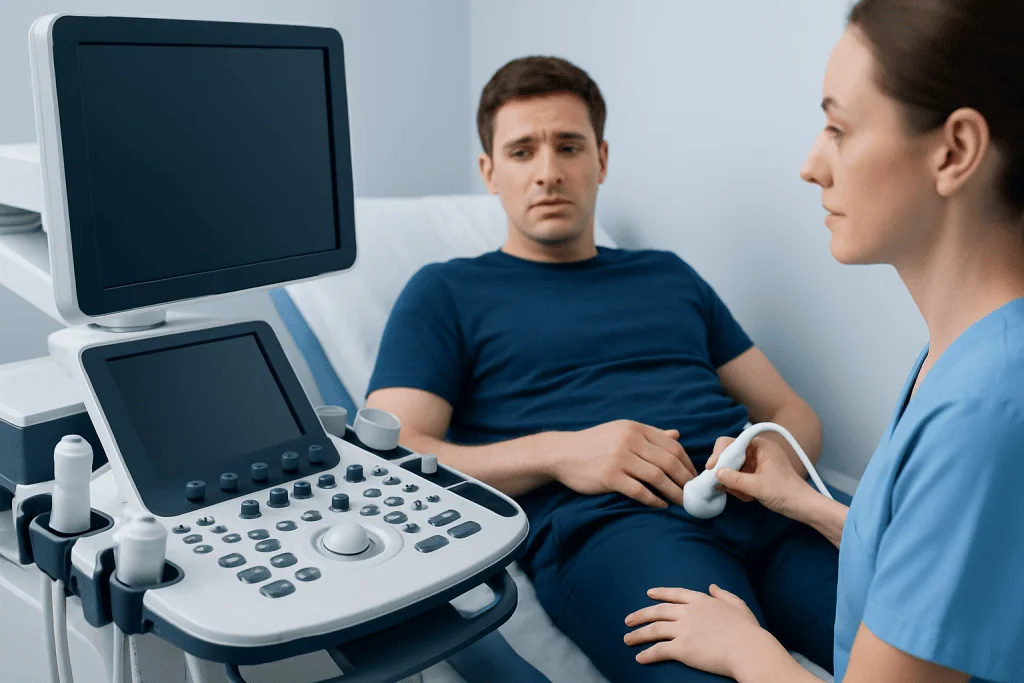
The classic symptom of testicular torsion is sudden, severe pain in one side of the scrotum. The pain may begin abruptly and can become intense within a short time. The affected testicle may also look higher than usual or sit at an unusual angle.
Swelling is also common, and the scrotum may become red, tender, or firm. Some patients feel nausea or vomit because the pain can be strong. In younger boys, the person may have trouble describing the pain and may simply appear distressed, avoid walking, or hold the groin area.
Not every case follows the same pattern. Occasionally, pain comes and goes if the testicle twists and then temporarily untwists on its own. Even if symptoms improve, medical evaluation is still important because the problem can recur and may lead to a full torsion later.
- Sudden pain in one testicle or one side of the scrotum
- Scrotal swelling or redness
- Nausea or vomiting
- A testicle that appears higher than normal
- Lower abdominal or groin pain
- Pain that wakes a person from sleep
Why testicular torsion happens
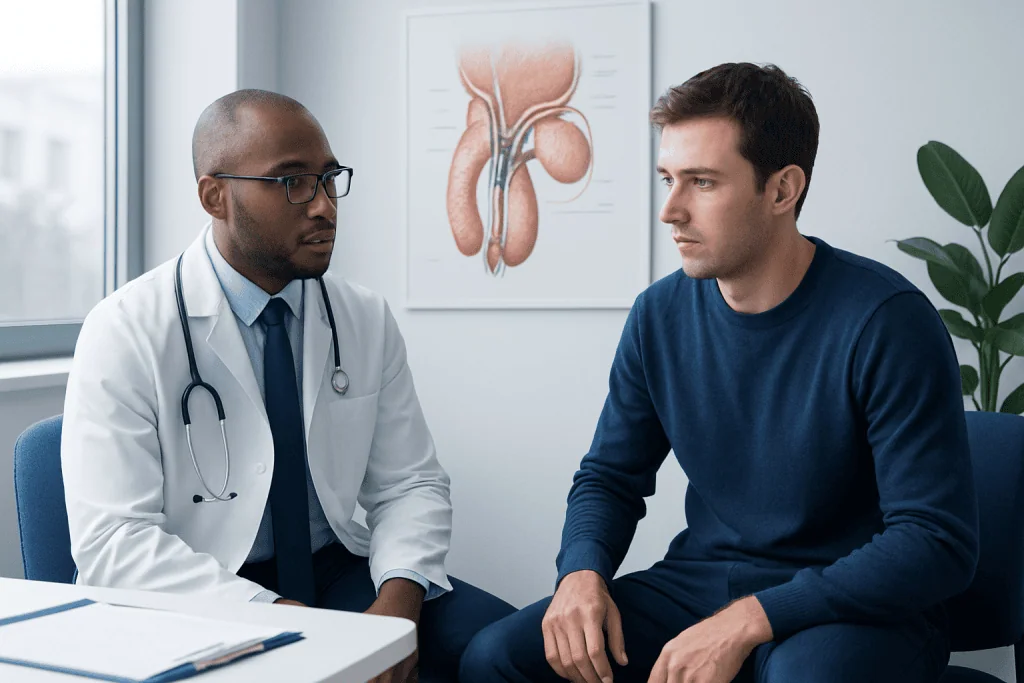
Testicular torsion usually happens because the testicle is able to rotate too freely within the scrotum. In many patients, this is related to a structural difference sometimes called a bell-clapper deformity. With this anatomy, the testicle is not as firmly attached as usual, making twisting easier.
The condition is not always triggered by injury. It can happen during sleep, after exercise, after a growth spurt in adolescence, or without any obvious cause. Cold temperatures and sudden movements are sometimes reported before symptoms begin, but they are not the root cause.
Some patients may also experience intermittent torsion, where the cord twists and then untwists on its own. This can cause repeated short episodes of testicular pain. These episodes should not be dismissed, because they may be a warning sign before a complete torsion develops.
Other causes of scrotal pain, such as testicular cancer or infections, can present differently but may also need prompt assessment. A doctor can help distinguish between these possibilities based on the history, examination, and appropriate imaging.
Risk factors and who is most affected
Testicular torsion is seen most often in adolescents, especially during puberty when the testicles are growing quickly. However, it can also occur in infants, adults, and older men. Family history may matter in some cases, because the anatomical tendency can run in families.
Previous episodes of unexplained scrotal pain may increase suspicion for intermittent torsion. Patients who have had a similar pain that suddenly resolved should mention this to their doctor, because it can be an important clue. A high-riding or more horizontal testicle on examination may also raise concern.
Although sports injuries can cause scrotal pain, torsion often occurs without trauma. That means the absence of injury does not make the condition less urgent. Any sudden one-sided testicular pain should be assessed quickly, especially in children and teenagers.
How doctors diagnose testicular torsion
Diagnosis begins with a focused medical history and physical examination. Doctors ask when the pain started, how severe it is, whether there has been swelling, nausea, vomiting, fever, urinary symptoms, or previous episodes. On examination, the affected testicle may be tender, swollen, and positioned higher than normal.
Scrotal ultrasound with Doppler is often used to evaluate blood flow. If blood flow appears reduced or absent, testicular torsion becomes much more likely. However, if the symptoms and examination strongly suggest torsion, surgery may be recommended without delay, because waiting too long for tests can reduce the chance of saving the testicle.
Doctors also consider other possible causes of sudden scrotal pain, including epididymitis, trauma, hernia, and varicocele in some cases. The goal is to quickly identify who needs urgent treatment. In emergency settings, speed and clinical judgment are very important.
Imaging may be part of the evaluation, and when clinically appropriate, advanced imaging or ultrasound-based assessment can support diagnosis. Still, testicular torsion remains primarily a time-sensitive clinical emergency rather than a condition to observe at home.
Treatment options and recovery
The standard treatment for testicular torsion is urgent surgery. During the procedure, the surgeon untwists the spermatic cord and checks whether blood flow returns to the affected testicle. The testicle is then usually stitched in place to reduce the chance of it twisting again, and the other testicle is typically secured as well because it may have the same anatomical risk.
In some situations, a doctor may attempt manual detorsion, which means carefully trying to untwist the testicle by hand. This may provide temporary relief, but it does not replace surgery. Surgical fixation is still usually needed to prevent the problem from coming back.
Recovery depends on how long the torsion lasted and whether the testicle regained adequate blood flow. Many patients recover well when treated early. If the testicle has been too severely damaged, removal may sometimes be necessary, but prompt treatment improves the likelihood of preserving it.
Patients are often advised to rest, limit strenuous activity for a period, and attend follow-up appointments. If there are underlying urinary or reproductive concerns, assessment by specialists in urology care may be helpful. In complex cases, coordinated pediatric urology support may be especially important for children and adolescents.
Prevention, self-care, and when to seek medical care
There is no reliable way to prevent a first episode of testicular torsion at home, especially when it is related to internal anatomy. The best protection is awareness. Patients, parents, and caregivers should know that sudden testicular or scrotal pain needs urgent medical evaluation rather than watchful waiting.
Self-care at home is not appropriate when torsion is possible. Ice packs, pain medicines, or rest should not delay emergency assessment. If a patient has repeated brief episodes of testicular pain that go away on their own, they should still see a doctor promptly because intermittent torsion may require preventive surgery.
Medical care should be sought immediately for sudden one-sided testicular pain, new scrotal swelling, nausea or vomiting with scrotal pain, or a testicle that looks high or out of position. Emergency assessment is especially important in children and teenagers, who may not always explain symptoms clearly.
Near the end of the care pathway, some patients may benefit from specialist follow-up to discuss recovery, fertility questions, or other male reproductive concerns such as male infertility. Acibadem International’s multidisciplinary specialists and JCI-accredited hospitals diagnose and treat urgent urologic conditions for international patients when expert evaluation is needed.
Frequently asked questions
Is testicular torsion an emergency?
Yes. Testicular torsion is considered a medical emergency because the twist can cut off blood supply to the testicle. Prompt treatment offers the best chance of saving the testicle and protecting its function.
What does testicular torsion pain feel like?
It usually causes sudden, severe pain in one testicle or one side of the scrotum. The pain may be accompanied by swelling, nausea, vomiting, or a testicle that appears higher than normal.
Can testicular torsion go away on its own?
Sometimes the testicle may briefly untwist on its own, and the pain can improve. Even if that happens, the condition still needs medical evaluation because the torsion can return and become complete again.
How is testicular torsion treated?
Treatment is usually urgent surgery to untwist the spermatic cord and secure the testicle in place. Doctors commonly secure the other testicle during the same operation to reduce the risk of torsion on that side as well.
Can a person lose a testicle from testicular torsion?
If blood flow is blocked for too long, the testicle can become damaged beyond recovery. That is why sudden scrotal pain should be assessed immediately rather than monitored at home.
Does testicular torsion affect fertility?
It can, especially if treatment is delayed and the testicle is severely damaged. Many patients do well after early treatment, but fertility questions are best discussed with a urologist during follow-up.
References
- American Urological Association
- European Association of Urology
- National Institute of Diabetes and Digestive and Kidney Diseases
- MedlinePlus
- American Academy of Pediatrics
This article is for general information only and is not a substitute for professional medical advice. Please consult a qualified doctor about your individual situation.
Testicular Torsion in Turkey — costs, top hospitals & a free quote
JCI-accredited · board-certified surgeons · reply within 24h
Add us as a Preferred Source to see more of our trusted health content across Google Search, AI Overviews and Discover.

More from the Health Library


Related Specialists

Prof. Dr. Hüsnü Görgen
Gynecology & Obstetrics
Prof. Dr. Cihan Aksoy
Physical Medicine & Rehabilitation
Dr. Mahir Kenduşim
Ophthalmology
Dr. Memiş Ali Mutlu
Gynecology & Obstetrics