Hemoglobin Levels Explained: Reference Ranges and What Affects Them

Hemoglobin levels are reported on a blood test and help show how well blood can carry oxygen. A typical adult range is often about 12 to 17.5 g/dL, but normal values vary by laboratory, age, sex, and pregnancy status.
Key Takeaways
- Hemoglobin levels are reported on a blood test and help show how well blood can carry oxygen.
- A typical adult range is often about 12 to 17.5 g/dL, but normal values vary by laboratory, age, sex, and pregnancy status.
- Low hemoglobin commonly points to anemia, blood loss, iron deficiency, chronic disease, or vitamin deficiency.
- High hemoglobin may occur with dehydration, smoking, high altitude, lung or heart disease, or bone marrow disorders.
- One result alone does not make a diagnosis; doctors interpret hemoglobin together with symptoms, red blood cell indices, and other tests.
Hemoglobin levels measure the amount of oxygen-carrying protein in red blood cells. A result is considered normal or abnormal based on the reference range used by the laboratory, as well as age, sex, pregnancy status, altitude, hydration, and underlying health conditions.
What hemoglobin levels mean
Hemoglobin levels are the amount of hemoglobin measured in a blood sample. Hemoglobin is the iron-containing protein inside red blood cells that carries oxygen from the lungs to the rest of the body and helps bring carbon dioxide back to the lungs. When the level is too low or too high, it may signal a health issue, but the meaning depends on the person’s age, sex, medical history, hydration, and the laboratory’s reference range.
In many laboratories, a broad adult reference range is roughly 12 to 17.5 grams per deciliter (g/dL). However, this headline number is only a starting point. Values normally differ between children and adults, between people assigned male or female at birth, and during pregnancy. Doctors also consider where a person lives, since people at higher altitudes often have naturally higher hemoglobin levels.
Hemoglobin is usually measured as part of a complete blood count, or CBC. It is not interpreted in isolation. A doctor typically reviews the result together with hematocrit, red blood cell count, mean corpuscular volume (MCV), ferritin or iron studies when needed, and the person’s symptoms. This fuller view helps distinguish between normal variation and a problem that needs attention.
Normal ranges: age, sex, pregnancy, and context
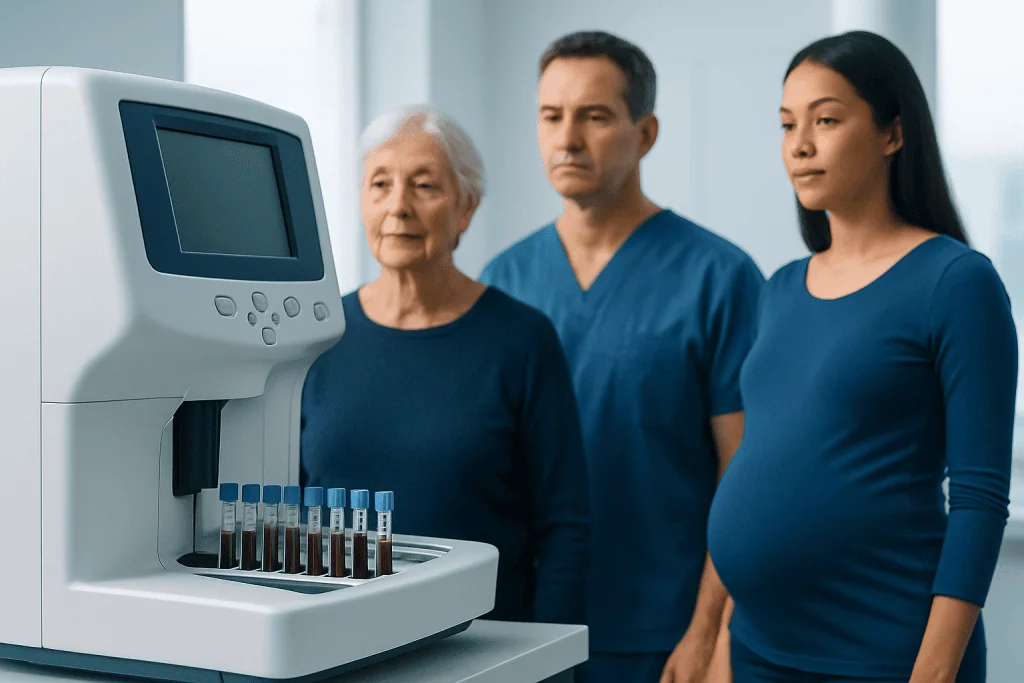
There is no single hemoglobin number that is normal for everyone. Laboratories set their own reference intervals, so the range printed on the test report is the most important guide. In general, adult males often have slightly higher hemoglobin values than adult females, largely because of hormonal influences and differences in average red blood cell mass.
Children’s hemoglobin levels change with age. Newborns usually have higher values than older infants and children, and those values gradually shift as the body adapts after birth. During pregnancy, hemoglobin often decreases somewhat because blood plasma volume expands more than red blood cell mass. This does not always mean disease, but it still needs proper interpretation because iron deficiency and other causes of anemia are also common in pregnancy.
Context matters as much as the number itself. A person who is dehydrated may appear to have a higher hemoglobin level because the blood is more concentrated. On the other hand, receiving large amounts of intravenous fluids can temporarily lower the measured concentration. People who smoke, have chronic lung disease, live at high altitude, or have certain heart conditions may also have higher levels as the body tries to compensate for reduced oxygen availability.
- Often lower: pregnancy, fluid overload, some chronic illnesses, nutritional deficiencies, blood loss
- Often higher: dehydration, smoking, high altitude, chronic low oxygen states, some bone marrow conditions
- Always important: compare with symptoms, past results, and the specific lab range
When a low hemoglobin level is medically meaningful

Low hemoglobin usually suggests anemia, meaning the blood may not carry oxygen as efficiently as it should. Whether the finding is medically significant depends on how far below range it is, whether it developed suddenly or gradually, and whether symptoms are present. A mild reduction found on routine testing may cause no symptoms at all, while a sharp drop from bleeding can require urgent care.
Common causes include iron deficiency, vitamin B12 or folate deficiency, menstrual blood loss, digestive tract bleeding, chronic kidney disease, inflammation, infection, and inherited blood disorders. Doctors often use other CBC values to narrow down the cause. For example, a low MCV may suggest iron deficiency or thalassemia, while a high MCV may point toward vitamin deficiency, alcohol-related effects, liver disease, or some medications.
Symptoms of low hemoglobin can include tiredness, weakness, shortness of breath with activity, pale skin, dizziness, headaches, cold hands or feet, and a fast heartbeat. Some people also notice reduced exercise tolerance or trouble concentrating. If anemia is suspected, a doctor may investigate for anemia, iron deficiency, gastrointestinal blood loss, or other underlying causes rather than treating the number alone.
What can cause high hemoglobin levels
High hemoglobin is less common than low hemoglobin, but it can also be important. Sometimes the level is only temporarily elevated because of dehydration, which concentrates the blood. Once fluid balance returns to normal, the result may move back into range. For this reason, repeat testing may be useful before drawing conclusions.
Persistently high hemoglobin can happen when the body is exposed to lower oxygen levels over time. This may occur in people who smoke, live at high altitude, or have chronic lung disease, sleep-disordered breathing, or some heart conditions. In these settings, the body may make more red blood cells to improve oxygen delivery.
Less commonly, high hemoglobin may be linked to disorders of the bone marrow, including conditions such as polycythemia. Doctors may also review oxygen saturation, lung and heart function, medication use, and kidney health, because certain hormones and tumors can stimulate excess red blood cell production. If the level is repeatedly above range, medical evaluation helps clarify whether it reflects a temporary condition, a compensatory response, or a primary blood disorder.
How doctors evaluate an abnormal result
An abnormal hemoglobin result is usually the beginning of an evaluation, not the final diagnosis. The first step is often to confirm the result and review the full CBC. Looking at hematocrit, red blood cell count, MCV, mean corpuscular hemoglobin (MCH), red cell distribution width (RDW), white blood cells, and platelets helps identify patterns that point toward iron deficiency, inflammation, blood loss, bone marrow disease, or inherited conditions.
Additional tests may include ferritin and iron studies, vitamin B12 and folate levels, kidney function tests, reticulocyte count, stool testing for hidden blood, and in some situations tests for hemolysis or hemoglobin variants. If bleeding from the digestive tract is suspected, a doctor may recommend colonoscopy or upper endoscopy to look for ulcers, polyps, inflammation, or other sources of blood loss.
The interpretation also depends on symptoms and medical history. Recent surgery, heavy menstrual bleeding, pregnancy, chronic disease, smoking, high-altitude living, or known heart and lung conditions can all change what the number means. In more complex cases, patients may be referred for specialist care, including hematology evaluation, to determine the cause and plan treatment safely.
Treatment and self-care depend on the cause
There is no single treatment for abnormal hemoglobin levels because treatment should address the reason behind the result. If low hemoglobin is caused by iron deficiency, care may include dietary advice and iron replacement under medical guidance. If vitamin B12 or folate deficiency is present, those deficiencies are treated directly. If bleeding is the issue, finding and stopping the source is essential.
People with chronic kidney disease, inflammatory disorders, bone marrow disorders, or inherited blood conditions may need more specialized treatment. When hemoglobin is very low or symptoms are significant, urgent medical care may be needed, and some patients may require hospital-based treatment. If hemoglobin is high, treatment may focus on correcting dehydration, stopping smoking, improving oxygen levels, or managing an underlying lung, heart, or bone marrow condition.
Self-care can support overall blood health, but it should not replace medical evaluation. Eating a balanced diet with adequate iron, vitamin B12, folate, and protein can help, especially in people at risk of deficiency. Avoiding unnecessary iron supplements is also important because not every low hemoglobin result is due to iron deficiency, and excess iron can be harmful in some situations.
When to seek medical care
Medical advice is recommended if a blood test shows hemoglobin outside the laboratory’s reference range, especially if the change is new, persistent, or getting worse. Evaluation is also important if there are symptoms such as unusual fatigue, dizziness, shortness of breath, chest discomfort, fainting, pale skin, rapid heartbeat, or reduced ability to exercise. These symptoms do not always mean a serious problem, but they should be assessed properly.
Urgent care is needed if symptoms are severe, if there is suspected significant blood loss, black or bloody stools, vomiting blood, sudden weakness, or breathing difficulty. People who are pregnant, have cancer, kidney disease, heart disease, lung disease, or a known blood disorder should seek timely advice because hemoglobin changes may affect broader treatment decisions.
Near the end of the care pathway, patients may benefit from coordinated specialist assessment if the cause is unclear or complex. Acibadem International’s multidisciplinary specialists and JCI-accredited hospitals evaluate and treat blood-related conditions for international patients, including causes of abnormal hemoglobin when specialist input is needed.
Frequently asked questions
What is a normal hemoglobin level for adults?
A common adult reference range is roughly 12 to 17.5 g/dL, but the exact normal range depends on the laboratory and the person’s age, sex, and health context. The value shown on the lab report should be interpreted with a doctor rather than compared with a single universal number.
Is low hemoglobin always anemia?
Low hemoglobin often indicates anemia, but it does not explain the cause by itself. Doctors usually look at red blood cell indices, iron studies, kidney function, symptoms, and possible bleeding to confirm the diagnosis and identify the reason.
Can dehydration affect hemoglobin levels?
Yes. Dehydration can make hemoglobin appear higher because there is less fluid in the bloodstream, so the blood becomes more concentrated. After rehydration, the result may return closer to the usual range.
Why are hemoglobin levels lower in pregnancy?
During pregnancy, blood plasma volume increases more than red blood cell mass, which can lower the measured hemoglobin concentration. This can be a normal physiologic change, but doctors still check for iron deficiency and other causes of anemia because those are also common in pregnancy.
What symptoms can abnormal hemoglobin levels cause?
Low hemoglobin may cause fatigue, weakness, dizziness, shortness of breath, pale skin, or a fast heartbeat. High hemoglobin may cause no symptoms, but some people can experience headache, dizziness, or symptoms related to the underlying cause such as smoking-related or lung-related disease.
Should a person take iron if hemoglobin is low?
Not always. Iron helps only when iron deficiency is present, and low hemoglobin can have many other causes. It is safest to use supplements only after a clinician has reviewed the blood test and advised on the likely reason for the low level.
References
- World Health Organization
- American Society of Hematology
- National Heart, Lung, and Blood Institute
- MedlinePlus
- Mayo Clinic
This article is for general information only and is not a substitute for professional medical advice. Please consult a qualified doctor about your individual situation.
Explore treatments in Turkey — costs, top hospitals & a free quote
JCI-accredited · board-certified surgeons · reply within 24h
Add us as a Preferred Source to see more of our trusted health content across Google Search, AI Overviews and Discover.