Stress Fracture: What Patients Need to Know

A stress fracture usually develops gradually from overuse, not from one sudden accident. Pain often starts during activity and may become more constant if the bone does not get enough rest.
Key Takeaways
- A stress fracture usually develops gradually from overuse, not from one sudden accident.
- Pain often starts during activity and may become more constant if the bone does not get enough rest.
- Early imaging and medical assessment can help distinguish a stress fracture from a sprain, tendon injury, or shin splints.
- Treatment commonly includes rest from high-impact activity, supportive footwear or bracing, and a guided return to exercise.
- Risk rises with rapid training changes, poor nutrition, low bone density, and biomechanical problems.
A stress fracture is a small crack or severe bone bruise caused by repeated force rather than a single major injury. It often improves with early diagnosis, activity changes, and proper support, but delayed care can lead to slower healing or a complete fracture.
Overview: what a stress fracture is
A stress fracture is a tiny crack in a bone or a stress-related bone injury that develops when repeated force outpaces the body’s ability to repair normal wear and tear. It is most common in the feet, shins, ankles, hips, and pelvis, especially in people who run, jump, march, or spend long hours on their feet.
Unlike a traumatic fracture, which happens after a fall or direct blow, a stress fracture builds up gradually. Bone is living tissue that constantly renews itself. When training, work demands, or daily activity increase too quickly, the bone may not recover fully between sessions, and a small injury can develop.
Many patients first notice a specific aching spot that hurts during exercise and eases with rest. Because symptoms can seem mild at first, people may continue their usual routine, which can worsen the injury. Early recognition matters because treatment is often simpler and recovery is usually smoother when the bone is protected promptly.
Symptoms and how they feel
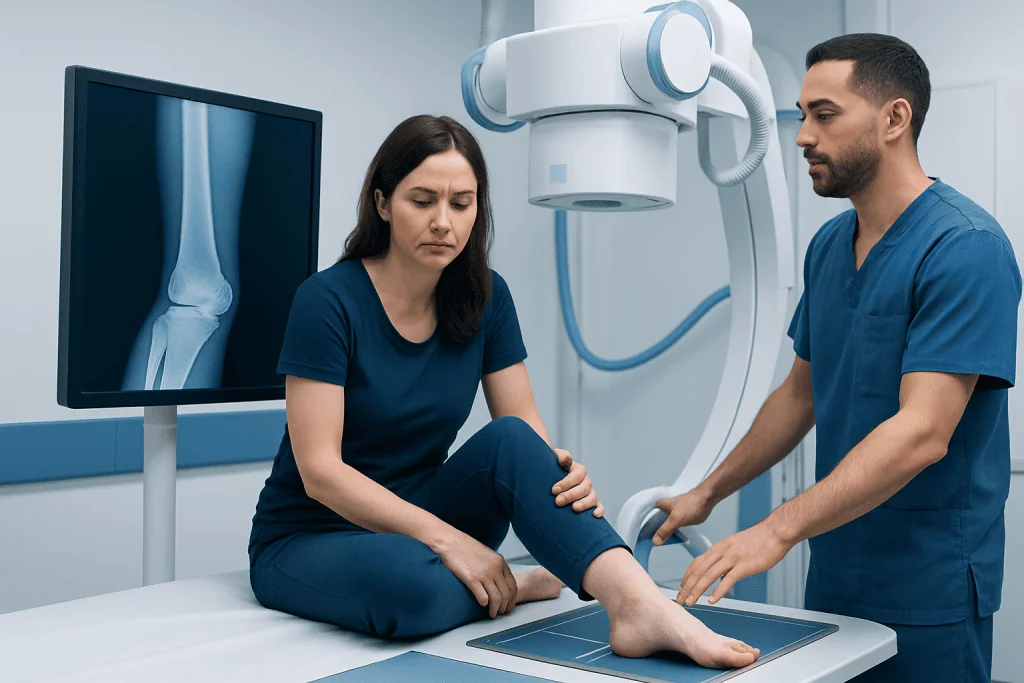
The most typical stress fracture symptom is pain that begins or worsens with weight-bearing activity. At first, discomfort may appear only during running, brisk walking, dancing, or sports. Later, the pain may come on earlier in activity, last longer afterward, or be noticeable even during ordinary walking.
The pain is often well localized, meaning the person can point to one tender area with a finger. Mild swelling may develop over the painful spot, and touching the area may feel sore. In the foot or lower leg, some people also notice a subtle limp or difficulty pushing off normally.
Symptoms can overlap with other overuse injuries such as tendon irritation or shin splints. A stress fracture is more likely when pain becomes progressively sharper, more focal, and less responsive to simple rest. If pain starts to occur at rest or at night, medical review becomes more important.
- Pain during or after repeated activity
- Tenderness in one small area of bone
- Mild swelling
- Discomfort with hopping or bearing weight
- Reduced athletic performance or limping
Causes and risk factors
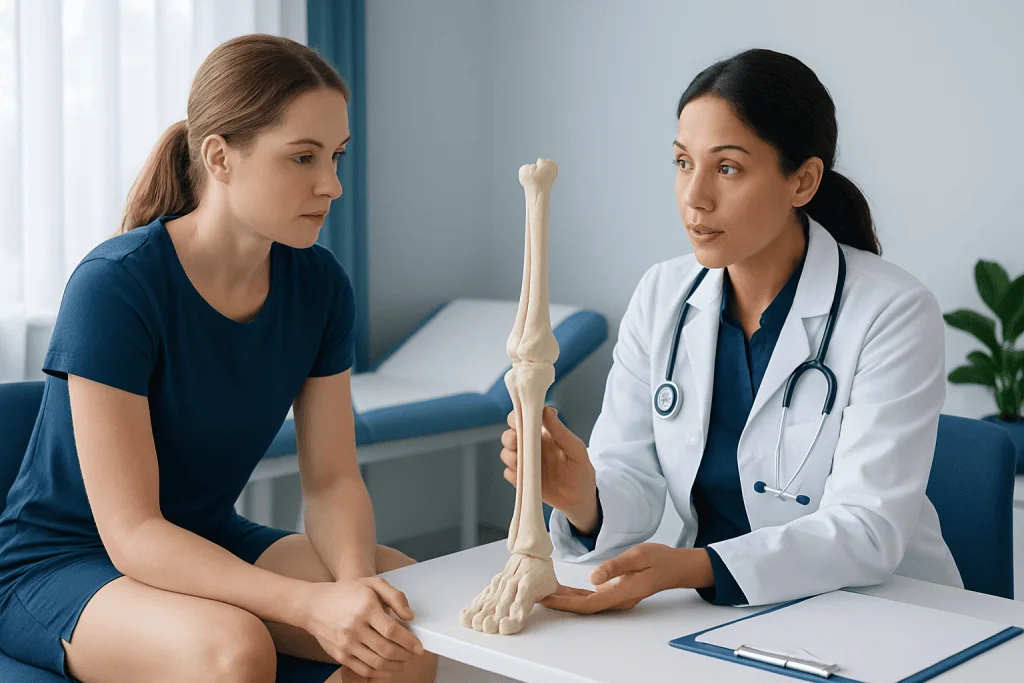
Stress fractures happen when repetitive loading exceeds the bone’s ability to adapt. A sudden increase in distance, speed, intensity, or training frequency is a common trigger. The same can happen when someone changes surfaces, such as moving from grass to pavement, or starts a new activity that involves jumping or impact.
Footwear, biomechanics, and muscle fatigue also matter. Worn-out shoes, poor shock absorption, flat feet, high arches, leg length differences, or altered gait can concentrate force in one area. When muscles become tired, they absorb less impact, and more stress reaches the bone.
Some medical and lifestyle factors can weaken bone resilience. These include low calorie intake, low calcium or vitamin D intake, low bone density, hormonal changes, menstrual irregularities, smoking, and certain medications. Conditions that affect bone health may also increase risk. In some patients, doctors evaluate whether there may be underlying osteoporosis or another issue affecting bone strength.
Although athletes are commonly affected, stress fractures are not limited to sports. They can also occur in military recruits, active workers, or anyone who increases physical demands quickly after a period of low activity.
How doctors diagnose a stress fracture
Diagnosis begins with a careful history and physical examination. A doctor will ask when the pain started, what activities trigger it, whether there has been a recent training change, and whether there are nutrition, menstrual, or bone health concerns. During the exam, the painful area is checked for focal tenderness, swelling, alignment issues, and problems with walking or balance.
Plain X-rays are often the first imaging test, but early stress fractures may not show up right away. If symptoms strongly suggest a stress fracture and the X-ray is normal, the doctor may recommend follow-up imaging. MRI is especially useful because it can detect bone stress injury earlier and show the extent of inflammation before a clear fracture line appears.
In some cases, bone scan or CT may be considered, depending on the bone involved and the question that needs to be answered. Imaging can be arranged through MRI or X-ray services when clinically appropriate. Blood tests are not always needed, but they may help if there is concern about vitamin deficiency, low energy availability, hormonal issues, or another condition affecting bone health.
Prompt diagnosis is particularly important for higher-risk areas such as parts of the hip, pelvis, or certain foot bones, where healing can be slower and complications may be more likely without protection.
Treatment options and recovery
The main treatment for a stress fracture is reducing the load on the injured bone so it can heal. This usually means stopping high-impact activity for a period of time, while switching to safer alternatives such as swimming or cycling if the doctor permits. The exact plan depends on the bone involved, the severity of the injury, and the patient’s symptoms.
Supportive treatment may include stiff-soled shoes, protective boots, crutches, taping, or bracing. Pain relief generally focuses on rest, ice, elevation, and practical support. A doctor may also address contributing factors such as training errors, footwear problems, low vitamin D, or menstrual or metabolic concerns.
Some patients benefit from guided strengthening, gait correction, and a structured return to sport through physical therapy and rehabilitation. Surgery is not needed for most stress fractures, but it may be considered for fractures in high-risk locations, fractures that fail to heal, or injuries in athletes who require stable fixation. Surgical care, when appropriate, may fall under orthopedic surgery.
Healing time varies. Lower-risk stress fractures may recover over several weeks, while others need a longer period of protection. Returning to impact activity too early can delay healing, so follow-up with a qualified clinician is important even when pain improves.
Prevention and self-care
Preventing a stress fracture usually involves balancing activity with recovery. Training should build gradually rather than jumping suddenly in distance or intensity. Rest days are part of bone health, not a setback. Cross-training can reduce repetitive impact while maintaining fitness.
Good footwear and surface choices can also help. Shoes should match the activity and be replaced when worn. Some people may benefit from assessment for orthotics or technique changes if they have recurring pain, abnormal foot mechanics, or repeated overuse injuries.
Nutrition is a key part of prevention. Bones need enough overall energy, protein, calcium, vitamin D, and other nutrients to repair daily stress. In people with repeated stress injuries, disordered eating, unexpected weight loss, menstrual changes, or known low bone density, medical review is important. Doctors may look for broader musculoskeletal problems, including related issues such as heel pain and heel spur-related gait changes that can alter walking mechanics.
- Increase training gradually
- Use supportive, activity-appropriate footwear
- Include rest and recovery days
- Maintain adequate nutrition and hydration
- Address recurring pain early rather than training through it
When to seek medical care
Medical care is recommended when bone pain lasts more than a few days, returns each time activity resumes, or causes limping. Assessment is also important if there is swelling, difficulty bearing weight, or a very specific tender spot over a bone. These signs suggest more than simple muscle soreness.
Urgent evaluation is needed if the person cannot walk normally, has sudden severe pain, or suspects a complete fracture after continuing to exercise through pain. Hip, groin, or pelvic pain in runners should not be ignored, because some stress fractures in these areas need especially prompt attention.
If symptoms are recurring, doctors may also check for underlying reasons such as low bone density, nutritional deficiency, hormonal imbalance, or biomechanical problems. For international patients who need coordinated evaluation, Acibadem International’s multidisciplinary specialists and JCI-accredited hospitals diagnose and treat stress fractures with imaging, orthopedics, and rehabilitation support.
Frequently asked questions
Can a stress fracture heal on its own?
Many stress fractures heal well if the bone is protected and the triggering activity is stopped early enough. However, continuing to exercise through pain can worsen the injury or delay recovery, so medical guidance is recommended.
What is the difference between a stress fracture and shin splints?
Shin splints usually cause more diffuse pain along a broader area of the shin, especially during exercise. A stress fracture tends to cause a more specific, pinpoint area of tenderness and may become painful with everyday walking if it progresses.
Do all stress fractures show on X-ray?
No. Early stress fractures may not be visible on a standard X-ray. If symptoms strongly suggest a stress fracture, a doctor may recommend MRI or repeat imaging later.
How long does a stress fracture take to heal?
Healing time depends on the bone involved, the severity of the injury, and whether the area is considered low risk or high risk. Some recover in several weeks, while others need a longer period of rest and protection before returning to impact activity.
Is walking bad for a stress fracture?
It can be, depending on the location and severity of the injury. Some patients may be allowed limited walking, while others need a boot, crutches, or stricter protection to avoid worsening the fracture.
Who is most at risk of getting a stress fracture?
People who rapidly increase activity, runners, dancers, military recruits, and athletes in impact sports are at higher risk. Risk also rises with poor nutrition, low bone density, menstrual irregularities, biomechanical problems, and worn or unsuitable footwear.
References
- American Academy of Orthopaedic Surgeons
- National Institute of Arthritis and Musculoskeletal and Skin Diseases
- Mayo Clinic
- American College of Sports Medicine
- National Health Service
This article is for general information only and is not a substitute for professional medical advice. Please consult a qualified doctor about your individual situation.
Joint and spine care in Turkey — expert assessment & treatment
JCI-accredited · board-certified surgeons · reply within 24h
Add us as a Preferred Source to see more of our trusted health content across Google Search, AI Overviews and Discover.
Check your numbers in seconds
BMI, calories, due date, blood pressure and 30+ more clinical calculators — free, instant, doctor-reviewed ranges.