Spider Veins — Explained by Medical Evidence, Not Myths
Spider veins are tiny red, blue, or purple vessels that appear close to the skin. They are often harmless, but symptoms such as aching, swelling, or heaviness may suggest related vein disease.
Key Takeaways
- Spider veins are tiny red, blue, or purple vessels that appear close to the skin.
- They are often harmless, but symptoms such as aching, swelling, or heaviness may suggest related vein disease.
- Risk factors include age, genetics, prolonged standing, pregnancy, hormonal changes, and sun exposure.
- Diagnosis may involve a physical examination and sometimes ultrasound to look for deeper vein problems.
- Treatment can include lifestyle measures, compression, and procedures such as sclerotherapy or laser therapy.
Spider veins are small, widened blood vessels visible near the skin’s surface, most often on the legs or face. They are usually a cosmetic concern, but in some people they can also signal underlying vein problems or cause discomfort that deserves medical assessment.
What spider veins are and what they usually mean
Spider veins are small, damaged or widened blood vessels that can be seen through the skin. They often appear as thin red, blue, or purple lines that branch out like a web or tree. These veins are most common on the legs and face, and they are usually a cosmetic issue rather than a dangerous medical condition.
Medical evidence shows that spider veins differ from varicose veins. Spider veins are smaller and closer to the skin’s surface, while varicose veins are larger, raised, and more likely to cause symptoms. Even so, some people with spider veins also have deeper circulation problems, which is why persistent symptoms should not be dismissed as “just cosmetic.”
A common myth is that spider veins always indicate poor health or serious circulation failure. In reality, many people develop them because of genetics, age, hormones, or long periods of standing. Another myth is that creams alone can remove them; topical products may support skin care, but they do not reliably eliminate the affected veins.
How spider veins look and feel
Spider veins are usually easy to recognize. They may appear as fine lines, clusters, or a web-like network of tiny vessels. Some are flat and barely noticeable, while others become more visible over time, especially after sun exposure, pregnancy, or years of standing.
Many people have no physical symptoms at all. When symptoms do occur, they may include mild burning, itching, throbbing, tenderness, or a feeling of heaviness in the legs. These symptoms do not always come from the spider veins themselves; they can sometimes reflect an underlying vein issue that needs evaluation.
Changes that deserve more attention include swelling, skin discoloration, leg fatigue, cramps, or visible larger veins nearby. When spider veins are accompanied by these problems, a clinician may assess for varicose veins or venous insufficiency rather than treating them as an isolated skin concern.
Why spider veins develop
Spider veins form when tiny veins weaken and become enlarged. In the legs, this often relates to pressure inside the veins and changes in the valves that help blood move back toward the heart. In the face, sun exposure, skin sensitivity, rosacea, and repeated flushing can contribute to visible vessels.
Several factors raise the likelihood of spider veins. Family history is one of the strongest. Age, pregnancy, hormonal shifts, obesity, prolonged sitting or standing, and previous vein injury can also play a role. Women are affected more often than men, partly because of hormonal influences.
Risk factors commonly associated with spider veins include:
- Genetic tendency to weak vein walls or valves
- Long hours of standing or sitting
- Pregnancy and hormonal changes
- Increasing age
- Excess body weight
- Sun exposure, especially for facial spider veins
- Prior surgery, injury, or blood clots affecting the veins
Spider veins can also appear without any obvious reason. Their presence does not automatically mean a person has a serious circulation disorder, but when they are widespread or symptomatic, medical review helps clarify whether a deeper vein condition is present.
How doctors diagnose spider veins
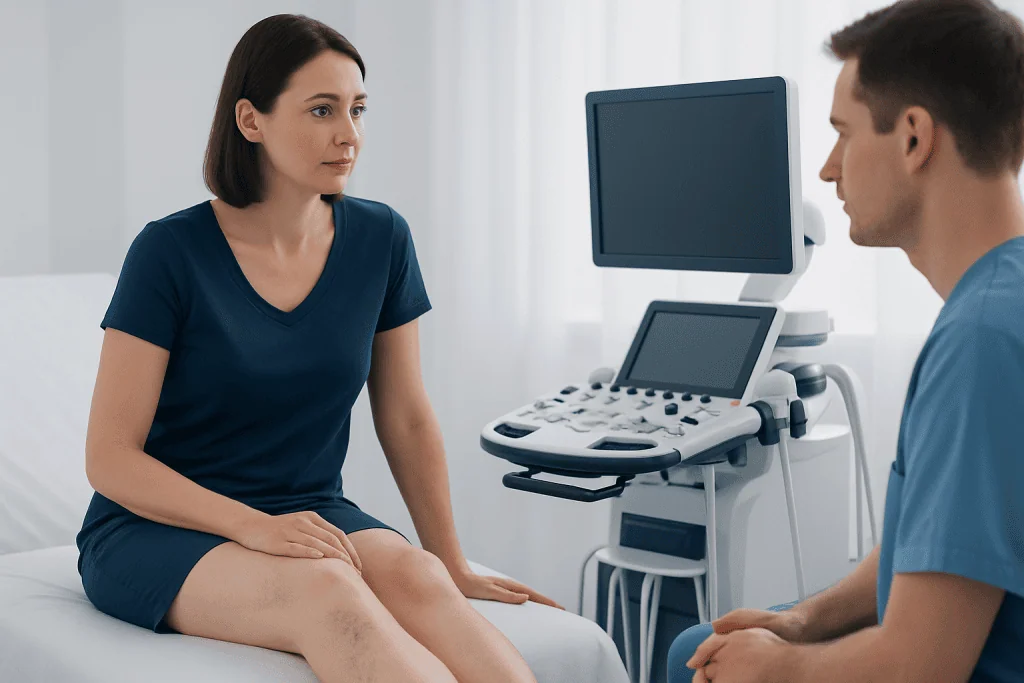
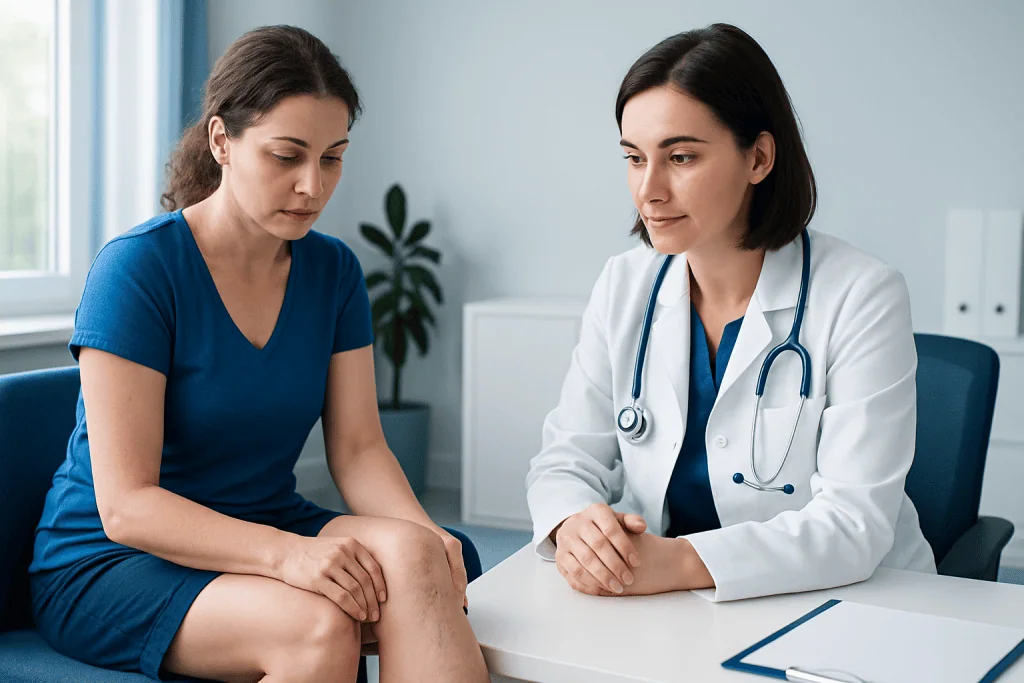
Diagnosis usually begins with a medical history and physical examination. A doctor will ask when the veins appeared, whether they are changing, and if symptoms such as pain, swelling, cramping, or heaviness are present. The location of the veins, the condition of the skin, and the presence of larger bulging veins also provide important clues.
For uncomplicated spider veins, examination alone may be enough. If symptoms suggest deeper venous disease, the doctor may recommend a duplex ultrasound. This test uses sound waves to show how blood is flowing in the veins and whether valves are working properly. It can help detect reflux, obstruction, or associated conditions that may affect treatment choices.
This step matters because treating only the visible surface veins may not lead to the best result if an underlying problem is missed. In selected patients, evaluation may also include assessment for deep vein thrombosis history or other vascular conditions when symptoms and risk factors point in that direction.
Treatment options supported by evidence
Treatment depends on whether spider veins are causing symptoms, whether an underlying vein disorder is present, and what the patient hopes to improve. If there are no symptoms and no deeper vein problem, treatment is often optional. Some people choose observation, while others seek treatment because the veins are bothersome or affect confidence.
Conservative measures may help reduce discomfort and slow progression. These include regular walking, elevating the legs when possible, avoiding prolonged standing or sitting, maintaining a healthy weight, and using compression stockings if recommended by a doctor. These steps do not remove existing spider veins, but they may improve leg symptoms and support vein health.
For visible spider veins that are being treated, common office-based options include sclerotherapy and laser treatment. Sclerotherapy involves injecting a solution into the vein so it closes and gradually fades. Laser-based treatment may be used especially for fine vessels or some facial veins, depending on skin type and vein size.
When larger feeding veins or significant venous reflux are found, treating the underlying source may improve both symptoms and cosmetic results. In those situations, doctors may discuss broader vein treatment options rather than focusing only on the surface vessels. The best approach depends on the pattern of disease, skin findings, and individual goals.
Prevention and self-care for everyday life
Spider veins cannot always be prevented, especially when family history is a major factor. Still, healthy daily habits may reduce pressure in the veins and lower the chance that new veins become more noticeable. These strategies are particularly useful for people whose work involves long periods of sitting or standing.
Helpful self-care measures include moving regularly, flexing the ankles during travel, choosing comfortable clothing that does not tightly restrict the waist or legs, and discussing compression stockings with a healthcare professional if leg symptoms are present. Physical activity supports circulation and may ease sensations of heaviness or fatigue in the legs.
For facial spider veins, gentle skin care and sun protection are important. Daily sunscreen use can help reduce sun-related damage to superficial vessels. Avoiding triggers that cause frequent facial flushing, such as excess heat or irritating skin products, may also help some people.
Home remedies have limits. Massage, creams, and supplements may provide comfort for some individuals, but they do not consistently remove established spider veins. If veins are increasing, changing, or causing symptoms, medical guidance is more reliable than self-treatment alone.
When to seek medical care
A medical review is sensible when spider veins are painful, spreading quickly, or accompanied by swelling, leg heaviness, skin color changes, or larger visible veins. These features can suggest underlying venous insufficiency rather than a simple surface issue. A doctor can decide whether imaging or treatment is needed.
Prompt assessment is especially important if one leg becomes suddenly swollen, warm, red, or significantly painful, or if there is unexplained shortness of breath or chest pain. Spider veins themselves do not usually cause emergencies, but these symptoms may point to a different condition that needs urgent care.
People considering treatment for cosmetic reasons may also benefit from specialist evaluation, since the most effective option depends on vein size, location, skin type, and the presence or absence of deeper reflux. Near the end of the care pathway, some patients choose centers with multidisciplinary vascular and dermatologic expertise; Acibadem International’s specialists in JCI-accredited hospitals diagnose and treat vein conditions for international patients.
Frequently asked questions
Are spider veins dangerous?
Spider veins are usually not dangerous and are often mainly a cosmetic concern. However, if they come with pain, swelling, heaviness, skin changes, or larger veins, a doctor may look for an underlying vein disorder.
What is the difference between spider veins and varicose veins?
Spider veins are small, flat, superficial vessels that look like fine lines or webs. Varicose veins are larger, twisted, and often raised above the skin, and they are more likely to cause discomfort or complications.
Can spider veins go away on their own?
Existing spider veins usually do not disappear completely without treatment. They may become less noticeable at times, but established vessels typically persist unless they are treated with procedures such as sclerotherapy or laser therapy.
Do compression stockings remove spider veins?
Compression stockings do not remove spider veins that are already present. They can, however, help reduce leg discomfort, support circulation, and may slow the development of additional vein-related symptoms in some people.
Who is more likely to develop spider veins?
People with a family history of vein problems are more likely to develop spider veins. Other common risk factors include aging, pregnancy, hormonal changes, prolonged standing or sitting, excess weight, and sun exposure for facial veins.
Is treatment for spider veins painful?
Most treatments are well tolerated, though some people feel mild stinging, warmth, or temporary discomfort during or after the procedure. Recovery is usually manageable, but the exact experience depends on the treatment type and the area being treated.
References
- American Academy of Dermatology
- Society for Vascular Surgery
- National Heart, Lung, and Blood Institute
- National Institute for Health and Care Excellence
- American Vein and Lymphatic Society
This article is for general information only and is not a substitute for professional medical advice. Please consult a qualified doctor about your individual situation.
Explore treatments in Turkey — costs, top hospitals & a free quote
JCI-accredited · board-certified surgeons · reply within 24h
Add us as a Preferred Source to see more of our trusted health content across Google Search, AI Overviews and Discover.