

Weighted Vest: An Evidence-Based Guide for Patients
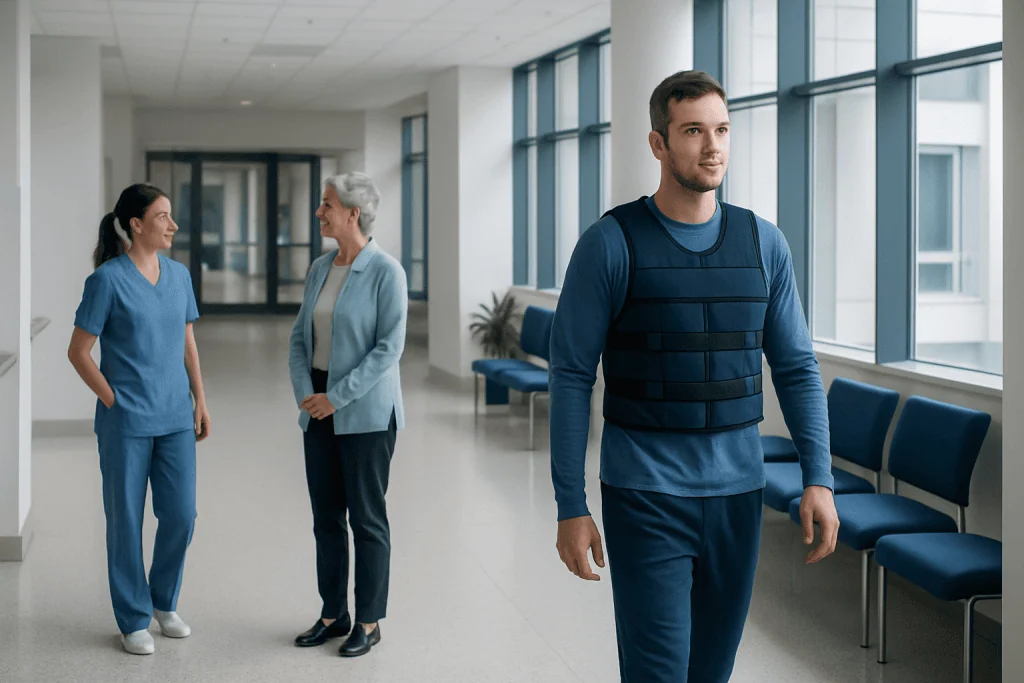
A weighted vest adds external load and can make walking or exercise more demanding. Potential benefits may include higher training intensity, improved strength work, and bone-loading in selected adults.
Key Takeaways
- A weighted vest adds external load and can make walking or exercise more demanding.
- Potential benefits may include higher training intensity, improved strength work, and bone-loading in selected adults.
- Risks include joint strain, back or neck discomfort, balance problems, and overuse injuries if the load is too heavy or used too long.
- People with heart, lung, spine, joint, or balance conditions should ask a clinician before using a weighted vest.
- Good fit, light starting loads, and gradual progression are important for safe use.
A weighted vest is a wearable garment that adds extra load to the body during walking, strength training, or daily activity. It may help some people increase exercise intensity or bone-loading, but safe use depends on health status, body mechanics, and the type of activity.
Overview: What a weighted vest does
A weighted vest is a close-fitting garment with built-in or removable weights that increases the load on the body during movement. People often use it while walking, climbing stairs, doing bodyweight exercises, or following rehabilitation or fitness plans. The main effect is simple: everyday movement and exercise require more effort when extra weight is carried close to the trunk.
For some adults, a weighted vest can be a practical training tool. It may raise exercise intensity without changing the movement itself, which is why it is sometimes used for walking programs, squats, step-ups, or supervised conditioning. It can also increase mechanical loading on bones and muscles, an effect that may be relevant for bone health and strength in selected individuals.
At the same time, a weighted vest is not automatically helpful or safe for everyone. Added load can change posture, walking mechanics, breathing comfort, and balance. People with pain, arthritis, osteoporosis, heart or lung disease, neurological conditions, or recent surgery may need individual advice before trying one.
In short, a weighted vest can be useful when matched to the right person, activity, and load. It is best viewed as a training tool rather than a general wellness product for all users.
Possible benefits and where the evidence fits
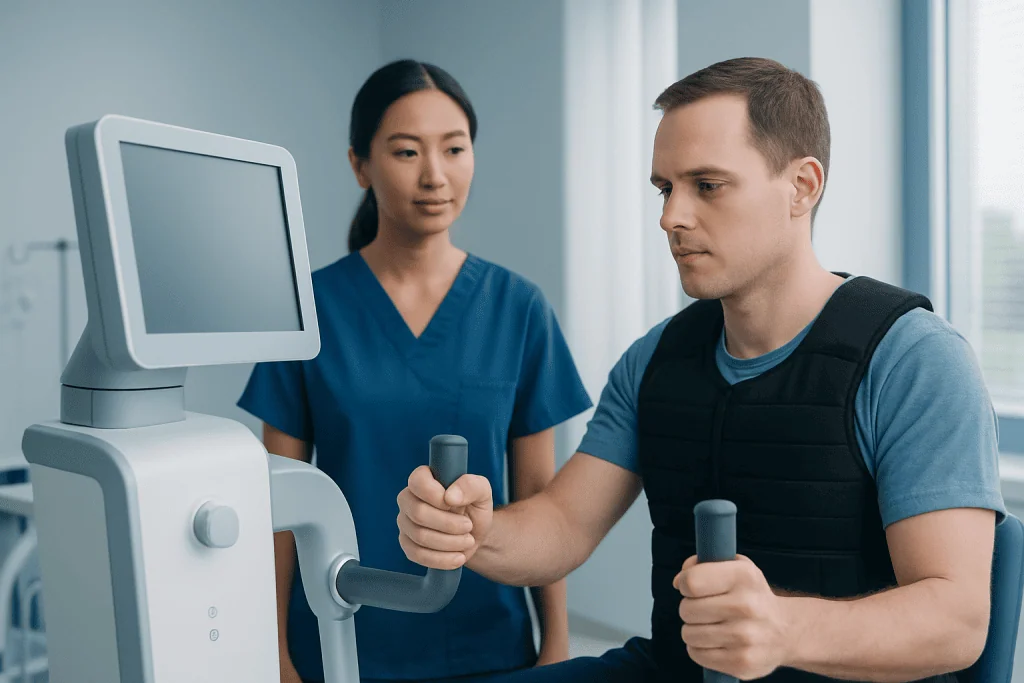
The potential benefits of a weighted vest depend on why it is being used. In exercise settings, it can increase the demand on the legs, trunk, and cardiovascular system during walking or bodyweight movements. This may help some people progress training when standard exercise becomes too easy.
Another possible benefit is bone-loading. Bones respond to mechanical stress, and carefully applied weight-bearing exercise may support bone health over time. However, a weighted vest is not a stand-alone treatment for low bone density. If bone loss is a concern, medical evaluation is important, especially because some people with fragile bones may be at higher risk of injury from added load. Related evaluation for osteoporosis may be appropriate when a person has fractures, height loss, or major risk factors.
Some rehabilitation or performance programs also use weighted vests to improve strength, function, or task-specific training. The quality of evidence varies by population and goal. Benefits are often most meaningful when the vest is part of a structured plan designed by a qualified professional rather than used randomly.
It is also important to keep expectations realistic. A weighted vest does not replace progressive strength training, balanced nutrition, or medical treatment. It may be one helpful tool among many, especially when chosen for a clear purpose and monitored over time.
Risks, side effects, and who should be cautious
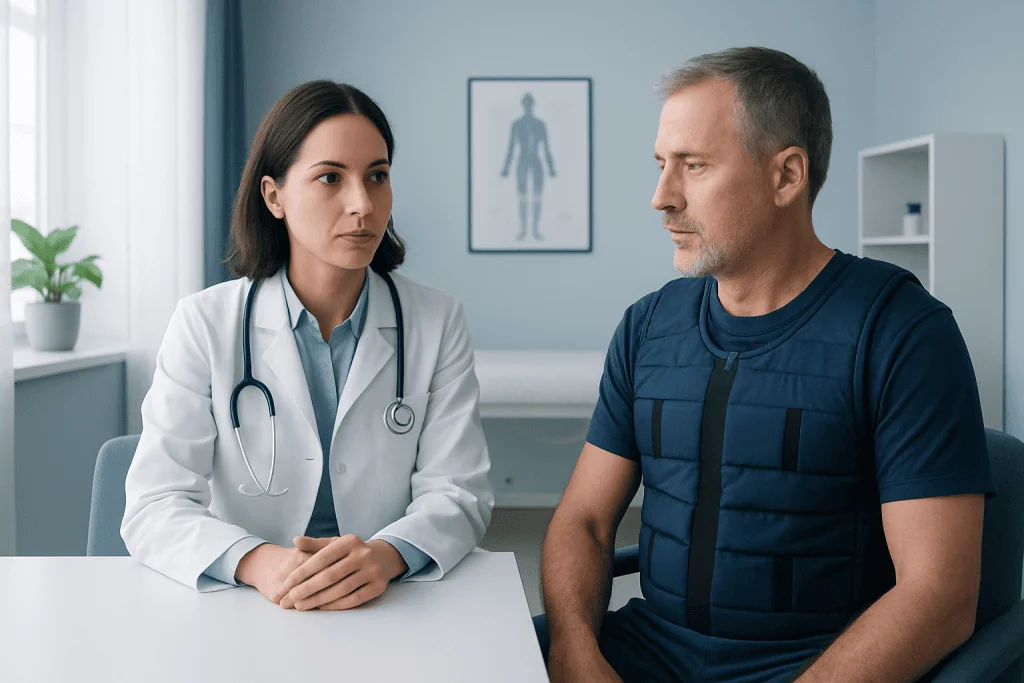
The main risks of a weighted vest come from carrying too much load, using it too long, or wearing it during unsuitable activities. Extra weight increases forces through the feet, ankles, knees, hips, and spine. This can worsen joint pain, trigger muscle strain, or contribute to overuse injuries, particularly if a person already has weak balance, poor posture, or limited conditioning.
A poorly fitted vest may place pressure on the shoulders, chest, or upper back. Some users notice neck tension, low back discomfort, skin irritation, or restricted breathing when the vest is too tight or heavy. High-impact activities, fast changes of direction, or uneven ground can further increase the risk of falls or awkward loading.
People with certain medical conditions should be especially careful. This includes those with osteoarthritis, chronic back pain, prior fractures, significant osteoporosis, scoliosis, disc problems, heart disease, uncontrolled high blood pressure, lung disease, balance disorders, neuropathy, pregnancy, or recovery from surgery. Anyone with joint symptoms may benefit from assessment for arthritis before adding external load to exercise.
Children and older adults need extra attention. In children, equipment use should be guided by pediatric or rehabilitation advice rather than trends. In older adults, even a modest load can affect gait and stability, so fall risk should be considered before use.
How to use a weighted vest more safely
Safe use begins with the right goal, the right fit, and a light starting load. The vest should sit snugly without shifting, rubbing, or compressing breathing. Weight should be distributed evenly across the front and back so the user does not lean forward or arch the lower back to compensate.
It is generally wise to start with short sessions during simple activities such as level walking or supervised bodyweight exercise. Progress should be gradual, based on comfort, posture, and recovery rather than speed. Pain is not a sign to keep pushing. New joint pain, back pain, dizziness, chest symptoms, or unusual shortness of breath are reasons to stop and seek advice.
Technique matters. A person should be able to stand tall, breathe normally, and keep steady control through the movement. If the load changes the pattern of walking, causes stomping, or makes the shoulders round forward, the vest may be too heavy or the activity may not be suitable.
Weighted vests should not be used to force rapid fitness gains. They are best combined with a broader program that may include physical therapy and rehabilitation or structured exercise advice when there is pain, weakness, or recovery from injury.
Who may benefit from medical guidance first
Some people are more likely to benefit from a professional assessment before starting a weighted vest. This includes individuals with persistent back, hip, knee, foot, or shoulder pain; anyone returning to exercise after a fracture or surgery; and those with known low bone density, balance concerns, or chronic disease.
A clinician may review posture, gait, muscle strength, and the intended activity to decide whether extra loading is appropriate. In some cases, the best next step is not adding weight but improving movement quality, core strength, footwear, or exercise selection. For example, pain linked to spinal alignment or joint mechanics may be better addressed through an evaluation in orthopedics and traumatology before using a vest.
People with heart or lung conditions should also ask whether added exertion is safe. Walking with a weighted vest can increase effort noticeably, even at a normal pace. If exercise commonly causes chest discomfort, marked breathlessness, palpitations, or lightheadedness, medical review is important first.
For international patients who need coordinated assessment, Acibadem International’s multidisciplinary specialists and JCI-accredited hospitals diagnose and treat musculoskeletal, rehabilitation, and chronic health concerns related to safe exercise planning.
How doctors evaluate problems related to weighted vest use
If symptoms develop after using a weighted vest, evaluation usually starts with a history and physical examination. A doctor may ask when the pain began, which activities trigger it, where it is felt, and whether there are warning signs such as numbness, weakness, swelling, or reduced exercise tolerance.
The examination may focus on posture, gait, joint range of motion, muscle tenderness, spine alignment, and balance. Depending on the symptoms, further testing may be recommended. Joint pain may sometimes need imaging, while breathlessness or chest symptoms may require heart or lung assessment. In selected cases, check-up services can help review underlying risk factors before starting a new exercise load.
If low bone density is suspected, a clinician may discuss bone health assessment and fall prevention. If back pain radiates to the leg, causes numbness, or follows a lifting injury, the person may need focused spine evaluation rather than simply stopping the vest and waiting.
The goal of diagnosis is not only to identify injury, but also to understand whether the person can continue with modifications, should pause use temporarily, or needs a different exercise plan altogether.
Alternatives and balanced training choices
A weighted vest is only one way to make activity more challenging. Depending on the person’s goals, better options may include progressive resistance training, walking uphill, cycling, swimming, low-impact aerobic classes, or supervised strengthening with machines or free weights. These options may provide clearer progression and less stress on painful joints.
For bone and muscle health, the most effective plan is often balanced rather than extreme. This may include weight-bearing exercise, resistance training, adequate protein intake, enough calcium and vitamin D when appropriate, sleep, and avoiding tobacco. People with pain often benefit from movement that improves control and tolerance gradually rather than simply increasing load.
Footwear and surface choice also matter. Supportive shoes and stable ground reduce unnecessary strain and lower the chance of falls. If a person notices recurring symptoms with a weighted vest but not with other exercise, that comparison itself is useful information.
For many adults, a structured exercise program built around consistency is more valuable than any single piece of equipment. The safest tool is the one a person can use regularly with good form and without provoking symptoms.
When to seek medical care
Medical advice is appropriate if a weighted vest causes persistent or worsening pain in the back, neck, hips, knees, ankles, or feet. It is also important to seek care for swelling, a limp, numbness, weakness, repeated loss of balance, or symptoms that do not improve after stopping use and resting.
Urgent medical attention is needed for chest pain, severe shortness of breath, fainting, sudden weakness, or a fall with significant pain or inability to bear weight. These symptoms are not typical exercise discomfort and should not be ignored.
Anyone with known osteoporosis, recent fracture, recent surgery, or a chronic heart or lung condition should ask a qualified clinician before starting weighted vest training. This is also true for older adults who have had falls or feel unsteady when walking.
When in doubt, a doctor, physical therapist, or rehabilitation specialist can help decide whether a weighted vest is appropriate, how much load is reasonable, and which exercises are safer alternatives.
Frequently asked questions
What is a weighted vest used for?
A weighted vest is used to add external load during walking, exercise, or functional training. Some people use it to increase workout intensity, support strength-focused exercise, or add weight-bearing stimulus under professional guidance.
Can a weighted vest help with bone health?
It may contribute to bone-loading in some adults, especially as part of a broader weight-bearing exercise plan. However, it is not a treatment on its own, and people with low bone density or fractures should speak with a doctor before using one.
Is a weighted vest safe for walking?
For many healthy adults, it can be safe when the vest fits well, the load is modest, and walking is done on stable surfaces. It may not be suitable for people with balance problems, joint pain, osteoporosis, or heart and lung conditions unless a clinician approves it.
Can a weighted vest cause back or joint pain?
Yes. Extra load increases stress on the spine and lower-limb joints, especially if the vest is too heavy, poorly fitted, or used for long periods. Pain is a sign to stop and reassess technique, load, and whether the activity is appropriate.
Who should avoid using a weighted vest?
People with recent fractures, severe osteoporosis, uncontrolled heart or lung disease, significant arthritis, balance disorders, pregnancy, or recovery from surgery should avoid using one unless a clinician advises otherwise. Older adults with fall risk should also be cautious.
How should someone start using a weighted vest?
It is best to begin with a light load, short sessions, and simple activities such as level walking or supervised bodyweight exercise. The vest should fit snugly without affecting breathing or posture, and progression should be gradual.
References
- World Health Organization
- Centers for Disease Control and Prevention
- National Institute on Aging
- National Institute of Arthritis and Musculoskeletal and Skin Diseases
- American College of Sports Medicine
This article is for general information only and is not a substitute for professional medical advice. Please consult a qualified doctor about your individual situation.
Explore treatments in Turkey — costs, top hospitals & a free quote
JCI-accredited · board-certified surgeons · reply within 24h
Add us as a Preferred Source to see more of our trusted health content across Google Search, AI Overviews and Discover.
Check your numbers in seconds
BMI, calories, due date, blood pressure and 30+ more clinical calculators — free, instant, doctor-reviewed ranges.

More from the Health Library



Related Specialists

Prof. Dr. Fevzi Toraman
Anesthesiology
Dr. Emel Özveren
Anesthesiology
Dt. Şevval Çelebi
Oral & Dental Health
Fzt. Gizem Karaoğlan
Physical Medicine & Rehabilitation