Spiders and Spider Bites: A Complete Medical Overview

Most spider bites are mild and cause temporary redness, pain, or swelling. Many skin sores blamed on spiders are actually due to other causes, including infections.
Key Takeaways
- Most spider bites are mild and cause temporary redness, pain, or swelling.
- Many skin sores blamed on spiders are actually due to other causes, including infections.
- Cold compresses, gentle wound care, and observation are often enough for uncomplicated bites.
- Medical care is important if symptoms spread, the wound worsens, or whole-body symptoms appear.
- Prevention focuses on reducing spider contact in clothing, bedding, storage spaces, and outdoor areas.
Spiders and spider bites are a common concern, but most bites cause only mild local irritation and improve with simple care. A careful medical overview helps distinguish typical bite reactions from problems such as infection, allergy, or the uncommon bite from a medically important spider.
Overview: What to Know About Spiders and Spider Bites
Spiders and spider bites are often feared, but most encounters do not lead to serious illness. In many cases, a suspected spider bite causes mild pain, itching, redness, or swelling that settles within a few days. True medically significant bites are uncommon, and many skin problems attributed to spiders are later found to be irritation, allergic reactions, or skin infections instead.
A spider bites mainly as a defensive act when trapped against the skin, disturbed in clothing or bedding, or handled directly. Unlike insects such as mosquitoes, spiders do not bite to feed on people. This matters because it helps explain why prevention usually centers on avoiding accidental contact rather than trying to stop repeated biting.
The medical importance of a bite depends on the species, the amount of venom injected, the body area involved, and the person’s age and general health. Children, older adults, and people with chronic illnesses may need closer observation. Even so, the majority of bites can be managed with basic first aid and sensible monitoring for warning signs.
How Spider Bites Usually Look and Feel

A typical mild spider bite may cause a small puncture mark, localized redness, tenderness, mild swelling, and itching. Some people notice a stinging or pinching sensation at the time of the bite, while others do not feel anything until the skin becomes irritated later. Symptoms often remain limited to one small area.
Over the next several hours, the area may become more inflamed before gradually improving. Mild warmth around the bite can occur, but severe spreading redness, significant swelling, or discharge are less typical and may suggest another problem such as bacterial infection. A blister may occasionally form, especially after a stronger local reaction.
Although the words “spider bite” are commonly used, many unexplained skin lesions are not bites at all. Boils, allergic rashes, ingrown hairs, eczema flares, insect bites, and minor trauma can look similar. If a person did not see a spider, diagnosis often depends more on the pattern of symptoms than on the assumption that a spider caused the skin change.
- Common mild features: redness, itching, pain, swelling
- Sometimes present: small blister, puncture marks, temporary skin discoloration
- Less typical and worth attention: increasing pain, drainage, ulceration, fever, muscle symptoms
When a Spider Bite May Be More Serious
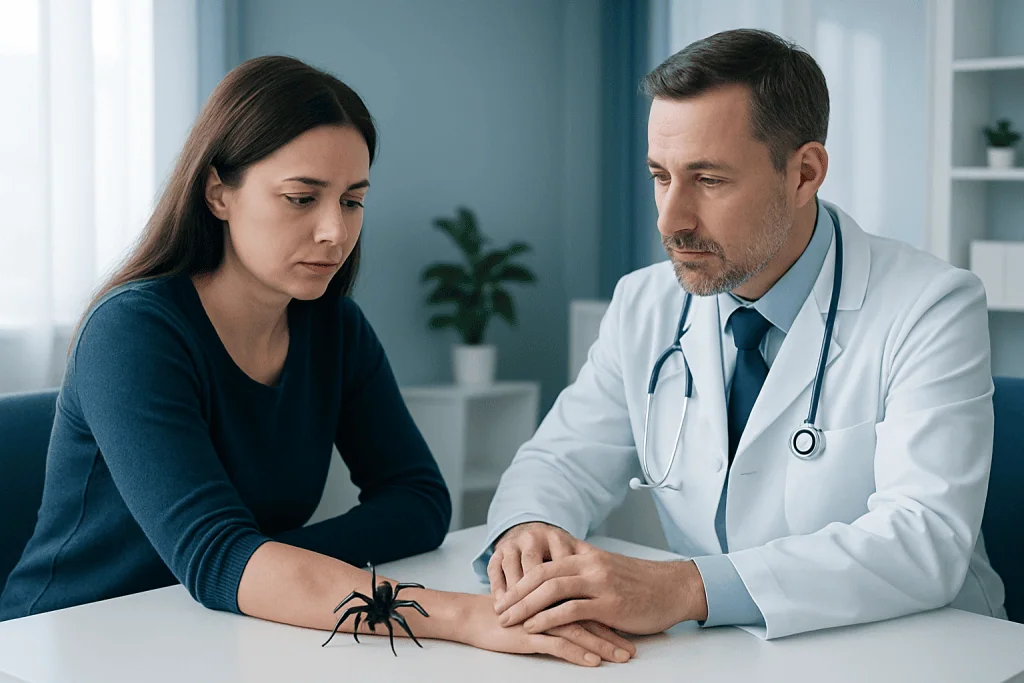
A small number of spider species can cause more important medical effects. Some bites mainly cause stronger local tissue injury, while others can affect the nervous system and lead to muscle cramps, sweating, restlessness, or pain spreading beyond the bite area. The pattern depends on the species involved and the individual response.
Concerning local signs include severe pain, a rapidly enlarging wound, blistering followed by darkening skin, or an open sore that develops over time. General symptoms can include nausea, vomiting, headache, sweating, fever, chills, muscle cramping, weakness, or trouble breathing. These symptoms are not common, but they should not be ignored.
It is also possible for a person to react to the bite itself with an allergic response. Fast-developing hives, facial swelling, wheezing, faintness, or difficulty breathing may signal a medical emergency. In addition, skin that seems to be worsening after a “bite” can sometimes be an infection such as cellulitis, which needs proper medical assessment and treatment.
What Causes Spider Bites and Who Is at Higher Risk
Spider bites happen when a spider is pressed against the skin or unexpectedly disturbed. This can occur while putting on shoes, gardening, lifting boxes in storage areas, reaching into sheds or garages, or sleeping with bedding that has been left on the floor. Outdoor work and contact with woodpiles, rocks, basements, and cluttered spaces can increase exposure.
Risk also depends on local geography because medically important spider species are not found in every region. Bites are more likely when spiders have quiet, undisturbed places to hide. Homes with cracks, clutter, stored clothing, and infrequently cleaned corners may create favorable conditions, although a spotless home can still occasionally have spiders.
People who may need extra caution include small children, older adults, and those with reduced immunity or chronic health conditions. These groups may be more vulnerable to complications from skin injury, infection, dehydration, or a stronger response to pain and inflammation. Still, even in higher-risk groups, most bites remain manageable when recognized early and watched carefully.
Diagnosis: How Doctors Evaluate a Suspected Spider Bite
Diagnosing a spider bite begins with the story of what happened: where the person was, whether a spider was seen, how quickly symptoms began, and whether the skin lesion is changing. If the spider was safely captured or photographed, that information can be helpful, but it is not essential. A doctor will examine the skin closely for features that fit or do not fit a bite.
In many cases, the key part of diagnosis is ruling out other causes. Conditions such as bacterial skin infection, allergic dermatitis, contact irritation, shingles, abscess, and inflammatory skin disease may look similar. If redness is spreading, the skin is hot and tender, or there is pus, the doctor may consider an infection rather than assuming a spider is responsible.
Tests are not always needed for a simple mild bite. However, blood tests, wound assessment, or imaging may be considered if there are whole-body symptoms, severe tissue changes, or concern about another diagnosis. If skin tissue damage becomes significant, a doctor may involve specialists in dermatology or wound care to guide treatment and follow-up.
Treatment Options and First Aid
Initial care for a mild spider bite is usually simple and supportive. The area should be washed gently with soap and water. A cold compress can help reduce pain and swelling, and the affected limb can be elevated if practical. Scratching should be avoided because it can worsen irritation and raise the chance of skin infection.
For discomfort or itching, a doctor or pharmacist may recommend appropriate over-the-counter symptom relief. If the skin is broken, keeping the area clean and loosely covered may help protect it. Antibiotics are not routinely needed for every spider bite; they are used when there is clear evidence of secondary bacterial infection rather than as automatic treatment.
When a bite appears more severe, medical treatment depends on the symptoms present. Care may include stronger pain control, fluids, monitoring, tetanus update if appropriate, wound management, or treatment for allergic reactions. If a worsening lesion develops into a significant skin problem, clinicians may assess whether advanced care such as wound care or, in selected cases, plastic and reconstructive surgery is needed after the acute phase. In hospitals serving international patients, Acibadem International’s multidisciplinary specialists and JCI-accredited hospitals diagnose and treat bite-related skin and soft tissue complications when specialist input is required.
Prevention and Practical Self-Care
Preventing spider bites starts with reducing accidental contact. Shoes, gloves, towels, and clothing that have been left unused should be shaken out before use, especially in garages, basements, attics, or outdoor areas. Gloves and long sleeves can be helpful for gardening, moving firewood, or cleaning storage spaces.
At home, simple measures can reduce spider hiding places. Regular cleaning, reducing clutter, sealing cracks around doors and windows, and moving beds slightly away from walls may help. Bedding stored on the floor and piles of clothing should be avoided when possible, especially in areas where spiders are commonly seen.
If a bite does occur, self-care includes washing the area, using a cold pack, resting the limb if it is painful, and watching for changes over the next 24 to 48 hours. It can be useful to take a photo of the skin to compare progression. Trying to cut the bite, suck out venom, or apply harsh chemicals is not recommended and may cause more damage than the bite itself.
When to Seek Medical Care
Medical care is appropriate if a suspected spider bite is becoming more painful, larger, darker, or more swollen instead of slowly improving. A person should also seek help if redness spreads, drainage appears, or the area develops blistering, ulceration, or marked warmth. These signs may point to significant inflammation or infection rather than a simple uncomplicated bite.
Prompt assessment is important if there are symptoms beyond the skin, such as muscle cramps, severe headache, vomiting, fever, heavy sweating, weakness, dizziness, or trouble breathing. Emergency care is needed for signs of a serious allergic reaction, including swelling of the lips or throat, wheezing, or fainting. Children, pregnant people, older adults, and individuals with major chronic illnesses should have a lower threshold for being evaluated.
If there is concern that the lesion is not healing correctly or may represent another condition, a doctor may consider skin infection, allergic disease, or other causes of tissue injury. Related problems may need broader evaluation and treatment, including care for skin infections or more complex soft tissue conditions. Early assessment can prevent unnecessary worry and helps ensure the right diagnosis and treatment plan.
Frequently asked questions
Are most spider bites dangerous?
No. Most spider bites cause mild local symptoms such as redness, itching, or pain and improve with basic first aid. Serious reactions are uncommon, but a bite should be monitored for worsening skin changes or general symptoms.
How can someone tell if it is really a spider bite?
It can be difficult to know for sure unless a spider was actually seen biting or found nearby. Many rashes, boils, and skin infections are mistaken for spider bites, so persistent or worsening lesions should be checked by a doctor.
What should be done right after a spider bite?
The area should be washed gently with soap and water, and a cold compress can be applied to reduce pain and swelling. The person should avoid scratching and watch the skin closely over the next day or two for any worsening.
Do spider bites always need antibiotics?
No. Antibiotics are not routinely used for every spider bite because venom-related irritation is not the same as bacterial infection. They are considered when there are signs of infection, such as pus, spreading redness, increasing warmth, or worsening tenderness.
When is a spider bite an emergency?
Emergency care is needed if there is trouble breathing, swelling of the face or throat, fainting, severe muscle cramps, or rapidly worsening whole-body symptoms. A rapidly spreading or darkening skin lesion also deserves prompt medical attention.
Can a spider bite cause a skin ulcer or tissue damage?
Some bites can cause stronger local reactions and, in uncommon cases, skin breakdown or tissue injury. However, other conditions can also cause ulcers, so a doctor may need to examine the area to confirm the cause.
References
- Centers for Disease Control and Prevention
- American Academy of Dermatology
- MedlinePlus
- Merck Manual Professional Edition
- Mayo Clinic
This article is for general information only and is not a substitute for professional medical advice. Please consult a qualified doctor about your individual situation.
Explore treatments in Turkey — costs, top hospitals & a free quote
JCI-accredited · board-certified surgeons · reply within 24h
Add us as a Preferred Source to see more of our trusted health content across Google Search, AI Overviews and Discover.

More from the Health Library



Related Specialists

Psk. Zeynep Şevval Ekşi
Psychology
Fzt. Semih Kızıltan
Physical Medicine & Rehabilitation
Dr. Ahmet Arif Ağlar
Cardiovascular Surgery
Prof. Dr. Güler Berkiten
Otorhinolaryngology