Best Posture Correctors: A Complete Medical Overview

A posture corrector may provide temporary reminder support, but it does not strengthen muscles by itself. The best choice depends on the goal, such as desk posture awareness, upper-back support, or symptom relief during recovery.
Key Takeaways
- A posture corrector may provide temporary reminder support, but it does not strengthen muscles by itself.
- The best choice depends on the goal, such as desk posture awareness, upper-back support, or symptom relief during recovery.
- Devices that are rigid, painful, or worn too long may be unhelpful and can sometimes promote muscle dependence.
- Persistent back pain, numbness, weakness, balance problems, or worsening spinal curvature should be evaluated by a doctor.
- Exercise, workstation changes, and movement breaks are often more important than the brace itself.
The best posture correctors are usually simple, comfortable devices used for short periods alongside exercise and ergonomic changes—not as a permanent fix. For most people, posture improves most reliably when a support device is combined with muscle strengthening, movement habits, and medical assessment if pain or nerve symptoms are present.
Overview: Are posture correctors worth using?
The best posture correctors can be useful, but usually as part of a broader plan rather than a stand-alone solution. In practical terms, a good posture corrector is one that gently reminds the body to align better, fits comfortably, and can be used safely for limited periods while a person works on strengthening, stretching, and daily movement habits.
Many people look for posture correctors because of slouching at a desk, rounded shoulders, neck strain, or mild upper-back discomfort. These devices may help improve body awareness and reduce some muscle fatigue during activities. However, they do not correct the underlying reasons for poor posture on their own, such as weak postural muscles, prolonged sitting, stiffness, or an unsuitable workstation.
From a medical perspective, posture is not simply about “sitting perfectly straight” all day. Healthy posture involves changing positions regularly, keeping joints in comfortable alignment, and allowing muscles to share the work efficiently. Because of this, the best approach is usually a flexible combination of education, exercise, ergonomic support, and, when needed, professional assessment.
Types of posture correctors and who they may help
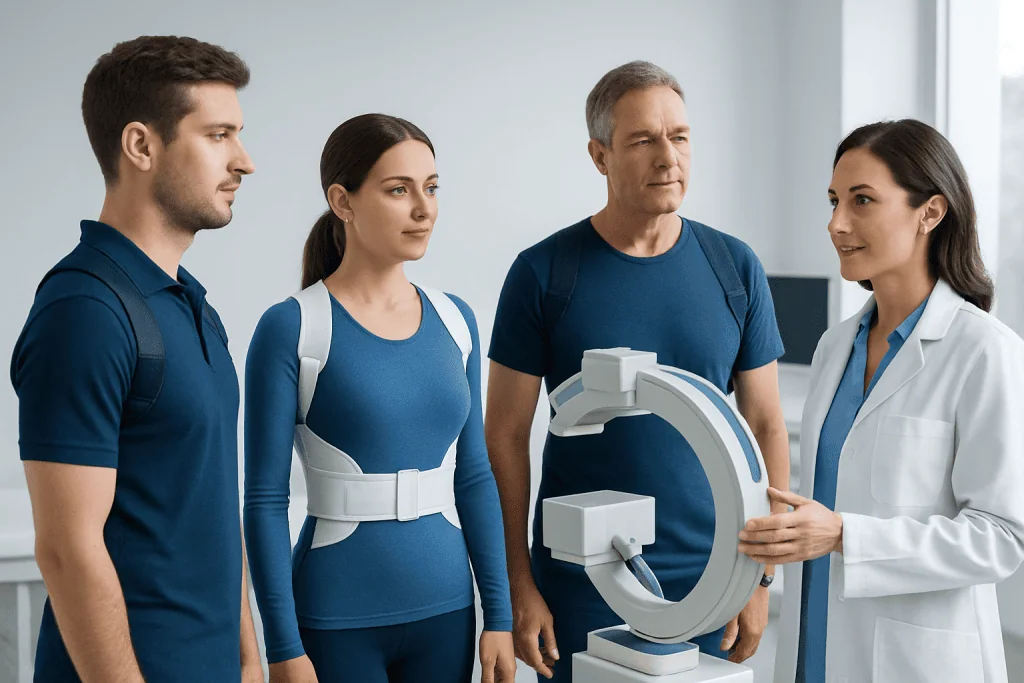
Posture correctors come in several forms. Soft shoulder-retraction straps are designed to reduce slouching by drawing the shoulders gently backward. Brace-style upper-back supports provide a broader contact area and may feel more stable for some users. There are also posture shirts, kinesiology taping approaches, lumbar rolls, and wearable electronic devices that vibrate when posture changes.
The most suitable device depends on the person’s symptoms and daily routine. Someone with mild desk-related slumping may do well with a light reminder strap used during computer work, while a person recovering from a musculoskeletal injury may need a more structured plan supervised by a clinician. If back pain is significant or related to a known spinal condition, a doctor may recommend evaluation for scoliosis or other structural causes before choosing any support device.
In general, features that matter most are comfort, adjustability, breathability, ease of use, and the ability to move normally while wearing the device. A posture corrector should not make breathing difficult, dig into the skin, or force the body into an unnatural position. Devices that are too aggressive are less likely to be used consistently and may increase discomfort instead of helping.
- Reminder straps: often used for rounded shoulders and desk posture awareness
- Back braces: may offer broader support for the upper or lower back
- Posture shirts or garments: provide mild, distributed support during daily activities
- Seat supports or lumbar rolls: useful when sitting posture is a major problem
- Smart posture trainers: focus on feedback and habit-building rather than bracing
What posture correctors can and cannot do

A posture corrector can help a person notice slumping sooner, reduce some muscular strain, and support better alignment during certain tasks. Some people find that they feel less tired in the shoulders or upper back after using one for short periods. For those with mild postural habits rather than structural spine disease, this reminder effect can be genuinely helpful.
What these devices cannot do is permanently “fix” posture without active participation from the user. They do not by themselves strengthen the core, shoulder blade stabilizers, or deep neck muscles that help maintain healthy posture over time. If worn for many hours every day without exercise, some braces may even encourage over-reliance, meaning the muscles do less of the work they should be doing.
It is also important to separate poor posture from medical conditions that need targeted treatment. Persistent pain may come from muscle strain, disc problems, arthritis, osteoporosis-related changes, or nerve compression rather than posture alone. In such cases, posture support may still have a role, but the main treatment plan often involves rehabilitation, medication, imaging, or specialist care such as physical therapy and rehabilitation and, in selected cases, orthopedic evaluation.
How to choose the best posture corrector safely
Choosing the best posture corrector starts with defining the goal. If the main issue is occasional slouching while using a laptop, a lightweight reminder strap may be enough. If there is lower-back discomfort during sitting, an ergonomic seat support or lumbar roll may be more appropriate than a shoulder brace. A device should match the activity it is meant to support.
Fit is especially important. The brace should feel snug but not tight, allow normal breathing, and avoid pressure on the neck, underarms, chest, or skin. Adjustable straps are usually helpful because posture needs can vary depending on clothing and activity. If a person has sensitive skin, circulation problems, recent surgery, or chronic lung disease, it is wise to speak with a clinician before prolonged use.
Short, structured use is usually better than all-day wear. Many clinicians advise using a posture corrector as a training tool for limited periods while strengthening the body’s natural support system. During that time, it helps to add simple habits such as screen-height correction, regular standing breaks, and exercises for the upper back, shoulder blades, core, and hip mobility. For people with persistent spinal pain, a comprehensive review by specialists in spine care may be appropriate.
Exercises and daily habits that matter more than the brace
The most effective long-term posture improvement usually comes from movement and habit change. Strengthening the muscles around the shoulder blades, upper back, abdomen, and hips can improve how the body supports itself during sitting, standing, and walking. Stretching the chest, hip flexors, and neck can also help when stiffness contributes to a rounded posture.
Daily ergonomics are equally important. A chair should support a neutral sitting position, the screen should be near eye level, and the keyboard and mouse should allow relaxed shoulders and bent elbows. Remaining in one position for too long can be more harmful than sitting imperfectly, so regular movement breaks are important even with an excellent workstation.
Helpful self-care measures often include:
- Changing position every 30 to 60 minutes
- Keeping frequently used screens at a comfortable height
- Practicing gentle chin tucks and shoulder blade retraction exercises
- Strengthening the core and upper back with clinician-approved exercises
- Walking regularly to reduce prolonged static loading of the spine
- Sleeping on a mattress and pillow that keep the neck and back comfortable
If posture issues are linked to chronic pain, deconditioning, or recovery after injury, supervised exercise may be safer and more effective than self-directed routines. In that setting, a clinician can identify whether the problem is truly postural or related to another issue such as a herniated disc or joint disease.
When a posture problem may signal an underlying condition
Not all posture changes are simply habits. Sometimes a person appears to lean, stoop, or shift position because the body is protecting a painful area or compensating for weakness, stiffness, or imbalance. Neck pain, upper-back pain, low-back pain, shoulder limitation, and hip problems can all affect posture. In older adults, osteoporosis and age-related spinal changes may also contribute.
A visible curve in the spine, uneven shoulders, rib prominence, worsening stooping, or a tendency to lean to one side may need medical assessment. So can posture changes accompanied by numbness, tingling, radiating arm or leg pain, weakness, headaches, balance problems, or difficulty walking. These features suggest that posture is not the whole story and that a specific diagnosis is important.
Doctors may evaluate musculoskeletal, neurologic, and structural causes depending on the symptoms. Conditions involving the spine, nerves, joints, or muscles may require a different plan than a simple support device. In some cases, imaging or a rehabilitation program is needed to understand why posture has changed and how best to improve it.
Diagnosis, treatment options, and when to seek medical care
Diagnosis usually begins with a history and physical examination. A doctor or physiotherapist may ask when symptoms started, what activities make them worse, whether there is pain at rest or at night, and whether any numbness or weakness is present. They may assess spinal alignment, muscle flexibility, balance, gait, and the way a person sits, stands, and moves during daily tasks.
Treatment depends on the cause. For simple postural strain, the plan often includes education, home exercises, ergonomic changes, and brief use of a support device if helpful. When symptoms are more persistent, treatment may include supervised rehabilitation, pain management, or specialty evaluation. Surgery is not a treatment for ordinary poor posture, but it may be considered for specific structural or neurologic conditions after careful assessment.
Medical care should be sought if posture changes are new and progressive, if pain lasts more than a few weeks, or if symptoms interfere with sleep, work, walking, or daily activities. Urgent evaluation is important for severe trauma, unexplained fever, unexplained weight loss, new bowel or bladder problems, numbness in the groin area, or significant weakness. Near the end of the care pathway, some patients may benefit from multidisciplinary review; Acibadem International’s specialists in JCI-accredited hospitals diagnose and treat spine and musculoskeletal conditions for international patients.
In summary, the best posture correctors are those used thoughtfully: comfortable, goal-specific, and paired with exercise and medical guidance when needed. A brace may support better habits, but lasting improvement usually comes from addressing the reason posture changed in the first place.
Frequently asked questions
Do posture correctors really work?
They can help some people by increasing awareness of slouching and providing temporary support during certain activities. They work best when combined with exercises, movement breaks, and better workstation setup rather than being used as a permanent solution.
How long should a posture corrector be worn each day?
In many cases, short periods are more appropriate than all-day use. The ideal duration depends on the device, comfort, and the person’s symptoms, so it is sensible to follow product instructions and ask a clinician if pain or underlying spinal problems are present.
Can a posture corrector weaken muscles?
It can contribute to over-reliance if it is worn for long periods without exercise. That is why posture correctors are generally viewed as training aids, while strengthening and mobility work remain the foundation of lasting posture improvement.
What is the best posture corrector for office work?
For desk work, many people do best with a lightweight, comfortable reminder-style device or a seat support that improves ergonomics. The best option is one that can be used without pain, does not restrict breathing, and encourages healthy movement rather than rigid holding.
Can children or teenagers use posture correctors?
Sometimes, but they should not be used casually if a young person has back pain, visible spinal curvature, or rapid growth-related changes. A pediatrician or specialist should assess ongoing posture concerns in children and teenagers to rule out underlying conditions.
Should a person use a posture corrector if they have back pain?
It depends on the cause of the pain. Mild strain may improve with temporary support, but persistent, severe, or radiating pain needs medical evaluation because the problem may involve discs, joints, nerves, or spinal alignment rather than posture alone.
References
- World Health Organization
- National Institute of Arthritis and Musculoskeletal and Skin Diseases
- American Academy of Orthopaedic Surgeons
- National Institute of Neurological Disorders and Stroke
- Mayo Clinic
This article is for general information only and is not a substitute for professional medical advice. Please consult a qualified doctor about your individual situation.
Joint and spine care in Turkey — expert assessment & treatment
JCI-accredited · board-certified surgeons · reply within 24h
Add us as a Preferred Source to see more of our trusted health content across Google Search, AI Overviews and Discover.

More from the Health Library



Related Specialists

Dr. Feyyaz Kabadayı
Pulmonary Medicine
Fzt. Yusuf Mücahit Turan
Physical Medicine & Rehabilitation
Prof. Dr. Güngör Boztaş
Gastroenterology
Prof. Dr. Mustafa Seyhan
Orthopedic Surgery & Traumatology