Mid Back Discomfort Left Side: An Evidence-Based Guide for Patients

Left-sided mid back discomfort often comes from muscles, posture, or minor spine-related irritation. The exact location, timing, triggers, and associated symptoms help narrow the cause.
Key Takeaways
- Left-sided mid back discomfort often comes from muscles, posture, or minor spine-related irritation.
- The exact location, timing, triggers, and associated symptoms help narrow the cause.
- Red-flag symptoms such as chest pain, shortness of breath, fever, trauma, or new weakness need prompt medical assessment.
- Treatment depends on the cause and may include rest, heat, movement modification, physical therapy, or other medical care.
- Prevention focuses on posture, regular activity, safe lifting, and managing everyday strain.
Mid back discomfort left side is commonly linked to muscle strain, posture, or irritation of joints and nerves around the thoracic spine. Most cases improve with self-care, but pain that is severe, persistent, or paired with symptoms such as fever, breathing trouble, weakness, or urinary changes should be checked by a doctor.
Overview: what left-sided mid back discomfort can mean
Mid back discomfort left side usually refers to pain, aching, tightness, burning, or tenderness felt between the lower neck and the bottom of the rib cage, mainly on the left. In many people, the cause is not dangerous. Common explanations include muscle strain, poor posture, repetitive movements, sleeping awkwardly, or irritation of the joints, discs, or nerves in the thoracic spine.
That said, the same area can also reflect pain from nearby structures such as the ribs, lungs, kidneys, or digestive organs. Because of this, doctors do not look only at the back itself. They also consider whether the discomfort changes with movement, breathing, coughing, meals, urination, exercise, or stress.
A helpful way to think about this symptom is by pattern rather than by one single diagnosis. A sore spot that worsens when twisting or lifting often points toward the muscles or spine. Pain paired with fever, cough, a rash, urinary symptoms, or shortness of breath may suggest a different source and should not be ignored.
Common symptoms and patterns doctors look for
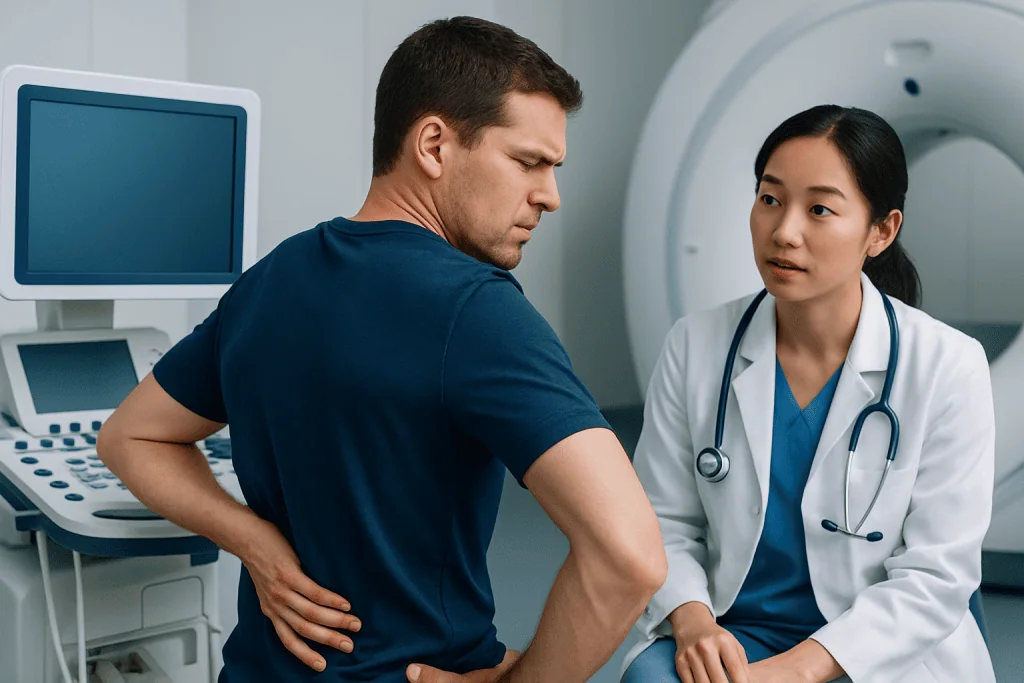
People describe this symptom in different ways. Some feel a dull ache near the shoulder blade or along the ribs. Others notice sharp pain with turning, bending, taking a deep breath, or reaching overhead. There may also be stiffness, muscle spasm, or tenderness when pressing on the area.
The pattern matters. Discomfort that starts after lifting, exercise, long desk work, or a night in an awkward sleeping position is often mechanical, meaning it relates to muscles, joints, or soft tissues. Pain that travels around the chest wall, causes tingling, or feels electric may involve an irritated nerve. If movement has little effect but breathing or coughing makes it worse, doctors may think more broadly about the ribs, lungs, or pleura.
- Mechanical pattern: worse with twisting, bending, lifting, or prolonged posture
- Muscular pattern: tightness, spasm, tenderness, improved by heat or gentle movement
- Nerve-related pattern: burning, shooting pain, tingling, or wraparound discomfort
- Referred pain pattern: symptoms associated with meals, urination, fever, cough, or breathing
Associated symptoms are especially important. Unexplained weight loss, night sweats, numbness, weakness, bowel or bladder changes, or pain after trauma can change how urgently the problem needs evaluation.
Possible causes of mid back discomfort on the left side

The most frequent causes are musculoskeletal. These include strained muscles, overuse, poor workstation setup, sudden twisting, carrying heavy bags on one side, or weakness in the muscles that support the spine and shoulder blades. The thoracic spine is less mobile than the lower back, but its joints, discs, and surrounding tissues can still become irritated.
Rib-related causes can also lead to one-sided mid back pain. Intercostal muscles between the ribs may be strained after coughing, sports, or abrupt movement. Irritated costovertebral joints, where ribs meet the spine, can cause a sharp or localized ache. In some cases, thoracic disc problems or spinal wear-and-tear may contribute; related conditions can overlap with back pain.
Not all causes begin in the spine or muscles. Kidney problems may cause flank discomfort higher in the back and sometimes come with urinary symptoms, nausea, or fever. Lung conditions such as infection, inflammation around the lung, or rarely a clot can cause pain that worsens with breathing. Digestive causes, including acid reflux or upper abdominal conditions, may occasionally refer discomfort to the mid back.
Less common but important causes include shingles, especially if burning pain is followed by a rash; fractures after a fall or in people with fragile bones; inflammatory disorders; and, more rarely, tumors or infection involving the spine. A doctor may also consider whether neck issues or shoulder problems are referring pain into the mid back. When the main problem is muscular tension or overuse, structured rehabilitation such as physical therapy and rehabilitation can be part of care.
Risk factors and red flags
Several factors make left-sided mid back discomfort more likely. Long hours at a computer, low physical activity, repetitive work, heavy lifting, sudden increases in exercise, poor sleep position, and emotional stress can all increase muscle tension and strain. Previous back problems, deconditioning, and smoking may also contribute to persistent symptoms.
Doctors pay close attention to red flags because they help identify people who may need prompt testing. Pain after a car accident, fall, or direct injury needs assessment, especially if it is severe or limits movement. The same is true for pain with fever, chills, unexplained weight loss, history of cancer, or a weakened immune system.
- Shortness of breath, chest pressure, or pain spreading to the arm or jaw
- New weakness, numbness, walking difficulty, or loss of coordination
- Loss of bladder or bowel control
- Persistent night pain or pain that does not improve with rest
- Visible rash or severe pain with fever
These signs do not always mean a serious disease is present, but they do mean self-diagnosis is not enough. Prompt medical review helps identify whether the source is musculoskeletal or whether testing is needed for a lung, kidney, nerve, or spine-related problem.
How doctors diagnose the cause
Diagnosis begins with a careful history. A doctor will ask when the discomfort started, where exactly it is felt, whether it stays in one spot or spreads, and what makes it better or worse. Questions often cover exercise, work posture, recent infections, cough, urinary symptoms, injuries, and any numbness or weakness.
The physical exam usually includes checking posture, spine and rib movement, muscle tenderness, breathing pattern, and the nearby shoulder and neck. A clinician may test sensation, strength, and reflexes if nerve irritation is suspected. In many straightforward cases, this clinical assessment is enough to begin treatment without extensive testing.
Imaging or lab tests are used when the pattern suggests something more than a routine strain. X-rays can help after trauma or if a fracture is suspected. MRI may be considered for persistent pain, neurological symptoms, or concern about discs, nerves, or spinal tissues; this may connect with evaluation for herniated disc when symptoms fit. Blood tests, urine tests, chest imaging, or abdominal studies may be used if infection, kidney disease, or another non-spine cause is possible.
If symptoms are prolonged or complex, a person may be referred to specialists in orthopedics, neurology, pulmonology, nephrology, or rehabilitation. Accurate diagnosis matters because treatment is guided by the cause rather than by the location alone.
Treatment options and what recovery may involve
For uncomplicated muscle or posture-related pain, treatment often starts conservatively. Relative rest, short-term activity modification, heat or ice, gentle stretching, and a gradual return to normal movement are common first steps. Many people improve over days to a few weeks, especially when they avoid complete inactivity and address the trigger that caused the strain.
Clinicians may recommend nonprescription pain relief when appropriate, but the choice should be individualized based on age, stomach, kidney, heart, and other health factors. If muscle spasm, mobility limits, or recurring symptoms are present, supervised exercise therapy can help improve posture, movement patterns, and strength. For longer-lasting or mechanically driven pain, some patients may benefit from assessment by orthopedic rehabilitation.
If a spinal cause is suspected, care may include targeted rehabilitation, image-guided pain procedures in selected cases, or specialist review. When imaging reveals a significant structural issue, care may overlap with spine surgery evaluation, although surgery is not needed for most people with mid back discomfort. Treatment for non-musculoskeletal causes is different and may involve antibiotics, kidney care, respiratory treatment, or other condition-specific management.
Recovery depends on the diagnosis, overall health, and how long symptoms have been present. Pain that is improving, becoming less frequent, and allowing better movement is usually a reassuring sign. Pain that escalates, spreads, or begins to interfere with sleep, breathing, or nerve function should be reviewed again.
Self-care and prevention in daily life
Self-care works best when it matches the likely cause. For many people, that means reducing strain without staying completely still. Gentle walking, frequent position changes, light mobility exercises, and avoiding long periods hunched over a desk can help the muscles calm down and recover. Supportive sleep positioning and a comfortable mattress and pillow setup may also reduce repeated stress on the thoracic area.
Ergonomics matter. Screens at eye level, shoulders relaxed, feet supported, and regular breaks can reduce tension in the neck and mid back. When lifting, keeping objects close to the body and avoiding twisting under load lowers the chance of recurrent strain. Athletes and active adults often benefit from warming up gradually and building strength in the core, back, and shoulder blade muscles.
- Take standing or stretching breaks every 30 to 60 minutes during desk work
- Alternate bags or use a backpack instead of carrying weight on one side
- Increase activity gradually after illness, travel, or inactivity
- Practice breathing and stress-management techniques if tension worsens symptoms
When symptoms keep returning, a formal assessment can identify movement habits, posture issues, or muscle imbalances that may not be obvious day to day. Near the end of the care pathway, some patients choose multidisciplinary evaluation; Acibadem International’s specialists in JCI-accredited hospitals diagnose and treat back and spine conditions for international patients.
When to seek medical care
Medical care is appropriate if mid back discomfort left side lasts more than a few weeks, keeps coming back, or interferes with work, sleep, exercise, or daily activities. An appointment is also reasonable if there is no clear trigger, if home care has not helped, or if the pain feels deep, unusual, or progressively worse.
Urgent medical attention is important for pain with chest tightness, shortness of breath, fainting, significant trauma, high fever, coughing up blood, new weakness, numbness, or loss of bladder or bowel control. These symptoms need prompt assessment because they can point to conditions outside the muscles and spine.
It is also wise to seek care if a rash appears, if pain follows a known cancer diagnosis, or if there are kidney-related symptoms such as fever with urinary changes. A clinician can decide whether the discomfort is likely mechanical or whether blood tests, urine tests, or imaging are needed.
Frequently asked questions
Is mid back discomfort left side usually serious?
Most cases are not serious and are related to muscles, posture, or minor irritation in the thoracic spine or ribs. However, pain that is severe, persistent, or associated with breathing problems, fever, trauma, weakness, or urinary symptoms should be checked by a doctor.
How can someone tell if the pain is muscular?
Muscular discomfort often feels sore, tight, or tender and tends to worsen with certain movements, lifting, twisting, or prolonged posture. It may improve with heat, gentle activity, and avoiding the trigger. Only a clinician can confirm the cause when symptoms are unclear or persistent.
Can kidney problems cause left-sided mid back pain?
Yes. Kidney-related pain is often felt more in the flank area and may be accompanied by fever, nausea, urinary burning, blood in the urine, or frequent urination. Because the location can overlap with back pain, medical assessment may be needed to tell the difference.
Should exercise stop completely until the pain goes away?
Usually not. Complete bed rest can make many back-related problems feel worse over time. Gentle movement and activity modification are often more helpful, but strenuous exercise, heavy lifting, and painful motions should be limited until the cause is clearer.
When is imaging such as an MRI needed?
Imaging is not necessary for every episode of back discomfort. It is more often used after trauma, when pain does not improve, or when there are neurological symptoms, infection concerns, or signs suggesting a non-musculoskeletal cause.
Can stress contribute to left mid back discomfort?
Yes. Stress can increase muscle tension, shallow breathing, and postural strain, especially around the shoulders and thoracic spine. Stress does not explain every case, but it can make existing discomfort more noticeable or harder to settle.
References
- National Institute of Arthritis and Musculoskeletal and Skin Diseases
- American Academy of Orthopaedic Surgeons
- National Institute of Neurological Disorders and Stroke
- MedlinePlus
- Mayo Clinic
This article is for general information only and is not a substitute for professional medical advice. Please consult a qualified doctor about your individual situation.
Joint and spine care in Turkey — expert assessment & treatment
JCI-accredited · board-certified surgeons · reply within 24h
Add us as a Preferred Source to see more of our trusted health content across Google Search, AI Overviews and Discover.

More from the Health Library



Related Specialists

Prof. Dr. Mustafa Herdem
Orthopedic Surgery & Traumatology
Dr. Mehmed Fatih Yumrutaş
Inpatient Clinic Physicians Clinical Service
Dr. Serap Sapmaz Deniz
Pediatrics
Prof. Dr. Özlem Aydın
Pathology