Heberden’s Nodes: An Evidence-Based Guide for Patients

Heberden's nodes are bony bumps at the distal finger joints, most commonly linked to osteoarthritis. They may cause stiffness, swelling, tenderness, or reduced finger movement, especially during flare-ups.
Key Takeaways
- Heberden's nodes are bony bumps at the distal finger joints, most commonly linked to osteoarthritis.
- They may cause stiffness, swelling, tenderness, or reduced finger movement, especially during flare-ups.
- Diagnosis is usually based on symptoms, physical examination, and sometimes X-rays.
- Treatment aims to reduce pain and maintain hand function through joint protection, exercises, and symptom relief.
- Medical review is important if swelling is sudden, severe, affects one joint, or is associated with redness, warmth, or fever.
Heberden's nodes are firm bony enlargements that develop at the end joints of the fingers, most often as part of hand osteoarthritis. They are common, usually not dangerous, and treatment focuses on confirming the cause, easing symptoms, and preserving hand function.
Overview: what Heberden's nodes mean
Heberden’s nodes are hard, bony enlargements that form at the joints closest to the fingertips, called the distal interphalangeal joints. In most cases, they are a feature of osteoarthritis, the common “wear-and-tear” form of arthritis that affects joint cartilage and nearby bone over time. They can appear in one finger or several and may develop gradually over months or years.
For many people, the first concern is whether these bumps are dangerous. In general, Heberden’s nodes are not harmful growths and are not a sign of cancer. They usually reflect structural changes in the joint itself. However, they can be uncomfortable, affect hand appearance, and sometimes make fine hand movements more difficult.
These nodes are different from soft lumps caused by skin, tendon, or cyst problems. They are part of the joint and often occur along with other signs of hand osteoarthritis, such as stiffness, aching, and reduced flexibility. A doctor may also look for related changes such as osteoarthritis in other hand joints.
How Heberden's nodes develop
In osteoarthritis, the smooth cartilage that helps joints glide begins to thin and wear down. As the joint changes, the body may respond by forming extra bone at the edges of the joint. These bony outgrowths can create the visible bumps known as Heberden’s nodes.
The process is not always painful at every stage. Some people notice tenderness and swelling as a node is forming, then find that discomfort settles once the joint changes become more established. Others mainly notice stiffness, reduced range of motion, or gradual finger deformity.
Heberden’s nodes are closely related to a similar finding called Bouchard’s nodes, which affect the middle finger joints rather than the end joints. Together, these changes can alter grip, pinch strength, and dexterity. Understanding that the bump comes from joint remodeling can help explain why treatment focuses more on comfort and function than on removing the node itself.
Symptoms and day-to-day effects

Heberden’s nodes can look different from person to person. They are usually firm rather than soft, and they often appear on the sides or back of the end finger joint. One or more fingers may be affected, and both hands are commonly involved, though not always symmetrically.
Common symptoms include pain or tenderness at the joint, especially during periods of active inflammation. Stiffness is often more noticeable after rest or in the morning, and movement may feel limited. Some people also notice swelling before the bony enlargement becomes fully established.
Daily tasks can become frustrating when hand osteoarthritis progresses. Activities such as buttoning clothes, opening jars, typing, writing, cooking, or using small tools may feel more difficult. Symptoms often vary over time, with some days being relatively comfortable and others marked by aching or flare-ups.
- Hard bumps at the end joints of the fingers
- Joint stiffness or reduced finger flexibility
- Tenderness, swelling, or intermittent pain
- Changes in finger alignment or shape
- Difficulty with gripping or fine motor tasks
Causes and risk factors
The most common cause of Heberden’s nodes is hand osteoarthritis. Age is an important risk factor because joint cartilage and supporting tissues change over time. Family history also matters, and some people seem more genetically prone to developing nodal hand osteoarthritis.
Heberden’s nodes are more often seen in women, especially after midlife, though they can affect anyone. Previous finger injury, repeated strain on the hands, and certain patterns of joint use may contribute in some individuals. Even so, these nodes do not simply mean that a person has “used their hands too much”; several biological factors influence who develops them.
Not every swollen finger joint is a Heberden’s node. Conditions such as inflammatory arthritis, gout, infection, mucous cysts, or trauma can also cause pain and visible joint changes. This is one reason a proper assessment matters, especially if symptoms appear suddenly or are associated with marked redness and warmth.
How doctors diagnose Heberden's nodes
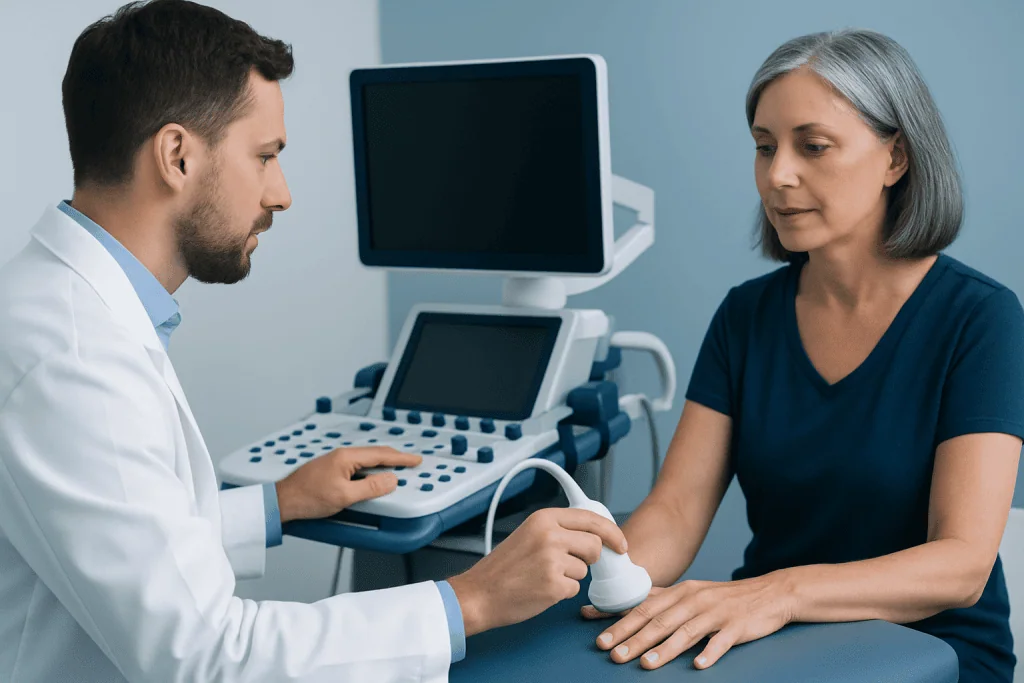
Diagnosis usually begins with a medical history and physical examination. A doctor will ask when the bumps appeared, whether pain and stiffness are present, how symptoms affect daily activities, and whether other joints are involved. On examination, the doctor checks the size, firmness, tenderness, movement, and alignment of the affected joints.
In many cases, the diagnosis is clinical, meaning it can be made based on the pattern of symptoms and examination findings. X-rays may be recommended when the diagnosis is uncertain, when symptoms are more severe than expected, or when another joint disorder needs to be ruled out. Imaging can show joint space narrowing, bone spurs, and other features of osteoarthritis.
Blood tests are not usually needed for straightforward Heberden’s nodes, but they may be ordered if the doctor suspects another cause such as rheumatoid arthritis or an inflammatory condition. If symptoms do not fit the usual pattern, a specialist in orthopedic care or rheumatology may help clarify the diagnosis.
Treatment options and symptom relief
Treatment for Heberden’s nodes focuses on relieving symptoms, supporting hand function, and addressing the underlying osteoarthritis. The bony change itself usually cannot be reversed, but many people can manage discomfort effectively and continue their normal activities with practical strategies and medical guidance.
Conservative treatment is often the first step. This may include activity modification, hand exercises, warm compresses, and short-term use of splints for painful flare-ups if recommended by a clinician. Over-the-counter or prescription pain relief may be appropriate for some patients, but medication choices should always be discussed with a doctor, especially for people with stomach, kidney, heart, or bleeding concerns.
Hand therapy or physical therapy and rehabilitation can be helpful when stiffness, weakness, or reduced dexterity affects daily life. A therapist may teach joint-protection techniques, range-of-motion exercises, and ways to reduce strain during household or work tasks. If there is significant deformity, severe pain, or uncertainty about the cause, referral for hand surgery assessment may occasionally be considered, although surgery is not needed for most people.
- Joint protection and pacing of hand activities
- Warmth, gentle mobility exercises, and hand therapy
- Pain-relief medicines when medically appropriate
- Short-term splinting for selected painful joints
- Specialist review if symptoms are severe, unusual, or persistent
Self-care, prevention, and living well with hand osteoarthritis
There is no guaranteed way to prevent Heberden’s nodes, but healthy joint habits can support comfort and function. Simple measures include avoiding prolonged forceful gripping when possible, using ergonomic tools, taking breaks during repetitive hand tasks, and keeping the hands warm if stiffness tends to worsen in cold conditions.
Gentle regular movement is often more helpful than complete rest. Finger stretches and strengthening exercises recommended by a clinician or therapist may help maintain mobility and hand use. General health measures also matter: staying physically active, managing body weight, sleeping well, and controlling other health conditions can support musculoskeletal health overall.
People sometimes worry that using their hands will inevitably make the condition rapidly worse. In most cases, balanced activity is beneficial, while pain should be used as a guide to pace tasks. Near the end of the care journey, some international patients may seek multidisciplinary assessment; Acibadem International’s specialists in JCI-accredited hospitals diagnose and treat hand joint conditions, including hand osteoarthritis, when expert review is needed.
When to seek medical care
Medical advice is appropriate if a new finger joint bump is painful, growing, or interfering with hand function. A doctor should also evaluate symptoms that are not typical of osteoarthritis, such as sudden onset in a single joint, pronounced redness, marked warmth, significant swelling, or pain that wakes a person at night.
Prompt assessment is especially important if there is fever, recent injury, drainage from the area, numbness, or rapid loss of movement. These features may suggest infection, fracture, crystal arthritis, or another problem that needs different treatment. Persistent hand pain or stiffness also deserves review because early guidance can help protect function.
Even when the cause is straightforward osteoarthritis, medical care can be useful if self-care is not enough. Patients may benefit from a treatment plan tailored to pain control, work demands, and long-term hand function.
Frequently asked questions
Are Heberden's nodes the same as arthritis?
Heberden's nodes are not a separate disease on their own. They are a physical sign most commonly caused by osteoarthritis affecting the end joints of the fingers. A doctor can confirm whether the bumps fit this pattern or suggest another condition.
Do Heberden's nodes go away?
The bony enlargement usually does not fully disappear once it has formed. However, pain and swelling may lessen after the active phase settles. Treatment is aimed at improving comfort and hand function rather than removing the node in most cases.
Are Heberden's nodes painful?
They can be painful, especially while they are developing or during osteoarthritis flare-ups. Some people mainly notice stiffness or finger deformity rather than significant pain. Symptoms vary from person to person and can change over time.
Can Heberden's nodes be prevented?
There is no certain way to prevent them completely because age, genetics, and osteoarthritis risk all play a role. Still, protecting the joints, pacing repetitive hand tasks, and staying active may support better hand function. Early medical advice can also help manage symptoms before they interfere more with daily life.
Do I need an X-ray for Heberden's nodes?
Not always. Many cases can be recognized from the history and physical examination alone. An X-ray may be useful if the diagnosis is uncertain, symptoms are severe, or another joint problem needs to be excluded.
When is surgery considered for Heberden's nodes?
Surgery is not needed for most people. It may be considered in selected cases with severe pain, major deformity, or significant functional limitation after conservative treatment has not helped enough. A hand specialist can explain whether surgical options are relevant and what results to expect.
References
- American Academy of Orthopaedic Surgeons
- Arthritis Foundation
- National Institute of Arthritis and Musculoskeletal and Skin Diseases
- Mayo Clinic
- National Health Service
This article is for general information only and is not a substitute for professional medical advice. Please consult a qualified doctor about your individual situation.
Joint and spine care in Turkey — expert assessment & treatment
JCI-accredited · board-certified surgeons · reply within 24h
Add us as a Preferred Source to see more of our trusted health content across Google Search, AI Overviews and Discover.