Hamstring Curls — Explained by Medical Evidence, Not Myths
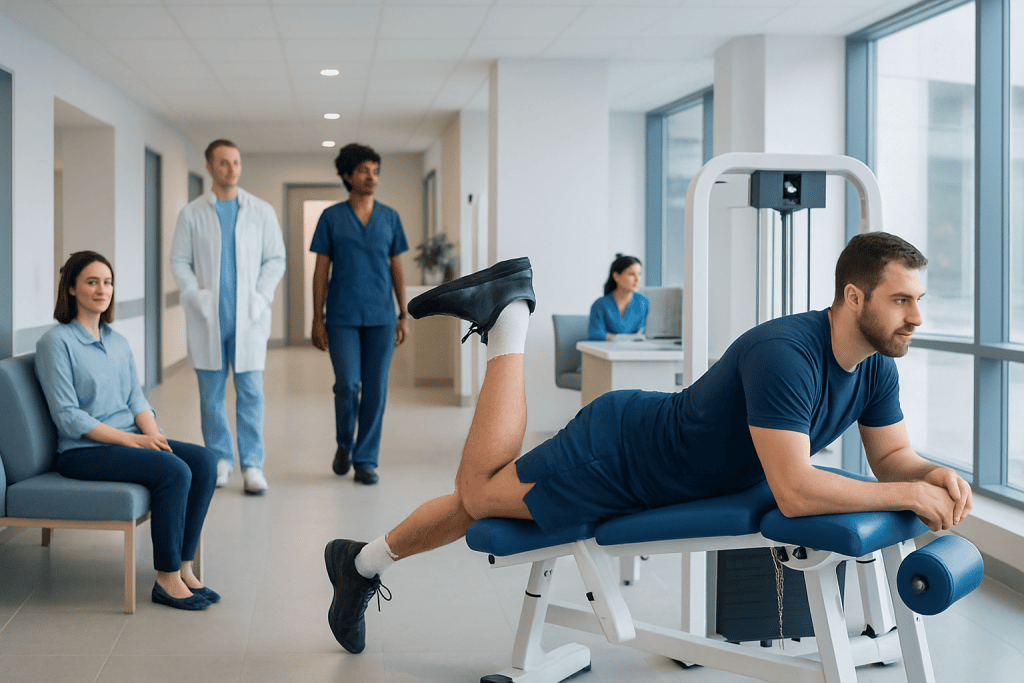
Hamstring curls primarily strengthen the hamstring muscles that bend the knee and help control hip movement. Good form matters more than heavy resistance; fast, jerky repetitions can increase strain and reduce exercise quality.
Key Takeaways
- Hamstring curls primarily strengthen the hamstring muscles that bend the knee and help control hip movement.
- Good form matters more than heavy resistance; fast, jerky repetitions can increase strain and reduce exercise quality.
- Hamstring curls can be useful in general fitness and rehabilitation, but exercise choice should match a person's symptoms, goals, and medical history.
- Pain during or after the exercise is a signal to stop and reassess technique, load, or whether the exercise is appropriate.
- People with recent injury, swelling, locking, or persistent weakness should seek professional assessment before continuing.
Hamstring curls are a strengthening exercise that mainly targets the muscles at the back of the thigh. When performed with controlled technique and the right resistance, they can support knee stability, lower-limb function, and rehabilitation, but they are not suitable for every pain pattern or injury stage.
What hamstring curls are and what they do
Hamstring curls are an exercise designed to strengthen the hamstrings, a group of muscles at the back of the thigh. These muscles help bend the knee and assist with hip extension, which is important for walking, climbing stairs, running, and many daily movements. In practical terms, hamstring curls train the leg to pull the heel toward the body against resistance.
They can be performed in several ways, including with a machine at a gym, resistance bands, ankle weights, a cable system, or a stability ball. The exact version matters less than the underlying principles: controlled movement, appropriate resistance, and a range of motion that does not provoke pain. Medical evidence supports hamstring strengthening as one part of lower-limb conditioning and rehabilitation, especially when combined with broader strength and movement training.
Hamstring curls are often discussed as if they are either essential or harmful. Neither claim is universally true. They are simply one exercise option. For some people, they are a practical way to isolate hamstring strength. For others, especially those with certain knee, hip, or low-back issues, alternative exercises may be better tolerated or more functional.
How the hamstrings work in daily life and sport
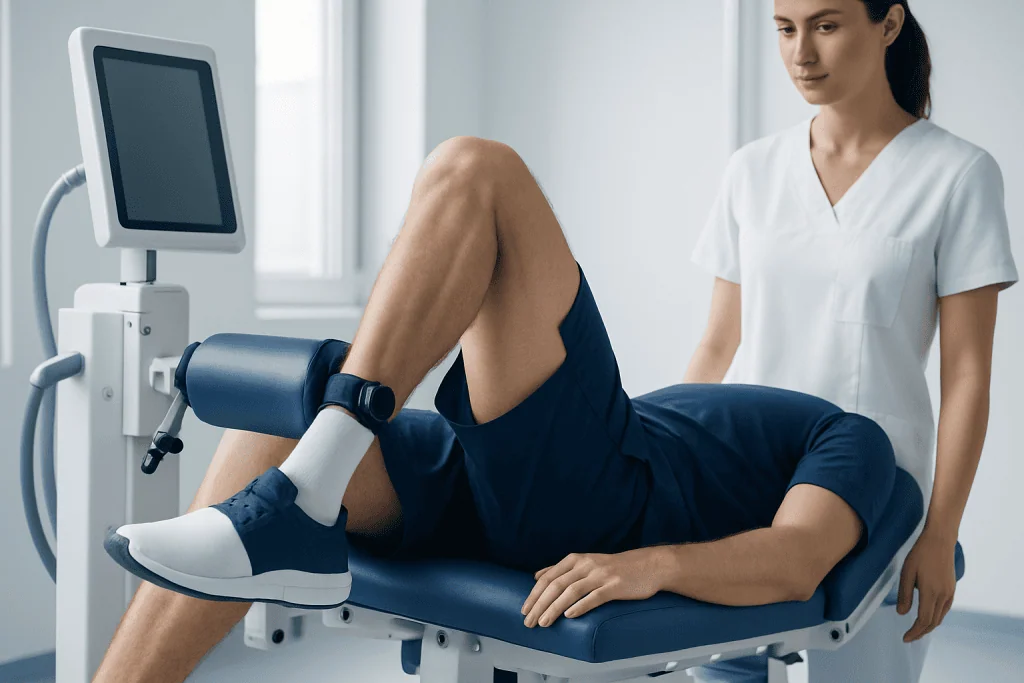
The hamstrings include three main muscles: biceps femoris, semitendinosus, and semimembranosus. Together, they help slow the lower leg during walking and running, support movements such as rising from a chair, and contribute to athletic tasks like sprinting, jumping, and changing direction. They also work with the gluteal muscles and calf muscles as part of a coordinated chain rather than acting alone.
This is why hamstring curls can be helpful, but also why they should not be viewed as the only hamstring exercise a person needs. A machine curl mainly emphasizes knee flexion. Real-life movement also requires the hamstrings to control force across both the knee and the hip. For this reason, exercise programs often combine curls with movements such as bridges, hip hinges, or other strengthening tasks, especially during rehabilitation.
When weakness, fatigue, or poor movement control affects the hamstrings, it can contribute to reduced performance and may increase stress on nearby structures. Depending on the person, these can include the knee joint, the front of the thigh, the lower back, or the tendons around the hip and knee. In some cases, symptoms may overlap with conditions such as knee pain or meniscus problems, which is why persistent pain should not be dismissed as simple muscle soreness.
Potential benefits of hamstring curls

Hamstring curls may help improve muscle strength, endurance, and control. For people who are starting a strengthening program, recovering from inactivity, or returning to exercise after some injuries, they can provide a straightforward and measurable way to load the hamstrings. Clinicians sometimes use them because resistance can be adjusted gradually and technique can be monitored closely.
Stronger hamstrings may support knee function by helping balance the pull of the quadriceps muscles at the front of the thigh. This is relevant in general conditioning and in some rehabilitation programs, including selected cases after knee injury or surgery when advised by a specialist. In a structured rehab plan, hamstring curls may appear alongside physical therapy and rehabilitation to rebuild strength, mobility, and confidence in movement.
Another potential benefit is exercise variety. Some people struggle to feel their hamstrings working during compound exercises such as squats or deadlift variations. A curl pattern can make it easier to target the back of the thigh more directly. Still, the best exercise is the one that is safe, tolerable, and appropriate for the individual’s goals rather than the one that seems most popular online.
- They can be scaled from very light to more challenging resistance.
- They may be useful when a person needs a simple, repeatable exercise.
- They can complement broader leg and hip strengthening.
- They may fit into supervised rehabilitation after certain injuries.
Proper form, common mistakes, and myths
Good hamstring curl form usually means moving slowly, keeping the pelvis and trunk stable, and using a resistance level that allows full control. The motion should feel like the heel is being drawn toward the buttock without sudden jerking, twisting, or lifting the hips to cheat the movement. A person should be able to breathe normally and stop each repetition with control rather than letting the weight pull the leg back.
Common mistakes include using too much weight, rushing through repetitions, arching the lower back, and training through pain. These habits may shift load away from the intended muscles or place unnecessary stress on the knee, hip, or back. It is also a mistake to assume that soreness equals success. Mild post-exercise fatigue can be normal, but sharp pain, swelling, or limping are not expected training responses.
Several myths deserve correction. Hamstring curls do not “tone” a specific area in a special way separate from overall strength training. They are not inherently bad for the knees when prescribed appropriately, but they are not automatically protective either. Most importantly, they are not a substitute for a complete program that includes movement quality, flexibility where needed, and progressive strengthening across the entire lower limb.
Who should be cautious or modify the exercise
Hamstring curls may need to be modified or avoided temporarily if a person has a recent hamstring strain, a painful knee injury, significant joint swelling, severe muscle cramping, or unexplained leg pain. People with low-back symptoms may also notice discomfort if the pelvis is not well supported during the exercise. In these cases, a clinician may suggest a different position, lower resistance, shorter range of motion, or another exercise entirely.
After surgery or a major injury, the timing of hamstring loading matters. For example, some rehabilitation protocols after ligament reconstruction or tendon injury limit certain exercises in the early phase. A supervised program may include assessment with orthopedic rehabilitation or, when the underlying issue is unclear, a specialist evaluation through orthopedic care. This helps match exercise selection to tissue healing and function rather than using a one-size-fits-all approach.
Older adults, beginners, and people with balance limitations can still perform hamstring-focused exercise safely, but the version should match their abilities. A seated or lying machine may be easier to control than a standing version. For home exercise, resistance bands can be helpful, though they also require attention to setup and stability. Comfort, control, and consistent progression are usually more important than the specific equipment used.
How clinicians assess pain related to hamstring curls
If hamstring curls cause pain, clinicians do not usually rely on the exercise alone to explain the problem. They look at where the pain is located, whether there was a specific injury, what other movements provoke symptoms, and whether there is weakness, stiffness, swelling, bruising, or instability. Pain at the back of the thigh may suggest a muscle or tendon issue, while pain deep in the knee could point to joint structures or referred symptoms.
Evaluation often includes a physical examination of strength, flexibility, joint motion, gait, and tenderness. Depending on the presentation, the clinician may consider conditions such as a hamstring strain, tendon irritation, patellofemoral pain, ligament injury, or cartilage and meniscal problems. Imaging is not needed for every case, but it may be considered when symptoms are severe, persistent, or linked to trauma.
A person should seek an expert opinion if self-management is not helping or if function is clearly limited. In some cases, a team approach involving sports medicine, orthopedics, and rehabilitation is useful. Near the end of the care pathway, if international patients need specialist assessment, Acibadem International’s multidisciplinary teams in JCI-accredited hospitals diagnose and treat musculoskeletal conditions using individualized plans.
Safe progression and self-care tips
Safe progression with hamstring curls usually starts with a resistance level that feels manageable for controlled repetitions. It is generally better to begin conservatively and increase load gradually than to start too heavy and compensate with poor form. Rest days, recovery, sleep, and overall training balance all influence how well the muscles adapt.
Warm-up can also make the exercise more comfortable. A few minutes of light movement, followed by gentle dynamic activity for the hips and knees, may prepare the muscles for loading. Some people benefit from pairing curls with glute and core exercises to improve overall lower-limb control rather than focusing on one muscle group in isolation.
Helpful self-care principles include:
- Stop if pain is sharp, sudden, or worsening.
- Reduce resistance or range of motion if form breaks down.
- Avoid comparing progress to others; progression should match the individual.
- Allow recovery time if there is significant fatigue or soreness.
- Seek guidance if symptoms continue for more than a short period or interfere with walking, sport, or sleep.
When to seek medical care
Medical care is advisable if pain begins suddenly with a pop, tearing sensation, immediate weakness, or visible bruising. These signs can suggest a more significant muscle or tendon injury. Care is also important if the knee swells, locks, gives way, or cannot fully bend or straighten after exercise or injury.
A healthcare professional should also assess symptoms that persist despite rest and exercise modification, especially if there is ongoing limping, night pain, numbness, or pain spreading below the knee. People returning to sport after injury may benefit from a formal plan before resuming high-speed running, jumping, or heavy leg training.
Prompt evaluation can help identify the real cause of pain and reduce the risk of prolonged symptoms. In many cases, early guidance allows a person to stay active in safer ways rather than stopping all movement. The goal is not just symptom relief, but a return to confident and well-controlled function.
Frequently asked questions
Are hamstring curls good for the knees?
Hamstring curls can be helpful for knee support because the hamstrings contribute to knee control. However, they are not appropriate for every knee problem, and painful technique or excessive resistance can make symptoms worse. A clinician can advise whether they fit a person's condition.
What muscles do hamstring curls work?
They primarily target the hamstrings at the back of the thigh. Depending on the variation, other muscles such as the calf muscles and gluteal muscles may assist with stability and movement control.
Should hamstring curls hurt?
No exercise should cause sharp, catching, or worsening pain. Mild muscle effort or temporary fatigue can be normal, but pain in the knee, hip, back, or back of the thigh suggests the exercise may need to be changed or paused.
Are seated and lying hamstring curls equally effective?
Both can strengthen the hamstrings when they are done correctly and progressed appropriately. The best choice depends on comfort, available equipment, joint position tolerance, and the goals of training or rehabilitation.
Can hamstring curls help after an injury?
They may be part of rehabilitation for some injuries, but timing and exercise selection matter. After strains, tendon problems, or knee surgery, a qualified professional should guide progression so the tissue is loaded safely.
How often should a person do hamstring curls?
There is no single schedule that suits everyone. Frequency depends on fitness level, recovery, other leg training, and whether the exercise is being used for conditioning or rehabilitation. A doctor or physiotherapist can help decide what is appropriate.
References
- American Academy of Orthopaedic Surgeons
- American College of Sports Medicine
- National Institute of Arthritis and Musculoskeletal and Skin Diseases
- American Physical Therapy Association
- National Health Service
This article is for general information only and is not a substitute for professional medical advice. Please consult a qualified doctor about your individual situation.
Joint and spine care in Turkey — expert assessment & treatment
JCI-accredited · board-certified surgeons · reply within 24h
Add us as a Preferred Source to see more of our trusted health content across Google Search, AI Overviews and Discover.