What Are Fingernails Made of? A Doctor-Reviewed Answer

Fingernails are made mainly of keratin, a hard protein formed by cells in the nail matrix. The visible nail plate is made of dead, compacted keratin cells, but nail growth depends on living tissue under the skin.
Key Takeaways
- Fingernails are made mainly of keratin, a hard protein formed by cells in the nail matrix.
- The visible nail plate is made of dead, compacted keratin cells, but nail growth depends on living tissue under the skin.
- Many nail changes are minor and temporary, often related to aging, dryness, trauma, or grooming habits.
- Color changes, pain, swelling, thickening, separation, or dark streaks should be assessed by a doctor.
- Doctors evaluate nail concerns with a physical exam and may use lab tests, cultures, or imaging when needed.
Fingernails are mostly made of keratin, a strong protective protein also found in hair and the outer layer of skin. In most people, questions about nail texture, color, or growth are harmless, but certain changes can point to injury, infection, skin disease, or an underlying health problem.
Overview: what fingernails are made of
Fingernails are mainly made of keratin, a tough fibrous protein. Keratin helps protect the tips of the fingers and supports fine movements such as picking up small objects, scratching, and stabilizing touch. The hard part that can be seen above the skin is called the nail plate.
The nail plate is formed from tightly packed dead cells filled with hard keratin. Although the visible nail itself is not living tissue, it is produced by living cells in the nail matrix, an area beneath the skin near the base of the nail. As these cells multiply, harden, and move forward, the nail grows outward.
Most nail variations are harmless. Nails can become brittle, ridged, stained, or temporarily uneven after minor injury, repeated handwashing, cosmetic products, or normal aging. Still, some changes deserve medical attention, especially if they are new, persistent, painful, or affect only one nail.
Useful warning signs include a dark streak, nail separation, thickening, yellowing, swelling around the nail, or changes along with fatigue, rash, joint pain, or weight change. In these situations, a doctor may look for infection, inflammation, nutritional issues, circulatory problems, or skin disorders such as skin cancer.
The parts of the nail and how they work
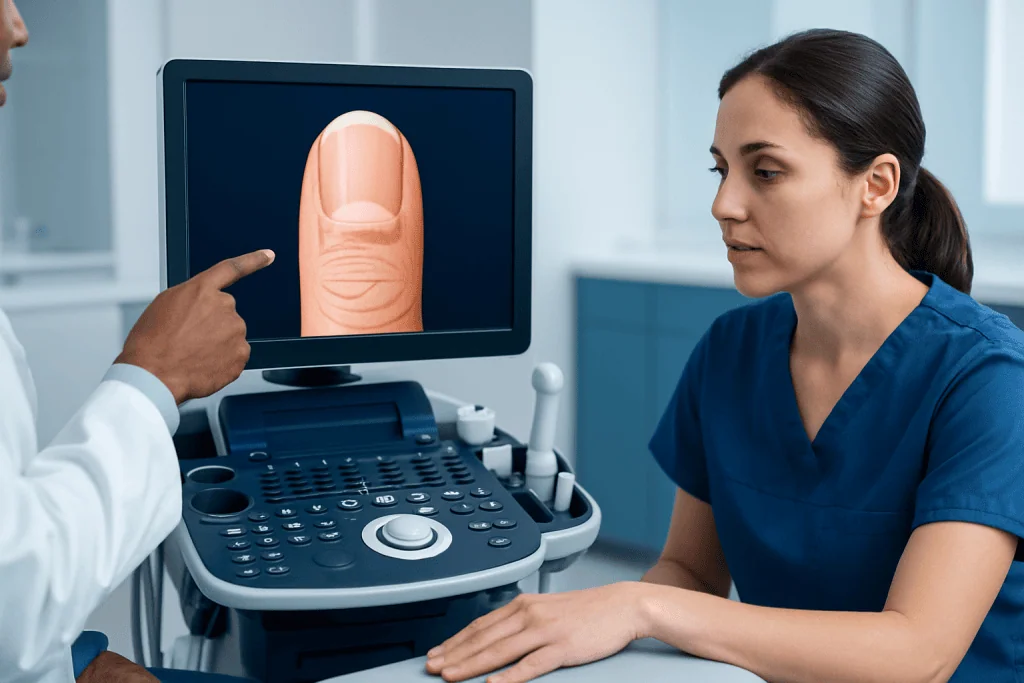
Understanding nail structure helps explain why nails look and behave the way they do. The nail is more than the hard surface on top. It includes several parts that grow together and protect the fingertip.
The main structures are:
- Nail plate: the hard visible part made of compacted keratin.
- Nail matrix: the growth center under the skin at the nail base where new nail cells are made.
- Nail bed: the skin under the nail plate that supports it as it grows forward.
- Cuticle: a thin seal between skin and nail that helps block germs and irritants.
- Lunula: the pale half-moon sometimes visible near the nail base.
- Nail folds: the skin around the sides and base of the nail.
The matrix largely determines nail thickness, shape, and growth pattern. If it is injured by trauma, inflammation, or infection, the nail may grow with grooves, dents, discoloration, or irregular shape. This is one reason doctors often ask about past finger injuries and cosmetic nail practices.
The nail bed also contributes to appearance. Because the nail plate is partly translucent, the blood vessels beneath the nail bed give healthy nails their usual pink tone. When the nail lifts away from the bed, the color and texture may change, sometimes suggesting infection, thyroid disease, psoriasis, or repeated irritation.
Why nails look hard if they are made of protein
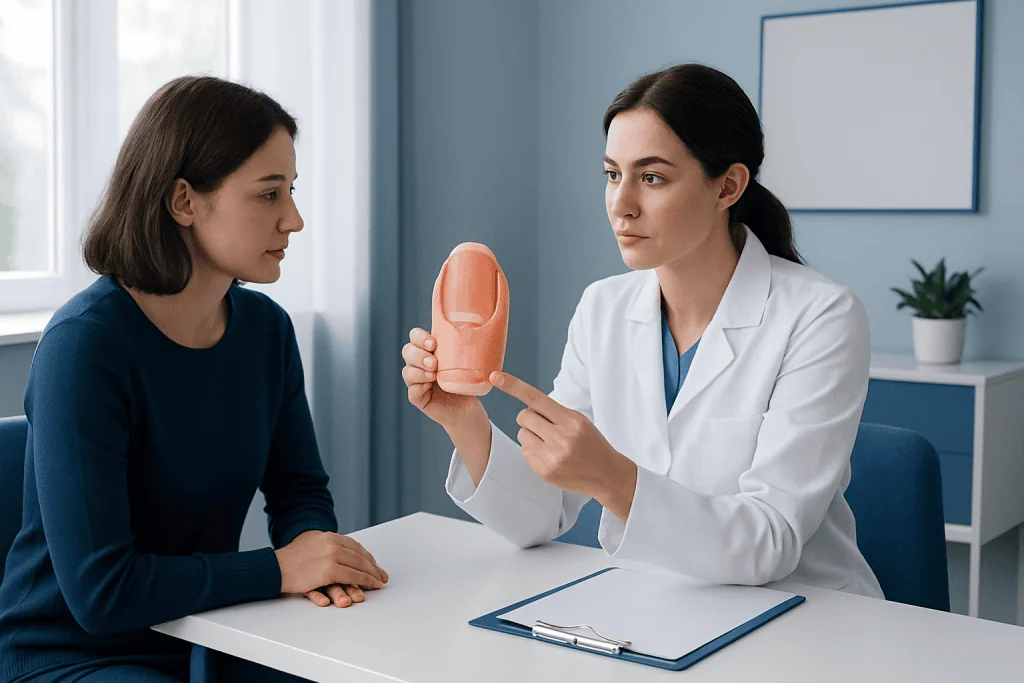
Many people are surprised that nails are made of protein rather than bone or calcium. Keratin becomes hard because its cells are densely packed and chemically linked in a way that creates strength and flexibility. This lets nails resist daily wear while still bending slightly instead of breaking with every small impact.
Nails do contain small amounts of water and trace minerals, but they are not made primarily of calcium. A common myth is that white spots or weak nails automatically mean calcium deficiency. In reality, these findings are often related to minor trauma, dryness, nail cosmetics, or local irritation rather than a mineral shortage.
Keratin in nails is similar to keratin in hair, but it is arranged differently, making nails firmer. The body continuously produces this protein in the matrix, and the nail plate moves forward slowly over time. Growth rate varies by age, overall health, season, blood flow, and whether the dominant hand is used more often.
Because nail growth is gradual, changes in health may show up in the nails weeks or months later. That is why doctors consider the timing of symptoms. A nail abnormality may reflect a past injury or illness rather than something happening only in the present moment.
Common nail changes and what they may mean
Most nail changes are not dangerous. Brittle nails, mild longitudinal ridges, and dryness are common with age, frequent washing, detergents, and repeated exposure to acetone or gel removers. Short-term discoloration may also happen after nail polish, smoking, or minor trauma.
Some changes are more likely to need evaluation. Thickened, crumbly, or yellow nails can suggest a fungal infection. Pits, roughness, or nail lifting may occur with inflammatory skin conditions such as eczema or psoriasis. Swollen, tender skin around the nail can be a sign of paronychia, an infection or inflammation of the nail fold.
Doctors also pay attention to color patterns. Pale nails may be seen with anemia or other systemic illness. Bluish nails may reflect reduced oxygen levels or circulation problems. A new dark line, especially if it widens or extends to nearby skin, should be reviewed promptly because rarely it can be related to melanoma under the nail.
Other clues include spoon-shaped nails, clubbing of the fingertips, recurrent splitting, or nail separation from the bed. These do not diagnose a condition by themselves, but they can help a doctor decide whether to assess for thyroid disease, autoimmune disease, iron deficiency, lung or heart problems, or chronic skin inflammation.
What can damage nails or affect how they grow
Nails can change for many reasons, and not all causes are medical. Repeated microtrauma from typing, sports, nail biting, picking, or cleaning under the nails may alter the nail plate or matrix. Artificial nails, aggressive manicures, and frequent chemical exposure can dry and weaken nails over time.
Infections are another common cause. Fungi can invade the nail and lead to thickening, distortion, and discoloration. Bacteria or yeast may affect the surrounding skin, especially when the cuticle is damaged. In some cases, doctors may recommend evaluation and nail fungus treatment when the appearance suggests onychomycosis.
Skin disorders often involve the nails as well as the surrounding skin. Psoriasis, eczema, and lichen planus can lead to pitting, ridging, splitting, or lifting. Circulation issues, endocrine disorders, nutritional deficiency, and certain medications can also influence nail growth and texture.
Less commonly, a nail change may reflect a tumor or another serious condition affecting the nail unit. This is why persistent changes involving one nail, especially with pain, bleeding, a growing mass, or a dark streak, should not be ignored. A specialist may sometimes assess the area within a broader dermatology evaluation.
How a doctor evaluates nail concerns
If a nail problem lasts, worsens, or seems unusual, a medical review can help clarify the cause. The doctor usually begins by asking when the change started, whether one or several nails are affected, and whether there has been trauma, illness, a rash, new medication, or exposure to chemicals or nail cosmetics.
A physical examination looks at the nail plate, nail folds, cuticle, and nearby skin. The doctor may compare fingernails and toenails, assess color, thickness, shape, tenderness, and separation, and check for clues elsewhere on the body such as skin plaques, hair changes, swelling, or signs of poor circulation.
Depending on the findings, tests may include nail clippings or scrapings to look for fungus, bacterial cultures, blood tests for selected health conditions, or imaging if injury is suspected. If there is concern about a suspicious pigmented band or growth, the doctor may recommend referral to a dermatologist and, in some cases, a biopsy.
This stepwise approach is meant to be targeted rather than alarming. Many nail complaints can be diagnosed by inspection alone, while tests are reserved for situations where the result could change treatment or rule out a more important underlying problem.
Treatment and self-care for healthier nails
Treatment depends on the cause. Dry, brittle nails often improve with gentler nail care, reduced chemical exposure, and regular use of moisturizers on the hands, nails, and cuticles. Wearing gloves for cleaning or prolonged wet work can also help protect the nail barrier.
If infection is present, treatment may include topical or oral medication depending on the organism and how much of the nail is involved. Inflammatory conditions may need prescription creams, steroid injections around the nail, or management of the underlying skin disease. If trauma is the issue, avoiding repeated pressure and allowing time for regrowth is often important.
Good daily care includes:
- Keeping nails clean and trimmed, but not excessively short
- Avoiding cutting or aggressively pushing back the cuticle
- Limiting nail biting and picking
- Using moisturizers after handwashing
- Taking breaks from gels, acrylics, and harsh removers if nails are weak
- Seeking advice before using supplements marketed for nail growth
When a broader skin condition is involved, management may include care from specialists familiar with nail and skin disorders. Near the end of the care pathway, some patients may be referred for skin cancer treatment if a suspicious lesion under or around the nail needs further assessment. Acibadem International’s multidisciplinary specialists and JCI-accredited hospitals also diagnose and treat nail-related conditions for international patients.
When to seek medical care
Most nail changes are mild and temporary, but certain signs should be checked by a doctor. Medical review is sensible if a change lasts for several weeks, keeps returning, affects daily function, or does not improve with simple self-care. It is also reasonable to seek care sooner if only one nail is changing in an unusual way.
Prompt assessment is especially important for:
- A new dark streak or patch under the nail
- Pain, swelling, pus, or warmth around the nail
- Nail lifting, marked thickening, or crumbling
- Bleeding, ulceration, or a lump near the nail
- Changes with rash, joint pain, fatigue, weight change, or breathing symptoms
- Repeated nail infections or poor healing
People with diabetes, poor circulation, immune suppression, or chronic skin disease should be particularly careful with persistent nail problems. Early evaluation can help identify treatable causes and reduce the risk of complications.
Although online images can be helpful for awareness, they cannot confirm a diagnosis. A qualified clinician can decide whether a nail change is a harmless variation, a local problem such as infection or trauma, or a clue to an underlying health condition that deserves attention.
Frequently asked questions
Are fingernails made of calcium?
No. Fingernails are made mainly of keratin, a durable protein. They may contain trace minerals, but calcium is not the main material that forms the nail plate.
Are fingernails living tissue?
The visible nail plate is made of dead, hardened cells. However, the nail matrix under the skin is living tissue and is responsible for producing new nail cells as the nail grows.
Why do nails become brittle or split?
Brittle or splitting nails are often linked to frequent wetting and drying, detergents, cold weather, aging, and cosmetic nail products. Sometimes they can also be associated with skin conditions, thyroid disorders, or iron deficiency, so persistent changes should be discussed with a doctor.
Do white spots on nails mean a vitamin deficiency?
Usually not. Small white spots are commonly caused by minor trauma to the nail matrix, often from everyday bumps that may go unnoticed. If nail changes are widespread or occur with other symptoms, a doctor can decide whether testing is needed.
How fast do fingernails grow?
Fingernails grow slowly and continuously, with speed varying from person to person. Growth may be influenced by age, health, blood flow, season, medications, and whether a hand is used more often.
Can nail changes signal a health problem?
Yes, sometimes. While many changes are harmless, persistent discoloration, pitting, thickening, nail lifting, clubbing, or a dark streak can be associated with infection, inflammatory skin disease, circulation issues, or other medical conditions.
This article is for general information only and is not a substitute for professional medical advice. Please consult a qualified doctor about your individual situation.
Hair transplant in Turkey — costs, graft counts & a free assessment
JCI-accredited · board-certified surgeons · reply within 24h
Add us as a Preferred Source to see more of our trusted health content across Google Search, AI Overviews and Discover.

More from the Health Library

How to Stretch? A Doctor-Reviewed Answer

Nausea When Hungry Explained: Common Triggers and Red Flags

What Does C Diff Poop Look Like? Here Is What the Evidence Says

Signs of Kidney Stones Explained: Common Triggers and Red Flags

How Do I Get Rid of a Spot Quickly? Here Is What the Evidence Says