Foraminal Stenosis: Early Signs, Risk Factors, and How It Is Treated
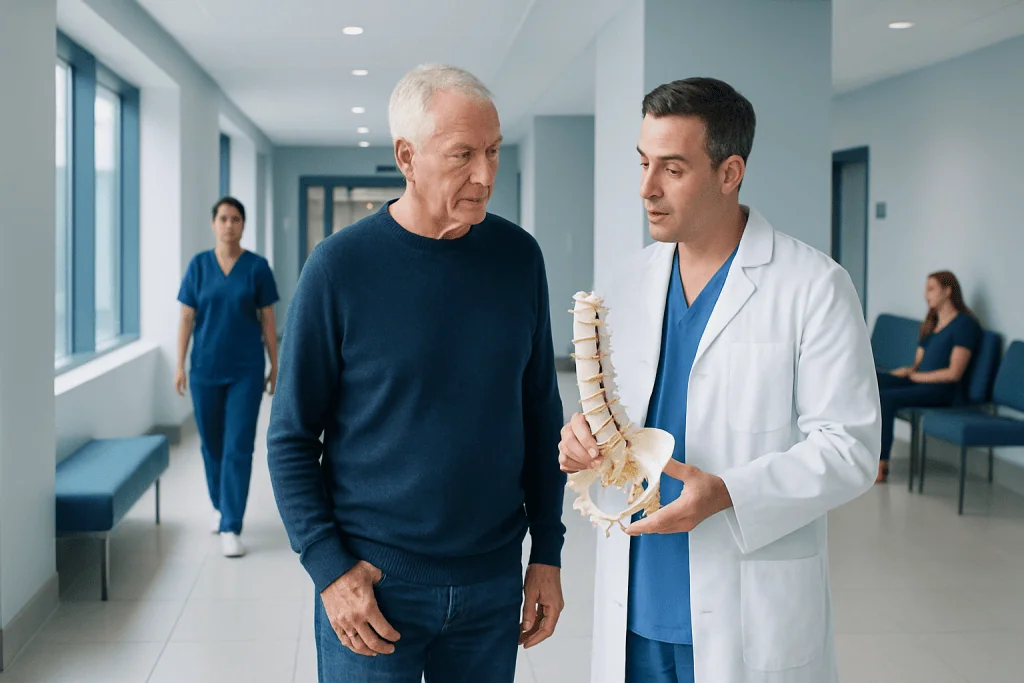
Foraminal stenosis happens when the opening for a spinal nerve becomes too narrow and presses on the nerve. Common symptoms include radiating pain, numbness, tingling, or weakness in an arm or leg.
Key Takeaways
- Foraminal stenosis happens when the opening for a spinal nerve becomes too narrow and presses on the nerve.
- Common symptoms include radiating pain, numbness, tingling, or weakness in an arm or leg.
- Age-related wear, disc changes, arthritis, and bone spurs are common causes.
- Many people improve with activity changes, physical therapy, and pain-relief treatments.
- Urgent medical assessment is needed for worsening weakness, balance problems, or bowel or bladder changes.
Foraminal stenosis is a narrowing of the small openings where spinal nerves leave the spine. It may cause neck or back pain, numbness, tingling, or weakness, and treatment depends on how much the nerve is irritated and how symptoms affect daily life.
Overview: what foraminal stenosis means
Foraminal stenosis is a condition in which one or more of the small passageways in the spine, called foramina, become narrower than normal. These openings allow spinal nerves to travel from the spinal canal to the rest of the body. When a foramen narrows, the nearby nerve can become irritated or compressed, which may lead to pain, tingling, numbness, or weakness.
This narrowing can happen in the neck, mid-back, or lower back, but it is most often discussed in the cervical spine (neck) and lumbar spine (lower back). Symptoms depend on which nerve is affected. For example, narrowing in the neck may cause symptoms in the shoulder, arm, or hand, while narrowing in the lower back may cause symptoms in the buttock, leg, or foot.
Not everyone with foraminal narrowing has symptoms. Imaging scans may show changes in the spine even in people who feel well. Treatment is usually based more on symptoms, physical examination, and how daily activities are affected than on scan findings alone.
Early signs and symptoms
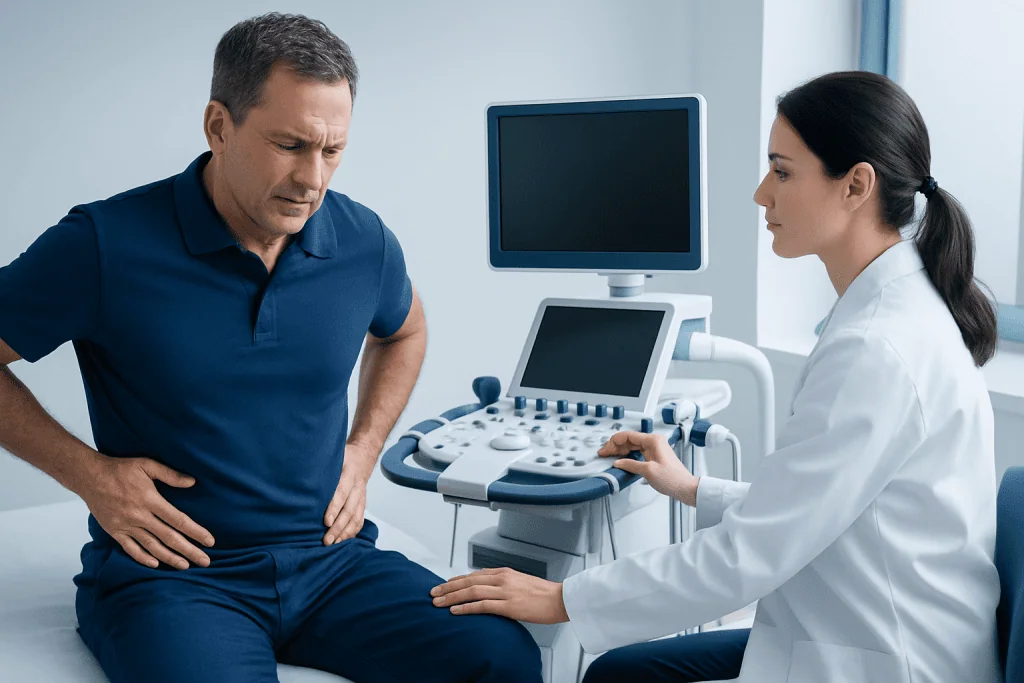
Early symptoms of foraminal stenosis can be subtle. Some people first notice aching in the neck or lower back that comes and goes. Others feel a burning, shooting, or electric-like pain that travels along the path of a nerve. This can happen when standing, twisting, extending the back or neck, or after long periods in one position.
Numbness and tingling are also common early signs. A person may describe pins-and-needles in the fingers, hand, thigh, calf, or foot. If the affected nerve controls muscle function, weakness may develop over time. This might show up as reduced grip strength, trouble lifting the front of the foot, or difficulty climbing stairs.
Symptoms often affect one side more than the other, although both sides can be involved. In the neck, foraminal stenosis may resemble a herniated disc because both can irritate a nerve root. In the lower back, symptoms may overlap with other causes of sciatica-like pain, so a careful medical evaluation is important.
- Neck or back pain that may worsen with certain movements
- Pain spreading into the shoulder, arm, buttock, or leg
- Tingling or numbness in the hands or feet
- Muscle weakness or reduced coordination in the affected limb
- Symptoms that improve with rest or position changes
Why it happens: causes and risk factors

The most common cause of foraminal stenosis is age-related degeneration of the spine. Over time, spinal discs can lose height and hydration, the joints in the spine can develop arthritis, and bone spurs may form. These changes can reduce the space available for a nerve as it passes through the foramen.
Other structural problems can also narrow the opening. A bulging or herniated disc may press into the foramen. Thickening of surrounding ligaments, shifting of one vertebra over another, scoliosis, or previous spinal injury can also contribute. In some cases, narrowing develops after spinal surgery because of scar tissue or ongoing degeneration nearby.
Risk factors include increasing age, repetitive heavy lifting, physically demanding work, poor posture, obesity, smoking, and a history of spinal injury. Some people may have a naturally smaller foramen or spinal anatomy that makes nerve compression more likely. Conditions such as osteoarthritis and degenerative disc disease are frequently linked with foraminal narrowing and may coexist with spinal stenosis in other parts of the spinal canal.
How doctors diagnose foraminal stenosis
Diagnosis begins with a detailed history and physical examination. A doctor will ask where the pain starts, where it travels, what movements make it worse, and whether there is numbness, weakness, balance difficulty, or sleep disruption. The pattern of symptoms often gives useful clues about which nerve root may be involved.
During the examination, the doctor checks strength, reflexes, sensation, walking, posture, and spinal movement. Certain maneuvers may reproduce or relieve symptoms and help distinguish foraminal stenosis from muscle strain, joint problems, peripheral nerve disorders, or circulation-related leg pain.
Imaging may be used to confirm the diagnosis and guide treatment. MRI is often the most informative test because it shows nerves, discs, and soft tissues clearly. CT can help assess bone changes such as spurs, and plain X-rays may show alignment or disc space narrowing. In some cases, nerve tests such as electromyography are used when the diagnosis is uncertain or symptoms may come from more than one source.
Treatment options and what recovery may involve
Treatment depends on symptom severity, the cause of narrowing, and whether there are signs of ongoing nerve injury. Many people start with conservative care. This may include relative rest, avoiding movements that trigger symptoms, anti-inflammatory or pain-relief medicines recommended by a doctor, and a structured physical therapy program to improve posture, mobility, and core or neck support.
Physical therapy often focuses on gentle stretching, strengthening, body mechanics, and activity modification. Some patients also benefit from heat or cold therapy, short-term bracing in selected cases, or supervised exercise aimed at reducing pressure on the affected nerve. If symptoms are persistent, a doctor may consider image-guided injections to calm inflammation around the nerve. These can be part of a broader pain management plan.
When symptoms do not improve, when pain remains severe, or when weakness progresses, surgery may be discussed. The goal is to create more space for the nerve by removing the structure causing compression. Depending on the location and anatomy, options may include decompression procedures and, in selected patients, stabilization surgery. A specialist may review approaches used in spine surgery and whether minimally invasive techniques are appropriate.
Recovery varies from person to person. Some improve within weeks with conservative care, while others need longer rehabilitation. Outcomes are often best when treatment begins before significant nerve damage develops. In complex cases, evaluation by teams experienced in neurosurgery and orthopedic spine care can help tailor the plan to the individual.
Prevention and self-care
It is not always possible to prevent foraminal stenosis, especially when age-related degeneration is a major factor. However, everyday habits can reduce strain on the spine and may lower the chance of symptoms. Regular movement, strengthening of the trunk and back muscles, and flexibility exercises can support spinal health.
Good posture matters during sitting, standing, lifting, and screen use. It may help to avoid prolonged positions, use ergonomic work setups, and lift with the hips and knees rather than the back. Maintaining a healthy body weight can reduce mechanical stress on the lower back, and quitting smoking supports disc and bone health.
Self-care should be gentle rather than aggressive. Pushing through severe nerve pain or trying forceful twisting exercises may worsen symptoms. If home measures do not help, or if pain repeatedly returns, a qualified clinician can advise whether rehabilitation, imaging, or referral is needed.
- Stay physically active with spine-friendly exercise
- Take breaks from long periods of sitting or standing
- Use safe lifting techniques
- Strengthen core and postural muscles
- Seek guidance before starting intense exercise during a pain flare
When to seek medical care
Medical review is sensible if neck or back pain lasts more than a few weeks, keeps returning, or spreads into an arm or leg with tingling or numbness. An appointment is also important if symptoms are making it harder to walk, work, sleep, drive, or do routine activities safely.
Prompt assessment is needed if weakness is increasing, if there is loss of hand function or foot control, or if balance problems are developing. Emergency care is important for bowel or bladder changes, numbness around the groin or inner thighs, fever with severe back pain, or sudden symptoms after a major injury, because these can point to conditions that need urgent treatment.
For international patients who need evaluation, Acibadem International’s multidisciplinary specialists and JCI-accredited hospitals diagnose and treat spinal nerve compression conditions using individualized plans based on symptoms, examination, and imaging findings.
Frequently asked questions
Is foraminal stenosis the same as spinal stenosis?
Not exactly. Spinal stenosis is a broad term for narrowing in the spine, while foraminal stenosis refers specifically to narrowing of the openings where nerves exit. A person can have foraminal stenosis alone or along with other types of spinal narrowing.
Can foraminal stenosis heal on its own?
The structural narrowing usually does not fully reverse on its own, especially when it is related to wear-and-tear changes. However, symptoms may improve significantly with time, activity changes, physical therapy, and medical treatment. Some people have stable narrowing with few or no symptoms.
Does foraminal stenosis always require surgery?
No. Many cases are managed without surgery, especially when symptoms are mild to moderate and there is no progressive weakness. Surgery is usually considered when pain remains disabling despite treatment or when nerve function is worsening.
What movements can make foraminal stenosis worse?
This depends on the part of the spine involved, but repeated extension, twisting, heavy lifting, or staying in one position too long can aggravate symptoms in some people. Activities that narrow the irritated nerve space may trigger radiating pain. A clinician or physical therapist can help identify safer movement patterns.
Can exercise help foraminal stenosis?
Yes, the right exercise program can help many people. Gentle strengthening, flexibility work, posture training, and guided aerobic activity may reduce strain and improve function. Exercises should be individualized, especially if symptoms include weakness or marked leg or arm pain.
How is foraminal stenosis confirmed?
Doctors usually combine symptoms, physical examination findings, and imaging studies. MRI is commonly used because it shows nerve compression and surrounding soft tissues well. Other tests may be added if the diagnosis is uncertain or more than one problem may be contributing to symptoms.
References
- National Institute of Arthritis and Musculoskeletal and Skin Diseases
- American Academy of Orthopaedic Surgeons
- National Institute of Neurological Disorders and Stroke
- North American Spine Society
- MedlinePlus
This article is for general information only and is not a substitute for professional medical advice. Please consult a qualified doctor about your individual situation.
Joint and spine care in Turkey — expert assessment & treatment
JCI-accredited · board-certified surgeons · reply within 24h
Add us as a Preferred Source to see more of our trusted health content across Google Search, AI Overviews and Discover.