Hypertrophic Scar: An Evidence-Based Guide for Patients

A hypertrophic scar is a raised scar that stays within the original wound area. It develops when the body produces excess collagen during healing after surgery, burns, acne, cuts, or other skin injury.
Key Takeaways
- A hypertrophic scar is a raised scar that stays within the original wound area.
- It develops when the body produces excess collagen during healing after surgery, burns, acne, cuts, or other skin injury.
- Many hypertrophic scars flatten and soften over time, but symptoms such as itching, pain, or restricted movement may need treatment.
- Common treatment options include silicone therapy, pressure therapy, corticosteroid injections, laser treatment, and selected surgical approaches.
- Early wound care, sun protection, and prompt medical advice for problematic scars can improve outcomes.
A hypertrophic scar is a raised, thickened scar that forms as part of the body’s healing process and remains within the boundaries of the original wound. It is not dangerous in most cases, but it can cause itching, discomfort, tightness, or cosmetic concern, and several evidence-based treatments may help.
Overview: What Is a Hypertrophic Scar?
A hypertrophic scar is a raised, thickened scar that forms when the skin produces too much collagen during healing. Unlike a normal scar, it becomes more prominent, firmer, and sometimes red or itchy. Importantly, a hypertrophic scar stays within the borders of the original wound rather than growing beyond it.
This type of scar can develop after surgery, burns, cuts, piercings, acne, or other skin injuries. It is a benign condition, meaning it is not cancerous. Even so, it can affect comfort, appearance, and confidence, especially when it appears on visible areas such as the face, chest, shoulders, or joints.
Some people confuse hypertrophic scars with keloids, but they are not the same. A keloid extends beyond the original injury and may continue growing over time. By comparison, a hypertrophic scar usually appears within weeks after injury, may become thick for a period, and often gradually flattens to some extent. If the diagnosis is unclear, a skin specialist may also consider other scar-related conditions such as keloid scars.
How a Hypertrophic Scar Looks and Feels
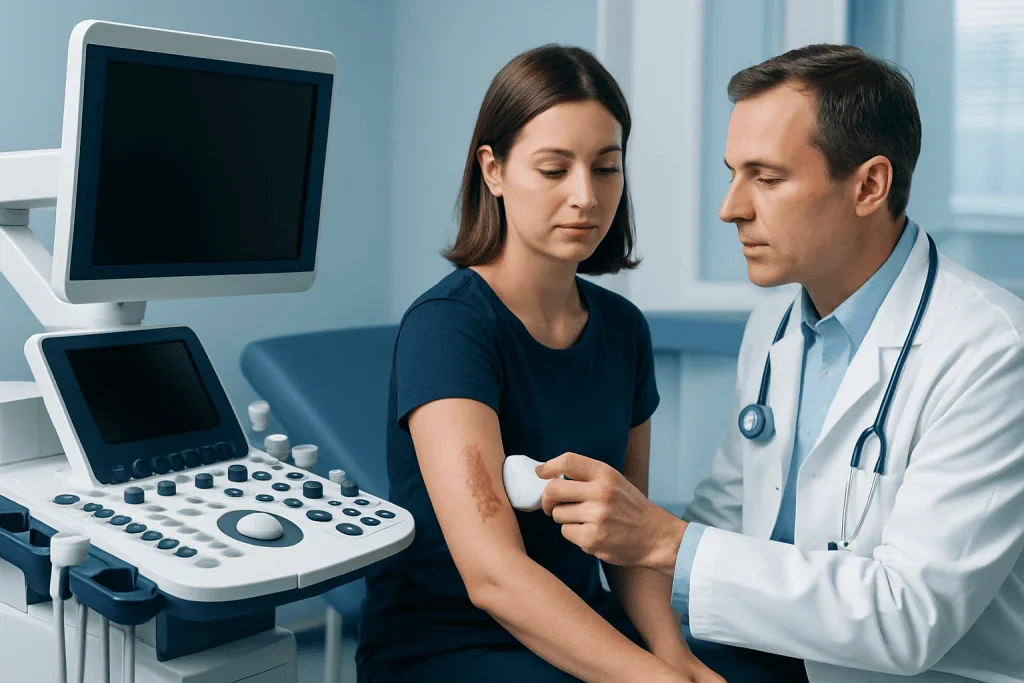
Hypertrophic scars are typically raised above the surrounding skin and may look pink, red, or darker than nearby tissue, depending on skin tone and the stage of healing. Early scars are often more vascular, which is why they can appear redder at first. Over time, many become paler and softer.
Symptoms vary from person to person. Some scars cause no discomfort and are mainly a cosmetic concern, while others can itch, feel tender, burn, or become painful when touched. Scars over joints or large burned areas may feel tight and can reduce movement if they contract as they mature.
Common features include:
- Raised or thickened skin over a healed wound
- Firm or rope-like texture
- Redness or darker discoloration
- Itching, tenderness, or mild pain
- Tightness, especially near a joint
- Slow improvement over months to years
The appearance of a scar does not always predict how much it will bother a person. A small scar may itch intensely, while a larger one may be painless. This is one reason a treatment plan is usually tailored to symptoms, location, age of the scar, and the patient’s goals.
Why Hypertrophic Scars Form: Causes and Risk Factors

A hypertrophic scar forms when the repair phase of wound healing is overactive. After a skin injury, the body lays down collagen to close and strengthen the wound. If too much collagen is produced, or if collagen is not remodeled normally, the scar can become thick and raised.
Not every wound turns into a hypertrophic scar. The risk is higher when healing is delayed, inflammation is prolonged, or the skin is under tension. Deep burns are a well-known cause, but surgery, traumatic cuts, bites, acne, and repeated irritation can also contribute.
Factors that may increase risk include:
- Burns, especially deeper burns
- Surgical incisions under tension
- Wounds that become infected or heal slowly
- Injuries on the chest, shoulders, upper back, neck, or joints
- Younger age, when healing responses can be stronger
- A personal tendency to develop raised scars
Skin color and genetics may also influence scar behavior, although hypertrophic scars can occur in any skin type. Good wound care does not guarantee prevention, but it can reduce avoidable triggers such as infection, dryness, and repeated trauma to the healing area.
How Doctors Diagnose a Hypertrophic Scar
Diagnosis is usually clinical, which means a doctor can often identify a hypertrophic scar by examining the skin and asking about the history of the wound. The timing of scar development, whether it stays inside the original wound borders, and whether symptoms like itching or tightness are present all help guide the diagnosis.
The doctor may ask when the injury happened, how long the wound took to heal, whether there was infection, and if the scar has changed in size or color. They may also examine movement if the scar is near a joint, because functional limitation can affect treatment decisions.
Tests are not usually needed. In less typical cases, or if another skin condition is suspected, the clinician may consider referral to a dermatologist or plastic surgeon. This is especially helpful if the scar is rapidly changing, repeatedly inflamed, or difficult to distinguish from a keloid or another type of lesion.
Assessment may also include the impact on daily life. For example, a scar on the hand, eyelid, mouth, or over a joint may require more active treatment than a similar scar in a less mobile area, even if both look similar in size.
Treatment Options for a Hypertrophic Scar
Treatment depends on the age of the scar, its size and location, symptoms, and whether movement is affected. Many hypertrophic scars improve gradually, so the best first step is often a conservative plan that supports scar maturation. A doctor may recommend treatment sooner if there is significant itching, pain, contracture, or distress about appearance.
Silicone gel sheets or topical silicone are commonly used first-line options. These products help hydrate the scar and may reduce thickness, redness, and discomfort when used regularly over time. Massage, moisturization, and pressure garments may also be advised in selected cases, especially after burns.
When symptoms persist or the scar remains prominent, doctors may consider procedures such as laser treatment to reduce redness and improve texture, or injections of corticosteroids into the scar to soften and flatten it. Other therapies may be considered in specialist care depending on the scar’s behavior and the response to earlier treatment.
If a scar causes marked tightness or limits movement, surgical revision can sometimes help, but surgery alone may not be enough because scars can recur. For some patients, a specialist in plastic and reconstructive surgery may advise combining surgery with silicone therapy, injections, or other measures to improve the result. In visible or uncertain cases, referral through dermatology can also be useful for diagnosis and long-term scar management.
Prevention and Self-Care During Healing
While no method can prevent every hypertrophic scar, careful wound care can support better healing. Following the treating clinician’s instructions, keeping the wound clean, and protecting the area from repeated friction or stretching are simple but important steps. Picking at scabs or exposing a fresh wound to trauma can worsen inflammation and increase the chance of a more noticeable scar.
Once the skin surface has closed, gentle moisturization may help reduce dryness and discomfort. If recommended by a doctor, silicone gel or silicone sheets can be started early in the scar-forming phase. Sun protection is also important because healing scars can darken more easily with ultraviolet exposure, making them more visible for longer.
Helpful self-care measures may include:
- Following wound-care instructions carefully
- Avoiding smoking if possible, as it can impair healing
- Protecting healing skin from tension, rubbing, and sun exposure
- Using silicone products if advised
- Attending follow-up visits after burns or surgery
- Seeking early advice if the scar becomes rapidly raised, itchy, or tight
Patients with a history of raised scars should mention this before surgery or cosmetic procedures. This allows the care team to plan incision placement, aftercare, and monitoring more carefully. Near the end of the care pathway, international patients may also wish to know that Acibadem International’s multidisciplinary specialists in JCI-accredited hospitals diagnose and treat problematic scars when expert assessment is needed.
When to Seek Medical Care
Medical review is appropriate if a scar becomes very itchy, painful, or increasingly tight, or if it starts to interfere with movement. Scars across joints, the face, eyelids, lips, or hands deserve particular attention because they may affect function as well as appearance.
A doctor should also assess scars that remain inflamed, repeatedly break down, or are difficult to identify. Sometimes what seems like a simple raised scar may need closer evaluation to rule out a keloid, infection, or another skin problem. Patients should not try to self-treat with harsh products, needles, or home remedies that can injure the skin further.
It is also sensible to seek care after a major burn, after surgery if the scar is worsening, or before choosing cosmetic scar procedures. Early professional advice can help set realistic expectations and may improve comfort and long-term scar quality.
Frequently asked questions
What is the difference between a hypertrophic scar and a keloid?
A hypertrophic scar stays within the borders of the original wound, while a keloid grows beyond those borders into surrounding skin. Hypertrophic scars may improve over time more often than keloids. Because the two can look similar early on, a doctor may need to assess the scar to confirm the diagnosis.
Do hypertrophic scars go away on their own?
Many hypertrophic scars become flatter, softer, and less red over time, but they may not disappear completely. Improvement often takes months and sometimes longer. If the scar is itchy, painful, or limiting movement, treatment may help.
What is the best treatment for a hypertrophic scar?
There is no single best treatment for every person. Silicone therapy is often used first, while injections, laser therapy, pressure treatment, or surgery may be considered depending on the scar’s age, symptoms, and location. A doctor can recommend the most suitable approach after examining the scar.
Can a hypertrophic scar be prevented?
Prevention is not always possible, but careful wound care can reduce risk. Keeping the wound clean, minimizing tension on healing skin, protecting it from sun exposure, and using silicone products when advised may help. People who tend to form raised scars should tell their doctor before surgery or skin procedures.
Are hypertrophic scars dangerous?
A hypertrophic scar is usually not dangerous and is considered a benign result of healing. However, it can cause discomfort, itch, cosmetic concern, or restricted movement if it forms over a joint or large area. Medical advice is helpful if symptoms are significant or the diagnosis is uncertain.
How long does it take for a hypertrophic scar to flatten?
The timeline varies widely. Some scars begin to soften and flatten within several months, while others take a year or longer to mature. Consistent treatment and follow-up can support improvement, but results differ from person to person.
References
- American Academy of Dermatology
- British Association of Dermatologists
- National Health Service
- Mayo Clinic
- World Health Organization
This article is for general information only and is not a substitute for professional medical advice. Please consult a qualified doctor about your individual situation.
Explore treatments in Turkey — costs, top hospitals & a free quote
JCI-accredited · board-certified surgeons · reply within 24h
Add us as a Preferred Source to see more of our trusted health content across Google Search, AI Overviews and Discover.