Radon and: A Complete Medical Overview

Radon is a colorless, odorless radioactive gas that can accumulate indoors. Long-term radon exposure increases the risk of lung cancer, even in people who have never smoked.
Key Takeaways
- Radon is a colorless, odorless radioactive gas that can accumulate indoors.
- Long-term radon exposure increases the risk of lung cancer, even in people who have never smoked.
- There are usually no early symptoms from radon exposure itself.
- Home testing is the only reliable way to detect radon.
- Reducing indoor radon levels with proven mitigation methods can lower health risk.
- Medical evaluation is important for persistent breathing symptoms or concern about long-term exposure.
Radon and health are closely connected because radon is a naturally occurring radioactive gas that can build up indoors and increase the risk of lung cancer over time. It cannot be seen or smelled, so testing the home is the only way to know whether exposure is present and whether action is needed.
Overview: what radon is and why it matters
Radon is a naturally occurring radioactive gas formed when uranium in soil, rock, and water breaks down. Outdoors, it usually disperses into the air and does not build up to harmful levels. Indoors, however, radon can enter through foundation cracks, construction joints, crawl spaces, sump pits, and some water supplies, then become concentrated over time.
The main health concern is not immediate poisoning or irritation. Instead, the concern is long-term exposure. When radon is inhaled, radioactive particles can damage cells lining the lungs. Over many years, this damage may increase the chance of developing lung cancer.
Radon does not cause a specific day-to-day feeling that reliably alerts a person to its presence. A home, school, or workplace can have high radon levels even if it appears clean, well maintained, and well ventilated at times. That is why public health agencies recommend testing rather than guessing.
From a medical perspective, radon is best understood as an environmental risk factor. It is especially important for people who smoke or used to smoke, because tobacco smoke and radon together can raise lung cancer risk more than either exposure alone.
How radon affects health
The strongest proven health effect of radon is an increased risk of lung cancer. This risk depends on several factors, including the radon level, the length of time a person is exposed, and whether the person smokes or has smoked in the past. Risk generally rises with higher levels and longer exposure.
Radon-related illness develops silently. In most cases, there are no early warning signs caused by radon itself. A person can live for years in a home with elevated radon without noticing any unusual symptoms. This is one reason radon is considered an important but often overlooked public health issue.
It is helpful to separate radon from common indoor air concerns such as dust, mold, or chemical odors. Those can cause irritation or allergy symptoms, while radon is primarily linked to long-term cancer risk rather than short-term discomfort. If breathing symptoms are present, a doctor may also consider other lung conditions, including lung cancer and chronic respiratory diseases.
Although the lungs are the main organ affected, worry about radon often leads people to seek broader health advice about smoking cessation, air quality, and cancer screening. A clinician can help place radon exposure in context and decide whether further testing or follow-up is appropriate.
Symptoms and possible signs of illness

Radon exposure itself usually does not cause immediate symptoms. People do not typically feel dizzy, irritated, or unwell simply because radon is present in a building. Because it has no color, smell, or taste, it cannot be detected by human senses.
Symptoms may appear only if lung disease develops later. Possible warning signs that deserve medical attention include a persistent cough, coughing up blood, chest pain, shortness of breath, unexplained weight loss, or repeated respiratory infections. These symptoms do not automatically mean radon-related illness, but they should not be ignored.
Many of these symptoms have other common causes, such as infection, asthma, chronic obstructive pulmonary disease, or other lung conditions. A doctor may recommend imaging or specialist assessment if symptoms are ongoing, especially in a person with a smoking history or known exposure to environmental risks.
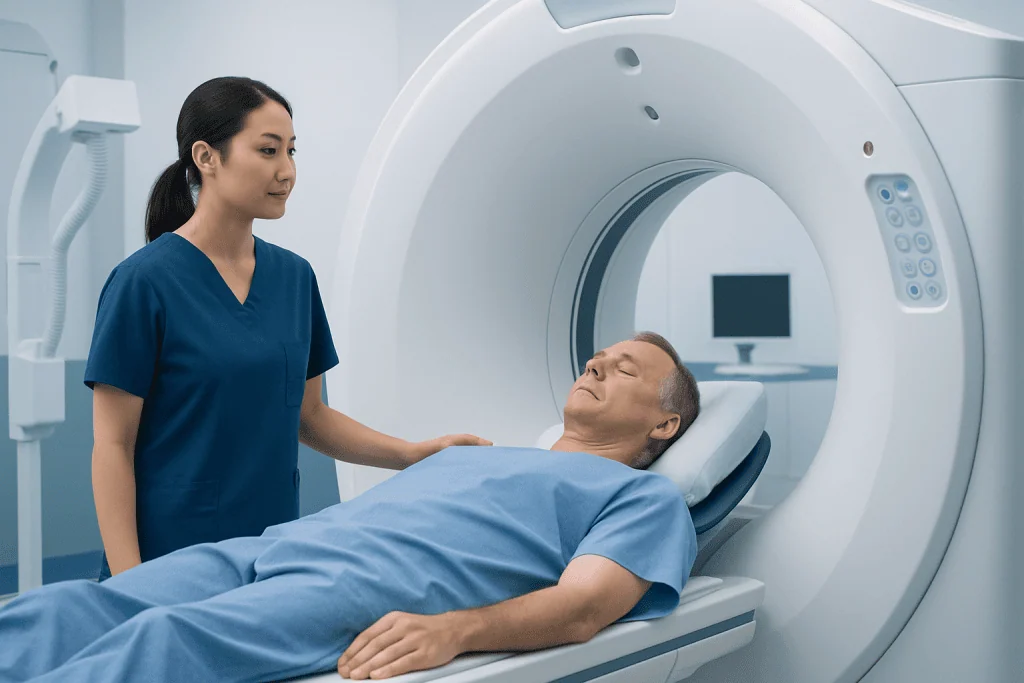
If evaluation is needed, testing may include chest imaging such as chest X-ray or more detailed CT imaging, depending on the clinical situation. These tests do not measure radon exposure directly; they help assess whether a lung problem is present.
Where radon comes from and who may be at higher risk
Radon comes mainly from the ground beneath buildings. It can seep through small openings in floors and walls, around service pipes, through crawl spaces, and into basements and lower living areas. Any home may have elevated radon, including newer or older houses, homes with or without basements, and well-sealed energy-efficient buildings.
Geography matters, but local variation can be large. Homes next to each other may have very different radon levels depending on soil composition, building materials, ventilation patterns, and structural details. For that reason, neighborhood assumptions are not enough; each building should be tested individually.
Certain people face a higher health risk from the same level of radon exposure. Smokers and former smokers are the clearest example. Children may also be a concern in household planning because they can have many years of potential future exposure ahead of them, even though the main proven disease link remains lung cancer later in life.
People who spend long periods in basements, ground-floor rooms, or underground workplaces may also have more exposure if radon levels are elevated. Those with prior lung disease, a family history of lung cancer, or combined occupational exposures should discuss their overall risk with a qualified clinician.
Testing, diagnosis, and medical evaluation
The only reliable way to know whether indoor radon is present is to test for it. Home radon test kits and professional measurement services can assess indoor levels. Short-term tests can provide a quick snapshot, while long-term tests often give a better picture of average exposure across seasons and living patterns.
Testing radon in a building is different from diagnosing a medical condition. There is no routine blood test, breath test, or scan that confirms how much radon a person has absorbed over time. Instead, doctors evaluate health effects by reviewing symptoms, smoking history, occupational exposures, and imaging or lung tests when needed.
If a person has concerning respiratory symptoms, a clinician may perform a physical examination and consider tests such as pulmonary function assessment, chest imaging, or referral to a lung specialist. In some cases, additional evaluation may be needed to rule out conditions such as COPD or other causes of chronic cough and breathlessness.
People with long-term exposure often ask whether they should be screened for lung cancer. The answer depends on individual risk factors, especially age and smoking history. A doctor can explain whether formal screening programs or specialist consultation are appropriate.
Reducing exposure and treatment options
The most effective way to reduce radon-related risk is to lower indoor radon levels. Proven mitigation methods include sub-slab depressurization systems, improved under-floor ventilation, sealing major entry routes, and other building-specific repairs carried out by qualified professionals. Retesting after mitigation is important to confirm that levels have decreased.
General ventilation may help in some situations, but it is not always enough on its own. Because radon entry is influenced by building structure and pressure differences, a proper mitigation plan is usually more reliable than simply opening windows from time to time.
There is no medicine that removes past radon exposure from the body. Medical treatment is directed at any disease that may develop, not at the exposure itself. If lung cancer is diagnosed, management may involve a personalized plan that can include lung cancer treatment and other specialist care depending on the stage and the person’s overall health.
Stopping smoking is one of the most important health steps for anyone concerned about radon. It does not erase prior exposure, but it can meaningfully reduce future lung cancer risk. Near the end of the care journey, some international patients may seek assessment in centers such as Acibadem International, where multidisciplinary specialists in JCI-accredited hospitals diagnose and treat lung and respiratory conditions.
Prevention and self-care at home
Prevention focuses on awareness, testing, and practical action. Testing is especially sensible when moving into a new home, after structural renovations, when using previously unfinished lower-level rooms more often, or if a neighboring property is found to have elevated radon. Owners and tenants alike can ask about testing and mitigation history.
Simple steps can support a healthier indoor environment, although they do not replace formal radon control. These include maintaining ventilation systems, addressing visible foundation gaps, and following up after major building work. If a water source is known to contribute radon in a local area, specialized advice may be needed.
- Test the home with an approved radon method.
- Repeat testing when recommended or after mitigation work.
- Ask about radon when buying, selling, or renting a property.
- Avoid smoking and limit secondhand smoke exposure indoors.
- Seek medical advice for persistent respiratory symptoms.
Self-care also includes keeping a record of environmental concerns and health changes. This can help a doctor understand the timeline of exposure, symptoms, smoking history, and other factors that influence risk.
When to seek medical care
Medical care is appropriate if a person has ongoing cough, shortness of breath, chest discomfort, coughing up blood, repeated chest infections, or unexplained weight loss. These symptoms have many possible causes, but they warrant professional assessment, especially if there is a known history of smoking or long-term radon exposure.
A doctor should also be consulted when anxiety about radon is causing significant worry or uncertainty about next steps. Clinicians can explain risk in a balanced way, review whether any tests are indicated, and help patients focus on effective actions such as home mitigation and smoking cessation.
Urgent care is needed for severe breathing difficulty, sudden chest pain, or coughing up a significant amount of blood. Even if radon is part of the background concern, these symptoms need prompt medical attention because they can signal a serious lung or heart problem.
For people without symptoms, routine medical advice may still be helpful if a building test shows high radon levels, particularly in current or former smokers. A tailored conversation can clarify whether monitoring, lifestyle changes, or specialist referral would be useful.
Frequently asked questions
What does “radon and health” mean?
It refers to the relationship between radon exposure and its effects on the body, especially the lungs. The most important proven health risk is an increased chance of lung cancer after long-term exposure.
Can a person feel radon exposure right away?
Usually no. Radon has no smell, color, or taste, and it does not typically cause immediate symptoms. That is why building testing is necessary to detect it.
Is radon only a problem for smokers?
No. Radon can increase lung cancer risk in people who have never smoked as well. However, the risk is higher in people who currently smoke or smoked in the past.
How can someone know if there is radon in the home?
The only reliable method is a radon test performed with an approved home kit or by a qualified professional. Results can show whether levels are elevated and whether mitigation is recommended.
Can radon exposure be treated with medication?
There is no medication that removes past radon exposure from the body. The main approach is to reduce ongoing exposure in the building and to evaluate and treat any lung disease if it develops.
Should everyone exposed to radon get a lung scan?
Not necessarily. Imaging decisions depend on symptoms and overall risk factors, especially age and smoking history. A doctor can advise whether evaluation or formal lung cancer screening is appropriate for the individual.
References
- World Health Organization
- United States Environmental Protection Agency
- Centers for Disease Control and Prevention
- National Cancer Institute
This article is for general information only and is not a substitute for professional medical advice. Please consult a qualified doctor about your individual situation.
Persistent digestive symptoms? Get evaluated in Turkey
JCI-accredited · board-certified surgeons · reply within 24h
Add us as a Preferred Source to see more of our trusted health content across Google Search, AI Overviews and Discover.