Arthritis in Knee: Symptoms, Causes, and Treatment Options

Arthritis in knee refers to joint inflammation and cartilage damage that can cause pain, stiffness, swelling, and limited mobility. Osteoarthritis is the most common type, but rheumatoid arthritis, post-traumatic arthritis, and crystal-related arthritis can also affect the knee.
Key Takeaways
- Arthritis in knee refers to joint inflammation and cartilage damage that can cause pain, stiffness, swelling, and limited mobility.
- Osteoarthritis is the most common type, but rheumatoid arthritis, post-traumatic arthritis, and crystal-related arthritis can also affect the knee.
- Diagnosis is based on symptoms, physical examination, imaging, and sometimes blood tests or joint fluid analysis.
- Many people improve with a combination of exercise, physical therapy, weight management, medicines, and supportive devices.
- Surgery may be considered when symptoms are severe, daily activities are limited, and non-surgical treatments no longer help.
Arthritis in knee is a common cause of pain, stiffness, swelling, and reduced movement in one or both knees. Treatment depends on the type and severity, and often includes exercise, weight management, pain relief, physical therapy, injections, and sometimes surgery.
Overview: What arthritis in knee means
Arthritis in knee means the knee joint has ongoing inflammation, wear-related damage, or both, leading to pain and reduced function. The knee is one of the body’s largest and hardest-working joints, so arthritis there can make walking, climbing stairs, standing up, and exercise more difficult. Symptoms may come on gradually, as in osteoarthritis, or more suddenly in inflammatory or crystal-related forms of arthritis.
The term covers several conditions rather than a single disease. The most common is osteoarthritis, in which the joint cartilage gradually wears down and the surrounding bone and tissues change over time. Other causes include autoimmune inflammation such as rheumatoid arthritis, prior injury causing post-traumatic arthritis, and gout or pseudogout, which can trigger painful flare-ups.
Although knee arthritis is common with aging, it is not simply an unavoidable part of getting older. Symptoms can often be reduced and function improved with a personalized plan. Early evaluation can help identify the type of arthritis and guide treatment before pain and stiffness begin to affect daily life more significantly.
Symptoms and how they may affect daily life
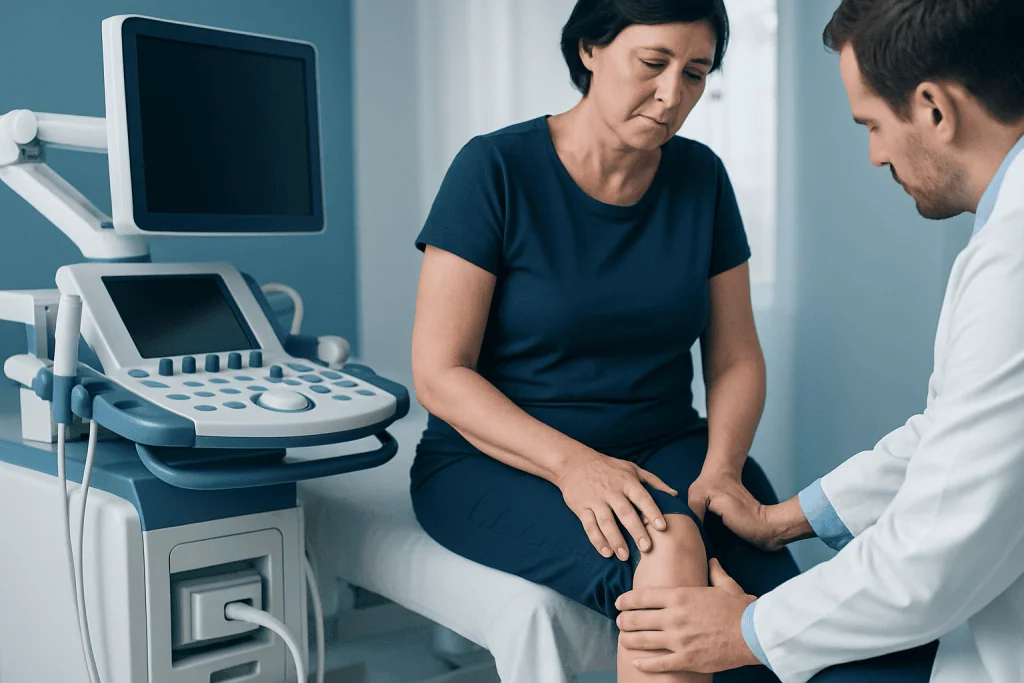
Arthritis in knee often causes pain during movement, especially with walking, bending, climbing stairs, or getting up from a chair. Many people notice stiffness after resting, particularly in the morning or after sitting for a long time. The joint may also feel swollen, warm, tender, or less stable than usual.
Symptoms do not always match X-ray findings exactly. Some people with mild imaging changes have significant pain, while others with more visible joint damage have milder symptoms. Pain may be steady or come in flare-ups, and weather changes, activity level, and body weight can influence how the knee feels from day to day.
Common symptoms include:
- Pain with activity or after activity
- Morning stiffness or stiffness after rest
- Swelling around the knee
- Reduced range of motion
- Grinding, clicking, or a sensation of catching
- Weakness or a feeling that the knee may give way
- Difficulty walking longer distances or using stairs
Over time, untreated symptoms may affect sleep, exercise, work, and independence. Because movement can become uncomfortable, people sometimes become less active, which may weaken the muscles that support the knee and further worsen function. Addressing symptoms early can help break this cycle.
Causes and risk factors

Osteoarthritis is the leading cause of arthritis in knee. In osteoarthritis, cartilage that cushions the ends of bones becomes thinner and rougher over time. The joint lining, bone beneath the cartilage, and surrounding tissues may also change, contributing to pain, stiffness, and swelling. Risk rises with age, but age alone does not fully explain why some people develop symptoms and others do not.
Other causes include autoimmune conditions such as rheumatoid arthritis, in which the immune system attacks the joint lining and causes ongoing inflammation. Knee arthritis can also follow a previous injury such as a ligament tear, meniscus injury, or fracture. Repeated stress from certain occupations or sports may add to long-term joint strain. Crystal deposits from gout or pseudogout can produce sudden episodes of severe knee pain and swelling.
Important risk factors include:
- Older age
- Excess body weight
- Previous knee injury or surgery
- Family history of osteoarthritis
- Muscle weakness around the knee or hip
- Inflammatory autoimmune disease
- Joint malalignment, such as bow-legged or knock-kneed posture
- Repetitive kneeling, squatting, or heavy joint loading
Because the cause influences treatment, it matters whether the problem is mainly wear-related, inflammatory, post-traumatic, or crystal-related. A knee that is swollen, warm, and suddenly painful may need different testing and care than a knee with slowly progressive discomfort over several years.
How doctors diagnose knee arthritis
Diagnosis usually begins with a discussion of symptoms, medical history, and how the knee problem affects everyday activities. A doctor will ask when symptoms started, whether they are constant or come and go, and whether there was a previous injury. During the physical exam, the knee is checked for swelling, warmth, tenderness, range of motion, stability, alignment, and walking pattern.
X-rays are commonly used to look for signs such as joint space narrowing, bone spurs, and changes in bone shape that suggest osteoarthritis. In some cases, magnetic resonance imaging may help evaluate cartilage, ligaments, menisci, or other soft tissues, especially if symptoms suggest an injury or another condition. Blood tests may be useful when inflammatory arthritis is suspected.
If the knee is significantly swollen, a doctor may remove a small sample of joint fluid for analysis. This can help identify infection, gout, pseudogout, or inflammatory arthritis. Joint infection is not the same as arthritis in knee caused by osteoarthritis, but it can produce pain and swelling and needs urgent treatment.
Because knee pain can have other causes, doctors may also consider bursitis, tendon problems, referred pain from the hip or spine, or cartilage and meniscus injuries. In some people, a fuller orthopedic assessment is needed to plan care, especially if surgery might be an option or there is concern for advanced osteoarthritis.
Treatment options: from conservative care to surgery
Treatment for arthritis in knee usually starts with non-surgical measures. A tailored exercise program is a foundation of care because it helps maintain joint movement, strengthen the muscles around the knee, and improve balance and function. Weight management can also reduce stress on the knee joint and ease symptoms in people who are overweight. Many patients benefit from a combination of physical therapy, activity adjustment, and simple pain-relief strategies.
Medicines may include acetaminophen or nonsteroidal anti-inflammatory drugs, depending on a person’s health history and a clinician’s advice. Topical anti-inflammatory gels may help some people with fewer whole-body side effects than oral medicines. For selected patients, supportive devices such as a brace, cane, shock-absorbing footwear, or insoles can improve comfort and confidence during walking.
When symptoms persist despite basic treatment, doctors may consider injections. These can include corticosteroid injections for short-term relief in some patients. In some cases, clinicians may discuss other injection-based approaches depending on the diagnosis and local practice. People whose symptoms are driven by inflammatory arthritis may need disease-specific treatment supervised by a rheumatology team rather than standard osteoarthritis care alone.
If pain is severe, sleep is affected, and daily tasks remain difficult despite consistent non-surgical treatment, surgery may be discussed. Depending on the joint damage and the person’s overall health, options may include knee replacement or other procedures planned by an orthopedic surgeon. In broader joint care, related approaches such as robotic orthopedic surgery and physical therapy and rehabilitation may be part of treatment planning or recovery support.
Self-care, exercise, and prevention strategies
Self-care can make a meaningful difference in managing arthritis in knee. Gentle, regular movement is generally more helpful than complete rest. Low-impact activities such as walking on level ground, cycling, swimming, and water exercise can improve flexibility and strength without placing as much stress on the joint as high-impact activities.
Strengthening the quadriceps, hamstrings, hip muscles, and core can help the knee work more efficiently. Stretching may reduce stiffness, while balance exercises can support stability and reduce fear of falling. A physical therapist can help design a program that fits the person’s pain level, fitness, and goals. It is usually best to increase activity gradually rather than doing too much during a good day and flaring symptoms afterward.
Helpful self-care steps include:
- Maintaining a healthy weight
- Using heat for stiffness and ice for flares, if these provide relief
- Choosing supportive shoes
- Avoiding repetitive deep squatting or twisting when possible
- Using a cane or brace if recommended
- Pacing activity and taking short rest breaks during symptom flares
Prevention is not always possible, but reducing knee injuries, staying active, and treating problems early may lower the risk of progression. For international patients who need specialist evaluation, Acibadem International’s multidisciplinary teams at JCI-accredited hospitals diagnose and treat knee arthritis with orthopedic, rheumatology, imaging, and rehabilitation support.
When to seek medical care
Medical review is a good idea if knee pain lasts more than a few weeks, keeps returning, or begins to interfere with walking, exercise, sleep, or work. A clinician should also assess persistent swelling, increasing stiffness, or loss of movement, especially if home measures are no longer helping. Early care can clarify the cause and support safer, more effective treatment choices.
Prompt medical attention is especially important if the knee becomes suddenly very swollen, red, hot, or severely painful, or if there is fever, inability to bear weight, or recent trauma. These features can suggest infection, fracture, crystal arthritis, or another urgent problem that needs rapid evaluation.
People who have an autoimmune disease, a history of gout, or previous major knee injury should not ignore new or changing symptoms. A doctor can help determine whether the condition is mainly degenerative, inflammatory, or injury-related and whether referral to orthopedics, rheumatology, or rehabilitation would be most helpful.
Frequently asked questions
What is the most common type of arthritis in knee?
Osteoarthritis is the most common type of arthritis in knee. It develops when cartilage gradually wears down and the joint changes over time, leading to pain, stiffness, and reduced movement.
Can arthritis in knee be cured?
There is no universal cure for most chronic forms of knee arthritis, but symptoms can often be managed very effectively. Many people maintain good mobility and quality of life with exercise, weight management, medicines, physical therapy, and, when needed, procedures or surgery.
Is walking good for knee arthritis?
For many people, walking is a helpful low-impact activity that supports joint movement, circulation, and general health. The key is to walk at a comfortable pace, use supportive shoes, and avoid pushing through severe pain; a clinician or physical therapist can help tailor activity safely.
How do I know if my knee pain is arthritis or an injury?
Arthritis often causes gradual pain, stiffness after rest, and symptoms that build over time, while an injury may start suddenly after a twist, fall, or impact. Still, the two can overlap, and a doctor may need to examine the knee and arrange imaging to tell the difference clearly.
When is knee replacement considered for arthritis in knee?
Knee replacement is usually considered when pain is severe, daily activities are limited, and non-surgical treatments no longer provide enough relief. The decision depends on symptoms, exam findings, imaging, general health, and personal goals rather than on X-rays alone.
Can young adults get arthritis in knee?
Yes, although knee arthritis is more common with age, younger adults can also develop it. Previous injury, autoimmune disease, joint alignment problems, or crystal-related arthritis can lead to knee arthritis earlier in life.
References
- American Academy of Orthopaedic Surgeons
- Arthritis Foundation
- National Institute of Arthritis and Musculoskeletal and Skin Diseases
- Centers for Disease Control and Prevention
- National Health Service
This article is for general information only and is not a substitute for professional medical advice. Please consult a qualified doctor about your individual situation.
Arthritis in Turkey — costs, top hospitals & a free quote
JCI-accredited · board-certified surgeons · reply within 24h
Add us as a Preferred Source to see more of our trusted health content across Google Search, AI Overviews and Discover.

Physical Medicine & Rehabilitation
Restoring movement and function after injury, surgery or neurological conditions.
150 specialists in this unit