Thigh Pain: Common Causes, Related Conditions, and When to See a Doctor

Thigh pain commonly results from muscle strain, overuse, nerve irritation, or problems in the hip, knee, or lower back. The location and pattern of pain can offer clues, such as front, inner, outer, or back-of-thigh discomfort.
Key Takeaways
- Thigh pain commonly results from muscle strain, overuse, nerve irritation, or problems in the hip, knee, or lower back.
- The location and pattern of pain can offer clues, such as front, inner, outer, or back-of-thigh discomfort.
- Warning signs include sudden swelling, redness, weakness, numbness, inability to bear weight, or pain after a significant injury.
- Diagnosis may involve a physical exam and, when needed, imaging, blood tests, or vascular studies.
- Treatment depends on the cause and may include rest, physical therapy, medicines, or treatment of an underlying joint, nerve, or vascular condition.
Thigh pain is a symptom rather than a diagnosis, and it can come from muscles, tendons, joints, nerves, blood vessels, or referred pain from the back or hip. Many cases improve with rest and activity changes, but persistent, severe, or sudden thigh pain should be assessed to identify the cause and guide treatment.
Overview: what thigh pain can mean
Thigh pain can happen in the front, back, inner, or outer part of the upper leg. In many people, it is related to a muscle strain, overuse, or irritation of soft tissues after exercise, walking, or a sudden movement. However, thigh pain can also come from the hip joint, knee, lower back, nerves, or blood vessels, so the same symptom may have several different causes.
A helpful way to think about thigh pain is by asking three questions: where the pain is felt, what it feels like, and what brought it on. A dull ache after activity may suggest overuse, while sharp pain with a specific movement can point to a strain. Burning, tingling, or numbness may be more consistent with nerve involvement, and swelling or warmth can raise concern for inflammation or a circulation problem.
Because thigh pain is a symptom rather than a disease, treatment works best when the underlying cause is identified. Mild cases may improve with rest, gentle movement, and temporary activity modification. If pain is severe, keeps returning, or comes with weakness, fever, major swelling, or trouble walking, medical evaluation is important.
How symptoms vary by location and pattern
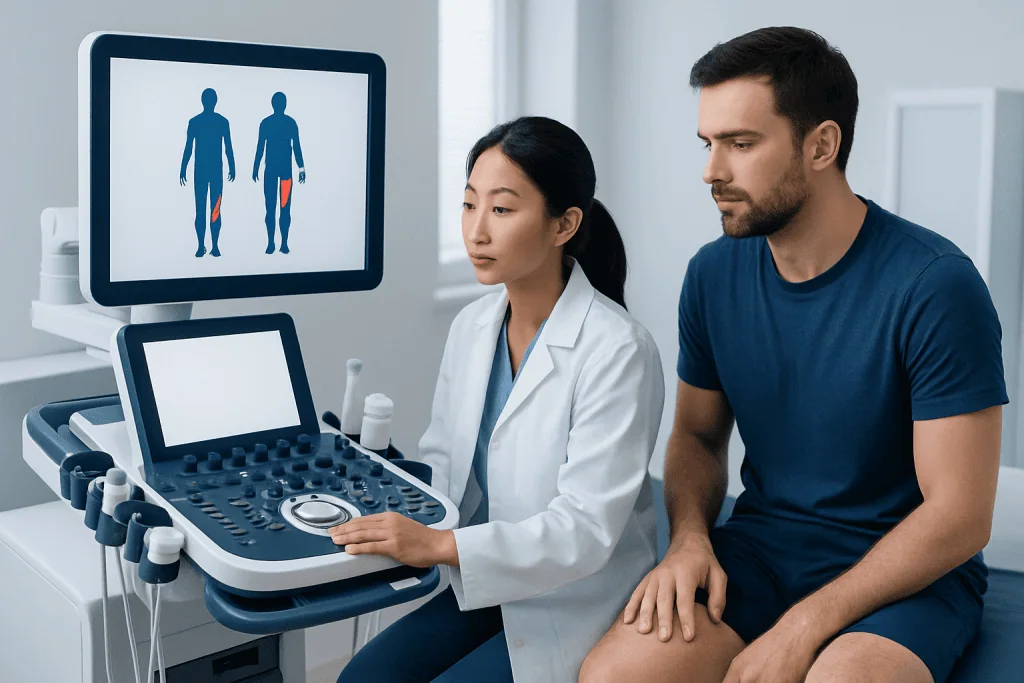
The exact pattern of thigh pain often helps narrow down the cause. Front-of-thigh pain may be linked to quadriceps muscle strain, hip flexor problems, or nerve compression from the lower back. Inner thigh pain is often associated with adductor muscle strain, especially in people who run, kick, or change direction quickly. Outer thigh pain can relate to soft-tissue irritation near the hip, while pain in the back of the thigh may come from the hamstrings or from nerve pain traveling down from the spine.
The quality of pain also matters. Soreness or tightness after activity may suggest a minor muscle injury. Sharp pain during movement can happen with a muscle or tendon strain. Burning, electric, or shooting pain may occur when a nerve is irritated, such as in sciatica. Cramping pain with walking that improves with rest can sometimes reflect a circulation problem rather than a muscle issue.
Other symptoms can provide important clues:
- Swelling, bruising, or tenderness after injury may suggest a strain or contusion.
- Stiffness in the hip or groin can point to joint-related causes.
- Numbness, tingling, or weakness may indicate nerve involvement.
- Redness, warmth, or one-sided leg swelling needs prompt medical assessment.
- Fever or unexplained weight loss deserves evaluation, especially if pain is persistent.
Some people notice thigh pain only during exercise, while others feel it at rest or at night. Pain that wakes a person from sleep, steadily worsens, or appears without a clear reason should not be ignored.
Common causes and related conditions

Muscle strain is one of the most frequent reasons for thigh pain. This can affect the quadriceps in the front, the hamstrings in the back, or the adductor muscles on the inner thigh. Strains are more likely after sprinting, jumping, sudden direction changes, or exercising without enough warm-up. The pain may start suddenly or build over hours, and there may be tenderness, tightness, or bruising.
Joint and tendon problems can also refer pain into the thigh. Conditions affecting the hip may cause aching in the upper thigh or groin, especially with walking, climbing stairs, or rising from a chair. For example, hip osteoarthritis can create stiffness and a deep ache that seems to spread into the thigh. Tendon irritation around the hip can cause pain on the outer side of the upper leg.
Nerve-related causes are another important group. Problems in the lower back, including a bulging disc or spinal wear-and-tear, can irritate nerves and send pain down the thigh. This pain may be burning, shooting, or associated with tingling. Sometimes the discomfort is not primarily in the leg itself but is referred from the back, which is why a clinician may examine both the spine and the hip when assessing thigh pain.
Less often, thigh pain may be linked to circulation or more serious medical conditions. A blood clot in a deep vein can cause swelling, tenderness, warmth, and pain, usually in one leg. Reduced blood flow in the arteries may lead to cramping pain during walking. Infection, inflammatory conditions, or, rarely, tumors can also cause persistent thigh pain, especially when symptoms do not fit a typical injury pattern.
Risk factors that make thigh pain more likely
Thigh pain is more common when the muscles and joints are under repeated stress. Sudden increases in training, poor conditioning, muscle tightness, and inadequate recovery can all increase the chance of overuse or strain. Sports that involve sprinting, kicking, jumping, or rapid directional changes place particular strain on the thigh muscles.
Everyday factors also matter. Long periods of sitting, weak core or hip muscles, limited flexibility, and poor movement mechanics can contribute to discomfort in the thigh, hip, and lower back. Footwear, walking surface, and workplace setup may also affect posture and loading patterns, especially in people who stand for long hours or perform repetitive tasks.
Age and medical history can shift the likely cause. Older adults are more likely to have joint wear, tendon problems, circulation issues, or nerve compression from the spine. People with diabetes, vascular disease, arthritis, or a history of back problems may be at increased risk of non-muscle causes of thigh pain. A recent operation, prolonged immobility, smoking, or hormone therapy may raise the risk of a blood clot and should always be mentioned to a doctor.
How doctors diagnose thigh pain
Diagnosis starts with a careful history and physical examination. A doctor will ask when the pain began, where it is located, whether there was an injury, and what makes it better or worse. The exam may include checking walking pattern, range of motion in the hip and knee, muscle strength, tenderness, swelling, reflexes, and sensation.
Many cases can be assessed clinically, but tests are sometimes needed to confirm the cause or rule out more serious conditions. Imaging may be used when symptoms are severe, prolonged, or linked to trauma. An X-ray can help evaluate bone and joint problems, while MRI may be useful for soft tissue, tendon, or nerve-related concerns. Ultrasound can assess muscle injuries and may also be used if a blood clot is suspected.
When symptoms suggest a vascular problem, additional circulation tests may be recommended. If back-related nerve compression is suspected, evaluation may include imaging of the spine. Blood tests are not needed for every patient, but they may be helpful when infection, inflammation, or another systemic condition is possible. The goal is not simply to label the pain, but to identify the source accurately enough to guide treatment and recovery.
Treatment options for thigh pain
Treatment depends on the underlying cause. For mild muscle strains and overuse injuries, initial care often includes reducing aggravating activity, using ice in the early phase, and gradually returning to movement as symptoms improve. Short-term pain relief medicines may be recommended when appropriate. Complete inactivity is not usually necessary for long, but pushing through pain can delay healing.
Physical therapy is often central to recovery, especially when thigh pain is related to muscle imbalance, tendon irritation, hip mechanics, or back-related nerve symptoms. A rehabilitation plan may focus on flexibility, strengthening, posture, gait, and a gradual return to normal activities. In some cases, structured physical therapy and rehabilitation can help reduce recurrence by addressing the movement patterns that contributed to the problem in the first place.
If the source is the hip, knee, or spine, treatment may involve a broader orthopedic or neurological approach. This can include guided exercise, anti-inflammatory strategies, injections in selected cases, or treatment of the underlying condition. Patients with persistent joint-related pain may be assessed through orthopedics and traumatology, especially when pain limits walking or everyday function.
Urgent treatment is needed when thigh pain is caused by a blood clot, infection, fracture, or significant nerve compression. These conditions require prompt medical evaluation rather than home care. Near the end of the care pathway, some international patients choose centers such as Acibadem International, where multidisciplinary specialists in JCI-accredited hospitals evaluate and treat musculoskeletal, neurological, and vascular causes of leg pain.
Self-care, prevention, and safe activity
Many episodes of thigh pain can be prevented or reduced with sensible training and daily habits. A gradual increase in exercise intensity gives muscles and tendons time to adapt. Warming up before sports, strengthening the hips and core, and maintaining flexibility may lower the risk of strain, especially for runners and people who play field or court sports.
Good self-care also means listening to early warning signs. Persistent tightness, repeated cramping, or pain that returns with the same activity may signal a problem that needs correction rather than simply more rest. Alternating activities, improving technique, and allowing recovery days can be helpful. For people with back-related or posture-related pain, regular movement breaks and ergonomic adjustments may reduce strain on the spine and legs.
Home care is most appropriate for mild symptoms without red flags. Rest from painful activities for a short period, gentle stretching only if comfortable, and a gradual return to activity are often reasonable. However, self-treatment should not replace medical advice when pain is severe, getting worse, or linked to swelling, weakness, or numbness.
When to seek medical care
Medical care is advisable if thigh pain lasts more than a few days without clear improvement, keeps returning, or interferes with walking, work, sleep, or exercise. It is also worth seeking assessment if the pain follows an injury and there is marked bruising, a popping sensation, or difficulty bearing weight. A doctor can help determine whether the problem is muscular, joint-related, neurological, or vascular.
Urgent medical attention is important if thigh pain comes with one-sided swelling, warmth, redness, chest pain, shortness of breath, fever, sudden weakness, numbness, or loss of bladder or bowel control. These symptoms can signal a condition that needs prompt treatment. Severe pain after a fall, inability to move the leg normally, or a visibly deformed limb should also be evaluated without delay.
If symptoms suggest a vascular issue, specialist assessment through cardiovascular surgery or vascular medicine may be needed. If pain appears to be related to the spine or nerve compression, evaluation by neurosurgery or a spine specialist may be appropriate in selected cases. Early assessment can help prevent complications and support a safer recovery plan.
Frequently asked questions
What is the most common cause of thigh pain?
One of the most common causes of thigh pain is muscle strain or overuse, especially after exercise, running, or sudden movements. However, pain can also come from the hip, lower back, nerves, or blood vessels, so persistent symptoms should be assessed.
Can thigh pain come from the back?
Yes. Irritated nerves in the lower back can send pain into the front, side, or back of the thigh. This type of pain may feel burning, shooting, or tingling and may occur with numbness or weakness.
How can someone tell if thigh pain is muscular or something more serious?
Muscular pain often follows activity or injury and may improve with rest over several days. Warning signs of a more serious problem include major swelling, redness, warmth, fever, severe weakness, numbness, inability to bear weight, or pain that is sudden and unexplained.
Should thigh pain be treated with rest or exercise?
It depends on the cause. Mild strains often benefit from short-term rest from painful activities followed by a gradual return to movement, while complete rest for long periods may slow recovery. Exercise programs are often helpful when guided by a clinician or physical therapist.
Can dehydration cause thigh pain?
Dehydration can contribute to muscle cramps, which some people feel in the thigh. But dehydration does not explain every case, and ongoing or recurrent thigh pain may have another cause that needs evaluation.
When should someone worry about a blood clot in the thigh or leg?
A blood clot should be considered when pain is accompanied by swelling in one leg, warmth, tenderness, or redness, especially after travel, surgery, or prolonged immobility. These symptoms need prompt medical attention because clots can become serious if untreated.
References
- American Academy of Orthopaedic Surgeons
- National Health Service
- Mayo Clinic
- National Institute of Arthritis and Musculoskeletal and Skin Diseases
- Centers for Disease Control and Prevention
This article is for general information only and is not a substitute for professional medical advice. Please consult a qualified doctor about your individual situation.
Joint and spine care in Turkey — expert assessment & treatment
JCI-accredited · board-certified surgeons · reply within 24h
Add us as a Preferred Source to see more of our trusted health content across Google Search, AI Overviews and Discover.