Blisters on Feet: What Patients Need to Know

Most blisters on feet result from friction, pressure, heat, or moisture. Keeping the blister clean, protected, and free from further rubbing helps it heal.
Key Takeaways
- Most blisters on feet result from friction, pressure, heat, or moisture.
- Keeping the blister clean, protected, and free from further rubbing helps it heal.
- A blister should usually be left intact unless a clinician advises drainage.
- People with diabetes, nerve problems, or poor blood flow should seek medical advice early.
- Warning signs such as pus, spreading redness, fever, or severe pain may suggest infection.
Blisters on feet are common and are most often caused by friction, heat, or moisture that irritates the upper layers of skin. Most improve with simple care, but some need medical attention, especially if they are infected, very painful, or occur in people with diabetes or poor circulation.
Overview: what blisters on feet usually mean
Blisters on feet are small pockets of fluid that form when the skin is irritated or damaged. In many cases, they develop after repeated rubbing from shoes, long walks, exercise, or warm and sweaty conditions. They are common, often uncomfortable, and usually manageable with basic skin protection and time.
A blister is the body’s natural way of protecting deeper skin. The thin outer layer covers fluid underneath, creating a cushion while the area heals. This means that although a blister can look concerning, it is often helping the skin recover.
Not every blister has the same cause. Some are simple friction blisters, while others may be related to burns, allergic reactions, skin infections, or ongoing skin conditions such as eczema. Looking at when the blister appeared, what shoes or activities were involved, and whether there are other skin changes can help clarify the reason.
Most people improve with rest, dry socks, properly fitting footwear, and a clean dressing. However, recurrent blisters, blisters that appear without clear friction, or blisters in people with diabetes should not be ignored and deserve professional evaluation.
Common symptoms and what a foot blister looks like
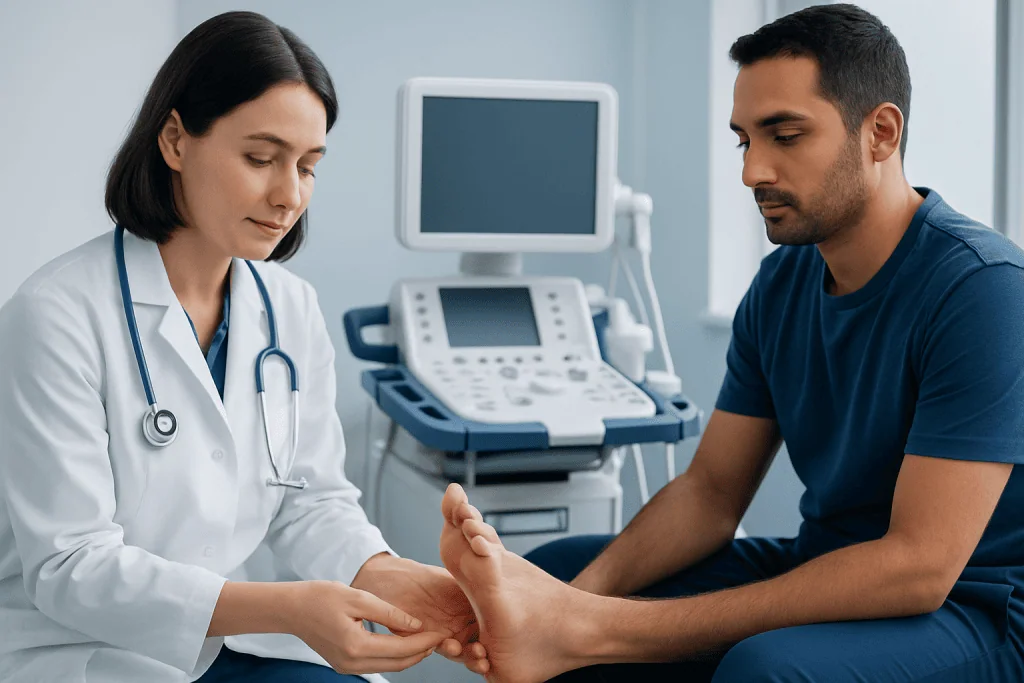
Blisters on feet often start as a “hot spot,” which is a tender, burning, or rubbing sensation before a visible bubble appears. Soon after, a raised area forms that may contain clear fluid. The skin around it can feel sore, especially when walking or wearing shoes.
Some blisters remain small and only mildly uncomfortable. Others become larger, tense, and painful if pressure continues. If the top layer tears, the raw skin underneath may sting and be more vulnerable to infection.
Symptoms can vary depending on the cause. Friction blisters are usually found on pressure points such as the heel, toes, sides of the feet, or ball of the foot. Blisters related to skin disease may occur with itching, scaling, redness, or repeated flare-ups.
- Clear fluid under a raised patch of skin
- Pain or tenderness with walking
- Redness from rubbing or pressure
- Stinging if the blister opens
- Occasional blood-filled blister after stronger pressure or impact
Why blisters on feet happen

The most common cause of blisters on feet is friction. Repeated rubbing makes the upper skin layers separate, and fluid collects between them. New shoes, poorly fitting footwear, long-distance walking, running, and certain sports are frequent triggers.
Moisture is another major factor. Sweat softens the skin and increases rubbing, which is why blisters often form during hot weather or intense exercise. Socks that stay damp, shoes that do not breathe well, and prolonged activity can make this more likely.
Pressure and heat can also contribute. A pressure point from a tight shoe seam or an area that bears extra weight may form a blister even without a long walk. Burns from hot surfaces or sun exposure are a different type of blister and may need separate care.
Less commonly, blisters on feet may be linked to athlete’s foot, contact dermatitis, insect bites, or autoimmune blistering disorders. Certain skin infections can mimic blisters or cause fluid-filled lesions. If there is scaling, itching between the toes, or persistent rash, assessment for athlete’s foot or another skin problem may be helpful.
Who is more likely to get them
Anyone can develop foot blisters, but some factors make them more likely. People who are physically active, spend long hours standing, or wear stiff or tight shoes are at increased risk. A sudden increase in walking distance or exercise intensity often leads to blisters before the skin has adapted.
Foot shape and gait matter as well. Bunions, hammertoes, high arches, flat feet, or areas of prominent bone can create repeated pressure points. Socks that bunch up, rough shoe interiors, and seams rubbing on the same area can also contribute.
Medical conditions deserve special attention. People with diabetes, reduced sensation, poor circulation, or weakened immunity may not notice early rubbing and may heal more slowly. In these situations, even a small blister can become a more serious wound if it is not protected and monitored.
Some patients experience repeated skin irritation because of fungal infection, eczema, or excessive sweating. When blisters keep returning despite better footwear and self-care, a clinician may recommend further evaluation, sometimes including dermatology care or a review of shoe fit and foot mechanics.
How blisters on feet are diagnosed
Diagnosis is usually based on the skin’s appearance and the person’s recent activity, footwear, and symptoms. A typical friction blister is often easy to recognize. The location, whether the fluid is clear or bloody, and whether the skin has opened can help guide care.
A doctor may ask when the blister appeared, whether it followed walking or exercise, and whether there is itching, fever, redness, drainage, or repeated episodes. Questions about diabetes, circulation problems, numbness, and prior skin conditions are also important because these can change how a blister should be managed.
If infection, fungal disease, or an inflammatory skin condition is suspected, further examination may be needed. In some cases, a sample from the skin or fluid may be tested. Persistent or unusual blisters may need assessment to rule out less common causes.
When foot structure, pressure points, or gait seem to be driving repeated injury, the clinician may suggest a broader foot evaluation. This can be especially helpful if calluses, nail problems, or recurring pain are present alongside the blisters.
Treatment options and safe blister care
For most uncomplicated blisters on feet, treatment focuses on protecting the skin and reducing further friction. The area should be gently cleaned with mild soap and water, then covered with a protective dressing. Padding around the blister, rather than directly on top of it, may help reduce pressure while walking.
In general, a blister should be left intact when possible because the overlying skin provides a natural barrier against infection. If a blister is very large, very painful, or likely to burst, a healthcare professional may recommend sterile drainage while keeping the blister roof in place. Pulling off the top skin can slow healing and increase infection risk.
If the blister has already opened, the area should be cleaned carefully and covered with a non-stick dressing. Ongoing friction must be addressed by changing shoes, using moisture-wicking socks, resting the foot, or adding protective inserts or padding. Some people benefit from orthopedic evaluation if pressure points or foot shape repeatedly cause skin injury.
When infection is suspected, medical treatment may be needed. Signs include worsening redness, warmth, swelling, pus, fever, or increasing pain. If a blister is caused by a rash, allergy, or fungal infection rather than simple friction, treatment should target the underlying cause instead of the blister alone.
Prevention and self-care that can make a real difference
Preventing blisters on feet often depends on reducing friction before it starts. Shoes should fit well, with enough room in the toe box and no areas that rub repeatedly. New shoes are best broken in gradually rather than worn for a full day right away.
Keeping feet dry is equally important. Moisture-wicking socks, changing out of damp socks, and choosing breathable footwear can lower the risk. Some people use protective tape, blister pads, or friction-reducing products on areas that tend to rub during exercise or travel.
Regular foot care can also help. Nails should be trimmed properly, rough callused areas should be managed carefully, and the feet should be checked for early hot spots after long walks or sports. People with known foot deformities or recurring pressure areas may benefit from insoles or supportive footwear advice.
- Choose well-fitting shoes for the activity
- Wear clean, dry socks and change them if sweaty
- Use padding on high-friction areas before activity
- Stop early if a hot spot begins to develop
- Inspect the feet daily if there is diabetes or reduced sensation
When to seek medical care
Medical care is recommended if a foot blister shows signs of infection, becomes increasingly painful, or does not start improving with basic care. A blister that keeps coming back in the same place may mean there is an underlying pressure problem, skin condition, or infection that should be assessed.
Prompt evaluation is especially important for people with diabetes, poor circulation, nerve damage, or immune system problems. In these patients, a minor blister can turn into a deeper wound more easily and may need careful monitoring. If there is concern about a more serious foot wound, assessment in a setting experienced with wound care can be appropriate.
Patients should also seek help if there is spreading redness, pus, bad odor, fever, red streaking, or difficulty walking. A blood blister after a strong impact, a burn-related blister, or blisters associated with a widespread rash may also need professional attention.
Near the end of the care pathway, some patients benefit from multidisciplinary support, especially when blisters are linked to diabetes, structural foot problems, or chronic skin disease. Acibadem International’s multidisciplinary specialists and JCI-accredited hospitals diagnose and treat these conditions for international patients.
Frequently asked questions
Should a blister on the foot be popped?
Usually, no. Leaving the blister intact helps protect the skin underneath and lowers the chance of infection. If it is very large or painful, a clinician can advise whether sterile drainage is appropriate.
How long do blisters on feet take to heal?
A simple friction blister often improves within a few days and may heal fully within about one to two weeks. Healing can take longer if the area keeps rubbing, the blister opens, or there is an underlying medical condition.
What is the fastest way to heal blisters on feet?
The most helpful steps are to reduce friction, keep the area clean, and cover it with a protective dressing. Resting the foot, wearing better-fitting shoes, and keeping socks dry can help the skin recover more smoothly.
How can someone tell if a foot blister is infected?
Possible signs of infection include increasing redness, warmth, swelling, pus, bad odor, or worsening pain. Fever or red streaks extending from the area need prompt medical attention.
Are blisters on feet always caused by shoes?
No. Shoes are a common cause, but blisters can also result from heat, burns, moisture, fungal infection, contact dermatitis, or certain skin diseases. Recurrent or unexplained blisters should be checked by a doctor.
When are foot blisters more serious?
They are more concerning when they occur in people with diabetes, poor circulation, or reduced sensation, or when there are signs of infection. A blister that does not heal, keeps returning, or causes significant trouble walking should also be evaluated.
This article is for general information only and is not a substitute for professional medical advice. Please consult a qualified doctor about your individual situation.
Explore treatments in Turkey — costs, top hospitals & a free quote
JCI-accredited · board-certified surgeons · reply within 24h
Add us as a Preferred Source to see more of our trusted health content across Google Search, AI Overviews and Discover.

More from the Health Library

Dry Patches on Skin — Explained by Medical Evidence, Not Myths

Male Reproductive System — Explained by Medical Evidence, Not Myths

Sunblock — Explained by Medical Evidence, Not Myths

Stromal Tumor — Explained by Medical Evidence, Not Myths

Low Carb Alcoholic Drinks: An Evidence-Based Guide for Patients