

Shin Bone — Explained by Medical Evidence, Not Myths

The shin bone is called the tibia and is the main weight-bearing bone of the lower leg. Shin bone symptoms can come from bone, muscle, tendon, joint, or circulation-related problems.
Key Takeaways
- The shin bone is called the tibia and is the main weight-bearing bone of the lower leg.
- Shin bone symptoms can come from bone, muscle, tendon, joint, or circulation-related problems.
- Common issues include shin splints, stress fractures, direct trauma, and arthritis around the knee or ankle.
- Persistent, severe, or sudden shin pain should be assessed by a qualified doctor.
- Diagnosis may involve an exam plus imaging such as X-ray, CT, or MRI.
- Treatment depends on the cause and may range from rest and physiotherapy to fracture care or surgery.
The shin bone is the tibia, the larger of the two bones in the lower leg and the main bone that carries body weight between the knee and ankle. Understanding how it works can help explain common symptoms such as shin pain, stress injuries, fractures, and overuse problems.
What the Shin Bone Is and Why It Matters
The shin bone is the tibia, a strong long bone at the front and inner side of the lower leg. It connects the knee to the ankle and supports most of the body’s weight during standing, walking, and running. The smaller bone beside it is the fibula, which provides stability but carries less weight.
People often use the phrase “shin bone” to describe the whole front of the lower leg, but medically the term refers to the tibia itself. This distinction matters because pain in the shin area may come from the tibia, the surrounding muscles, the tendons, the periosteum covering the bone, or nearby joints and nerves.
The tibia plays a central role in movement. It helps transfer force through the leg, supports the knee and ankle joints, and provides attachment points for muscles that control walking, balance, and foot motion. Because it bears such a large mechanical load, it is vulnerable to both sudden injuries and repetitive stress.
Anatomy of the Tibia in Simple Terms
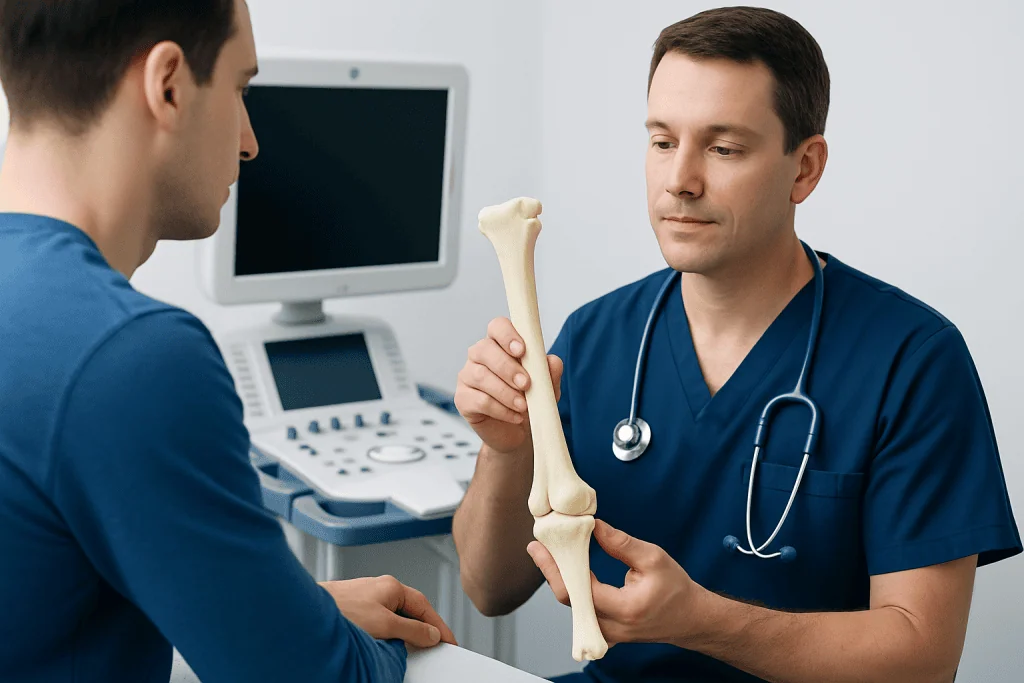
The tibia has three main regions: the upper end near the knee, the shaft in the middle, and the lower end near the ankle. The upper part forms part of the knee joint, while the lower part contributes to the ankle joint. The long shaft is what many people feel as the hard ridge down the front of the shin.
Inside, the tibia contains dense outer bone for strength and a more porous inner structure that helps absorb force. It is covered by a thin membrane called the periosteum, which contains nerves and blood vessels. This is one reason why injuries to the shin can feel especially tender.
Several muscles attach along the tibia, including muscles involved in lifting the foot, stabilizing the ankle, and controlling the arch of the foot. When these muscles are overworked, the tissues around the bone can become irritated, contributing to conditions such as shin splints.
The tibia also depends on healthy circulation and bone remodeling. Bone is living tissue, so it constantly repairs small areas of wear. If activity rises too quickly or healing cannot keep up, stress-related injury may develop.
Common Symptoms Linked to the Shin Bone

Symptoms around the shin bone vary depending on the cause. Some people notice a dull ache during exercise, while others develop sharp pain after a twist, fall, or direct blow. Pain may be localized to one small spot or spread along a broader part of the shin.
Other possible symptoms include swelling, bruising, warmth, tenderness to touch, limping, stiffness around the knee or ankle, or pain that worsens when bearing weight. In overuse conditions, symptoms may start during activity and improve with rest, then gradually become more constant if the problem progresses.
Warning signs deserve closer attention. Inability to walk, a visible deformity, sudden severe swelling, numbness, severe pain after trauma, or pain at rest that does not improve may point to a more serious problem such as fracture, significant soft tissue injury, or less commonly a circulation-related emergency.
- Diffuse aching after running may suggest overuse.
- Point tenderness in one spot may raise concern for a stress fracture.
- Pain with swelling after injury may indicate a tibia fracture or soft tissue damage.
- Pain with fever or redness needs medical review to rule out infection or inflammation.
What Can Cause Shin Bone Pain?
Shin pain is often blamed on the bone itself, but several structures can be involved. A common cause is overuse from running, jumping, military training, or rapid increases in exercise. Repeated loading can irritate the tissue around the tibia and lead to shin splints, or in some cases a stress fracture.
Acute injury is another important cause. A direct hit to the shin can bruise the bone and surrounding tissue, while falls, sports injuries, or vehicle accidents can cause a tibia fracture. Fractures may range from small cracks to complete breaks and can involve the shaft or the joint surfaces near the knee or ankle.
Biomechanics also matter. Flat feet, poorly fitting footwear, weak hip or calf muscles, tight lower-leg muscles, or changes in running surface can alter load through the tibia. In children and adolescents, growth and sports participation may increase stress on the lower leg, although symptoms should still be assessed individually.
Less commonly, shin-area symptoms may be related to arthritis near the knee or ankle, tendon inflammation, nerve irritation, circulation problems, bone infection, or metabolic bone weakness. Because causes differ so much, persistent symptoms should not be self-diagnosed based on one symptom alone.
How Doctors Diagnose Shin Bone Problems
Diagnosis starts with a careful history and physical examination. A doctor typically asks when the pain began, whether there was an injury, what activities make it worse, and whether there are symptoms such as swelling, night pain, numbness, or fever. The exact location of tenderness often gives useful clues.
During the examination, the doctor may assess walking, check for swelling or bruising, feel the shin for focal tenderness, and examine the knee, ankle, muscles, and circulation. This broader approach is important because symptoms felt over the shin may start from nearby joints or soft tissues rather than from the tibia itself.
Imaging is often used when a fracture or persistent injury is suspected. An X-ray is usually the first test, but early stress fractures may not always appear clearly. In selected cases, MRI can show bone stress and soft tissue injury in more detail, while CT scan may help define complex fractures or joint involvement.
Additional tests depend on the clinical picture. Blood tests may be considered if infection, inflammation, or bone health issues are suspected. The goal is to identify the true cause so that treatment matches the problem rather than only the symptom.
Treatment Options for Shin Bone Conditions
Treatment depends on the diagnosis. For mild overuse-related pain, doctors often recommend relative rest, temporary reduction of high-impact activity, ice, supportive footwear, and a gradual return to exercise. Physiotherapy may help improve flexibility, strength, running mechanics, and load management.
Stress injuries usually require a longer period of activity modification. Continuing to train through pain can worsen a bone stress reaction and increase the risk of a complete fracture. Recovery plans are individualized and may include supervised rehabilitation, cross-training, and attention to nutrition and bone health.
Fractures of the tibia may need immobilization with a brace or cast, restricted weight-bearing, or surgery, depending on where the fracture is, whether the bone is displaced, and whether the joint is involved. Some patients benefit from specialist orthopedic evaluation and trauma care, especially after major injury or when healing is not straightforward.
If pain is related to joint disease, tendon problems, or a structural issue around the leg, treatment focuses on that cause. This may include medicines for symptom control, rehabilitation, or in selected cases knee replacement when advanced joint degeneration is the main problem. Near the end of the care pathway, patients seeking coordinated assessment may also be seen by Acibadem International, where multidisciplinary specialists in JCI-accredited hospitals diagnose and treat lower-limb bone and joint conditions for international patients.
Prevention and Self-Care for a Healthier Shin
Many shin problems can be reduced by building activity gradually. A sudden jump in running distance, speed, or training intensity places extra stress on the tibia and the tissues around it. A steady progression with rest days allows the bone and muscles to adapt more safely.
Footwear and movement patterns also matter. Shoes should fit well and suit the activity. People who run regularly may benefit from assessment of gait, muscle strength, and flexibility, especially if they have recurrent shin pain. Surface changes, such as moving from softer ground to hard pavement, should be introduced progressively.
General bone health supports the tibia over the long term. Adequate nutrition, sufficient calcium and vitamin D intake when appropriate, and regular strength training can help maintain strong bones and muscles. Smoking cessation and attention to hormonal and metabolic health are also important for bone resilience.
- Warm up before exercise and cool down afterward.
- Increase training volume gradually rather than suddenly.
- Use proper technique and supportive footwear.
- Rest early if pain begins instead of pushing through it.
- Seek advice for repeated shin pain or recurrent injuries.
When to Seek Medical Care
Medical assessment is recommended if shin pain lasts more than a few days, keeps returning, or interferes with walking, exercise, or sleep. Pain that becomes more localized to one small area, especially in athletes or active adults, should be checked because this pattern can suggest a stress injury.
Urgent care is important after significant trauma, if there is visible deformity, severe swelling, inability to bear weight, numbness, a cold foot, or rapidly worsening pain. These symptoms may signal a fracture or another serious injury that needs prompt treatment.
It is also sensible to seek medical advice if shin symptoms come with fever, redness, unexplained weight loss, or pain that occurs at night or at rest. While these causes are less common, they should not be ignored. Early diagnosis often makes treatment simpler and helps protect long-term mobility.
Frequently asked questions
Is the shin bone the same as the tibia?
Yes. The shin bone is the common name for the tibia, which is the main weight-bearing bone in the lower leg. It runs from the knee to the ankle and works together with the smaller fibula.
Why does my shin bone hurt when I run?
Running-related shin pain is often caused by overuse, especially if training intensity or distance increased quickly. Common reasons include shin splints, muscle strain, or a stress injury to the tibia. A doctor should assess pain that is persistent, focal, or worsening.
How can someone tell the difference between shin splints and a stress fracture?
Shin splints usually cause a more spread-out ache along a larger part of the shin, often linked to exercise. A stress fracture more often causes pain in one specific spot and may hurt even with walking or at rest as it worsens. Imaging and examination are often needed to confirm the difference.
Can a shin bone injury heal without surgery?
Many shin-related injuries do heal without surgery, including mild overuse injuries and some fractures that are stable and well aligned. Treatment may include rest, immobilization, rehabilitation, and follow-up imaging when needed. Surgery is usually considered when the fracture is displaced, unstable, or involves the joint.
What tests are used for shin bone problems?
Doctors often begin with a physical exam and an X-ray if a fracture is suspected. MRI can help identify stress injuries and soft tissue problems, while CT may be useful for complex fractures. The choice depends on symptoms and the suspected cause.
When should shin pain be treated as urgent?
Urgent care is needed if shin pain follows major trauma or comes with visible deformity, severe swelling, inability to bear weight, numbness, or changes in foot color or temperature. These signs can suggest a serious injury or impaired circulation. Prompt treatment helps reduce the risk of complications.
References
- American Academy of Orthopaedic Surgeons
- National Institute of Arthritis and Musculoskeletal and Skin Diseases
- MedlinePlus
- American College of Sports Medicine
- National Health Service
This article is for general information only and is not a substitute for professional medical advice. Please consult a qualified doctor about your individual situation.
Joint and spine care in Turkey — expert assessment & treatment
JCI-accredited · board-certified surgeons · reply within 24h
Add us as a Preferred Source to see more of our trusted health content across Google Search, AI Overviews and Discover.

More from the Health Library

Norovirus — Explained by Medical Evidence, Not Myths

Acetazolamide Drugs — Explained by Medical Evidence, Not Myths
White Pimples on Testis — Explained by Medical Evidence, Not Myths

Impending Doom: An Evidence-Based Guide for Patients

Secondary Hypothyroidism: A Complete Medical Overview

Diagram of Digestive Organs — Explained by Medical Evidence, Not Myths
Orthopedic Surgery & Traumatology Specialists at Acibadem

Dr. Alp Er Tunga Bölükbaşı
Orthopedic Surgery & Traumatology
Dr. Alper Gölpınar
Orthopedic Surgery & Traumatology
Prof. Dr. Alper Kaya
Orthopedic Surgery & Traumatology
Fzt. Alperen Mustafa Oğuz
Physical Medicine & Rehabilitation