Positive Pregnancy Test False: A Complete Clinical Guide for Patients
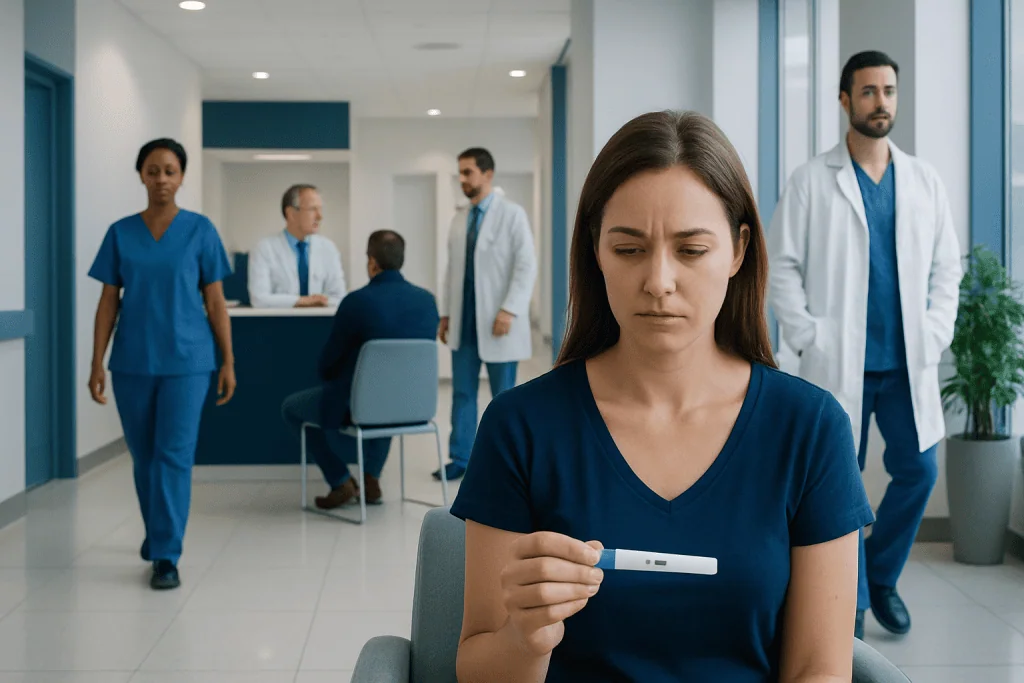
Most home pregnancy tests are accurate when used correctly, but false-positive results can still occur. Early pregnancy loss, fertility medicines containing hCG, and certain medical conditions are among the main causes.
Key Takeaways
- Most home pregnancy tests are accurate when used correctly, but false-positive results can still occur.
- Early pregnancy loss, fertility medicines containing hCG, and certain medical conditions are among the main causes.
- Reading the test outside the recommended time window can lead to confusion, especially with evaporation lines.
- A blood hCG test and follow-up testing are often the clearest way to confirm whether a pregnancy is present.
- Heavy bleeding, severe pain, fainting, or one-sided pelvic pain require prompt medical attention.
A positive pregnancy test false result is uncommon, but it can happen. The most reliable way to sort it out is to repeat the test correctly, review medicines and timing, and confirm the result with a clinician using blood tests and, when needed, ultrasound.
Overview: Can a Positive Pregnancy Test Be False?
Yes, a positive pregnancy test false result is possible, although it is less common than a false-negative result. Pregnancy tests work by detecting human chorionic gonadotropin, or hCG, a hormone usually produced after a fertilized egg implants in the uterus. When hCG is present for another reason, or when a test is misread, the result may appear positive even when there is no ongoing pregnancy.
For many patients, the most important point is that one test alone does not always give the full picture. A positive result may reflect a very early pregnancy, an early loss, recent pregnancy-related care, certain fertility medicines, or, less commonly, a medical condition that affects hCG levels. That is why clinicians often recommend repeating the test and confirming with a blood test if there is any doubt.
It can also help to know that “false positive” is sometimes used loosely. In some situations, the test correctly detected hCG, but the pregnancy did not continue, as in a very early miscarriage sometimes called a chemical pregnancy. In that case, the test was detecting a real hormone change, but the outcome may understandably feel confusing or distressing.
How Pregnancy Tests Work and Why Timing Matters
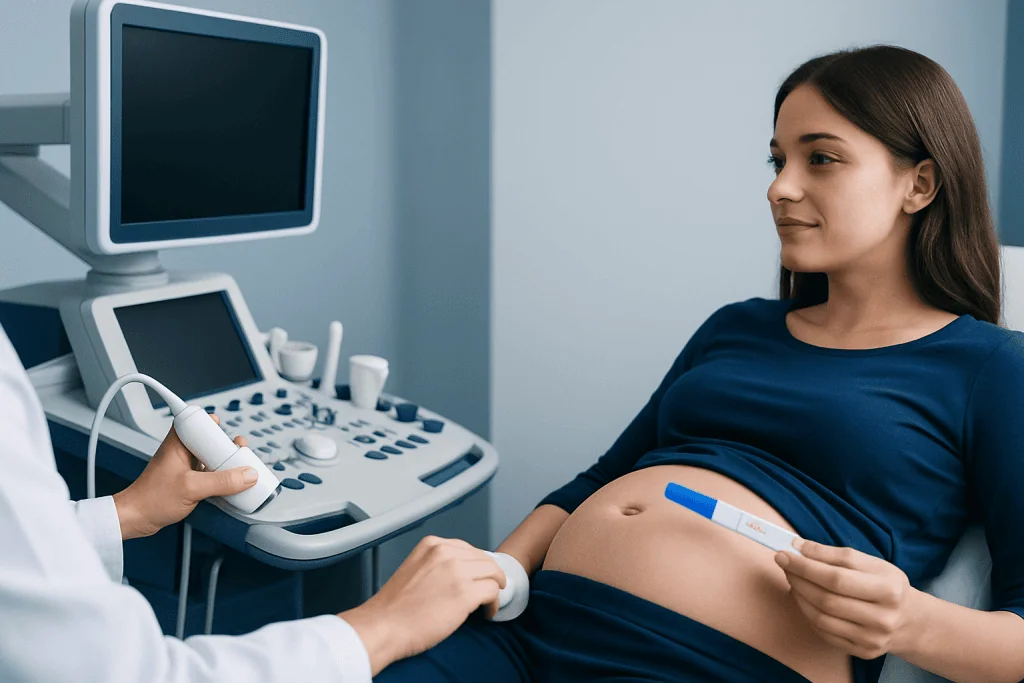
Home urine pregnancy tests are designed to detect hCG in urine. After conception, hCG usually begins to rise after implantation. If a person tests too early, there may not be enough hormone to detect. If a person tests after a recent pregnancy event or after taking hCG-containing medicine, the hormone may still be in the body and trigger a positive result.
Most test manufacturers advise using first-morning urine, checking the expiration date, and reading the result only within the stated time window. These steps matter because diluted urine can affect sensitivity, and reading a test too late may lead to mistaking an evaporation line for a positive result. An evaporation line is not the same as a true positive, but it can look convincing.
Blood testing in a clinic can provide more precise information. A qualitative blood test answers whether hCG is present, while a quantitative blood test measures the amount. Serial blood tests taken over time may show whether hCG is rising normally, falling, or staying unchanged, which helps doctors understand what is happening.
Common Reasons for a False-Positive Result

One of the most common reasons a person may think they have a positive pregnancy test false result is an early pregnancy loss. In a chemical pregnancy, implantation may occur and hCG may rise enough to turn a test positive, but the pregnancy stops developing very early. The person may then have bleeding around the time of an expected period or a few days later.
Fertility treatment is another important cause. Medicines that contain hCG can remain in the body for a period of time and cause a positive result even when pregnancy has not yet been established. Patients undergoing IVF treatment or ovulation-induction care are often advised about the best timing for testing because testing too soon after an hCG trigger shot can be misleading.
Less commonly, certain medical conditions can affect hCG levels or test interpretation. These may include some ovarian conditions, recent miscarriage or abortion, recent childbirth, or rare tumors that produce hCG. Laboratory factors, user error, and test defects can also play a role. Although uncommon, these possibilities are why persistent uncertainty should be assessed by a clinician rather than relying on repeated home testing alone.
- Very early pregnancy loss or chemical pregnancy
- Recent fertility medicines containing hCG
- Recent miscarriage, abortion, or childbirth
- Improper test use or reading the result too late
- Rare medical conditions that produce hCG
Symptoms That May Add Context
Symptoms alone cannot prove whether a pregnancy test is truly positive or falsely positive. Some people with an early ongoing pregnancy feel breast tenderness, nausea, fatigue, bloating, or a missed period. Others have no symptoms at all. In the earliest stages, symptoms vary widely and may overlap with premenstrual changes.
If bleeding begins after a positive test, the explanation can range from harmless spotting to an early pregnancy loss or, more urgently, an ectopic pregnancy. Cramping may also occur in both normal early pregnancy and miscarriage, so symptoms need to be interpreted carefully. One-sided pelvic pain, shoulder pain, fainting, or dizziness deserve prompt medical assessment.
Because symptoms can be nonspecific, doctors usually look at the full picture: the timing of the menstrual cycle, the date of the test, medicine use, bleeding pattern, pain, and follow-up hCG levels. This is especially important when there is a history of infertility, previous miscarriage, or ectopic pregnancy.
How Doctors Confirm the Result
If a home test is positive but the situation is unclear, a doctor may recommend repeating the urine test in 48 hours or arranging a blood hCG test. In a healthy early pregnancy, hCG often rises over time, although exact patterns vary. A single value may not be enough, so repeat testing can be more informative than one isolated result.
Ultrasound becomes useful when hCG levels and gestational timing suggest that a pregnancy should be visible. If a test remains positive but no pregnancy is seen in the uterus, the doctor may consider a very early normal pregnancy, an early loss, or an ectopic pregnancy. This is why follow-up matters, even when symptoms seem mild.
Depending on the findings, the clinician may also review medicines, examine for bleeding or tenderness, and consider other gynecologic conditions. If there are concerns about fertility or repeated pregnancy loss, more specialized evaluation may be recommended through services such as infertility treatment or broader reproductive assessment.
Treatment and What Happens Next
Treatment depends on the reason behind the positive result. If the test reflects a normal early pregnancy, the next step is routine prenatal follow-up. If it reflects an early loss, many patients need monitoring until hCG returns to a nonpregnant range, along with guidance on bleeding, pain, and emotional recovery. Clinical support is important because even a very early loss can feel significant.
If fertility medicine caused the result, the plan may simply involve waiting the recommended amount of time and repeating testing under medical guidance. If a rare medical condition is suspected, treatment focuses on the underlying cause. This might involve gynecology, endocrinology, or oncology input depending on the situation, though such causes are far less common than timing- or pregnancy-related explanations.
When structural gynecologic conditions are part of the bigger picture, doctors may suggest further evaluation. In selected cases, patients may be assessed for issues such as ovarian cysts or other pelvic conditions if symptoms, imaging, or hormone results point in that direction. The goal is to clarify the cause and guide care safely.
Self-Care, Prevention, and Reducing Confusion
Not every false-positive result can be prevented, but a few practical steps can reduce confusion. Patients should use a test that is not expired, follow the instructions exactly, and read the result only within the recommended time frame. Testing after a missed period is usually more reliable than testing several days earlier.
It also helps to keep a note of cycle dates, fertility medicines, and any recent pregnancy events such as miscarriage, abortion, or childbirth. This information gives the doctor important context if the result is unclear. Patients using fertility treatments should follow the testing schedule given by their care team rather than testing independently too soon.
Emotional self-care matters as well. Waiting for confirmation can be stressful, especially for people trying to conceive or those worried about an unexpected pregnancy. Seeking support from a trusted clinician, partner, family member, or counselor can help while the diagnosis is being clarified.
When to Seek Medical Care
Medical advice is appropriate any time a positive home test does not match symptoms, cycle timing, or personal circumstances. A clinician can review the result, order confirmatory testing, and explain what follow-up is needed. This is particularly important after fertility treatment, after recent pregnancy loss, or if repeat home tests give mixed results.
Urgent care is needed for severe abdominal or pelvic pain, pain on one side, heavy bleeding, fainting, shoulder pain, or marked dizziness. These symptoms can signal complications that need prompt evaluation, including ectopic pregnancy. Patients should not wait for symptoms to become severe before contacting a doctor.
Near the end of the care journey, some patients may seek coordinated specialist evaluation, especially when results remain unclear or fertility issues are involved. Acibadem International’s multidisciplinary specialists at JCI-accredited hospitals diagnose and treat pregnancy-related and reproductive conditions for international patients, including services such as gynecology care when further assessment is needed.
Frequently asked questions
How common is a false-positive pregnancy test?
It is less common than a false-negative result, especially when a high-quality home test is used correctly. Still, it can happen because of very early pregnancy loss, fertility medicines containing hCG, or testing and timing issues.
Can an evaporation line look like a positive pregnancy test?
Yes. If the test is read after the recommended time window, a faint evaporation line may be mistaken for a true positive. Following the package instructions closely can reduce this problem.
Can a chemical pregnancy cause a positive test?
Yes. In a chemical pregnancy, hCG may rise enough for a test to become positive, but the pregnancy ends very early. This can feel like a false positive, although the test was detecting real hCG at the time.
How soon should testing be repeated after an unclear positive result?
Many clinicians suggest repeating a home test after about 48 hours or arranging a blood hCG test. Follow-up timing may vary depending on symptoms, fertility treatment, or concerns about ectopic pregnancy.
Can medications cause a false-positive pregnancy test?
Some fertility medicines that contain hCG can do this. Most common antibiotics and routine medicines do not cause a false-positive result, but patients should review all medications with a clinician if they are unsure.
Do I need an ultrasound after a positive home pregnancy test?
Not always right away. Ultrasound is most useful when the timing and hCG level suggest that a pregnancy should be visible, or when there is pain, bleeding, or concern for ectopic pregnancy.
References
- American College of Obstetricians and Gynecologists
- Mayo Clinic
- Cleveland Clinic
- National Health Service
- MedlinePlus
This article is for general information only and is not a substitute for professional medical advice. Please consult a qualified doctor about your individual situation.
Explore treatments in Turkey — costs, top hospitals & a free quote
JCI-accredited · board-certified surgeons · reply within 24h
Add us as a Preferred Source to see more of our trusted health content across Google Search, AI Overviews and Discover.
Check your numbers in seconds
BMI, calories, due date, blood pressure and 30+ more clinical calculators — free, instant, doctor-reviewed ranges.