Understanding Treatment for Balding Hair: A Complete Patient Guide

There is no single best treatment for balding hair; the right option depends on the underlying cause. Pattern hair loss often responds best when treatment begins early and continues consistently.
Key Takeaways
- There is no single best treatment for balding hair; the right option depends on the underlying cause.
- Pattern hair loss often responds best when treatment begins early and continues consistently.
- Evaluation may include a scalp exam, medical history, and sometimes blood tests or a biopsy.
- Options may include medications, low-level light therapy, injections, or hair restoration procedures.
- Sudden shedding, patchy loss, scalp pain, or hair loss with other symptoms should be assessed by a doctor.
Treatment for balding hair can help slow hair loss, support regrowth in some people, and improve hair density or appearance depending on the cause. The best approach starts with identifying whether shedding is due to pattern hair loss, a medical condition, stress, nutrition, medications, or scalp disease.
Overview: what treatment for balding hair involves
Treatment for balding hair usually begins with one practical question: why is the hair thinning or falling out? Hair loss is not a single condition. It can be caused by inherited pattern hair loss, hormonal shifts, autoimmune disease, nutritional deficiency, stress, scalp inflammation, some medications, or temporary shedding after illness. Because these causes behave differently, treatment also differs from person to person.
In general, treatment for balding hair aims to do one or more of the following: slow further loss, protect existing follicles, encourage regrowth where follicles are still active, or restore coverage when regrowth is unlikely. Some people benefit from medication alone, while others need treatment of an underlying health issue or may consider a procedural option such as hair transplant surgery.
It is also important to set realistic expectations. Hair grows slowly, and most effective treatments take months before visible improvement appears. Results depend on the cause of loss, how long it has been present, family history, age, hormone status, and how consistently treatment is followed.
How balding hair can look and feel
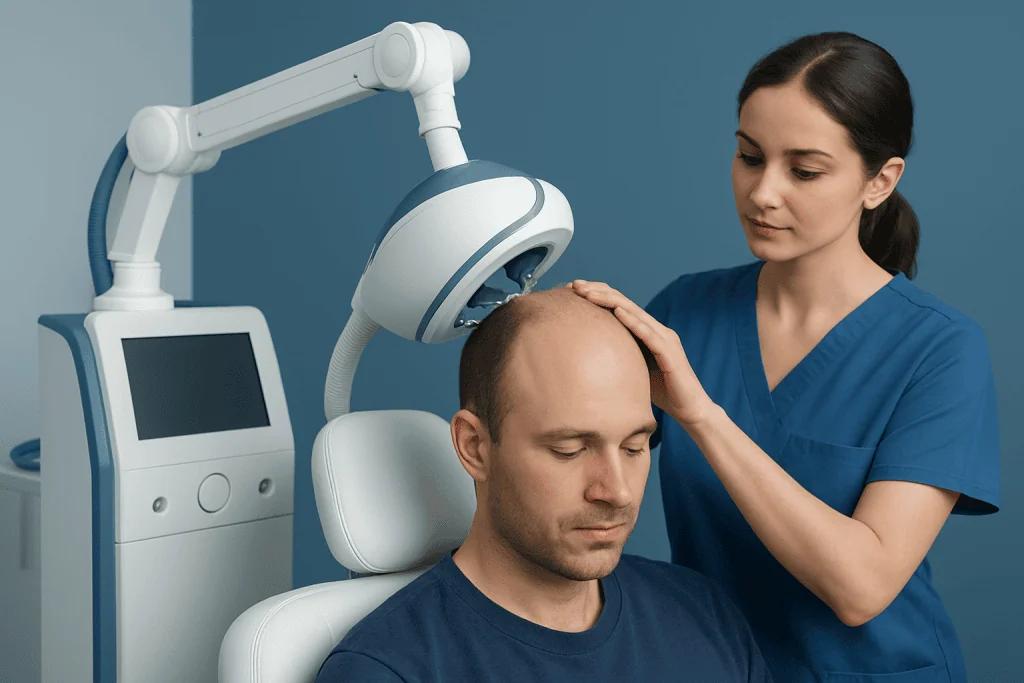
Balding hair may develop gradually or appear more suddenly. In male pattern hair loss, thinning often starts at the temples or crown and may slowly progress over years. In female pattern hair loss, people more often notice widening of the part line, reduced overall density, or a ponytail that feels thinner. Some people describe seeing more scalp under bright light before they notice obvious hair loss in the mirror.
Not all hair loss follows a pattern. Temporary shedding may lead to large amounts of hair on the pillow, in the shower, or on the brush. Patchy bald spots can suggest an autoimmune problem such as alopecia areata. Hair breakage from heat, bleaching, tight hairstyles, or harsh chemical treatments can also mimic thinning, even when the root remains healthy.
Symptoms involving the scalp itself matter too. Itching, burning, flaking, tenderness, redness, or pus-filled bumps can point to inflammation or infection. These signs may change the diagnosis and treatment plan, so they should be mentioned during a medical visit.
Common causes and risk factors

The most common long-term cause of balding hair is androgenetic alopecia, also called male pattern baldness or female pattern hair loss. This inherited condition gradually shrinks hair follicles in genetically sensitive areas of the scalp. Hormones play a role, but the process is not caused simply by having “too much” hormone. Family history on either side can increase risk.
Another frequent cause is telogen effluvium, a form of diffuse shedding that may happen after physical or emotional stress. Triggers can include fever, surgery, childbirth, major weight loss, severe illness, and some medications. In this type of loss, more hairs than usual shift into the resting phase and shed a few months after the trigger.
Medical conditions can also contribute to balding hair. Examples include thyroid disease, iron deficiency, low protein intake, vitamin or mineral deficiencies, autoimmune disorders, polycystic ovary syndrome, and scalp disorders that cause inflammation or scarring. Some cases of hair loss are linked with chronic skin conditions and may overlap with broader hair loss disorders that need dermatologic assessment.
Hair care habits matter as well. Tight braids, extensions, frequent heat styling, repeated bleaching, or strong chemical straightening can damage the hair shaft or place traction on the follicle. Over time, traction hair loss may become harder to reverse if the follicle is repeatedly injured.
How doctors diagnose the cause
A medical evaluation for balding hair often starts with a detailed history. A doctor may ask when the hair loss began, whether it was sudden or gradual, where it started, and whether there have been triggers such as stress, recent illness, pregnancy, weight change, or new medications. Family history, menstrual history, and signs of hormone imbalance can also be important.
The scalp and hair are then examined closely. The doctor looks for the pattern of thinning, miniaturized hairs, broken hairs, inflammation, scaling, or scarring. In some cases, a pull test or dermoscopic examination helps distinguish between common causes. Photographs may be useful to compare change over time.
Blood tests are sometimes recommended when the cause is not obvious or when symptoms suggest an underlying condition. These may assess thyroid function, iron status, nutritional factors, inflammation, or hormones in selected patients. If a scarring disorder or unclear inflammatory condition is suspected, a small scalp biopsy may be needed. This helps guide treatment and protects against permanent follicle damage.
Treatment options for balding hair
The best treatment for balding hair depends on diagnosis, severity, and the person’s goals. For inherited pattern hair loss, doctors may recommend medical treatments that help slow progression and support regrowth in active follicles. Common options include topical medication, certain oral medicines in appropriate patients, and low-level light therapy. These treatments usually require ongoing use to maintain benefit.
When hair loss is caused by an underlying condition, treatment focuses on that trigger. Correcting iron deficiency, managing thyroid disease, reviewing medications, improving nutritional intake, or treating scalp inflammation may allow hair growth to recover over time. In autoimmune conditions such as alopecia areata, treatment may include anti-inflammatory approaches, including carefully selected dermatologic treatment and injections in some cases.
Procedural options may be considered when medical treatment is not enough or when follicle loss is advanced. These may include platelet-rich plasma in selected cases, camouflage techniques, or hair restoration procedures for suitable candidates with stable donor hair. A transplant does not stop future thinning in untreated areas, so long-term planning is important.
Supportive care also matters. Gentle scalp care, avoiding traction hairstyles, limiting harsh chemical processing, and treating dandruff or scalp inflammation can improve the hair environment. Some people also benefit from cosmetic approaches such as volumizing cuts, fiber concealers, wigs, or hairpieces while medical treatment takes effect.
What to expect from treatment and follow-up
One of the most important parts of treatment for balding hair is understanding the timeline. Hair grows in cycles, so visible change takes patience. Many treatments need at least three to six months before shedding stabilizes or fine regrowth appears, and longer before density improves enough to be obvious. During the early weeks, some people notice continued shedding, which does not always mean treatment is failing.
Follow-up appointments help assess whether the diagnosis still fits and whether the plan is working. Doctors may compare scalp photographs, review side effects, and adjust treatment if the response is limited. If a person has more than one cause of hair loss, such as inherited thinning plus iron deficiency or scalp inflammation, combination treatment may be needed for the best result.
Expectations should remain realistic and individualized. Some people regain noticeable density, while others mainly slow further loss and preserve current hair. Restoring confidence and improving control over the condition are also meaningful outcomes. Near the end of the care pathway, some patients seek consultation with centers experienced in dermatology, endocrinology, and reconstructive or aesthetic procedures if restoration is being considered.
Self-care and prevention strategies
Not every type of balding hair can be prevented, especially inherited pattern hair loss. Still, good scalp and hair habits can reduce avoidable damage and support overall hair health. Gentle washing, avoiding excessive heat, minimizing tight hairstyles, and spacing out bleaching or chemical treatments can protect fragile hair and reduce breakage.
General health also plays a role. A balanced diet with enough protein, iron, and micronutrients supports the hair growth cycle. Sudden restrictive dieting can trigger shedding in some people. Managing stress, treating chronic medical conditions, and reviewing medication side effects with a doctor may also help when shedding has multiple contributing factors.
People should be cautious with supplements and over-the-counter products that promise dramatic regrowth. “Natural” does not always mean safe or effective, and some supplements may interact with medicines or mask a true medical cause. A doctor or dermatologist can help decide which treatments are evidence-based and appropriate.
When to seek medical care
A doctor should assess balding hair when hair loss is sudden, rapidly worsening, patchy, or associated with scalp symptoms such as pain, burning, redness, scaling, or sores. Medical review is also important if thinning begins at a young age, if eyebrows or body hair are affected, or if hair loss follows a major illness or new medication.
People should also seek care if hair loss comes with fatigue, weight change, irregular periods, acne, increased facial hair, or other symptoms that may suggest a hormonal or nutritional problem. Early evaluation is especially important when scarring hair loss is possible, because delayed treatment can lead to permanent loss.
For international patients needing coordinated assessment, Acibadem International’s multidisciplinary specialists and JCI-accredited hospitals evaluate and treat hair and scalp conditions with individualized planning. A qualified doctor can help clarify the cause, explain options, and build a realistic treatment plan.
Frequently asked questions
What is the most effective treatment for balding hair?
The most effective treatment for balding hair depends on the cause. Pattern hair loss often responds to medical therapies that slow follicle shrinkage, while temporary shedding improves when the trigger is corrected. A proper diagnosis is the best way to choose an effective plan.
Can balding hair grow back?
Sometimes it can, especially if the follicles are still active and the cause is treatable. Regrowth is more likely in temporary shedding, nutritional deficiency, some inflammatory conditions, and early pattern hair loss. Long-standing or scarring hair loss is less likely to fully reverse.
How long does treatment for balding hair take to work?
Most treatments need several months before visible improvement appears because hair grows slowly. Many people need at least three to six months to judge early response, and longer for fuller results. Ongoing treatment is often needed to maintain gains in pattern hair loss.
Is hair transplant the only permanent option?
A hair transplant can provide long-lasting redistribution of healthy follicles in selected people, but it is not the only useful option. Medical treatments may preserve existing hair and delay progression, especially when started early. Whether a transplant is appropriate depends on the pattern of loss, donor hair supply, and long-term expectations.
Should women and men be treated differently for balding hair?
The underlying cause, hormone status, and safety considerations can differ between women and men, so treatment plans are often individualized. Some therapies are used differently depending on sex, age, pregnancy plans, and associated conditions. Evaluation is especially important in women with irregular periods, acne, or sudden diffuse thinning.
Can stress alone cause balding hair?
Stress can trigger a common form of shedding called telogen effluvium, usually a few months after the stressful event. This type of loss is often diffuse rather than patterned and may improve over time once the trigger settles. However, stress can also occur alongside inherited pattern hair loss, making assessment helpful.
References
- American Academy of Dermatology
- National Institutes of Health
- Mayo Clinic
- British Association of Dermatologists
- Cleveland Clinic
This article is for general information only and is not a substitute for professional medical advice. Please consult a qualified doctor about your individual situation.
Hair transplant in Turkey — costs, graft counts & a free assessment
JCI-accredited · board-certified surgeons · reply within 24h
Add us as a Preferred Source to see more of our trusted health content across Google Search, AI Overviews and Discover.
Check your numbers in seconds
BMI, calories, due date, blood pressure and 30+ more clinical calculators — free, instant, doctor-reviewed ranges.