Presbycusis: An Evidence-Based Guide for Patients

Presbycusis is a common, gradual form of hearing loss linked to aging. People often notice difficulty understanding conversation before they realize sounds are softer.
Key Takeaways
- Presbycusis is a common, gradual form of hearing loss linked to aging.
- People often notice difficulty understanding conversation before they realize sounds are softer.
- Hearing tests help confirm the diagnosis and rule out other treatable causes.
- Treatment often includes hearing aids, listening strategies, and communication support.
- Protecting hearing from loud noise and managing long-term health conditions may help reduce further loss.
Presbycusis is age-related hearing loss. It usually develops slowly in both ears and most often affects the ability to hear high-pitched sounds and understand speech, especially in noisy places.
Overview: what presbycusis means
Presbycusis is the medical term for age-related hearing loss. It usually develops slowly over time and tends to affect both ears. Many people first notice that others seem to mumble, or that conversations are harder to follow in restaurants, family gatherings, or other noisy settings.
This type of hearing loss often affects higher-pitched sounds first. As a result, consonants in speech may become less clear even when overall volume seems adequate. A person may hear that someone is speaking but still struggle to understand what was said.
Presbycusis is not simply a normal inconvenience that should be ignored. Because hearing is closely linked to communication, social connection, and daily safety, assessment is worthwhile when symptoms appear. Modern evaluation can identify whether the hearing loss fits age-related changes or whether another problem also needs attention.
How presbycusis affects hearing and daily life
Hearing depends on delicate structures in the inner ear, auditory nerve pathways, and the brain’s ability to process sound. With aging, these systems may gradually become less efficient. The result is often reduced sensitivity to sound, less clarity of speech, and more effort needed to listen.
Presbycusis can affect much more than volume. Even mild hearing loss may make a person feel tired after conversation because the brain is working harder to fill in missing sounds. Watching television may require higher volume, and phone calls may become frustrating, especially if speech is fast or background noise is present.
Over time, untreated hearing loss can contribute to social withdrawal, misunderstanding, and reduced confidence in group settings. Family members may notice repeated requests for repetition, missed details, or responses that seem off-topic. Recognizing these everyday patterns can help people seek support earlier.
Symptoms and common signs

The symptoms of presbycusis usually appear gradually rather than suddenly. Because the change is slow, some people adapt without realizing how much hearing has changed. Others may only become aware of the problem when relatives or friends point it out.
Common signs include:
- Difficulty understanding speech, especially in background noise
- Frequently asking people to repeat themselves
- Feeling that others are mumbling or speaking unclearly
- Needing to turn up the television, radio, or phone volume
- Trouble hearing high-pitched voices or sounds
- Finding group conversations more tiring or confusing
- Sometimes noticing ringing in the ears, also called tinnitus
These symptoms can overlap with other ear conditions. For example, earwax buildup, middle ear problems, certain medications, or other causes of hearing loss may produce similar concerns. That is why a hearing assessment is important instead of assuming aging is the only reason.
Causes and risk factors
Presbycusis is usually caused by a combination of age-related changes in the inner ear and auditory pathways. Tiny sensory hair cells inside the cochlea can become damaged or reduced over time. Changes in blood supply, nerve function, and sound processing in the brain may also contribute.
Although aging is the main risk factor, several other influences can affect how early hearing loss appears and how severe it becomes. Long-term exposure to loud noise is especially important, including occupational noise, firearms, loud music, and repeated recreational exposure. Genetics may also play a role, meaning some people are more susceptible than others.
Additional factors associated with hearing decline include diabetes, cardiovascular disease, smoking, and some medications that can affect hearing. Previous ear disease and chronic inflammation may matter in some individuals as well. When a doctor evaluates presbycusis, they often consider overall health because hearing changes may reflect more than one contributing factor.
How doctors diagnose presbycusis
Diagnosis begins with a medical history and a review of symptoms. The clinician may ask when the hearing problem began, whether it affects one or both ears, whether tinnitus is present, and whether there has been exposure to loud noise or use of medications that may affect hearing. Sudden hearing loss, dizziness, ear pain, or one-sided symptoms may point to a different diagnosis and need prompt attention.
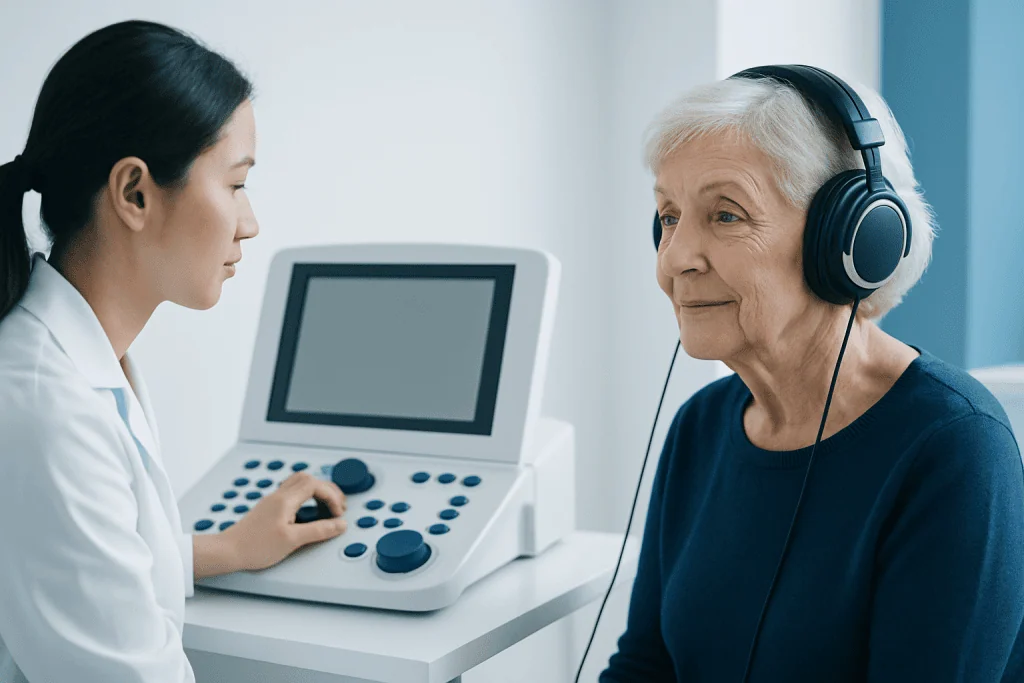
A physical examination of the ears helps check for wax blockage, infection, or visible structural problems. Formal hearing testing is then the key step. This is usually performed by an audiologist and may include pure-tone audiometry, speech testing, and other measurements that show the type and degree of hearing loss.
Presbycusis often produces a pattern of gradual, sensorineural hearing loss in both ears, especially at higher frequencies. If the pattern is unusual, further evaluation may be recommended. In some cases, imaging or specialist review is used to exclude other ear or nerve conditions. If hearing loss is more complex, assessment may also overlap with broader ear conditions that need targeted care.
Treatment options and communication support
There is no single cure that reverses typical age-related hearing loss, but effective treatment can greatly improve communication and quality of life. The most common management option is hearing aids. These devices are selected and adjusted according to a person’s hearing test results, listening needs, manual dexterity, and preferences.
In addition to hearing aids, communication strategies are important. Good lighting, facing the speaker, reducing background noise, and speaking clearly at a natural pace can all help. Assistive listening devices may also be useful for phone calls, television, or public listening environments. Some people benefit from formal hearing aid assessment and fitting to match the technology to their daily routines.
If hearing loss becomes severe and hearing aids provide limited benefit, further specialist review may be considered. For selected patients, advanced options such as cochlear implant evaluation may be appropriate. If tinnitus is also present, treatment may include education, sound therapy, and approaches aimed at reducing distress rather than eliminating the sound completely.
Near the end of the care pathway, some patients also benefit from speech-reading training, family counseling, or support for listening fatigue. Acibadem International’s multidisciplinary specialists and JCI-accredited hospitals diagnose and treat hearing conditions for international patients, including situations where ENT care and audiology input are both helpful.
Prevention and self-care
Not all age-related hearing loss can be prevented, but healthy habits may help protect the hearing that remains. The most important step is limiting exposure to loud noise. Using ear protection at work, during concerts, while using power tools, or in other noisy settings can reduce additional damage over time.
General health also matters. Managing conditions such as high blood pressure, diabetes, and heart disease may support blood flow and nerve health, which are relevant to hearing. Avoiding smoking and discussing possible hearing-related side effects of medications with a doctor may also be useful.
Self-care at home can make communication easier:
- Choose quieter places for conversation when possible
- Ask others to face you while speaking
- Reduce background noise from television or appliances
- Use captions for television and video content
- Keep hearing devices clean, charged, and correctly fitted
- Schedule regular follow-up hearing checks if hearing loss has been identified
Seeking help early is part of self-care. Many people wait years before being assessed, but earlier support often makes adaptation easier for both the individual and their family.
When to seek medical care
Medical evaluation is recommended when hearing loss begins to affect conversation, work, safety, or social life. It is also sensible to arrange a hearing test if television volume keeps increasing, speech seems less clear, or family members notice changes before the person does.
Some symptoms need faster assessment because they are less typical of presbycusis. These include sudden hearing loss, hearing loss in only one ear, severe dizziness, ear drainage, ear pain, or a rapidly worsening change in hearing. Persistent tinnitus in one ear or significant imbalance should also be discussed with a qualified doctor.
Timely care can help identify treatable causes and support earlier rehabilitation. Even when hearing loss is age-related, evaluation gives patients a clearer understanding of what is happening and what practical steps can help.
Frequently asked questions
Is presbycusis the same as normal hearing loss with aging?
Presbycusis is the medical term for age-related hearing loss. It describes a typical pattern of gradual hearing decline, usually in both ears, that often affects higher-pitched sounds and speech clarity.
Can presbycusis happen suddenly?
Presbycusis usually develops slowly over time rather than all at once. Sudden hearing loss is not typical and should be assessed promptly by a doctor because it may have other causes that need urgent treatment.
Will hearing aids restore hearing to normal?
Hearing aids do not cure presbycusis or return hearing exactly to normal. However, they can significantly improve access to speech and everyday sounds when they are properly selected and fitted.
Does presbycusis always affect both ears?
It most often affects both ears, although the degree of loss may not be exactly the same on each side. Marked one-sided hearing loss is less typical and may need further evaluation.
Can tinnitus occur with presbycusis?
Yes. Some people with presbycusis also notice tinnitus, often described as ringing, buzzing, or hissing in the ears. Tinnitus can have several causes, so it should be discussed during a hearing assessment.
Can lifestyle changes prevent presbycusis?
Aging itself cannot be stopped, so presbycusis cannot always be prevented. Still, protecting the ears from loud noise, managing chronic health conditions, and avoiding smoking may help reduce additional hearing damage.
This article is for general information only and is not a substitute for professional medical advice. Please consult a qualified doctor about your individual situation.
Explore treatments in Turkey — costs, top hospitals & a free quote
JCI-accredited · board-certified surgeons · reply within 24h
Add us as a Preferred Source to see more of our trusted health content across Google Search, AI Overviews and Discover.

More from the Health Library

Postpartum: An Evidence-Based Guide for Patients

How to get rid of male breast? A Doctor-Reviewed Answer

Soy Lecithin: A Complete Medical Overview

White Toes: A Complete Medical Overview

Prostate Exam — Explained by Medical Evidence, Not Myths