Ivc Filter: An Evidence-Based Guide for Patients

An IVC filter is designed to reduce the risk of a blood clot traveling to the lungs. It does not treat an existing clot and does not replace blood thinners when anticoagulation is possible.
Key Takeaways
- An IVC filter is designed to reduce the risk of a blood clot traveling to the lungs.
- It does not treat an existing clot and does not replace blood thinners when anticoagulation is possible.
- Some IVC filters are temporary and should be reviewed for timely removal.
- Possible risks include filter movement, blockage, fracture, or new clot formation.
- Regular follow-up is important after placement to decide whether the filter is still needed.
An IVC filter is a small metal device placed in the inferior vena cava, the body’s largest abdominal vein, to help trap blood clots before they can reach the lungs. It is usually considered when a person has a high risk of pulmonary embolism and blood-thinning treatment cannot be used, has failed, or needs temporary support.
What is an IVC filter?
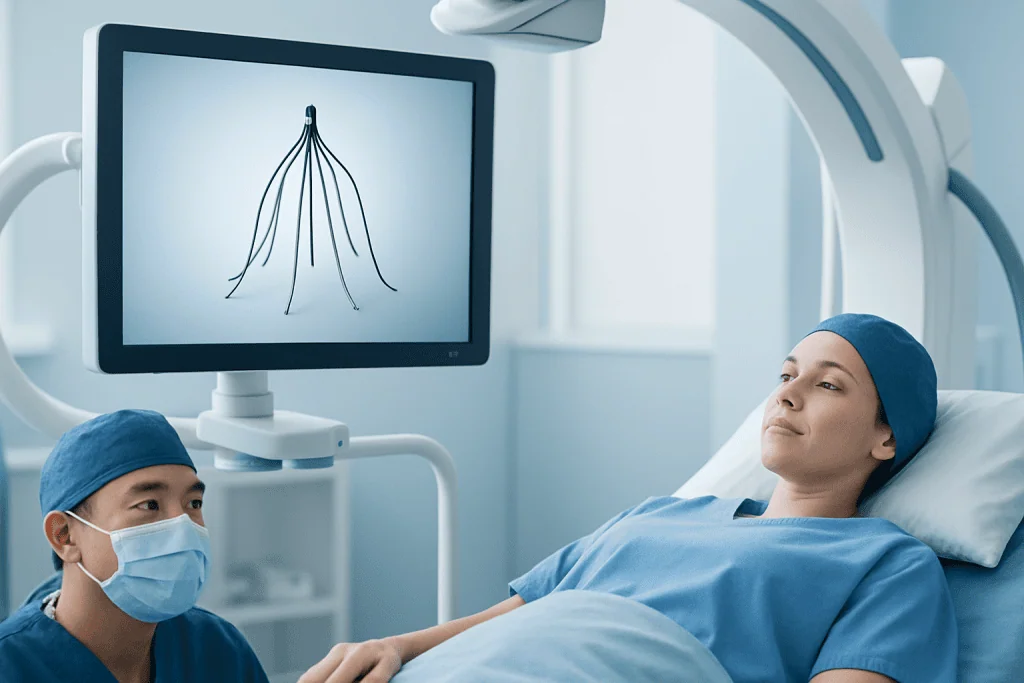
An IVC filter is a small, cage-like medical device placed inside the inferior vena cava, the large vein that carries blood from the lower body back to the heart. Its purpose is to catch some blood clots that break loose from veins in the legs or pelvis before they can travel to the lungs and cause a pulmonary embolism. For many patients, this means it is used as a protective measure in carefully selected situations rather than as routine treatment.
Doctors usually consider an inferior vena cava filter when a person has a clotting condition such as deep vein thrombosis or a high risk of pulmonary embolism, and standard treatment with blood thinners is not possible or not sufficient. Examples include recent major bleeding, a high bleeding risk, or surgery and trauma that make anticoagulant use unsafe for a period of time.
It is important to understand what the device can and cannot do. An IVC filter may lower the chance that a large clot will reach the lungs, but it does not dissolve existing clots. It also does not prevent new clots from forming in the legs. Because of this, if blood thinners become safe later, they are often restarted even if a filter is in place.
When is an IVC filter used?
Use of an IVC filter is individualized. In general, it may be recommended for patients with confirmed venous thromboembolism who cannot take anticoagulants because of active bleeding, a recent brain bleed, certain surgeries, or other strong medical reasons. It may also be considered if a clot progresses or a pulmonary embolism occurs despite appropriate anticoagulant treatment, although these decisions are case-specific.
Some filters are intended to be permanent, but many modern devices are retrievable. A retrievable filter may be helpful when the risk is expected to be temporary, such as after severe injury, a short period of bleeding risk, or a procedure. In these cases, follow-up planning is just as important as placement, because the device may be removed once the danger period has passed.
Doctors weigh benefits and risks carefully before recommending a filter. They consider factors such as the person’s clot history, current symptoms, imaging results, overall health, and how long the clot risk is expected to last. The goal is to use the device only when the likely benefit clearly outweighs the potential complications.
- Clot in the legs or pelvis with a strong reason blood thinners cannot be used
- High risk of pulmonary embolism during a temporary period of bleeding risk
- Selected cases of recurrent embolism despite appropriate treatment
- Need for individualized protection during complex medical or surgical situations
How the procedure is done

IVC filter placement is usually performed by an interventional radiologist or vascular specialist using image guidance. The procedure is commonly done through a vein in the neck or groin. After cleaning the area and using local anesthetic, the doctor guides a thin tube called a catheter into the vein and positions the filter in the inferior vena cava.
Fluoroscopy, ultrasound, or other imaging helps ensure accurate placement below the veins that drain the kidneys. Once in the correct position, the filter is released and expands to attach to the vein wall. The procedure often takes less than an hour, although timing varies depending on the patient’s anatomy and the reason for placement.
Most people recover quickly and may go home the same day or after a short hospital stay, depending on their underlying condition. The treatment itself is often part of a broader care plan that may also involve clot imaging, medication review, and treatment of the clotting disorder. In some centers, placement and follow-up are coordinated through interventional radiology services.
Benefits, limits, and possible risks
The main potential benefit of an IVC filter is protection against a clot reaching the lungs when other options are limited. This can be important in high-risk situations, especially when pulmonary embolism would be particularly dangerous and anticoagulation is temporarily unsafe. For the right patient, it can serve as a bridge until standard therapy can be started or resumed.
At the same time, an IVC filter has important limits. It does not stop the body from making new clots, and it does not remove clots that already exist. Some patients can still develop leg swelling, pain, or new venous blockage. This is one reason doctors still prefer anticoagulation when it is safe and effective.
Possible complications include bleeding or bruising at the insertion site, infection, incorrect position, filter tilt, movement, blockage of the vena cava, new deep vein thrombosis, and in some cases fracture or penetration of the filter through the vein wall. These complications are not inevitable, but they are part of the reason follow-up matters. Patients benefit from discussing both short-term and long-term risks before the procedure.
If symptoms suggest a new clot or filter-related problem, the doctor may recommend imaging of the veins or abdomen. Patients with clotting disorders may also need evaluation through vascular surgery or related specialty care when symptoms are persistent or complex.
Follow-up and IVC filter removal
After placement, the next key step is structured follow-up. Doctors review whether the original reason for the filter still applies and whether blood thinners can now be used safely. If the filter was designed to be retrievable and protection is no longer needed, removal is often recommended to reduce long-term complications.
IVC filter removal is usually performed with a catheter-based technique similar to placement. A specialist threads a small device through a vein, captures the top of the filter, and withdraws it. Removal can be straightforward when the filter is taken out within an appropriate time window, but some filters become more difficult to remove if they remain in place for a long time or if they tilt or embed in the vein wall.
Not every filter can or should be removed, and timing varies by device type and patient factors. What matters most is that the patient is not lost to follow-up. Keeping procedure records, attending review appointments, and asking whether the filter is temporary or permanent can help avoid unnecessary long-term retention.
Living with an IVC filter: self-care and practical advice
Most people with an IVC filter can return to normal daily activities after recovery from the procedure, depending on their overall health and the condition that led to the filter. The most helpful step is to follow the medical plan closely. That may include taking prescribed blood thinners if they are later started, wearing compression stockings if recommended, staying hydrated, and moving regularly during long periods of sitting.
Patients should keep a record of the filter type, placement date, and the doctor or service that inserted it. This information is useful if care is needed later, especially during travel or emergency treatment. It is also wise to ask whether any future scans, procedures, or surgeries require special planning.
To support vein health, doctors often advise reducing preventable clot risks where possible. Helpful steps may include stopping smoking, maintaining a healthy weight, and moving the legs during long trips or bed rest. In some situations, the care team may also evaluate related vascular concerns with tests such as Doppler ultrasound.
For international patients who need coordinated evaluation, Acibadem International’s multidisciplinary specialists and JCI-accredited hospitals diagnose and treat venous clot conditions and can provide follow-up for filter placement and retrieval planning when appropriate.
When to seek medical care
Medical review is important if a person with an IVC filter develops new leg swelling, leg pain, chest pain, shortness of breath, coughing up blood, fainting, fever, or signs of infection at the insertion site. These symptoms do not always mean the filter is causing a problem, but they should not be ignored because they can signal a blood clot or another urgent condition.
Patients should also contact their doctor if they are unsure whether the filter is meant to stay in place permanently, or if they have not had follow-up since placement. A missed review can lead to a temporary filter staying in longer than intended. Asking directly, “Do I still need this filter?” is often the right next step.
Emergency care is appropriate for severe chest pain, significant breathing difficulty, sudden collapse, or symptoms of major bleeding. Even after an IVC filter is placed, urgent problems such as pulmonary embolism can still occur. Prompt assessment allows doctors to decide whether imaging, medication changes, or other treatment is needed.
Frequently asked questions
Does an IVC filter replace blood thinners?
No. An IVC filter does not replace blood thinners when anticoagulation is safe and appropriate. It is usually used when blood thinners cannot be given, need to be paused, or are not enough in selected cases.
How long can an IVC filter stay in place?
That depends on the type of filter and the reason it was inserted. Some are permanent, while many are retrievable and should be reviewed for removal once the clot risk has decreased or blood thinners can be used safely.
Is IVC filter placement painful?
Most patients feel pressure rather than significant pain during the procedure because local anesthetic and sedation are often used. Mild soreness or bruising at the insertion site can happen afterward, but severe pain is not typical and should be discussed with a doctor.
What are the main risks of an IVC filter?
Potential risks include bleeding at the access site, filter movement, tilt, blockage, new clot formation, fracture, or difficulty with later removal. The overall risk varies by patient, device type, and how long the filter remains in place.
Can a person still get a pulmonary embolism with an IVC filter?
Yes. An IVC filter may reduce the chance of a large clot reaching the lungs, but it cannot guarantee complete protection. It also does not prevent new clots from forming.
How is an IVC filter removed?
Removal is usually done through a catheter inserted into a vein in the neck or groin. Using imaging guidance, the specialist captures the filter and withdraws it, often in a minimally invasive procedure.
This article is for general information only and is not a substitute for professional medical advice. Please consult a qualified doctor about your individual situation.
Explore treatments in Turkey — costs, top hospitals & a free quote
JCI-accredited · board-certified surgeons · reply within 24h
Add us as a Preferred Source to see more of our trusted health content across Google Search, AI Overviews and Discover.

More from the Health Library

Jute Leaves: What Patients Need to Know

8 Ounces of Water: What Patients Need to Know

Medical Glue: A Complete Medical Overview

Aura — Explained by Medical Evidence, Not Myths

Surgeon — Explained by Medical Evidence, Not Myths