Understanding Triploidy Disease: A Complete Patient Guide

Triploidy disease means there are 69 chromosomes instead of the usual 46. It is different from trisomy, which affects only one chromosome pair.
Key Takeaways
- Triploidy disease means there are 69 chromosomes instead of the usual 46.
- It is different from trisomy, which affects only one chromosome pair.
- Most triploidy pregnancies end in miscarriage or stillbirth.
- Diagnosis usually involves ultrasound and genetic testing such as chorionic villus sampling or amniocentesis.
- There is no cure for triploidy, so care focuses on accurate diagnosis, pregnancy management, and emotional support.
- Parents usually are not to blame, and recurrence risk is often low, though medical counseling is important.
Triploidy disease is a rare chromosomal condition in which a fetus has three complete sets of chromosomes instead of the usual two. It most often leads to miscarriage or loss early in pregnancy, and in the uncommon cases that continue further, it can cause severe growth and organ development problems.
Overview: what triploidy disease means
Triploidy disease is a rare genetic condition in which a fetus has an extra complete set of chromosomes. Instead of the usual 46 chromosomes arranged in 23 pairs, there are 69 chromosomes. This major change in genetic material disrupts normal development from a very early stage.
In many cases, triploidy causes miscarriage in the first trimester. When pregnancy continues longer, the fetus usually has severe abnormalities affecting growth, the brain, heart, limbs, kidneys, and other organs. The placenta may also develop abnormally, which can increase health risks for the pregnant person.
Triploidy is not the same as trisomy. In trisomy, there is one extra copy of a single chromosome, such as in Down syndrome. In triploidy, every chromosome is present in three copies, making the condition far more extensive and usually not compatible with long-term survival.
Because this diagnosis can be overwhelming, clear information matters. Understanding how triploidy happens, how it is diagnosed, and what medical care may be needed can help families make informed decisions with their healthcare team.
How triploidy happens
Triploidy usually happens by chance at conception. The extra set of chromosomes may come from the egg or from the sperm. This is not caused by anything a parent did or did not do during pregnancy.
Doctors often describe two main biological patterns. In one type, the egg is fertilized by two sperm, or by one sperm carrying an extra set of chromosomes. In another type, the egg itself contains an extra set. These forms can affect the placenta and fetal growth in somewhat different ways.
When the extra chromosome set comes from the father, the placenta may be unusually large and cystic, sometimes resembling a partial molar pregnancy. When the extra set comes from the mother, the placenta may be small, and severe fetal growth restriction is more common. These are patterns rather than absolute rules, and each pregnancy needs individual assessment.
Triploidy can be confused with other chromosomal problems on early scans, so doctors may recommend further testing to distinguish it from conditions such as Down syndrome or other fetal genetic disorders.
Symptoms and signs during pregnancy

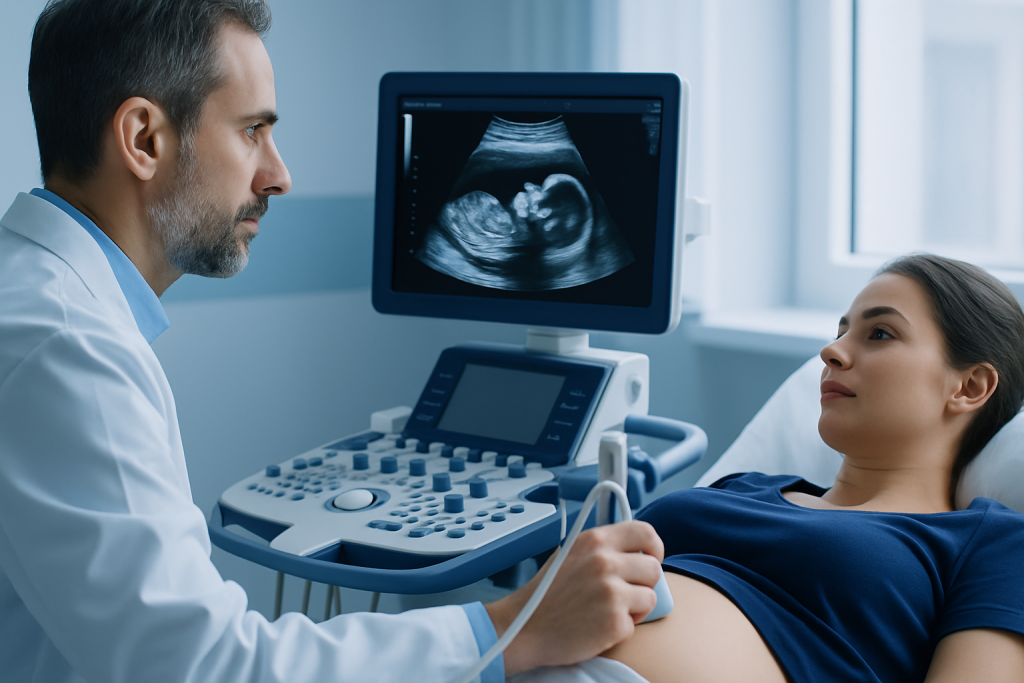
Triploidy disease does not cause symptoms in the fetus that a parent can feel directly, but it may be suspected during routine prenatal care. Ultrasound can show signs such as severe growth restriction, structural abnormalities, too much or too little amniotic fluid, or an abnormal placenta.
Some pregnancies are first evaluated because of vaginal bleeding, unusually severe nausea and vomiting, or blood pressure problems. If the placenta has molar-like changes, the pregnant person may also have higher-than-expected pregnancy hormone levels. In some cases, the uterus may measure larger or smaller than expected for gestational age.
On ultrasound, doctors may see abnormalities involving the brain, heart, face, hands, feet, or kidneys. Fetal movement may also be reduced later in pregnancy. However, ultrasound alone cannot confirm triploidy, because some findings overlap with other conditions.
Common clinical clues may include:
- Miscarriage, especially in the first trimester
- Severe fetal growth restriction
- Abnormal placental appearance
- Structural birth defects on ultrasound
- Abnormal amniotic fluid volume
- Pregnancy complications such as bleeding or early high blood pressure
Causes, risk factors, and recurrence
The direct cause of triploidy is a random error in fertilization or egg formation that leads to a complete extra set of chromosomes. In most cases, there is no identifiable inherited problem in either parent. This means parents should not assume they caused the condition through lifestyle, work, exercise, or normal daily activities.
Unlike some chromosome conditions, triploidy is not strongly linked to maternal age in the same way as certain trisomies. It can occur in any pregnancy. Researchers continue to study whether some rare biological factors may increase susceptibility in a small number of families, but most cases appear sporadic.
Recurrence risk is usually considered low after one triploidy pregnancy, but it is not zero. The exact risk can depend on the genetic findings and pregnancy history. For that reason, many couples benefit from genetic counseling before or during a future pregnancy.
If there has been recurrent pregnancy loss or repeated abnormal pregnancies, specialists may suggest a broader evaluation. This can include reviewing prior pathology reports, chromosome testing of pregnancy tissue when available, and discussion of prenatal testing options in future pregnancies.
How doctors diagnose triploidy disease
Diagnosis usually begins with prenatal ultrasound and a review of symptoms, pregnancy hormone levels, and maternal health. A screening test may raise suspicion, but a definite diagnosis requires genetic testing. This is important because management decisions should be based on the most accurate information possible.
The main diagnostic tests are chorionic villus sampling and amniocentesis, which collect placental or amniotic fluid cells for chromosome analysis. These tests can show that there are 69 chromosomes rather than 46. In some situations, more detailed molecular testing helps determine whether the extra chromosome set came from the mother or the father.
Noninvasive prenatal screening using maternal blood can sometimes suggest a chromosomal problem, but it does not reliably diagnose all cases of triploidy. If triploidy is suspected, confirmatory testing is usually recommended. Detailed genetic testing may also help distinguish triploidy from other conditions that can look similar on imaging.
Imaging remains an important part of the evaluation. A detailed ultrasound can assess fetal anatomy, growth, placental appearance, and amniotic fluid. In selected cases, amniocentesis helps confirm the diagnosis and guide counseling about the pregnancy and maternal monitoring.
Treatment options and pregnancy management
There is no treatment that can correct triploidy disease. Medical care focuses on confirming the diagnosis, monitoring the pregnant person, discussing the outlook honestly and compassionately, and supporting informed choices. Because the condition is usually not compatible with long-term survival, care is individualized based on gestational age, maternal health, and family wishes.
In many cases, the pregnancy ends naturally in miscarriage. If the diagnosis is made while the pregnancy is ongoing, doctors discuss available management options according to local laws, medical findings, and patient preferences. When the placenta has features of a partial molar pregnancy, closer maternal follow-up may be needed because of bleeding risks and the rare possibility of persistent placental tissue.
If pregnancy continues into the second or third trimester, the healthcare team may monitor blood pressure, bleeding, symptoms, and fetal status. Delivery planning depends on maternal well-being and the course of the pregnancy. After pregnancy loss or delivery, examination of the placenta and chromosome testing can provide helpful confirmation for future counseling.
Emotional care is an essential part of treatment. Families may benefit from support from obstetric specialists, maternal-fetal medicine experts, genetic counselors, mental health professionals, and bereavement services. Near the end of care planning, some international patients may seek evaluation at centers such as Acibadem International, where multidisciplinary specialists in JCI-accredited hospitals diagnose and manage complex pregnancy-related conditions.
Prevention, future pregnancy planning, and self-care
There is no known way to prevent most cases of triploidy because it usually results from a random genetic event at conception. Even so, preconception and prenatal care remain valuable. Early pregnancy visits, routine ultrasound, and timely testing can help identify serious chromosomal conditions as early as possible.
After a triploidy pregnancy, many people want to know what to do before trying again. A follow-up appointment can review pathology results, discuss whether the placenta had molar features, and explain if any additional blood tests are needed. Genetic counseling can help clarify recurrence risk and outline options for future pregnancies.
In a later pregnancy, doctors may offer early ultrasound and diagnostic testing if desired. Depending on the family history and previous findings, this may include screening first and then confirmatory testing, or direct diagnostic testing. If there were molar changes, the doctor may also advise waiting until follow-up is complete before attempting another pregnancy.
Self-care after a pregnancy affected by triploidy is important. This can include rest, follow-up medical visits, support from loved ones, and professional counseling if grief, anxiety, or depression become difficult to manage. Healing can take time physically and emotionally, and families should be encouraged to seek support without feeling rushed.
When to seek medical care
Prompt medical care is important during any pregnancy if there is heavy vaginal bleeding, severe abdominal pain, fever, fainting, severe headache, visual changes, or sudden swelling. These symptoms do not always mean triploidy, but they can signal urgent pregnancy complications that should be assessed without delay.
Anyone who has received a diagnosis or possible diagnosis of triploidy should stay in close contact with their obstetric team. Medical review is especially important if there are signs of miscarriage, rising blood pressure, worsening nausea and vomiting, or concerns about retained placental tissue after pregnancy loss.
People who have had a prior triploidy pregnancy should also seek medical advice before or early in a future pregnancy. Early consultation with an obstetrician, maternal-fetal medicine specialist, or genetic counselor can help create a monitoring plan and discuss testing options in a clear, supportive way.
If there is uncertainty about the diagnosis or the next steps, a second opinion from a fetal medicine or genetics specialist can be helpful. Families benefit most when care includes both medical guidance and emotional support throughout decision-making and follow-up.
Frequently asked questions
What is triploidy disease?
Triploidy disease is a chromosomal condition in which a fetus has 69 chromosomes instead of the usual 46. This happens because there is an extra complete set of chromosomes, which severely disrupts normal development.
Is triploidy the same as Down syndrome?
No. Down syndrome usually involves one extra copy of chromosome 21, while triploidy involves an entire extra set of all chromosomes. Because the genetic change is much larger, triploidy is generally far more severe.
Can a baby survive triploidy?
Most pregnancies affected by triploidy end in miscarriage or stillbirth. In the rare cases of live birth, survival is usually very limited because of severe abnormalities affecting multiple organs.
How is triploidy diagnosed during pregnancy?
Doctors may first suspect triploidy through ultrasound findings or abnormal prenatal screening results. A definite diagnosis usually requires chromosome testing through chorionic villus sampling or amniocentesis.
Did the parents do anything to cause triploidy?
In most cases, no. Triploidy usually happens because of a random error at conception, not because of food, exercise, stress, travel, or routine activities during pregnancy.
Can triploidy happen again in a future pregnancy?
The chance is usually low, but it is best discussed with a doctor or genetic counselor. Follow-up testing and review of the previous pregnancy can help estimate risk and guide planning for future pregnancies.
Why might triploidy affect the pregnant person’s health?
Triploidy can be associated with an abnormal placenta, and this may increase risks such as bleeding, severe nausea, or blood pressure problems. For this reason, careful medical monitoring is important for the pregnant person as well as the fetus.
References
- American College of Obstetricians and Gynecologists
- Society for Maternal-Fetal Medicine
- National Library of Medicine
- MedlinePlus
- National Organization for Rare Disorders
This article is for general information only and is not a substitute for professional medical advice. Please consult a qualified doctor about your individual situation.
Explore treatments in Turkey — costs, top hospitals & a free quote
JCI-accredited · board-certified surgeons · reply within 24h
Add us as a Preferred Source to see more of our trusted health content across Google Search, AI Overviews and Discover.
Check your numbers in seconds
BMI, calories, due date, blood pressure and 30+ more clinical calculators — free, instant, doctor-reviewed ranges.

More from the Health Library



Related Specialists

Prof. Dr. Ercan Karaarslan
Radiology
Assoc. Prof. Dr. Demet Çekdemir
Hematology
Dr. Atiye Ayral
Physical Medicine & Rehabilitation
Assoc. Prof. Dr. Saygın Abalı
Pediatric Endocrinology