Understanding Tethered Cord Syndrome: A Complete Patient Guide

Tethered cord syndrome happens when the spinal cord is attached to surrounding tissue and cannot move freely. Symptoms may include back pain, leg weakness, numbness, foot changes, scoliosis, and bladder or bowel difficulties.
Key Takeaways
- Tethered cord syndrome happens when the spinal cord is attached to surrounding tissue and cannot move freely.
- Symptoms may include back pain, leg weakness, numbness, foot changes, scoliosis, and bladder or bowel difficulties.
- Some people are diagnosed in childhood, while others are not recognized until adolescence or adulthood.
- MRI is often the key imaging test used to confirm the diagnosis and guide treatment planning.
- Treatment may include monitoring, symptom management, rehabilitation, and in selected cases surgery to release the tethering.
- Early medical review is important if symptoms are worsening or affecting walking, sensation, or bladder control.
Tethered cord syndrome is a neurological condition in which the spinal cord is abnormally anchored inside the spine, limiting its normal movement. This tension can lead to back or leg symptoms, changes in walking, and bladder or bowel problems, but timely evaluation and treatment can help protect function.
Overview: what tethered cord syndrome means
Tethered cord syndrome is a condition in which the spinal cord is held down by tissue attachments that limit its normal movement within the spinal canal. Instead of moving freely as the body grows and bends, the cord is placed under abnormal tension. Over time, that stretch can affect the nerves that travel to the legs, bladder, bowel, and lower back.
This condition may be present from birth or may become apparent later in life. In children, it is often linked to spinal development differences. In adolescents and adults, symptoms may emerge gradually as growth, daily activity, or age-related changes increase tension on the cord. Some people have clear symptoms, while others are first evaluated because of a skin mark over the lower spine or an abnormal scan done for another reason.
Tethered cord syndrome is not the same as every cause of back pain. Many conditions can produce similar complaints, including disc disease, scoliosis, or other spinal abnormalities. A careful neurological assessment is important to distinguish tethered cord syndrome from other spine and nerve conditions, including spina bifida and related developmental disorders.
How symptoms can appear over time

The symptoms of tethered cord syndrome can vary widely depending on a person’s age, the degree of tethering, and which nerves are affected. In some people, signs are subtle at first and progress slowly. In others, symptoms become more noticeable during growth spurts, after physical strain, or when another spinal problem draws attention to the area.
Common symptoms can include lower back pain, leg pain, muscle weakness, numbness, tingling, and changes in walking or balance. Some people develop foot deformities, differences in leg size, or tightening of the leg muscles. Children may have delayed motor milestones, frequent tripping, or difficulty keeping up with peers during physical activity.
Bladder and bowel symptoms are also important clues. These may include urgency, incontinence, repeated urinary tract infections, constipation, or trouble fully emptying the bladder. In children, persistent wetting problems beyond the expected age may need evaluation. A curve in the spine, such as scoliosis, may also be associated with underlying cord tethering in some cases.
- Back or leg pain that worsens with activity
- Weakness or reduced stamina in the legs
- Numbness, tingling, or altered sensation
- Changes in gait, posture, or balance
- Bladder or bowel control problems
- Foot abnormalities or progressive scoliosis
Why it happens: causes and risk factors
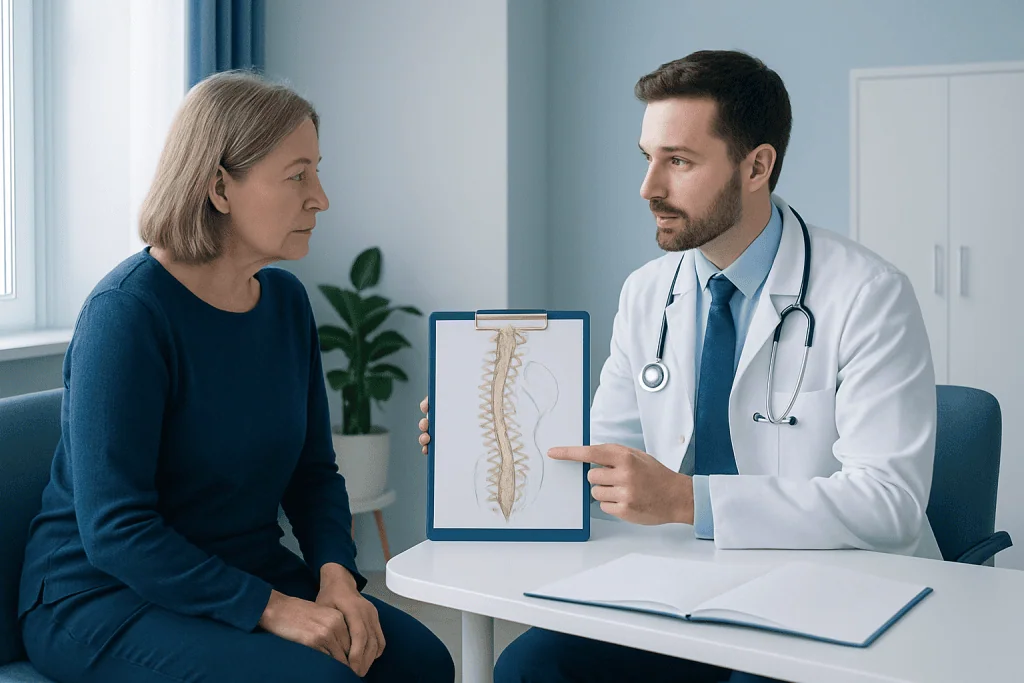
Tethered cord syndrome most often develops because the spinal cord is attached to structures around it by abnormal tissue. This may happen in people born with spinal differences such as spina bifida occulta, lipomas, thickened tissue bands, dermal sinus tracts, or a low-lying conus. In these situations, the spinal cord and surrounding tissues do not separate in the usual way during fetal development.
Not every case is congenital. Some people develop acquired tethering after previous spinal surgery, trauma, infection, inflammation, or scar tissue formation. Scar tissue can sometimes fix the cord in place and reduce its natural movement. This is one reason doctors review a person’s full spinal history when evaluating symptoms.
Risk factors are therefore related less to lifestyle and more to anatomy and medical history. A family may first notice a skin dimple, patch of hair, birthmark, or soft tissue swelling over the lower back, which can point to an underlying spinal abnormality. Still, the presence of a skin mark alone does not confirm tethered cord syndrome, and many people need imaging before a diagnosis can be made.
How doctors diagnose tethered cord syndrome
Diagnosis begins with a detailed medical history and neurological examination. The clinician will ask about pain, walking pattern, changes in strength or sensation, bladder or bowel issues, and whether symptoms are stable or progressive. In children, growth history, continence, and physical development are especially relevant. The lower back and feet may also be examined for visible signs of an underlying spinal issue.
MRI is the main imaging test used to evaluate tethered cord syndrome because it shows the spinal cord, surrounding tissues, and possible attachments in detail. It can help identify a low-lying conus, fatty tissue, scar tissue, or other structural abnormalities. In some situations, additional tests may be recommended to assess urinary function, nerve function, or bone alignment.
Diagnosis can be complex because symptoms do not always match imaging findings exactly. Some people have radiological signs with few symptoms, while others have clear functional problems that require close review. For this reason, care often involves several specialists, and advanced imaging such as MRI may be combined with neurological, orthopedic, or urological assessment to understand the full picture.
Treatment options and what they aim to do
Treatment depends on symptoms, neurological findings, age, imaging results, and whether the condition is stable or progressing. The main goals are to relieve tension on the spinal cord when appropriate, preserve nerve function, manage symptoms, and support mobility and quality of life. Not everyone with a tethered cord finding on imaging needs immediate surgery, especially if symptoms are absent or unchanged.
When symptoms are significant or worsening, surgery may be recommended to release the tethering and reduce ongoing strain on the cord. This is usually performed by a neurosurgeon with experience in spinal cord disorders. Surgical planning is individualized, and the expected benefit depends on the type of tethering, how long symptoms have been present, and which functions are affected. In suitable cases, a specialist may discuss neurosurgery as part of the treatment plan.
Non-surgical care can also play an important role. This may include pain management, bladder care, physiotherapy, gait support, and monitoring over time. Some patients benefit from rehabilitation focused on strength, balance, and mobility, particularly after treatment or when symptoms have affected daily function. Programs such as physical therapy and rehabilitation may help improve movement and independence when used under clinical guidance.
Living with the condition: monitoring, self-care, and daily support
People living with tethered cord syndrome often do best with regular follow-up tailored to their age and symptoms. Monitoring may include neurological checks, review of bladder or bowel function, and repeat imaging when clinically needed. The purpose of follow-up is to recognize any progression early, particularly in children who are still growing or in adults who develop new symptoms over time.
Self-care does not replace medical treatment, but it can support comfort and function. Patients are often advised to stay active within their comfort level, follow rehabilitation plans, and report any changes in walking, strength, sensation, or continence. Good bowel habits, hydration, and bladder management strategies may be helpful when these systems are affected. Footwear, orthotics, or mobility aids may also improve stability and reduce strain.
Emotional support matters too, especially for children and families adapting to a chronic neurological condition. Clear communication with the care team can help patients understand what symptoms to watch for and what goals treatment can realistically address. Near the end of the care pathway, some international patients choose centers such as Acibadem International, where multidisciplinary specialists in JCI-accredited hospitals evaluate and treat complex spinal cord conditions.
When to seek medical care
Medical assessment is important if a person has persistent back or leg pain, unexplained weakness, numbness, walking changes, or bladder and bowel problems, especially when these symptoms seem to be progressing. Parents should seek review if a child has a lower back skin mark along with leg weakness, foot deformity, scoliosis, or toilet-training difficulties that do not improve as expected.
Urgent medical care is needed if there is sudden worsening weakness, new loss of bladder or bowel control, severe pain, or rapid changes in walking. These symptoms do not always mean tethered cord syndrome is the cause, but they do need prompt evaluation to protect nerve function and rule out other serious spinal conditions.
If symptoms suggest a spinal or nerve problem, the first step is usually consultation with a qualified doctor, often followed by referral for specialist assessment and imaging. Early review can help clarify whether tethered cord syndrome is present and whether monitoring or treatment is the safest next step.
Frequently asked questions
Is tethered cord syndrome present at birth?
It often is, because many cases are linked to differences in spinal development before birth. However, symptoms may not appear until later in childhood or adulthood, and some cases can also develop after surgery, trauma, or scar tissue formation.
Can adults have tethered cord syndrome?
Yes. Some adults have congenital tethering that was not recognized earlier, while others develop symptoms later as tension on the cord becomes more noticeable. Adult symptoms may include back pain, leg weakness, sensory changes, and bladder difficulties.
Does every person with tethered cord syndrome need surgery?
No. Treatment depends on symptoms, neurological findings, and imaging results. Some people are monitored carefully over time, while surgery is considered when symptoms are progressive, function is affected, or there is concern about ongoing nerve damage.
What test is usually used to diagnose tethered cord syndrome?
MRI is usually the most important imaging test because it shows the spinal cord and surrounding tissues clearly. Doctors may also use neurological exams and, in some cases, bladder or nerve function tests to understand how the condition is affecting the body.
Can tethered cord syndrome cause bladder or bowel problems?
Yes. Because the lower spinal cord helps control bladder and bowel function, tethering can lead to urgency, incontinence, constipation, or incomplete emptying. These symptoms should be discussed with a doctor, especially if they are new or worsening.
What is the outlook for someone with tethered cord syndrome?
The outlook varies depending on the cause, the severity of symptoms, and how early the condition is recognized. With appropriate monitoring and treatment, many people can protect function, manage symptoms, and maintain daily activities, although long-term follow-up may still be needed.
References
- National Institute of Neurological Disorders and Stroke
- American Association of Neurological Surgeons
- National Organization for Rare Disorders
- Cleveland Clinic
- MedlinePlus
This article is for general information only and is not a substitute for professional medical advice. Please consult a qualified doctor about your individual situation.
Persistent digestive symptoms? Get evaluated in Turkey
JCI-accredited · board-certified surgeons · reply within 24h
Add us as a Preferred Source to see more of our trusted health content across Google Search, AI Overviews and Discover.