Flow Meter Peak: An Evidence-Based Guide for Patients

A flow meter peak reading shows how quickly air can be forced out of the lungs. Peak flow meters are most often used to monitor asthma at home, not to diagnose it alone.
Key Takeaways
- A flow meter peak reading shows how quickly air can be forced out of the lungs.
- Peak flow meters are most often used to monitor asthma at home, not to diagnose it alone.
- The most useful reading is a person’s own personal best, tracked over time under a clinician’s guidance.
- Correct technique matters because poor seal, coughing, or weak effort can lower the result.
- A drop in peak flow may signal worsening airway narrowing even before symptoms feel severe.
Flow meter peak is the highest airflow a person can blow out during a forceful exhale into a peak flow meter. It is a simple home measurement that can help monitor asthma and other airway conditions, especially when compared with a person’s usual best reading over time.
Overview: what flow meter peak means
Flow meter peak usually refers to the highest reading recorded on a peak flow meter, a small handheld device that measures how fast a person can blow air out of the lungs. In medical terms, this is called peak expiratory flow. It is commonly used in people with asthma to help detect airway narrowing and to follow day-to-day control.
The number on a peak flow meter is most meaningful when it is compared with that person’s usual readings rather than viewed in isolation. A single result can vary with effort, time of day, and technique. For that reason, clinicians often ask patients to track readings regularly and identify a personal best over a period when symptoms are well controlled.
Peak flow monitoring can support treatment plans, but it does not replace a full medical assessment. It is one part of respiratory care and may be used alongside symptom tracking, physical examination, and breathing tests such as spirometry. For patients living with asthma, this home tool can provide an early warning that airways are becoming more narrowed.
How a peak flow meter works
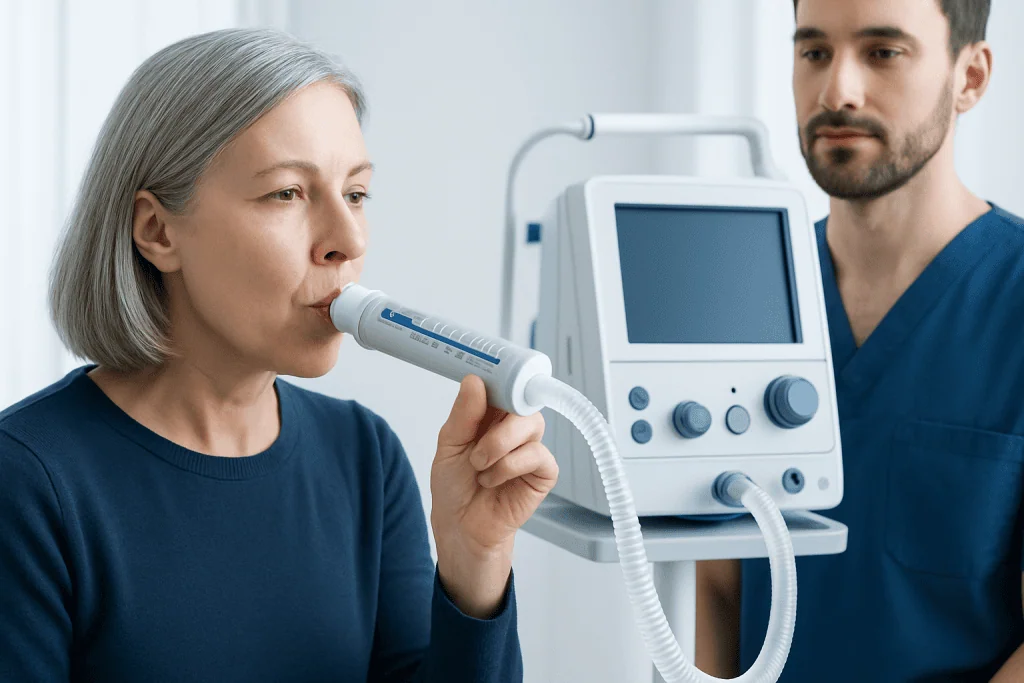
A peak flow meter measures the speed of airflow during a fast, forceful exhalation after taking a full breath in. When a person blows into the mouthpiece, a marker moves along a numbered scale. The highest number reached reflects the fastest airflow generated in that attempt.
This measurement focuses on large-airway airflow and is different from oxygen levels or total lung capacity. It does not show everything about lung function, but it can be useful because airway narrowing often lowers peak flow before symptoms become more obvious. Many patients and clinicians use it to watch for changes over days or weeks.
Most people are asked to make three attempts and record the highest reading, not the average. Because performance depends on effort and correct method, a healthcare professional may first demonstrate the technique and check that the patient is using the device properly. In some cases, a more complete spirometry test is needed to confirm the diagnosis or better understand breathing symptoms.
Who may benefit from peak flow monitoring

Peak flow meters are used most often in people with asthma, especially when symptoms vary over time or flare-ups have happened before. A clinician may recommend home monitoring for people who need help recognizing early changes, those adjusting treatment, or those who have difficulty judging how severe their symptoms are.
Some people with other respiratory conditions may also use peak flow readings as part of broader care, but the device is not equally helpful for every lung disease. It is generally less informative for conditions where airflow changes do not closely match peak flow values. A doctor can explain whether it fits an individual’s needs.
Children who are old enough to perform the maneuver consistently may also benefit, usually with caregiver support. In these cases, clear instructions and routine timing can improve reliability. For patients being evaluated for persistent cough, wheeze, or shortness of breath, clinicians may also consider conditions such as COPD and decide whether peak flow adds useful information.
How to use a peak flow meter correctly
Good technique is essential because inaccurate use can make readings seem lower or more variable than they truly are. Before blowing, the indicator should be set to the bottom of the scale. The person then stands or sits upright, takes as deep a breath as possible, seals the lips tightly around the mouthpiece, and blows out once as hard and fast as possible.
This should be repeated three times, resetting the marker each time, and the highest number is recorded. It helps to use the meter at the same times each day if a clinician has advised routine monitoring. Many people are asked to measure in the morning and evening and whenever symptoms worsen.
Common mistakes include not inhaling fully first, blowing too slowly, coughing during the attempt, letting the tongue block the mouthpiece, or not sealing the lips well. Keeping a written or digital diary can make trends easier to see. Some patients may use peak flow readings as part of an action plan while receiving asthma treatment supervised by a respiratory specialist.
- Use the same meter each time if possible.
- Record the highest of three attempts.
- Clean the device as directed by the manufacturer.
- Bring the meter or logbook to medical appointments for review.
Understanding results: personal best, zones, and patterns
The most practical way to interpret a flow meter peak reading is to compare it with a personal best. Personal best means the highest peak flow a person can achieve during a period when symptoms are well controlled. This becomes a reference point for future readings and helps guide discussions with a healthcare professional.
Some care plans use a zone system based on percentages of personal best. In general terms, higher readings closer to usual best suggest better airflow, while lower readings may suggest increasing airway narrowing. Exact cutoffs and what to do in each zone should come from the treating clinician, because age, diagnosis, and treatment plan all matter.
Patterns are often more helpful than one isolated number. For example, repeated drops in morning readings, greater day-to-day variability, or a steady decline over several days may indicate loss of control. If symptoms are increasing or readings are staying low despite treatment, further evaluation may be needed, sometimes including pulmonary function testing or other respiratory assessment.
Limitations and what can affect a reading
Peak flow meters are useful, but they have limits. The reading depends heavily on effort and technique, so it may be less reliable in very young children, in people who are very unwell, or in anyone who has not been shown how to use the device correctly. Different brands may also give slightly different numbers, which is why using the same meter consistently is preferred.
Several factors can affect the result. Time of day matters because peak flow may be lower in the morning. Respiratory infections, allergies, smoke exposure, exercise, poor sleep, and missed medicines can also influence airflow. For this reason, clinicians look at the reading in context rather than making decisions from one number alone.
A peak flow meter is not a substitute for emergency evaluation when breathing is worsening. It also cannot identify every cause of shortness of breath. Chest tightness, wheeze, cough, or low exercise tolerance may need broader assessment, including examination, imaging, or formal lung tests depending on the situation.
Self-care, monitoring habits, and when to seek medical care
For people advised to monitor peak flow at home, consistency is one of the most helpful habits. Readings should be taken as instructed, recorded clearly, and reviewed with a healthcare professional. It also helps to follow the prescribed treatment plan, avoid known triggers when possible, and check inhaler technique regularly if inhaled medicines are used.
Patients should seek medical advice if peak flow readings are repeatedly lower than their usual range, symptoms are waking them at night, rescue medicine seems to be needed more often, or normal activities are becoming harder. Medical care is also appropriate if there is uncertainty about how to interpret readings or whether the action plan is still suitable.
Urgent medical attention is needed for severe shortness of breath, difficulty speaking in full sentences, bluish lips or fingernails, confusion, or symptoms that do not improve promptly with prescribed rescue treatment. For international patients who need specialist assessment, Acibadem International’s multidisciplinary teams in JCI-accredited hospitals diagnose and treat respiratory conditions with individualized care.
Frequently asked questions
What is a normal flow meter peak reading?
There is not one normal number that fits everyone. Peak flow depends on factors such as age, height, sex, and, most importantly for ongoing monitoring, a person’s own personal best reading. A doctor can help decide what range is expected and how to interpret changes.
Is flow meter peak the same as spirometry?
No. A peak flow meter measures the fastest speed of exhalation in a simple home test, while spirometry is a more detailed breathing test usually done in a clinic or hospital. Spirometry provides broader information and is often used to help diagnose or confirm lung conditions.
Can a peak flow meter diagnose asthma?
A peak flow meter alone usually cannot diagnose asthma. It can support the assessment by showing variable airflow over time, but diagnosis typically also includes medical history, symptom pattern, examination, and formal lung function testing when needed.
Why does my peak flow change during the day?
Peak flow can vary naturally, and readings are often lower in the morning. Changes in symptoms, allergen exposure, infections, exercise, and medication use can also affect the result. Tracking readings at the same times each day makes patterns easier to understand.
How often should a peak flow meter be used?
That depends on the person’s condition and treatment plan. Some people use it daily, while others use it only during symptom changes or flare-ups. The schedule should be based on advice from a qualified healthcare professional.
What should someone do if the reading is lower than usual?
A lower-than-usual reading should be interpreted together with symptoms and the person’s written action plan, if one has been provided. If readings stay low, symptoms worsen, or there is concern about breathing, medical advice should be sought promptly. Severe breathing difficulty requires urgent care.
This article is for general information only and is not a substitute for professional medical advice. Please consult a qualified doctor about your individual situation.
Explore treatments in Turkey — costs, top hospitals & a free quote
JCI-accredited · board-certified surgeons · reply within 24h
Add us as a Preferred Source to see more of our trusted health content across Google Search, AI Overviews and Discover.

More from the Health Library

Harelip Cleft: A Complete Medical Overview

Scabies: What Patients Need to Know

Craving Salt: An Evidence-Based Guide for Patients

Hepatic Cyst: What Patients Need to Know

Aqualyx — Explained by Medical Evidence, Not Myths