Plantar Warts Disease: Symptoms, Causes, and Treatment Options

Plantar warts are caused by HPV entering the skin through tiny cuts or weak points on the soles. They often look like rough, thickened spots with small black dots and may hurt when standing or walking.
Key Takeaways
- Plantar warts are caused by HPV entering the skin through tiny cuts or weak points on the soles.
- They often look like rough, thickened spots with small black dots and may hurt when standing or walking.
- Many plantar warts improve over time, but persistent, painful, or spreading warts may need medical treatment.
- Common treatments include salicylic acid, cryotherapy, and other office-based procedures selected by a doctor.
- Good foot hygiene and avoiding barefoot contact in shared wet areas can help lower the risk of recurrence and spread.
Plantar warts disease is a common skin infection caused by certain types of human papillomavirus (HPV) that affects the soles of the feet. These warts are often harmless but can become uncomfortable because body weight presses them inward, making diagnosis and treatment especially important when walking becomes painful.
Overview
Plantar warts disease is a viral skin condition that affects the bottom of the foot. It happens when certain strains of human papillomavirus, or HPV, enter the outer layer of skin through small breaks, friction points, or softened skin. The result is a growth that may look like a callus at first but often has a rough surface and causes tenderness when pressure is applied.
Unlike warts on other parts of the body, plantar warts are pushed inward by the pressure of standing and walking. This inward growth can make them more painful than their size suggests. Some people develop a single wart, while others develop clusters called mosaic warts.
Plantar warts are common in both children and adults, especially in people who spend time barefoot in warm, moist communal areas such as locker rooms or pool decks. Although they are benign, they can interfere with sports, exercise, and daily comfort. A clinician may also consider other skin conditions, including skin cancer, if a lesion looks unusual or does not respond as expected.
How Plantar Warts Feel and Look
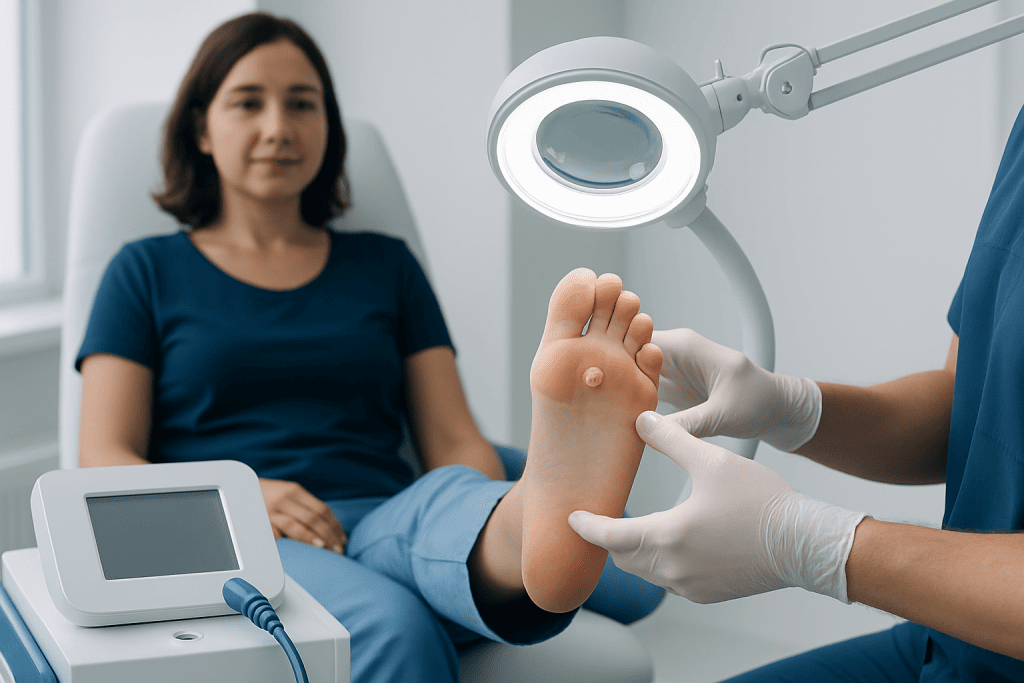
The appearance of plantar warts can vary. Many are small, grainy, and rough to the touch, often surrounded by thickened skin caused by pressure. They may be gray, tan, or slightly yellowish and can blend in with the surrounding sole.
A common clue is the presence of tiny black dots inside the wart. These dots are usually small clotted blood vessels rather than dirt. Another helpful sign is pain with side-to-side squeezing or direct pressure, especially in weight-bearing areas such as the heel or ball of the foot.
Symptoms can include discomfort while walking, a feeling of stepping on a pebble, or tenderness after standing for long periods. In some cases, the wart may interrupt normal skin lines, which helps distinguish it from a simple callus. It can be difficult for a person to tell the difference on their own, especially if the area is thick or dry.
- Rough, thickened spot on the sole
- Small black dots within the lesion
- Pain when walking or standing
- Flattened or inward-growing wart due to pressure
- Single lesion or grouped mosaic pattern
Causes and Risk Factors
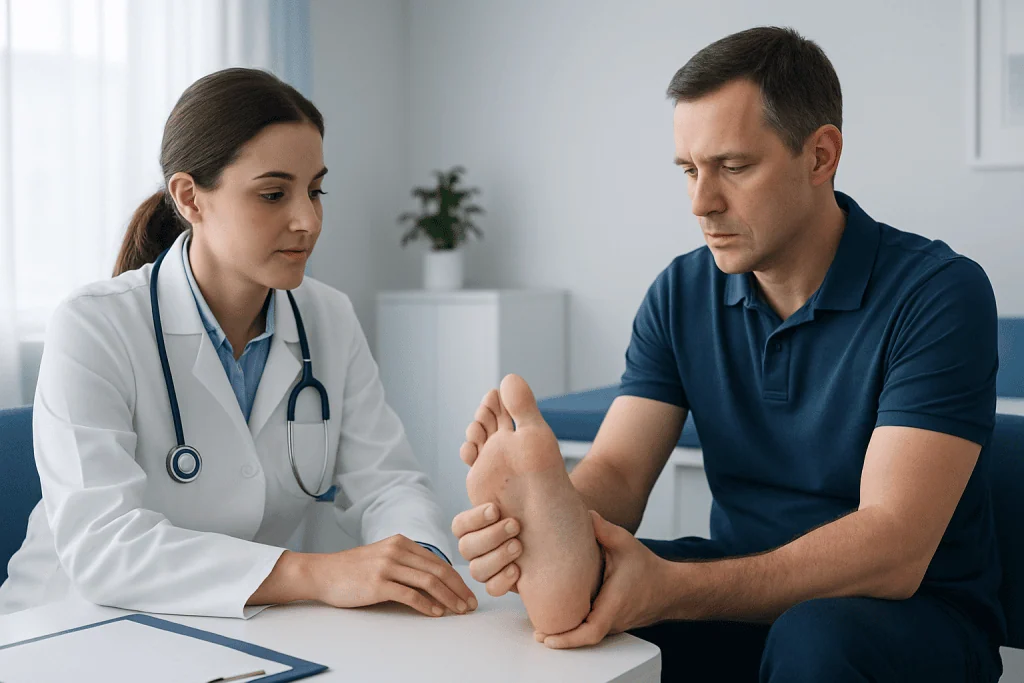
Plantar warts disease is caused by infection with specific HPV types that prefer the skin of the feet. The virus spreads through direct skin contact or indirectly through contaminated surfaces. Not everyone exposed to the virus develops a wart, because skin integrity and the immune system both influence whether infection takes hold.
The virus typically enters through tiny cracks, cuts, or areas of skin softened by moisture. Walking barefoot in communal showers, gym changing areas, or around swimming pools can increase exposure. Friction from footwear and repetitive pressure may also make it easier for the virus to penetrate the skin.
Some people are more likely to develop plantar warts than others. Children, teenagers, people with weakened immune defenses, and those with a history of previous warts may be at higher risk. People with eczema or other conditions that affect the skin barrier can also be more vulnerable. If there are broader concerns about wart-related skin issues, a doctor may assess other skin diseases as part of the evaluation.
Diagnosis and What Else It Could Be
Doctors usually diagnose plantar warts by examining the foot. The location, texture, interruption of normal skin lines, and black pinpoint dots often make the diagnosis clear. In some cases, the clinician may gently pare away thickened skin to look more closely at the wart’s surface.
Most people do not need complex tests. However, diagnosis matters because several conditions can resemble plantar warts, including calluses, corns, foreign-body reactions, fungal infections, and uncommon skin tumors. A lesion that bleeds easily, changes rapidly, has irregular color, or remains uncertain after treatment may need closer assessment.
If the diagnosis is unclear, a specialist may recommend further review or a skin biopsy. Evaluation is especially important for people with diabetes, poor circulation, or reduced sensation in the feet, because self-treatment may be unsafe in these situations. Foot discomfort may also overlap with other problems that need a different approach, and imaging such as MRI is only used when another underlying foot condition is suspected rather than to diagnose a typical wart.
Treatment Options
Plantar warts do not always need immediate treatment. Some go away on their own as the immune system gradually clears the virus. Treatment is usually considered when the wart is painful, spreading, persistent, or bothersome in daily life.
First-line treatment often includes salicylic acid applied regularly over time to gradually remove infected skin. Another common option is cryotherapy, in which a clinician freezes the wart. Depending on the wart’s size, depth, and response, a doctor may suggest repeated sessions or combine methods for better results.
For resistant cases, additional treatments may include stronger topical agents, careful curettage, laser-based treatment, or immune-directed therapies chosen by a specialist. If the diagnosis needs confirmation before a more advanced procedure, a doctor may perform a biopsy. In selected situations, evaluation by dermatology can help guide treatment when warts recur, spread, or fail standard care.
No single treatment works for every person, and warts can return even after successful treatment because HPV may persist in nearby skin. A doctor will consider age, pain level, location, skin condition, immune status, and personal preferences before recommending the best plan.
Self-care and Prevention
Self-care can support recovery and reduce spread. People should avoid picking, shaving, or cutting the wart, as this can irritate the skin and increase the chance of spreading the virus to other areas. It also helps to keep the feet clean and dry and to change socks regularly if sweating is a problem.
Footwear habits matter. Wearing sandals or shower shoes in communal wet areas may reduce exposure to HPV. Shoes that fit well can limit friction and pressure points, which may reduce skin damage that allows the virus to enter. If a wart is painful, cushioning pads may ease pressure while treatment is underway.
To avoid spreading the virus, it is best not to share towels, socks, shoes, pumice stones, or nail tools. People using at-home wart products should follow the directions carefully and avoid applying them to healthy skin. Anyone with diabetes, nerve damage, circulation problems, or uncertain diagnosis should speak to a doctor before trying home treatment.
When to Seek Medical Care
Medical care is appropriate if a wart becomes painful, spreads, keeps returning, or does not improve with basic treatment. A doctor should also assess any foot lesion that is bleeding, changing color, becoming irregular, or causing a change in walking pattern. Prompt evaluation is important when the diagnosis is uncertain.
People with diabetes, peripheral vascular disease, reduced sensation, or weakened immunity should seek professional advice early rather than self-treat. These conditions can increase the risk of skin injury, infection, and delayed healing. Children may also benefit from review if pain affects school, sports, or normal activity.
When specialist care is needed, Acibadem International’s multidisciplinary specialists in JCI-accredited hospitals evaluate and treat skin and foot conditions for international patients. A consultation can help confirm whether the lesion is a plantar wart and identify the most suitable next steps.
Frequently asked questions
Is plantar warts disease contagious?
Yes. Plantar warts are caused by HPV, which can spread through direct contact with the wart or indirectly through contaminated surfaces such as communal shower floors. Spread is more likely when the skin is damp or has small cracks.
Can plantar warts go away without treatment?
Yes, some plantar warts clear on their own as the immune system responds to the virus. However, this can take months or longer, and treatment may still be helpful if the wart is painful, spreading, or interfering with daily life.
How can someone tell a plantar wart from a callus?
A plantar wart often interrupts normal skin lines and may contain tiny black dots, while a callus is usually more uniform and caused by repeated pressure or friction. Warts may also hurt more with side-to-side squeezing, but a doctor may be needed to confirm the difference.
Are home treatments safe for everyone?
Not always. Over-the-counter wart treatments may be reasonable for some healthy adults, but they are not ideal for everyone. People with diabetes, poor circulation, nerve problems, very sensitive skin, or uncertain diagnosis should speak to a doctor before self-treating.
Why do plantar warts sometimes come back?
Recurrence can happen because HPV may remain in nearby skin even after the visible wart is removed. Reinfection is also possible, especially if the feet are exposed again in communal wet areas or if skin damage allows the virus to re-enter.
When should a child with a plantar wart see a doctor?
A child should be evaluated if the wart is painful, growing, spreading, or limiting walking, play, or sports. Medical review is also helpful if the diagnosis is uncertain or if home care has not improved the lesion.
References
- American Academy of Dermatology
- Centers for Disease Control and Prevention
- National Health Service
- Mayo Clinic
- Merck Manual Consumer Version
This article is for general information only and is not a substitute for professional medical advice. Please consult a qualified doctor about your individual situation.
Explore treatments in Turkey — costs, top hospitals & a free quote
JCI-accredited · board-certified surgeons · reply within 24h
Add us as a Preferred Source to see more of our trusted health content across Google Search, AI Overviews and Discover.