Pressure Points for Headaches: Common Causes, Related Conditions, and When to See a Doctor

Pressure points may temporarily ease headache discomfort, but evidence is limited and results vary. Headaches have many causes, including tension, migraine, sinus disease, dehydration, medication overuse, and underlying medical conditions.
Key Takeaways
- Pressure points may temporarily ease headache discomfort, but evidence is limited and results vary.
- Headaches have many causes, including tension, migraine, sinus disease, dehydration, medication overuse, and underlying medical conditions.
- Sudden, severe, new, or worsening headaches should be assessed by a doctor.
- Red-flag symptoms such as weakness, confusion, fever, vision loss, or headache after head injury need urgent attention.
- Diagnosis focuses on the headache pattern, associated symptoms, examination, and sometimes imaging or laboratory tests.
Pressure points for headaches may offer short-term comfort for some people, especially when headache pain is linked to stress, muscle tension, or neck tightness. They are not a cure, however, and the safest approach is to understand the type of headache, possible triggers, and when medical care is needed.
What pressure points for headaches can and cannot do
Pressure points for headaches are areas of the body that some people gently massage or press in an effort to reduce pain. Commonly used points include the space between the thumb and index finger, the temples, the bridge of the nose, the base of the skull, and the muscles of the neck and shoulders. For some individuals, this kind of self-massage can feel soothing and may reduce the sense of tightness that often accompanies a headache.
It is important to understand that pressure points do not treat the underlying cause of a headache. A tension-type headache, a migraine, a sinus problem, eye strain, dehydration, or a more serious neurological condition can all feel different and require different approaches. Relief from pressure points is usually temporary, and some headaches do not respond at all.
The most practical way to use pressure points is as one part of general comfort care. Gentle pressure, slow breathing, hydration, rest in a quiet room, and attention to triggers may help while a person monitors symptoms. If headaches are frequent, severe, new, or associated with warning signs, medical evaluation is more important than repeated self-treatment.
Common headache patterns and how they relate to pressure points
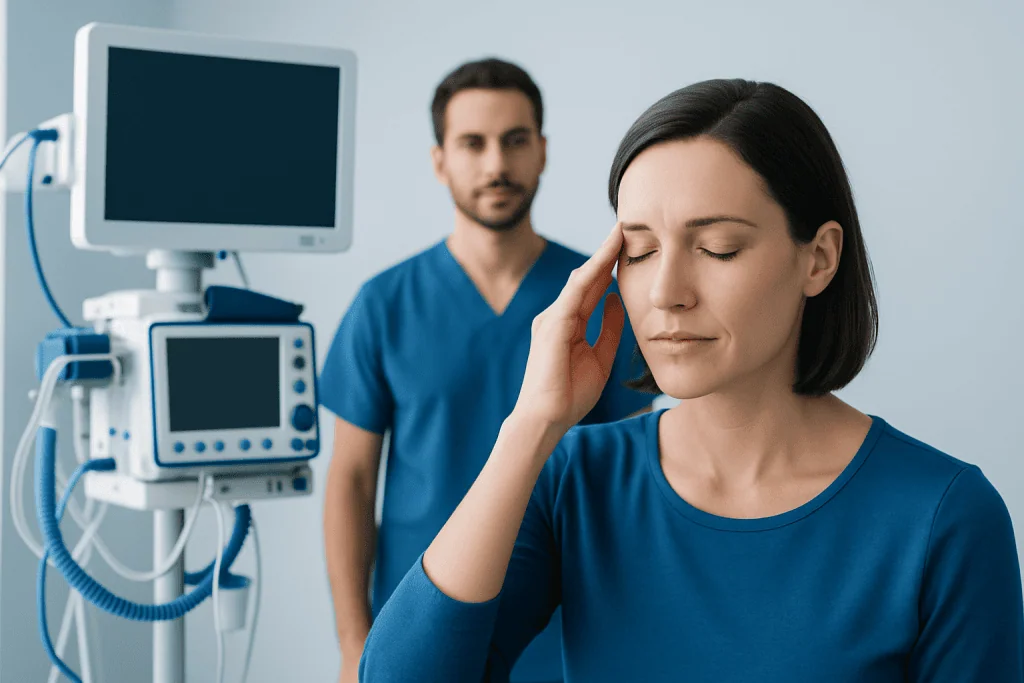
Many people look up pressure points for headaches when they are trying to tell whether their pain is “just tension” or something more. Tension-type headaches often cause a dull, band-like pressure around the forehead, scalp, or back of the head. In this setting, massage of the temples, jaw muscles, neck, and shoulders may feel helpful because tight muscles can contribute to the discomfort.
Migraine is different. Migraine pain is often throbbing or pulsating, may affect one side of the head, and can come with nausea, vomiting, sensitivity to light or sound, or visual changes. Pressure points may provide a small sense of comfort for some people during a migraine attack, but they do not replace proper migraine care. Readers who want to understand this pattern further may find it helpful to learn about migraine.
Headaches around the eyes, cheeks, or forehead may also be linked to sinus inflammation or nasal congestion, especially if there is facial pressure and thick nasal discharge. Jaw clenching, poor posture, sleep problems, and prolonged screen use can add another layer of muscular strain. Because several headache types can overlap, the body area that feels tender does not always reveal the true cause.
- Tension-type headache: pressure or tightness, often linked to stress or muscle strain
- Migraine: throbbing pain, often with nausea and sensory sensitivity
- Sinus-related headache: facial pressure with nasal symptoms
- Cervicogenic headache: pain that begins in the neck and radiates upward
- Medication-overuse headache: frequent headaches in people using pain relievers too often
Where people commonly apply pressure and what to know

People most often try pressure points at the temples, the web between the thumb and index finger, the inner edge of the eyebrows, the bridge of the nose, and the base of the skull where neck muscles attach. Others focus less on a specific point and more on the surrounding muscle groups, such as the jaw, upper shoulders, and scalp. The idea is not that these areas remove a disease process, but that they may reduce muscle tension or encourage relaxation.
If a person chooses to try this, pressure should be gentle to moderate rather than forceful. Deep pressure can irritate sensitive tissues, especially if the scalp, jaw, or neck is already sore. A practical method is to press or massage for several seconds at a time while breathing slowly, then pause and reassess. If symptoms worsen, the technique should be stopped.
There are situations where self-pressure should be avoided. A person should not strongly massage a painful area after recent head or neck injury, over inflamed skin, or when there is severe unexplained tenderness. Pressure point techniques are also not a substitute for evaluating repeated headaches, especially if a person has new neurological symptoms or significant changes in headache pattern.
Common causes and related conditions behind headache pain
The reason pressure points for headaches are so widely discussed is that headaches are extremely common and often triggered by everyday factors. Stress, poor sleep, dehydration, missed meals, eye strain, excessive screen time, and prolonged poor posture can all contribute. In these situations, pressure points may feel useful because the pain often overlaps with neck, scalp, and shoulder tension.
Headaches can also be related to medical conditions. Migraine is one of the most common recurring causes. Sinus infections, upper respiratory infections, high blood pressure, dental or jaw problems, sleep apnea, and some medications may also play a role. Less commonly, headaches can signal inflammation, bleeding, stroke, or a mass affecting the brain. That is why the full symptom pattern matters more than the location of a “pressure point.”
Some people experience headache because the neck itself is part of the problem. Tight muscles, arthritis, disc problems, or nerve irritation in the cervical spine can refer pain to the head. This type of pain is sometimes investigated with neurological examination and imaging, and treatment may involve posture correction, physical therapy, or targeted pain management rather than simple self-massage. Depending on findings, specialists may use physical therapy and rehabilitation as part of care.
Another important related condition is medication-overuse headache, which can develop when pain-relieving medicines are used too frequently. In that situation, pressure points might provide little benefit because the main issue is the headache cycle itself. A clinician can help identify whether recurring headache is a primary headache disorder or a symptom of another condition such as a brain tumor, although serious causes are much less common than tension headache or migraine.
How doctors diagnose recurring or severe headaches
Diagnosis begins with a detailed history. A doctor usually asks when the headaches started, how often they happen, where the pain is located, how long episodes last, what the pain feels like, and whether symptoms such as nausea, light sensitivity, fever, weakness, or visual changes occur. The pattern over time is especially important. A long history of similar headaches suggests one path, while a sudden change suggests another.
A physical and neurological examination helps identify signs that need further investigation. The doctor may check vision, eye movements, strength, sensation, reflexes, coordination, balance, sinus tenderness, jaw function, and neck range of motion. Blood pressure and medication history are also relevant because both can affect headache symptoms.
Not every headache requires imaging. However, scans may be recommended if the headache is new and severe, follows injury, is getting progressively worse, occurs with abnormal neurological findings, or raises concern for bleeding, stroke, infection, or another structural problem. In selected cases, doctors may use MRI or other imaging tests to look more closely at the brain, neck, or sinuses.
When headaches are recurrent, a headache diary can be very useful. Tracking timing, duration, sleep, meals, stress, menstrual cycles, medications, and associated symptoms often helps identify triggers and guides treatment decisions. This practical step can be as valuable as any single test.
Treatment options beyond pressure points
Treatment depends on the type and cause of the headache. For tension-type headaches, rest, hydration, stress reduction, heat, stretching, posture changes, and appropriate nonprescription pain relief may help. For migraine, care may include lifestyle strategies, prescription medicines to stop attacks, and preventive treatment when episodes are frequent or disabling. Self-massage or pressure points may fit into this plan, but usually as supportive care rather than the main treatment.
If the headache is connected to muscle tension or neck dysfunction, rehabilitation strategies may be recommended. These can include stretching, strengthening, ergonomic changes, and manual therapy under professional guidance. In selected patients with complex pain patterns, doctors may also discuss pain management approaches as part of a broader plan.
Treatment for secondary headaches focuses on the underlying problem. Sinus infection, uncontrolled blood pressure, dental disease, sleep disorders, medication overuse, and inflammatory conditions each need specific evaluation and care. When a person has frequent headaches, it is safer to get a clear diagnosis than to rely on repeated pressure-point use and assume the cause is harmless.
Near the end of the diagnostic journey, coordinated care can be especially helpful for people whose symptoms overlap neurology, ENT, pain medicine, and rehabilitation. Acibadem International’s multidisciplinary specialists and JCI-accredited hospitals diagnose and treat headache-related conditions for international patients when advanced evaluation is needed.
Self-care, prevention, and daily habits that may reduce headaches
Because many headaches are influenced by routine habits, prevention often starts with consistency. Regular sleep, steady hydration, balanced meals, and breaks from screens can lower the likelihood of common headaches. Gentle stretching of the neck and shoulders, attention to workstation setup, and relaxation techniques may also reduce tension that leads people to seek pressure points for headaches in the first place.
Trigger awareness is another useful step. Some people notice headaches after skipped meals, alcohol, strong odors, bright light, travel fatigue, intense stress, or hormonal changes. Keeping a symptom record can reveal patterns without guesswork. Once triggers are clearer, the goal is not perfection but manageable adjustments that reduce frequency or severity.
Good self-care also means using pain medicines carefully. Frequent use can lead to rebound or medication-overuse headache in some people. It is wise to follow product instructions and ask a doctor if headaches are happening often enough that regular medicine seems necessary. Pressure points, hydration, rest, and relaxation can be reasonable comfort measures, but repeated headaches deserve proper assessment.
When to seek medical care
A person should arrange medical review if headaches are frequent, worsening, different from usual, or no longer responding to their typical measures. It is also sensible to seek advice when headaches disrupt work, sleep, daily life, or are associated with neck pain, jaw pain, sinus symptoms, or repeated nausea. Children, older adults with new headaches, pregnant individuals, and people with cancer or weakened immunity may need earlier assessment.
Urgent medical attention is needed for a sudden severe headache that reaches maximum intensity quickly, headache after a head injury, or headache with fainting, confusion, seizures, weakness, numbness, difficulty speaking, chest pain, fever, stiff neck, persistent vomiting, or vision loss. These symptoms do not always mean a serious problem, but they should not be explained away by muscle tension or treated only with pressure points.
If a doctor suspects a neurological cause, referral to specialists may be appropriate. Depending on symptoms, further evaluation can include neurological consultation, imaging, and investigation for related disorders such as stroke or other conditions affecting the brain and blood vessels. Prompt assessment helps ensure that serious causes are not missed while allowing common, treatable causes to be managed effectively.
Frequently asked questions
Do pressure points really help headaches?
They may help some people feel temporary relief, especially when headache pain is linked to stress or tight muscles. However, the effect is variable, and pressure points do not treat the underlying cause of the headache.
Which headaches are most likely to feel better with pressure points?
Tension-type headaches and headaches related to neck or shoulder tightness are the ones most likely to improve with gentle self-massage or pressure. Migraine may also feel slightly better for some people, but it usually needs a broader treatment plan.
Can pressure points make a headache worse?
Yes, sometimes. Pressing too hard, massaging a very tender area, or manipulating the neck during a severe or unexplained headache can increase pain or discomfort, so gentle techniques are safer.
When should a person stop self-treating a headache?
Self-treatment should stop if the headache is severe, unusual, rapidly worsening, or accompanied by warning signs such as weakness, confusion, fainting, fever, or vision changes. Medical care is also important if headaches are happening often or interfering with daily life.
Are headaches around the eyes always caused by sinus problems?
No. Pain around the eyes can happen with migraine, tension headache, eye strain, cluster headache, or sinus disease, so location alone is not enough to identify the cause. Other symptoms and the overall pattern are more reliable.
What is the best way to track recurring headaches?
A headache diary is often the most useful first step. Recording timing, duration, intensity, associated symptoms, sleep, meals, stress, medications, and possible triggers can help a doctor identify the headache type and choose treatment.
References
- World Health Organization
- National Institute of Neurological Disorders and Stroke
- American Migraine Foundation
- National Institute for Health and Care Excellence
- Mayo Clinic
This article is for general information only and is not a substitute for professional medical advice. Please consult a qualified doctor about your individual situation.
Joint and spine care in Turkey — expert assessment & treatment
JCI-accredited · board-certified surgeons · reply within 24h
Add us as a Preferred Source to see more of our trusted health content across Google Search, AI Overviews and Discover.

More from the Health Library



Related Specialists

Prof. Dr. Mehmet Ali Vardar
Gynecology & Obstetrics
Dr. Azad Bairamovi
Inpatient Clinic Physicians Clinical Service
Dr. Cenk Ersemiz
Acibadem Life Clinical Service
Asst. Prof. Dr. M. Erkan Ekicibaşı
Cardiology