

Si Joint Dysfunction — Explained by Medical Evidence, Not Myths

SI joint dysfunction affects the joint linking the spine to the pelvis and can cause pain in the low back, buttock, groin, or thigh. Symptoms can resemble sciatica, hip problems, or other back conditions, so diagnosis usually relies on a combination of exam findings and tests.
Key Takeaways
- SI joint dysfunction affects the joint linking the spine to the pelvis and can cause pain in the low back, buttock, groin, or thigh.
- Symptoms can resemble sciatica, hip problems, or other back conditions, so diagnosis usually relies on a combination of exam findings and tests.
- Treatment often begins with activity changes, physical therapy, pain relief measures, and guided injections when needed.
- Pregnancy, prior injury, arthritis, altered walking mechanics, and spine fusion can increase the risk of SI joint problems.
- Medical review is important if pain persists, limits walking or sleep, or is accompanied by fever, weakness, numbness, or bowel or bladder symptoms.
SI joint dysfunction is a common cause of low back, buttock, or upper leg pain that happens when the sacroiliac joint moves too much, too little, or becomes irritated. It is not always easy to recognize, but careful history, physical examination, and selected imaging or injections can help distinguish it from other causes of back pain.
Overview: what SI joint dysfunction means
SI joint dysfunction refers to pain or impaired function arising from the sacroiliac joint, the joint where the sacrum at the base of the spine meets the iliac bones of the pelvis. These joints help transfer load between the upper body and the legs. When the joint becomes inflamed, stiff, or unusually mobile, it can create pain patterns that are often felt in the low back, buttock, groin, or upper thigh.
This condition is sometimes misunderstood because the term does not describe a single disease. Instead, it is a clinical problem that can develop for several reasons, including mechanical strain, pregnancy-related ligament changes, degeneration, inflammatory arthritis, or stress after spinal surgery. For many people, SI joint dysfunction is one of several contributors to back or pelvic pain rather than the only cause.
Medical evidence shows that sacroiliac pain can overlap with other musculoskeletal problems. That is why diagnosis is usually based on the whole picture rather than one symptom or one scan result alone. A doctor considers where the pain is located, what movements trigger it, what the physical examination shows, and whether imaging or image-guided diagnostic injections support the diagnosis.
Symptoms and how the pain may feel
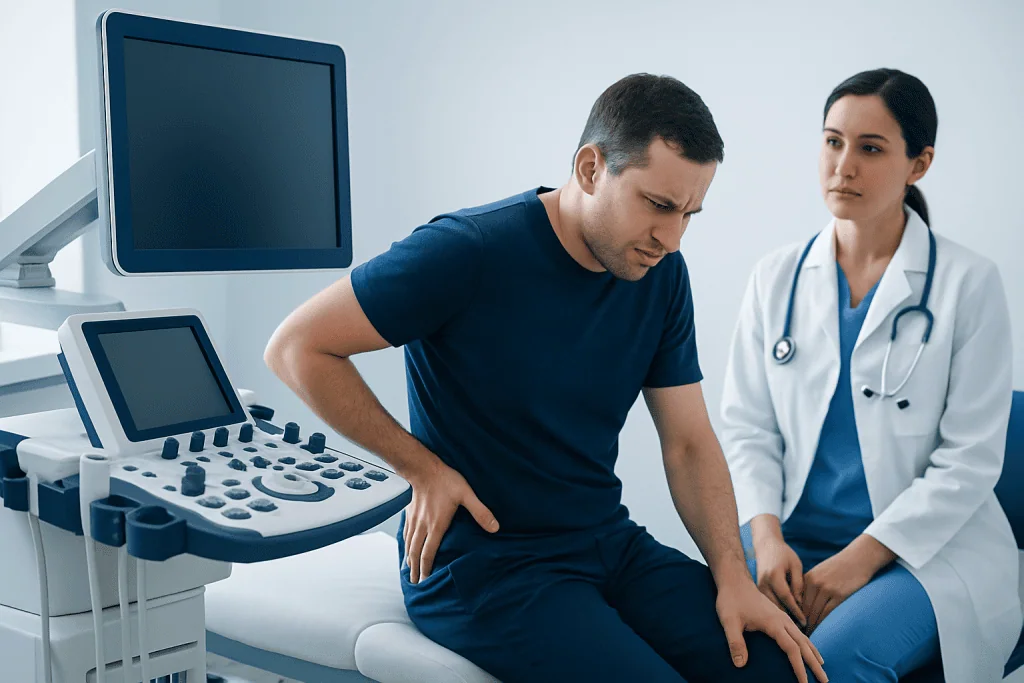
The most typical symptom of SI joint dysfunction is pain on one side of the low back or deep in the buttock, although both sides can be affected. Some people describe an aching or sharp pain that worsens when standing up from a chair, climbing stairs, turning in bed, running, or standing for long periods. Pain may also travel into the groin, outer hip, or upper thigh.
Unlike classic nerve pain, SI joint pain usually does not follow a neat line all the way below the knee, but overlap can occur. Because of this, some people think they have sciatica when the main problem is actually around the pelvis. Others notice a feeling of instability, stiffness after sitting, or discomfort when putting more weight on one leg.
Symptoms vary from person to person, but common features include:
- Pain in the low back, buttock, pelvis, groin, or upper leg
- Worsening pain with walking, stair climbing, or standing on one leg
- Discomfort when rolling in bed or getting out of a car
- Stiffness after prolonged sitting
- Tenderness near the dimples of the lower back
If numbness, marked leg weakness, loss of bladder or bowel control, fever, or unexplained weight loss is present, another condition may be responsible and urgent medical assessment is needed.
Why it happens: causes and risk factors

The SI joints normally allow only a small amount of movement. Pain may develop when that motion is either excessive or restricted. Extra motion can occur when the supporting ligaments become stretched, while reduced motion may happen with age-related degeneration, prior injury, or altered biomechanics of the spine and hips. In both cases, the surrounding tissues can become irritated and painful.
Pregnancy is a well-known risk factor because hormonal changes can relax pelvic ligaments and body weight distribution changes as pregnancy progresses. After childbirth, some people continue to have pelvic girdle or SI pain for a period of time. Falls, lifting injuries, sports involving repeated twisting, leg-length differences, and abnormal walking patterns can also strain the joint.
Inflammatory conditions may affect the SI joints as well. These include forms of arthritis such as ankylosing spondylitis and other spondyloarthropathies, in which inflammation can cause pain and morning stiffness. Degenerative arthritis may contribute too, especially in older adults. In some people, pain appears after lumbar fusion because forces that once moved through the lower spine are redistributed toward the SI joint.
Because pelvic and lower back pain has many causes, clinicians also consider nearby problems such as a herniated disc, hip joint disease, muscle strain, bursitis, or stress injury. Distinguishing among these possibilities helps guide treatment and avoids focusing on the wrong structure.
How doctors diagnose SI joint dysfunction
Diagnosis starts with a detailed history. A doctor asks where the pain begins, whether it spreads, what activities trigger it, whether there was an injury, and whether symptoms suggest inflammation or nerve compression. The pattern matters: pain that is localized around the buttock and worsened by transfers, twisting, or single-leg loading can point toward the SI joint, but no single symptom confirms it.
The physical examination usually includes several provocation tests designed to stress the SI joint in controlled ways. If multiple tests reproduce the familiar pain, the diagnosis becomes more likely. The clinician may also examine the hips, lower spine, gait, and nerve function to look for alternative or contributing causes. This broader assessment is important because SI joint dysfunction often coexists with lumbar or hip problems.
Imaging can help rule out fractures, severe arthritis, infection, or tumors, but standard X-rays, CT, or MRI do not always prove that the SI joint is the pain source. When symptoms are complex, MRI may be used to evaluate nearby discs, nerves, bones, and signs of inflammation. In selected cases, an image-guided anesthetic injection into the SI joint is used diagnostically. Significant short-term pain relief after a properly placed injection supports the SI joint as a major source of pain.
Because the diagnosis is partly clinical, it may take time to reach a clear answer. A thoughtful evaluation is often more useful than relying on one label too early.
Treatment options based on the cause and severity
Treatment usually begins with conservative care. Short periods of relative rest, avoiding movements that trigger pain, and using heat or ice may help during a flare. Over-the-counter or prescribed pain-relieving medicines may be considered by a doctor depending on the person’s overall health, stomach, kidney, and cardiovascular risk. In many cases, a structured physical therapy and rehabilitation plan is central to recovery.
Physical therapy generally focuses on improving core stability, strengthening the gluteal and hip muscles, restoring flexibility, and correcting movement patterns that overload the pelvis. Some people benefit from manual therapy, posture training, gait correction, or a pelvic support belt, especially during or after pregnancy. The aim is not only to reduce pain but also to improve how forces move through the spine, pelvis, and hips.
If symptoms persist, image-guided SI joint injections may be considered. These typically place local anesthetic, sometimes along with anti-inflammatory medication, directly into or around the joint. Such injections can help diagnostically and may reduce pain enough for rehabilitation to progress. In selected chronic cases that do not improve with appropriate non-surgical care, procedures such as radiofrequency ablation or minimally invasive stabilization may be discussed with a specialist.
Surgery is not the first option and is reserved for carefully selected patients when the diagnosis is strong and non-surgical treatment has not provided adequate relief. If another condition is contributing, treatment may also involve evaluation by orthopedics and traumatology or a spine specialist to address the full cause of pain rather than the SI joint alone.
Self-care, daily habits, and prevention
Not every case of SI joint dysfunction can be prevented, but daily habits can reduce strain on the lower back and pelvis. Gradual conditioning, good lifting technique, and attention to posture during prolonged sitting or standing may help. For people with recurrent pain, regular exercises that strengthen the abdominal, hip, and gluteal muscles often support better pelvic stability.
During a painful period, it may help to limit activities that involve repeated twisting, asymmetrical loading, or sudden impact. Standing with equal weight on both legs, taking breaks from long car rides, and modifying sports temporarily can reduce irritation. Sleep position changes, such as placing a pillow between the knees or under the knees, may also improve comfort.
Supportive self-care measures can include:
- Gentle stretching and guided strengthening exercises
- Maintaining a healthy body weight when possible
- Using supportive footwear and reviewing gait issues if needed
- Gradually returning to exercise instead of restarting abruptly
- Seeking help early if pregnancy-related pelvic pain is affecting mobility
Self-care should not replace medical evaluation when pain is severe, persistent, or changing. The safest approach is to use home strategies as part of a plan made with a qualified healthcare professional.
When to seek medical care
Medical care is appropriate if low back or buttock pain lasts more than a few weeks, keeps returning, or interferes with sleep, work, walking, or exercise. Assessment is also important if there was a fall, sports injury, recent pregnancy, inflammatory arthritis, or prior spine surgery, since each of these can influence the diagnosis and the best treatment plan.
Urgent medical review is needed if pain is accompanied by fever, unexplained weight loss, severe night pain, new weakness, numbness in the groin area, or loss of bladder or bowel control. These symptoms can suggest infection, significant nerve compression, or another condition that needs prompt attention rather than routine musculoskeletal care.
Because SI joint dysfunction can mimic other causes of pain, specialist review may be helpful when symptoms are persistent or the diagnosis remains uncertain. At the end of the evaluation pathway, some patients may need advanced imaging, guided injections, or multidisciplinary care involving rehabilitation, orthopedics, pain management, or rheumatology. Acibadem International’s multidisciplinary specialists in JCI-accredited hospitals evaluate and treat SI joint-related pain for international patients when a more comprehensive assessment is needed.
Frequently asked questions
Is SI joint dysfunction the same as sciatica?
No. SI joint dysfunction is pain arising from the sacroiliac joint, while sciatica refers to symptoms caused by irritation or compression of the sciatic nerve, often from the lower spine. The two can feel similar, especially when pain spreads into the buttock or thigh, so a medical examination is often needed to tell them apart.
Can SI joint dysfunction show up on MRI or X-ray?
Sometimes, but not always. Imaging may show inflammation, arthritis, or other structural problems, yet many people with SI joint pain have scans that are not clearly diagnostic. Doctors often use imaging to rule out other causes and may rely on the exam and, in some cases, a guided injection to confirm the pain source.
Does SI joint dysfunction go away on its own?
Mild episodes may improve with time, activity modification, and targeted exercise. However, persistent or recurrent symptoms often need a structured treatment plan to restore movement and reduce strain on the joint. Early care may help prevent a temporary flare from becoming a longer-term problem.
What activities can make SI joint pain worse?
Common triggers include prolonged standing, climbing stairs, running, twisting, getting up from a chair, and standing mainly on one leg. Rolling in bed or long periods of sitting may also aggravate symptoms. Keeping a simple symptom diary can help identify personal triggers.
Is SI joint dysfunction more common during pregnancy?
It can be. Pregnancy-related hormonal changes may loosen pelvic ligaments, and shifts in posture and body weight can increase stress on the sacroiliac joints. Many people improve after delivery, but some continue to need physiotherapy or medical assessment if pain remains limiting.
When is surgery considered for SI joint dysfunction?
Surgery is usually considered only after conservative treatment has been tried thoroughly and the diagnosis is well supported. Doctors typically want to see that symptoms are significant, other causes have been evaluated, and less invasive options such as rehabilitation and guided injections have not provided enough relief.
This article is for general information only and is not a substitute for professional medical advice. Please consult a qualified doctor about your individual situation.
Joint and spine care in Turkey — expert assessment & treatment
JCI-accredited · board-certified surgeons · reply within 24h
Add us as a Preferred Source to see more of our trusted health content across Google Search, AI Overviews and Discover.

More from the Health Library

Leukemia rash: Symptoms, Causes, and Treatment — Complete Patient Guide

BMI Chart: An Evidence-Based Guide for Patients

Golden Milk: An Evidence-Based Guide for Patients

Mouth Sores: What Patients Need to Know

Emom Workouts: An Evidence-Based Guide for Patients

Essential Oils During an Asthma Attack: Safety Risks
Physical Medicine & Rehabilitation Specialists at Acibadem

Assoc. Prof. Dr. Ata Can
Orthopedic Surgery & Traumatology
Prof. Dr. Ata Can Atalar
Orthopedic Surgery & Traumatology
Fzt. Atahan Vardı
Physical Medicine & Rehabilitation
Fzt. Atilla Murat Ünver
Physical Medicine & Rehabilitation