Charge Syndrome: Diagnosis, Outlook, and Modern Treatment Approaches
Charge syndrome is usually caused by a change in the CHD7 gene and affects multiple organs and body systems. Symptoms vary widely, so diagnosis often depends on a combination of clinical findings and genetic testing.
Key Takeaways
- Charge syndrome is usually caused by a change in the CHD7 gene and affects multiple organs and body systems.
- Symptoms vary widely, so diagnosis often depends on a combination of clinical findings and genetic testing.
- Treatment focuses on each person’s specific needs, including medical care, surgery when needed, and developmental support.
- Hearing, vision, feeding, breathing, and heart health often need early assessment.
- Long-term outlook depends on the severity of organ involvement and access to multidisciplinary care.
Charge syndrome is a rare genetic condition that affects development before birth and can involve the eyes, heart, airways, ears, growth, and nervous system. While there is no single cure, early diagnosis and coordinated treatment can help many children manage symptoms, support development, and improve long-term quality of life.
Overview: what charge syndrome means
Charge syndrome is a rare genetic condition present from birth that affects the development of several parts of the body. The name comes from a group of features often seen in the condition, including eye coloboma, heart defects, choanal atresia, growth and developmental differences, genital differences, and ear abnormalities. Not every child has all of these findings, and symptoms can range from mild to complex.
Most cases are linked to a change in the CHD7 gene, which helps guide early embryonic development. Because this gene influences the formation of multiple organs, charge syndrome can affect breathing, feeding, hearing, vision, balance, hormone function, and learning. For many families, the condition becomes clearer over time as different signs are recognized and evaluated together.
A practical way to understand charge syndrome is as a condition that needs coordinated care rather than one single treatment. Children may need support from pediatrics, cardiology, ENT, ophthalmology, audiology, genetics, endocrinology, rehabilitation, and developmental specialists. This team-based approach helps address both urgent medical issues and long-term growth and learning needs.
Signs and symptoms
The symptoms of charge syndrome can differ greatly from one child to another. Some babies are diagnosed soon after birth because of breathing problems, feeding difficulties, or a congenital heart defect. Others are identified later when hearing loss, delayed milestones, visual problems, or growth concerns become more noticeable.
Common features may include:
- Eye coloboma, which can affect vision
- Heart defects of varying types and severity
- Choanal atresia or narrowing of the nasal passages, which can make breathing difficult
- Hearing loss, unusual outer ears, or balance problems
- Feeding and swallowing difficulties
- Delayed growth and delayed developmental milestones
- Genital or urinary tract differences
- Low muscle tone, sleep problems, or cranial nerve dysfunction
Some children also have problems with smell, facial movement, swallowing coordination, or reflux. These issues may be subtle at first but can have an important effect on nutrition, speech development, and daily comfort. Because hearing and vision can both be affected, communication support often becomes an important part of care.
Behavior and learning profiles are also variable. Some children have mild developmental delays, while others need more extensive educational and physical support. The pattern of symptoms often becomes more individualized with age, which is why regular reassessment is important.
Causes and risk factors

Charge syndrome is most often caused by a pathogenic change in the CHD7 gene. This gene plays an important role in how tissues and organs form during early development. In many children, the gene change happens for the first time in that child and is not inherited from either parent.
In some families, genetic counseling may be recommended to discuss recurrence risk and testing options. Even when a child has a confirmed CHD7-related diagnosis, the severity of symptoms cannot always be predicted in advance. Two people with the same gene change may still have different medical needs.
There are no known lifestyle choices during pregnancy that cause charge syndrome. Parents should not blame themselves for the diagnosis. The main risk factor is the presence of the genetic change itself, although clinicians also consider the full clinical picture because not every person with charge syndrome has identical findings.
Because several features of charge syndrome can overlap with other congenital conditions, doctors may also compare it with related syndromes during evaluation. Genetic testing helps clarify the diagnosis and distinguish charge syndrome from other developmental disorders.
How charge syndrome is diagnosed
Diagnosis usually begins with a careful clinical assessment. Doctors look for a pattern of major and minor features, including eye findings, choanal atresia, characteristic ear differences, cranial nerve dysfunction, growth delay, and congenital heart disease. A newborn with breathing difficulty, feeding problems, and multiple congenital anomalies may prompt early genetic evaluation.
Genetic testing can identify a CHD7 gene change in many patients and helps support the diagnosis. However, diagnosis is not based on a single test alone. Specialists often combine physical examination, family history, imaging, hearing tests, eye examination, and heart studies to understand the full extent of involvement.
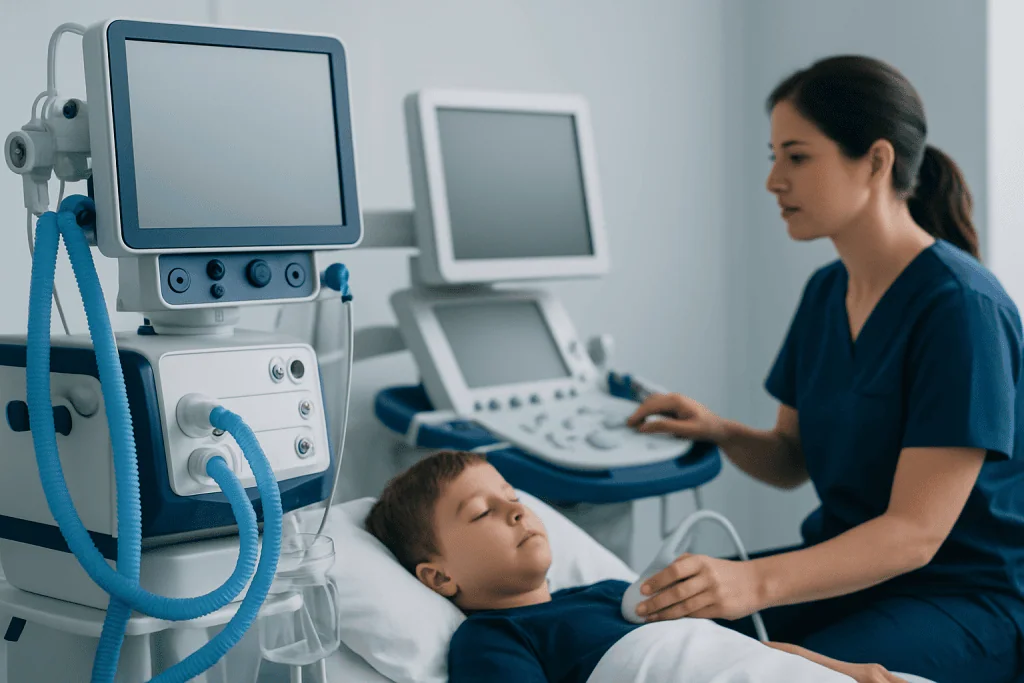
Common investigations may include echocardiography, hearing assessment, ophthalmologic examination, airway evaluation, and feeding or swallowing studies. Depending on symptoms, a child may also need hormone evaluation, kidney ultrasound, or brain imaging such as MRI scanning to assess related structural differences.
Early diagnosis matters because it helps the care team prioritize urgent needs such as airway safety, nutrition, and heart function. It also allows developmental therapies to begin sooner. If a child has a significant heart defect, clinicians may coordinate care similarly to other forms of congenital heart disease while also addressing the broader syndrome.
Modern treatment approaches and long-term care
There is no single cure for charge syndrome, so treatment is tailored to the individual child’s symptoms. Early care often focuses on breathing, feeding, and heart problems. Some infants need support in the neonatal period, and some require surgery to correct structural issues such as choanal atresia or selected heart defects.
Modern treatment approaches emphasize multidisciplinary planning. Depending on the child’s needs, care may include hearing devices, speech and language therapy, physiotherapy, occupational therapy, nutritional support, and developmental education. If structural problems affect the airway or ears, an ENT specialist may advise procedures such as cochlear implant treatment in selected cases of severe hearing loss or endoscopic airway or nasal procedures when appropriate.
Vision problems are also addressed individually. Children with coloboma need regular eye follow-up, visual support, and safety planning based on how much vision is affected. Feeding and swallowing teams can help reduce aspiration risk and improve nutrition, and some children may temporarily need tube feeding while skills develop.
Long-term care often continues into adolescence and adulthood. Follow-up may include hormone assessment for puberty and growth, monitoring for scoliosis or sleep problems, and ongoing hearing and balance support. When care is coordinated well, many children make meaningful progress in communication, mobility, and participation in daily life.
Outlook and quality of life
The outlook for charge syndrome varies widely because the condition itself is highly variable. A child with mild hearing loss and limited organ involvement may have a very different path from a child with severe airway, cardiac, or feeding problems. In general, outcome depends on how serious the early medical complications are and how quickly supportive care begins.
Many children benefit from early intervention programs, communication support, and individualized educational planning. Progress may happen at a slower pace, but development often continues over time. Families commonly find that functional goals such as safe feeding, mobility, self-care, and communication are more helpful than comparing one child’s timeline with another’s.
Quality of life can improve when sensory needs, sleep, behavior, and family support are addressed alongside medical treatment. Because both hearing and vision may be affected, children sometimes need adapted learning environments and alternative communication strategies. Emotional support for parents and caregivers is also important, especially during the first years after diagnosis.
In centers with coordinated pediatric expertise, families can receive structured follow-up across specialties. Acibadem International’s multidisciplinary specialists and JCI-accredited hospitals diagnose and treat complex congenital conditions for international patients, with care plans designed around each child’s individual needs.
Daily support, prevention, and self-care
Charge syndrome cannot be prevented once the underlying genetic change is present, but many complications can be reduced through early monitoring and practical day-to-day support. Families are often encouraged to keep a clear record of appointments, test results, hearing and vision assessments, and changes in feeding, sleep, or behavior. This can make coordinated care much easier.
At home, support often focuses on safe feeding, infection prevention, sensory-friendly routines, and communication. For some children, hearing technology, visual aids, posture support, or physical therapy exercises become part of everyday life. Simple consistency in routines can help children who have sensory sensitivities or developmental delays.
Parents and caregivers can also help by watching for changes in breathing, swallowing, sleep, hearing responses, and vision-related behavior. A child who has trouble with secretions, recurrent coughing during meals, or frequent ear infections may need reassessment. Ongoing follow-up with specialists helps ensure that support keeps pace with the child’s growth and development.
When future pregnancies are being planned, genetic counseling can help families understand recurrence risk and testing options. Counseling does not change the diagnosis but can provide useful information and support for informed decision-making.
When to seek medical care
Medical care should be sought promptly if a baby or child with possible or confirmed charge syndrome has trouble breathing, bluish lips, poor feeding, choking, dehydration, or reduced alertness. These symptoms may point to airway, swallowing, or heart-related problems and should not be watched at home for long periods.
Parents should also contact a doctor if there is repeated vomiting, poor weight gain, frequent chest infections, hearing concerns, worsening balance problems, or delayed progress in development. New symptoms are not always emergencies, but they often deserve review because charge syndrome can affect several body systems at once.
Regular scheduled follow-up is just as important as urgent care. Ongoing review by pediatrics, ENT, audiology, ophthalmology, cardiology, and rehabilitation teams helps detect problems early and supports long-term development. If a child’s symptoms suggest related airway or ear conditions, clinicians may also evaluate issues seen in choanal atresia or other congenital structural disorders.
Frequently asked questions
What is charge syndrome?
Charge syndrome is a rare genetic condition that affects development before birth and can involve several body systems at the same time. It often affects the eyes, ears, heart, nasal passages, growth, and development, but the exact pattern is different in each child.
Is charge syndrome inherited?
Most cases happen because of a new change in the CHD7 gene and are not inherited from either parent. In some situations, genetic counseling is recommended to discuss family testing and the chance of recurrence in future pregnancies.
Can charge syndrome be cured?
There is no single cure for charge syndrome because it is a genetic condition that affects multiple areas of development. Treatment focuses on managing specific symptoms, correcting structural problems when possible, and supporting growth, communication, and learning.
How is charge syndrome diagnosed in babies and children?
Doctors diagnose charge syndrome by looking at the child’s clinical features and often confirming the diagnosis with genetic testing for CHD7. The evaluation may also include hearing tests, eye exams, heart imaging, airway assessment, and feeding studies.
What are the most common problems in charge syndrome?
Common problems include hearing loss, vision differences, feeding and swallowing difficulty, breathing problems, heart defects, delayed growth, and developmental delay. Some children also have balance issues, sleep problems, or hormone-related concerns.
What is the life expectancy or outlook for someone with charge syndrome?
The outlook depends on how severely the heart, airway, feeding, and other organs are affected. With early diagnosis, careful monitoring, and coordinated treatment, many children can make steady developmental progress and achieve a better quality of life.
References
- National Institutes of Health
- MedlinePlus
- Genetics Home Reference / National Library of Medicine
- American Academy of Pediatrics
- National Organization for Rare Disorders
This article is for general information only and is not a substitute for professional medical advice. Please consult a qualified doctor about your individual situation.
Explore treatments in Turkey — costs, top hospitals & a free quote
JCI-accredited · board-certified surgeons · reply within 24h
Add us as a Preferred Source to see more of our trusted health content across Google Search, AI Overviews and Discover.