Last Finger Numb: Common Causes, Related Conditions, and When to See a Doctor

The most common cause of last finger numb is irritation or compression of the ulnar nerve. Symptoms may begin in the hand, elbow, wrist, or even the neck, depending on where the nerve is affected.
Key Takeaways
- The most common cause of last finger numb is irritation or compression of the ulnar nerve.
- Symptoms may begin in the hand, elbow, wrist, or even the neck, depending on where the nerve is affected.
- Weak grip, hand clumsiness, neck pain, or symptoms that do not go away can suggest a more significant problem.
- Self-care may help when symptoms are mild, but ongoing or sudden numbness needs medical evaluation.
- Urgent care is important if numbness appears suddenly with facial drooping, speech trouble, or arm weakness.
Last finger numb usually means numbness in the little finger, sometimes with the ring finger, and it is often related to pressure or irritation of the ulnar nerve. In many cases it improves when the source of pressure is addressed, but persistent, worsening, or sudden symptoms should be assessed by a doctor.
Overview: What last finger numb usually means
Last finger numb commonly refers to numbness in the little finger, and sometimes the side of the ring finger next to it. The most frequent explanation is irritation of the ulnar nerve, the nerve that supplies feeling to this part of the hand and helps control several small hand muscles.
This symptom can happen after leaning on the elbow for a long time, sleeping with the arm bent, repeated wrist or elbow movements, or using tools and devices in ways that place pressure on the nerve. For some people, the numbness comes and goes. For others, it may become more persistent or be accompanied by tingling, burning, weakness, or reduced hand coordination.
Although many cases are not serious, last finger numb is not always caused by the hand itself. The nerve may be compressed at the elbow or wrist, or affected higher up in the neck. Less often, circulation problems, vitamin deficiencies, diabetes, or other nerve conditions may be involved. That is why the pattern, timing, and associated symptoms matter.
How the symptom may feel

People describe last finger numb in different ways. It may feel like pins and needles, partial loss of sensation, a “dead” finger, burning, prickling, or unusual sensitivity to touch. Some notice symptoms only at night or after certain positions, while others feel them during typing, driving, phone use, cycling, or exercise.
Because the ulnar nerve often affects more than one area, the numbness may spread from the little finger into the ring finger, the outer side of the hand, or occasionally up toward the forearm. If the nerve irritation is stronger or lasts longer, weakness can develop. This may show up as dropping objects, trouble opening jars, difficulty spreading the fingers, or a weaker grip.
It can help to notice whether symptoms are constant or intermittent, whether they are triggered by bending the elbow or wrist, and whether neck pain or shoulder symptoms are also present. These details can guide a doctor toward the most likely cause.
Common causes and related conditions
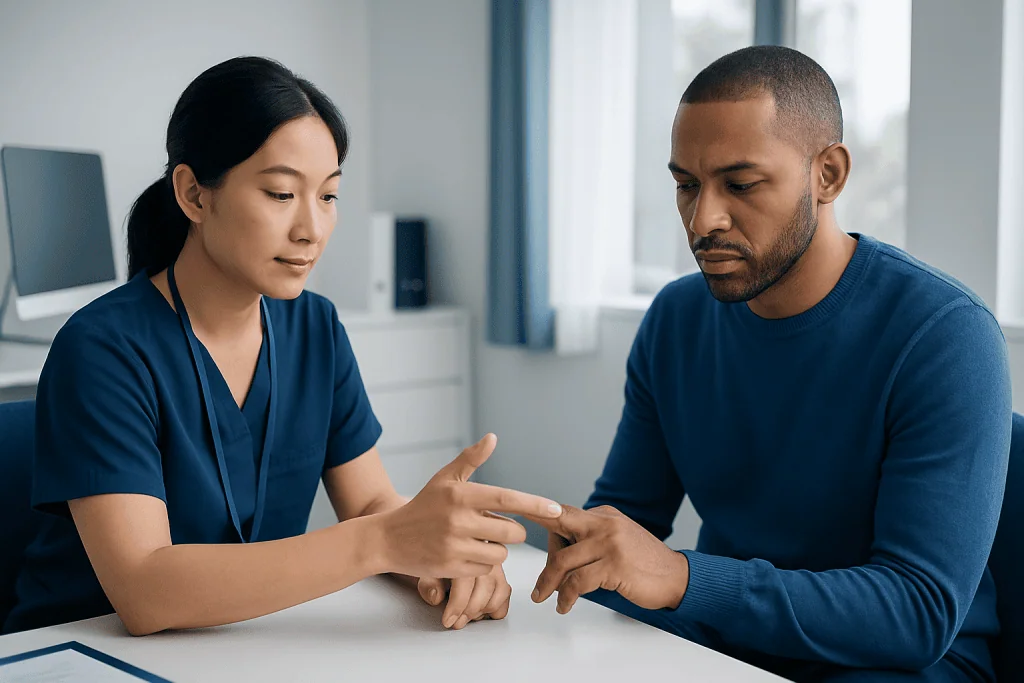
The most common cause of last finger numb is ulnar nerve compression. This can happen at the elbow, called cubital tunnel syndrome, or less commonly at the wrist in an area known as Guyon’s canal. Pressure at the elbow is especially common because the ulnar nerve passes close to the surface there, which is why hitting the “funny bone” produces a sudden electric sensation. Persistent compression can lead to recurring numbness or weakness. When appropriate, a clinician may evaluate for ulnar nerve entrapment.
Neck-related problems can also cause numbness in the little finger. A cervical disc problem, arthritis in the neck, or inflammation affecting the nerve roots can create symptoms that travel down the arm into the hand. In these cases, numbness may come with neck pain, shoulder pain, or weakness in the arm. Conditions such as cervical herniated disc may be part of the evaluation when symptoms extend beyond the hand.
Other possible causes include:
- Repetitive strain from work, sports, tool use, or frequent elbow bending
- Direct injury to the hand, wrist, elbow, or neck
- Diabetes and other causes of peripheral nerve damage
- Vitamin deficiencies, especially certain B vitamins
- Alcohol-related nerve injury
- Inflammatory or autoimmune conditions
- Less commonly, masses such as cysts putting pressure on a nerve
Circulation issues usually cause a different pattern, such as coldness, color change, or pain with use, but they can sometimes be confused with nerve symptoms. A careful examination helps separate nerve, muscle, joint, and blood vessel causes.
Risk factors that make numbness more likely
Several everyday habits can increase the chance of last finger numb. Resting the elbows on hard surfaces, sleeping with the elbows tightly bent, prolonged phone use, long drives, desk work without arm support, and cycling can all place repeated pressure on the ulnar nerve. Jobs or hobbies that involve vibration, gripping, or repetitive upper-limb movements may also contribute.
Body structure and general health can matter as well. Previous fractures or joint changes around the elbow or wrist may narrow the space around the nerve. Diabetes, thyroid disease, kidney disease, and some nutritional deficiencies can make nerves more vulnerable to pressure or injury.
People who already have neck problems may notice that a posture issue or disc-related irritation makes hand symptoms more noticeable. Sometimes more than one factor is present at the same time, such as mild neck nerve irritation plus elbow compression. This is one reason symptoms can vary from person to person.
How doctors diagnose the cause
Diagnosis begins with a medical history and physical examination. A doctor will usually ask when the numbness started, whether it is getting worse, what seems to trigger it, and whether there is associated weakness, pain, or neck symptoms. The exact location of the numbness matters because it can help identify which nerve is involved and where the problem may be located.
During the examination, the doctor may test sensation, grip strength, finger movement, and reflexes, and may look for tenderness or positions that reproduce symptoms. They may also examine the neck, shoulder, elbow, and wrist rather than focusing only on the hand.
If symptoms are persistent, unexplained, or associated with weakness, additional testing may be recommended. This can include nerve conduction studies and electromyography, which help assess how well the nerve and muscles are functioning. Imaging such as MRI or other scans may be used when a neck problem, structural compression, or another underlying condition is suspected. In some cases, blood tests help check for diabetes, vitamin deficiency, thyroid disorders, or inflammatory causes.
Treatment options for last finger numb
Treatment depends on the underlying cause. If the numbness is due to mild ulnar nerve compression, the first steps often focus on reducing pressure and irritation. This may include avoiding prolonged elbow bending, changing workstation or sleep positions, using padding at the elbow, and limiting activities that repeatedly trigger symptoms. Some people improve with simple behavior changes over several weeks.
When pain or inflammation is part of the problem, a doctor may advise short-term symptom relief measures and a structured rehabilitation plan. Physical therapy and rehabilitation can help improve posture, nerve mobility, flexibility, and upper-limb mechanics. Therapy is especially useful when symptoms are related to repetitive strain, posture, or recovery after an injury.
If a neck-related cause is suspected, treatment may focus on the cervical spine as well as the arm. Persistent weakness, muscle wasting, or nerve studies showing significant compression may lead to referral for specialist care. In selected cases, surgery may be considered to relieve pressure on the nerve or address a structural problem. Depending on the source, this might involve procedures related to peripheral nerve surgery or care from specialists in neurosurgery. The best approach depends on where the nerve is affected and how severe the symptoms are.
Self-care and prevention
Many mild cases of last finger numb improve when daily pressure on the nerve is reduced. Helpful steps include avoiding leaning on the elbows, taking breaks from repetitive activity, keeping wrists and elbows in neutral positions when possible, and adjusting computer, chair, and desk setup. Some people find it helpful to place a towel around the elbow at night to discourage prolonged bending during sleep.
General nerve health also matters. Managing blood sugar if diabetes is present, eating a balanced diet, limiting alcohol if advised by a doctor, and staying active can support nerve function. If symptoms seem related to sports or workplace tasks, technique changes or ergonomic guidance may reduce recurrence.
Self-care should not replace medical review when symptoms are strong, persistent, or progressive. Repeated episodes of numbness can become harder to reverse if the nerve remains compressed for too long. Early assessment can help protect hand strength and function.
When to seek medical care
Medical care is advisable if last finger numb lasts more than a few days, keeps returning, interferes with sleep, or is accompanied by weakness, clumsiness, or muscle loss in the hand. A doctor should also assess symptoms that follow an injury or occur together with neck pain, shooting arm pain, or numbness spreading beyond the little finger side of the hand.
Urgent medical attention is needed if numbness starts suddenly along with facial drooping, speech difficulty, severe weakness, confusion, or trouble walking, because these symptoms can signal a medical emergency such as stroke. Immediate care is also important if the hand becomes pale, very cold, severely painful, or if there is rapidly worsening weakness.
For ongoing symptoms, evaluation by a qualified clinician can clarify whether the issue is coming from the elbow, wrist, neck, or a more general nerve condition. Near the end of the care pathway, some people may need a combination of neurology, orthopedics, rehabilitation, or imaging support. Acibadem International’s multidisciplinary specialists and JCI-accredited hospitals diagnose and treat nerve, spine, and hand conditions for international patients.
Frequently asked questions
Is last finger numb usually a pinched nerve?
Often, yes. The most common reason is irritation or compression of the ulnar nerve, especially around the elbow. However, the nerve can also be affected at the wrist or higher up in the neck, so the exact cause should be confirmed if symptoms persist.
Why does my little finger go numb when I sleep?
Sleeping with the elbow bent for long periods can put pressure on the ulnar nerve. This is a common reason the little finger feels numb or tingly on waking. Adjusting sleep position and avoiding prolonged elbow flexion may help, but recurring symptoms deserve medical review.
Can neck problems cause numbness in the last finger?
Yes. Nerves that begin in the neck help provide sensation and movement to the arm and hand. If a nerve root in the neck is irritated, numbness may travel down into the little finger and may be associated with neck or shoulder pain.
When is numbness in the little finger an emergency?
It needs urgent attention if it begins suddenly with signs such as facial drooping, speech trouble, severe arm weakness, confusion, or trouble walking. It is also important to seek prompt care if the hand becomes very cold, pale, or severely painful, or if weakness is rapidly getting worse.
Will last finger numb go away on its own?
Mild cases caused by temporary pressure on the nerve sometimes improve with rest, position changes, and avoiding triggers. If the numbness keeps returning, lasts beyond a short period, or comes with weakness, it should be evaluated. Ongoing nerve compression can become harder to treat if ignored.
What tests might a doctor order for last finger numb?
The first step is usually a physical examination and discussion of symptoms. If needed, a doctor may order nerve conduction studies, electromyography, imaging such as MRI, or blood tests to look for conditions like diabetes, vitamin deficiency, or thyroid disease.
References
- National Institute of Neurological Disorders and Stroke
- American Academy of Orthopaedic Surgeons
- American Academy of Neurology
- Mayo Clinic
- Merck Manual
This article is for general information only and is not a substitute for professional medical advice. Please consult a qualified doctor about your individual situation.
Explore treatments in Turkey — costs, top hospitals & a free quote
JCI-accredited · board-certified surgeons · reply within 24h
Add us as a Preferred Source to see more of our trusted health content across Google Search, AI Overviews and Discover.

More from the Health Library



Related Specialists

Dr. Burak Kutlu
General Surgery
Prof. Dr. Ilgaz Doğusoy
Thoracic Surgery
Prof. Dr. Şenol Polat
Otorhinolaryngology
Dr. Gülay Beydilli Nacak
Gynecology & Obstetrics