Optician: An Evidence-Based Guide for Patients

An optician dispenses and fits glasses and contact lenses based on a prescription. Opticians are different from optometrists and ophthalmologists, who examine eyes and diagnose conditions.
Key Takeaways
- An optician dispenses and fits glasses and contact lenses based on a prescription.
- Opticians are different from optometrists and ophthalmologists, who examine eyes and diagnose conditions.
- Poor vision, eye pain, flashes, sudden vision changes, or eye injury need medical evaluation rather than only eyewear adjustment.
- Well-fitted glasses and contact lenses improve comfort, safety, and visual performance.
- Regular eye exams remain important even when prescription lenses seem to work well.
An optician is a trained eye care professional who prepares, fits, and adjusts glasses and contact lenses using a prescription written by an optometrist or ophthalmologist. They help patients see comfortably and use their eyewear correctly, but they do not diagnose eye disease or replace a full eye examination.
Overview: what an optician does
An optician is a healthcare professional who helps patients choose, fit, and maintain prescription eyewear. In practical terms, the optician uses a prescription provided by an optometrist or ophthalmologist to prepare glasses or contact lenses that match the patient’s visual needs. They also measure the face and eyes, adjust frames, and explain how to wear and care for lenses.
This role is important because even an accurate prescription may not feel comfortable if the eyewear is poorly fitted. A well-trained optician can improve how glasses sit on the nose and ears, align lenses correctly with the eyes, and help the patient select lens materials or coatings that suit work, reading, sports, or screen use.
Opticians do not usually diagnose eye diseases, prescribe medications, or perform the full medical assessment needed for eye symptoms. If a person has blurry vision, redness, pain, sudden visual changes, flashes, floaters, or possible injury, an eye doctor should assess the problem. An optician is best understood as a key member of the eye care team, working alongside clinicians who examine and treat the eyes.
Optician vs optometrist vs ophthalmologist
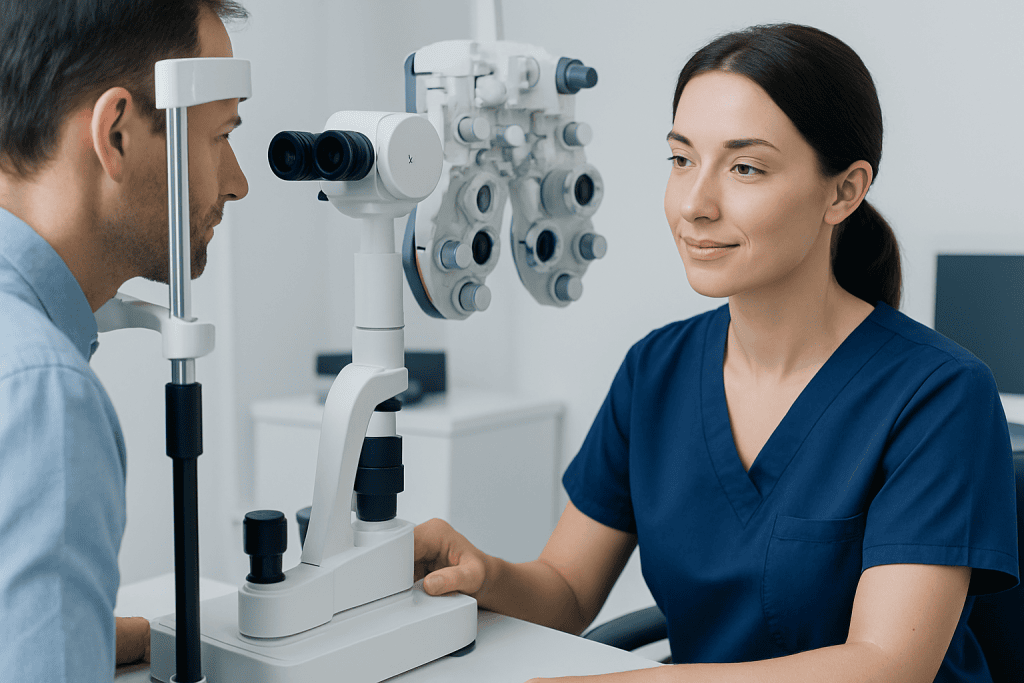
Patients often use these terms interchangeably, but they refer to different roles. An optician focuses on eyewear. An optometrist performs eye examinations, checks vision, prescribes glasses or contact lenses, and may detect some eye conditions. An ophthalmologist is a medical doctor who diagnoses and treats eye diseases and can perform surgery.
Knowing the difference helps patients choose the right professional. If the goal is to replace broken glasses, improve frame comfort, or learn how to use contact lenses, an optician is usually the right person. If the goal is to get a new prescription, investigate headaches related to vision, or check children’s eyesight, an optometrist or ophthalmologist is more appropriate.
If there is concern about cataracts, glaucoma, retinal disease, or a medical eye problem, specialist assessment matters. In those cases, patients may need evaluation for conditions such as cataract or more advanced testing by an eye specialist. When surgery or hospital-based treatment is needed, options may include eye surgery after a complete medical assessment.
How opticians help with glasses and contact lenses
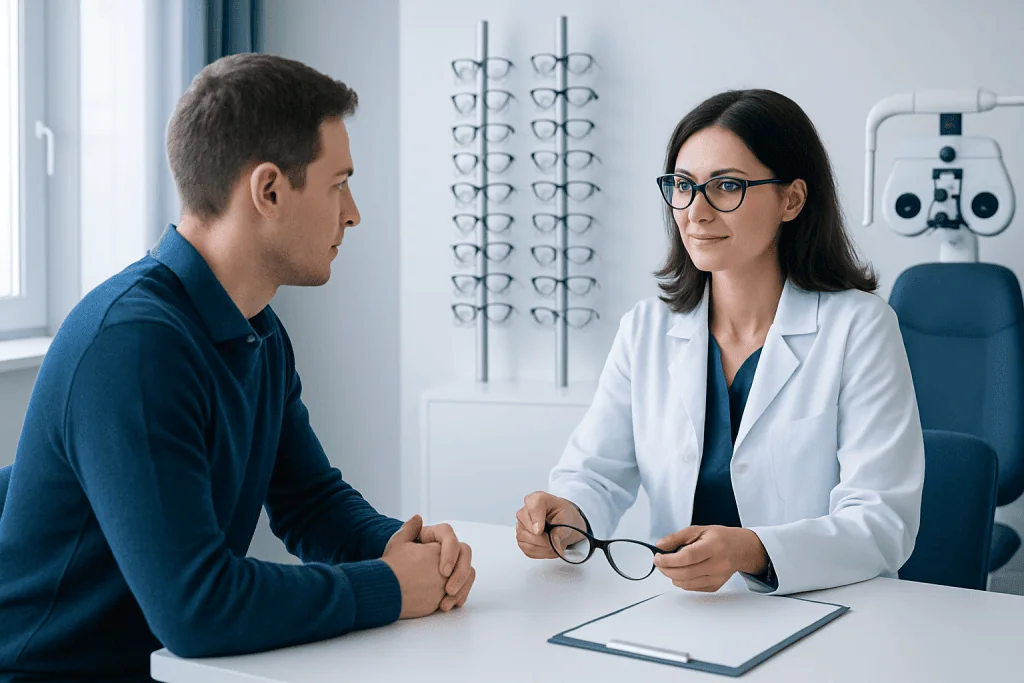
Opticians do more than hand over a pair of glasses. They take careful measurements such as pupillary distance, segment height for multifocal lenses, and frame fit. These details affect how clearly a person sees and how comfortable the glasses feel during daily use. A small misalignment can lead to eye strain, distortion, or slipping frames.
They also help patients compare lens types. Depending on the prescription and lifestyle, choices may include single-vision lenses, bifocals, progressive lenses, high-index materials, blue-light filtering options, photochromic lenses, or coatings that reduce glare and scratches. The best option depends on individual needs, not on one universal “best” lens.
For contact lenses, an optician may teach insertion, removal, hygiene, and storage. This education is essential because poor contact lens habits can raise the risk of infection or corneal irritation. In some settings, contact lens fitting itself may be done by an optometrist or ophthalmologist, especially if the patient has dry eye, complex prescriptions, or corneal conditions.
- Frame fitting and adjustments
- Lens measurement and ordering
- Advice on lens materials and coatings
- Basic contact lens handling education
- Repairs, replacements, and follow-up adjustments
Signs that eyewear needs adjustment or review
Glasses and contact lenses should support clear and comfortable vision. If a patient develops headaches, pressure marks on the nose, slipping frames, distorted side vision, difficulty adapting to progressive lenses, or ongoing discomfort with contact lenses, a review is sensible. Sometimes the issue is mechanical and can be corrected by an optician with simple frame or lens adjustments.
However, symptoms are not always caused by the eyewear itself. Blurred vision can happen when a prescription has changed, but it can also occur with dry eye, cataracts, diabetes-related eye changes, or other conditions. This is why persistent symptoms should not be attributed to the glasses alone without proper evaluation.
Children, older adults, and people with chronic conditions may especially benefit from regular review. If a child tilts the head to see, squints often, or avoids reading, the problem may need an eye examination rather than just a frame change. Similarly, adults who suddenly need stronger light to read or notice reduced night vision may need a clinical eye assessment.
When an eye exam is needed instead of an optician visit
An optician visit is helpful for lens fitting and frame concerns, but it does not replace a comprehensive eye exam. Anyone with new visual symptoms should consider an examination by an optometrist or ophthalmologist. This is especially true if the symptoms are sudden, one-sided, painful, or associated with redness, discharge, or light sensitivity.
Routine eye exams are also important when there are no symptoms. Some common eye diseases can develop gradually and may not be noticed early. Conditions such as glaucoma may affect the eyes before a person realizes there is a problem. Regular checks are particularly important for older adults and for people with diabetes, a family history of eye disease, or long-term steroid use.
During an eye exam, the clinician may assess visual acuity, refraction, eye pressure, eye alignment, the health of the cornea and lens, and the retina at the back of the eye. If needed, further treatment may include cataract surgery or other specialist care. The optician then supports the next step by providing the correct eyewear based on the updated prescription.
Choosing an optician and getting the best fit
Patients can make the most of an optician appointment by bringing their current glasses, the latest prescription, and a list of problems they are experiencing. Describing real-life challenges is useful, such as difficulty with computer screens, driving at night, reading small print, or alternating between near and distance tasks at work.
A good fitting process usually includes discussion of daily habits, face shape, lens thickness, comfort behind the ears, and how the glasses sit during movement. For multifocal lenses, accurate measurements are especially important because the reading and distance zones must align properly with the wearer’s eyes.
It can also help to ask practical questions. Patients may want to know how long adaptation should take, how to clean lenses safely, whether a backup pair is advisable, and what signs suggest the fit is wrong. If contact lenses are used, hygiene should be reviewed carefully. Comfort should improve with proper fitting, but medical symptoms still require clinical assessment.
Prevention, self-care, and healthy vision habits
Good vision care goes beyond replacing glasses when they break. Regular eye examinations, sensible screen habits, and correct lens care all support long-term eye comfort. People who spend long hours on digital devices may benefit from scheduled visual breaks, blinking more often, and making sure the screen is at a comfortable distance and height.
For contact lens users, hygiene is one of the most important preventive steps. Hands should be clean before handling lenses, and lenses should be stored and replaced exactly as instructed by the prescribing clinician. Sleeping in lenses that are not designed for overnight use or exposing lenses to water can increase the risk of infection.
General health also affects the eyes. Managing blood sugar, blood pressure, and smoking exposure can help protect vision over time. Wearing protective eyewear during sports, home repairs, or work with chemicals or flying debris is another simple but important step. If patients need a broader eye assessment, services such as laser eye surgery evaluation or medical ophthalmology review may be discussed when appropriate.
When to seek medical care
Medical care should be sought promptly for sudden loss of vision, eye pain, severe redness, flashes of light, a sudden increase in floaters, double vision, eye injury, or chemical exposure. These symptoms can indicate urgent eye conditions and should not be managed as a routine eyewear issue.
Patients should also arrange an eye examination if blurred vision persists despite new glasses, if headaches are frequent during visual tasks, or if contact lenses cause repeated irritation. Children with reading difficulty, squinting, or noticeable eye misalignment should be assessed rather than simply fitted with off-the-shelf lenses.
For people who need specialist evaluation, multidisciplinary eye care can help clarify whether the problem is optical, medical, or surgical. Acibadem International’s multidisciplinary specialists and JCI-accredited hospitals diagnose and treat eye conditions for international patients, with care tailored to the underlying cause rather than the eyewear alone.
Frequently asked questions
What is an optician?
An optician is a trained professional who fits, dispenses, and adjusts glasses and contact lenses using a prescription from an eye doctor. They help make sure eyewear is comfortable, functional, and suited to the patient’s daily needs.
Can an optician test eyes and write a prescription?
In many healthcare systems, opticians do not perform full eye examinations or prescribe treatment for eye disease. Patients usually need an optometrist or ophthalmologist for a vision test, diagnosis, and prescription.
Should someone see an optician or an ophthalmologist for blurry vision?
If blurry vision is new, persistent, sudden, or associated with pain, redness, or flashes, an ophthalmologist or optometrist is the better first step. An optician is most helpful after the prescription is known, when fitting or adjusting eyewear is needed.
Do opticians help with contact lenses?
Yes, opticians often help patients learn how to handle, insert, remove, and care for contact lenses. In some cases, especially with complex eyes or contact lens problems, the fitting and medical oversight are done by an optometrist or ophthalmologist.
How often should glasses be adjusted?
Glasses can be adjusted whenever they feel loose, crooked, uncomfortable, or leave pressure marks. Many people benefit from a quick check after the first days or weeks of wearing a new pair, and again whenever comfort or vision changes.
Can wrong glasses cause headaches?
Yes, an outdated prescription, poorly centered lenses, or an uncomfortable frame fit can contribute to headaches and eye strain. However, persistent headaches should not be assumed to come only from glasses and may need medical evaluation.
This article is for general information only and is not a substitute for professional medical advice. Please consult a qualified doctor about your individual situation.
Explore treatments in Turkey — costs, top hospitals & a free quote
JCI-accredited · board-certified surgeons · reply within 24h
Add us as a Preferred Source to see more of our trusted health content across Google Search, AI Overviews and Discover.

More from the Health Library

Fodmap: An Evidence-Based Guide for Patients

Metolazone: A Complete Medical Overview

Repatha Cost: What Patients Need to Know

Stains on Lips: What Patients Need to Know
Dental Xrays: An Evidence-Based Guide for Patients