Broken Finger — Explained by Medical Evidence, Not Myths

A broken finger can look like a sprain, but ongoing pain, swelling, deformity, or trouble moving the finger should be checked by a doctor. X-rays are usually needed to confirm a finger fracture and show whether the bone is aligned.
Key Takeaways
- A broken finger can look like a sprain, but ongoing pain, swelling, deformity, or trouble moving the finger should be checked by a doctor.
- X-rays are usually needed to confirm a finger fracture and show whether the bone is aligned.
- Many finger fractures heal with splinting or buddy taping, while some need reduction or surgery.
- Early hand movement at the right time helps reduce stiffness during recovery.
- Urgent care is needed for open wounds, severe deformity, numbness, poor circulation, or suspected joint involvement.
A broken finger is a fracture in one of the small bones of the finger, and it often causes pain, swelling, bruising, and difficulty moving the finger. Medical assessment is important because even small finger fractures may heal poorly if the bone is out of alignment or the joint is involved.
Overview: what a broken finger really means
A broken finger means one of the finger bones, called phalanges, has cracked or fractured. This can happen after a fall, sports injury, twisting force, crush injury, or direct blow. Some breaks are simple and stable, while others involve multiple fragments, the joint surface, or tendons and nearby soft tissues.
Many people assume a finger is only broken if it looks visibly bent. In reality, a broken finger may appear only swollen and bruised, much like a sprain. That is why medical evidence matters more than myths: pain and swelling alone cannot reliably show whether the injury is a fracture, dislocation, or ligament injury. A clinician usually needs an examination and X-rays to tell the difference.
Finger fractures are important to treat correctly because the hand depends on precise alignment and smooth joint movement. If a broken finger heals in the wrong position, a person may later notice stiffness, weakness, reduced grip, pain, or difficulty with fine tasks such as typing, buttoning clothes, or holding objects.
Signs and symptoms of a broken finger
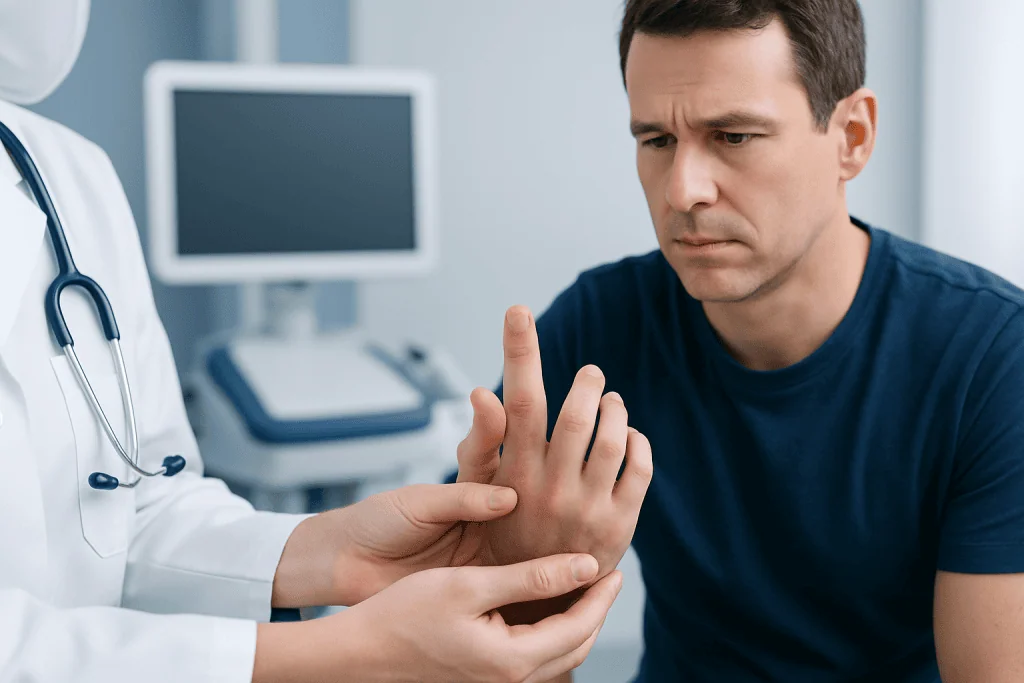
The most common symptoms of a broken finger are sudden pain, swelling, and tenderness after an injury. Bruising may appear within hours, and moving the finger can become painful or limited. Some people hear or feel a crack at the moment of injury, but this does not happen in every case.
A broken finger can also cause deformity, such as the finger looking crooked, shortened, rotated, or out of its usual position. Rotation is especially important: when the person makes a loose fist, the injured finger may cross over a neighboring finger instead of lining up normally. This often suggests the fracture is displaced and needs prompt assessment.
Other symptoms can include stiffness, numbness, or a feeling that the finger is unstable. In children, a finger fracture may be mistaken for a minor jammed finger, but persistent pain or swelling should still be assessed. Injuries involving the fingertip can be associated with nail-bed damage or a fracture of the end bone.
- Pain that worsens with movement or pressure
- Swelling and bruising
- Tenderness over a specific bone or joint
- Visible deformity or crooked appearance
- Difficulty bending or straightening the finger
- Numbness, tingling, or color change, which needs urgent medical attention
Causes, injury patterns, and risk factors

A broken finger is usually caused by trauma. Common causes include catching a ball incorrectly, punching a hard surface, closing a door on the finger, falling onto the hand, or workplace accidents involving machinery or heavy objects. Crush injuries may damage skin, nails, tendons, and blood vessels as well as bone.
Doctors often classify finger fractures by where and how the bone broke. The fracture may affect the base, shaft, or tip of the finger bone. It may be nondisplaced, meaning the bone pieces remain aligned, or displaced, meaning they have shifted. A fracture can also extend into a joint, which is more likely to affect long-term function if not treated properly.
Certain factors can increase risk or complicate healing. Contact sports, manual work, previous hand injury, and low bone strength can all play a role. In some cases, what seems to be a broken finger may instead be a ligament injury, tendon injury, or a related hand problem such as a trigger finger that limits movement for different reasons. A clinician considers the injury pattern, symptoms, and imaging before confirming the diagnosis.
How a broken finger is diagnosed
Diagnosis starts with a history of how the injury happened and a careful examination of the hand. The doctor checks swelling, tenderness, skin wounds, nail injury, circulation, sensation, and the way the finger moves. They may ask the person to bend the fingers into a loose fist to see whether the injured finger rotates or overlaps another finger.
X-rays are the standard imaging test for a broken finger. They show whether a fracture is present, which bone is involved, and whether the pieces are aligned. X-rays also help identify dislocations or fractures that extend into the joint. In many cases, this is enough to guide treatment.
If the injury is complex, the doctor may recommend further evaluation by a hand or orthopedic specialist. Additional imaging may be considered when there is concern about joint damage, hidden fractures, or soft-tissue injuries. This is one reason finger injuries should not be dismissed as trivial, especially when pain, swelling, or loss of movement continues beyond the first day or two.
Treatment options and what recovery usually involves
Treatment depends on the location of the fracture, whether the bone is stable, and whether the joint, tendon, skin, or nail is involved. Many simple broken fingers can be treated with splinting or buddy taping, which secures the injured finger to a neighboring finger for support. The goal is to keep the bone aligned while allowing safe healing.
If the bone pieces have shifted, a doctor may need to realign them in a procedure called reduction before applying a splint or cast. Some fractures are unstable, significantly displaced, open through the skin, or involve the joint in a way that makes surgery the safer option. In these cases, the person may be referred for specialist care such as orthopedic and traumatology treatment. Surgery may use small pins, screws, or plates to restore alignment and function.
Recovery is not only about the bone healing. Fingers can become stiff quite quickly, so the timing of movement matters. A clinician may recommend hand exercises or physical therapy and rehabilitation once it is safe to begin. Pain control, swelling reduction, and protecting the finger during daily activity are also part of treatment.
Healing time varies by age, health, fracture type, and whether surgery was needed. Many uncomplicated fractures improve over several weeks, but strength, flexibility, and comfort can continue to recover for longer. If the fracture affects the fingertip or nail area, there may also be temporary nail changes while the finger heals.
Self-care after injury and during healing
Immediately after a finger injury, basic first aid can help. The hand should be rested, and jewelry should be removed early before swelling increases. Applying a cold pack wrapped in cloth for short intervals may reduce swelling and pain. Keeping the hand elevated above heart level can also help, especially during the first 24 to 48 hours.
It is generally best not to force the finger straight, pull on it, or return to sport too early. If the finger seems badly bent, numb, pale, or has an open wound, prompt medical care is more appropriate than home treatment. Even when the finger looks only mildly swollen, persistent symptoms deserve evaluation because a fracture can be missed without imaging.
During recovery, patients are usually advised to follow splint instructions carefully and attend follow-up appointments. Moving the unaffected joints, when allowed, can help reduce stiffness in the rest of the hand. If surgery or more complex hand care is needed, care may involve teams experienced in hand surgery and rehabilitation. Near the end of treatment, Acibadem International’s multidisciplinary specialists at JCI-accredited hospitals can diagnose and treat broken finger injuries for international patients when specialist assessment is needed.
When to seek medical care
Medical care should be sought any time a finger injury causes significant pain, swelling, bruising, or limited movement that does not improve quickly. Because a sprain, dislocation, and broken finger can look similar, an examination and X-ray are often the only reliable way to understand the injury. Prompt diagnosis helps lower the risk of poor healing, stiffness, or long-term loss of function.
Urgent care is especially important if the finger looks deformed, rotated, or shortened; if there is numbness or tingling; or if the finger becomes pale, blue, or cold. Open cuts over the injured area, nail-bed injuries, and heavy bleeding also need same-day assessment because they may indicate an open fracture or deeper tissue damage.
People should also contact a doctor if they have increasing pain despite rest, worsening swelling, fever, or difficulty moving the finger after treatment has started. Follow-up matters because some fractures shift position after the initial injury. If another hand condition is suspected during recovery, such as stiffness related to Dupuytren’s contracture, the doctor may adjust the evaluation and treatment plan.
Frequently asked questions
How can someone tell if a finger is broken or just sprained?
A broken finger and a sprain can both cause pain, swelling, and bruising, so they can look very similar. Visible deformity, finger rotation, marked tenderness over the bone, or difficulty moving the finger raise concern for a fracture, but an X-ray is usually needed to confirm the diagnosis.
Can a broken finger heal on its own?
Some simple fractures can heal well with protection, but that does not mean they should be ignored. If the bone is out of alignment or the joint is involved, healing without proper treatment can lead to stiffness, deformity, or reduced function.
Should a broken finger always be put in a cast?
Not always. Many broken fingers are treated with a splint or buddy taping rather than a full cast, depending on which bone is affected and how stable the fracture is. More complex injuries may need reduction or surgery.
How long does a broken finger take to heal?
Healing time varies, but many uncomplicated finger fractures improve over several weeks. Recovery of motion and strength can take longer, especially if the joint was involved or if the finger was immobilized for a period of time.
When is surgery needed for a broken finger?
Surgery may be recommended if the fracture is unstable, displaced, open, severely rotated, or extends into the joint in a way that threatens hand function. The goal is to restore alignment and allow the finger to heal in a position that supports movement and grip.
What should someone avoid after a finger injury?
It is best to avoid forcing the finger into place, heavy gripping, and returning to sports or manual work too soon. Rings should be removed early if possible, and medical care should not be delayed if swelling, numbness, deformity, or color change develops.
References
- American Academy of Orthopaedic Surgeons
- American Society for Surgery of the Hand
- National Health Service
- MedlinePlus
- Mayo Clinic
This article is for general information only and is not a substitute for professional medical advice. Please consult a qualified doctor about your individual situation.
Joint and spine care in Turkey — expert assessment & treatment
JCI-accredited · board-certified surgeons · reply within 24h
Add us as a Preferred Source to see more of our trusted health content across Google Search, AI Overviews and Discover.

More from the Health Library
Hemothorax — Explained by Medical Evidence, Not Myths
Seed Corn on Foot: What Patients Need to Know

Badam Tel for Skin — Explained by Medical Evidence, Not Myths

Blood during cough: A Complete Medical Guide for Patients

Lewy Body Dementia Fast Decline — Explained by Medical Evidence, Not Myths