Newborn Feces Green — Explained by Medical Evidence, Not Myths

Green stool in a newborn is commonly normal and often reflects digestion, bile, or the transition from meconium to regular stool. Breastfeeding, formula feeding, iron supplements, and fast intestinal transit can all make baby stool look green.
Key Takeaways
- Green stool in a newborn is commonly normal and often reflects digestion, bile, or the transition from meconium to regular stool.
- Breastfeeding, formula feeding, iron supplements, and fast intestinal transit can all make baby stool look green.
- Color by itself is less important than the baby's overall condition, feeding, hydration, and growth.
- Pale white, chalky, or gray stool needs prompt medical assessment because it may signal a liver or bile flow problem.
- Green stool with blood, fever, repeated vomiting, poor feeding, or signs of dehydration should be evaluated by a doctor.
Newborn feces green is often a normal finding, especially in the first days of life or with common feeding patterns. The key is not the color alone, but whether the baby is feeding well, gaining weight, and free of warning signs such as fever, dehydration, blood, or persistent vomiting.
Overview: why newborn feces can be green
Newborn feces green is usually explained by normal biology, not myths. In many babies, green stool appears because bile pigments pass through the intestines, because the stool is changing from the dark meconium of the first days, or because of how the baby is fed.
During the first week, stool color can change quickly from black-green meconium to greenish-brown and then to yellow, mustard, tan, or green. This transition can look surprising, but it is often part of healthy adjustment after birth. Many parents notice green stool before the baby’s bowel pattern becomes more predictable.
What matters most is the whole picture. If the newborn is feeding regularly, making wet diapers, seems comfortable, and is growing as expected, green stool alone is rarely a sign of disease. A doctor is more concerned about accompanying symptoms such as fever, poor feeding, unusual sleepiness, dehydration, blood in stool, or pale white stools.
What normal green newborn stool can look like
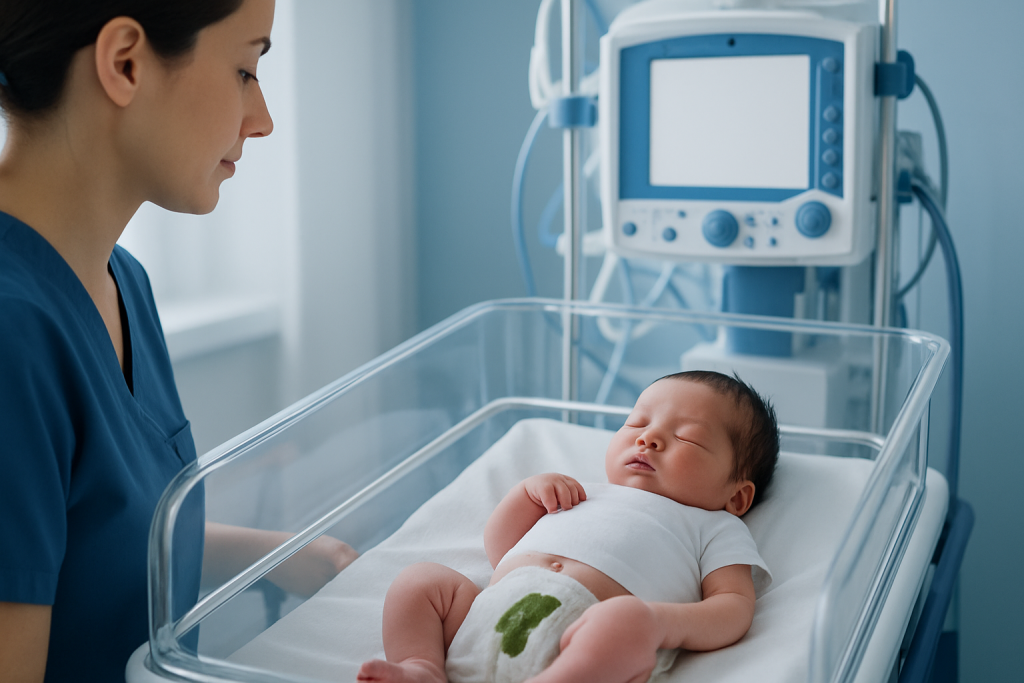
Healthy newborn stool can vary a great deal in color, texture, and frequency. Green stool may be dark and sticky in the meconium stage, loose and seedy in a breastfed baby, or pastier in a formula-fed baby. It may appear light green, olive, or yellow-green.
In breastfed infants, stools are often loose and can range from golden yellow to green. Formula-fed babies may have stools that are thicker and somewhat darker, including greenish shades. If a baby receives iron-fortified formula or iron supplements, the stool may look darker green without meaning anything is wrong.
Parents often expect a single “correct” stool color, but there is a broad normal range. A pediatrician usually interprets stool appearance alongside the baby’s age, feeding method, weight gain, comfort, and hydration.
- First days: black-green meconium is expected.
- Transition phase: green-brown stools are common.
- Breastfed babies: yellow, mustard, or green stools may all be normal.
- Formula-fed babies: tan, brown, or green stools may all be normal.
Medical reasons newborn feces green may happen

The most common medical explanation for green stool is bile. Bile is a digestive fluid made by the liver and stored in the gallbladder. As it moves through the intestine, it can color stool green, especially if the stool passes quickly and has less time to change toward brown or yellow.
Feeding patterns are another common reason. In breastfed babies, green stool may be seen when milk moves through the gut quickly, when feeding schedules are changing, or sometimes when a baby gets proportionally more lower-fat early milk than higher-fat later milk. In formula-fed newborns, iron-fortified formulas can also lead to green stool.
At times, green stool appears with mild stomach upset, a temporary viral illness, or food protein sensitivity. These possibilities are more likely when green stool is joined by fussiness, mucus, blood, poor feeding, vomiting, or slow weight gain. When digestive symptoms are more significant, doctors may assess for causes such as food allergy in children or other pediatric digestive concerns.
Antibiotics can change the balance of bacteria in the gut and may affect stool color and texture. In both mother and baby, medicines, supplements, and diet can influence stool appearance, although color changes alone still usually do not indicate serious illness.
Myths and misconceptions about green baby poop
One common myth is that green stool automatically means infection. In reality, infection is only one possible cause, and green color by itself is not enough to make that diagnosis. Most newborns with green stool are not seriously ill.
Another misconception is that green stool means breast milk is “bad” or that breastfeeding should stop. Breast milk remains the recommended source of nutrition for many infants, and green stool can occur in healthy breastfed babies. Any feeding changes should be discussed with a qualified clinician rather than based on stool color alone.
Some families are also told that every green stool signals intolerance to formula or a mother’s diet. While sensitivities can happen, especially if there is blood, mucus, eczema, or poor growth, isolated green stool is not reliable proof of allergy. Doctors look at the pattern over time, the baby’s symptoms, and the physical examination before advising changes.
Warning signs that suggest something more than normal variation
Although newborn feces green is often harmless, a few stool colors and symptoms deserve closer attention. Pale white, clay-colored, or gray stool is not normal and may suggest a problem with bile flow from the liver or gallbladder. This needs prompt medical review because early diagnosis matters.
Blood in the stool, repeated forceful vomiting, a swollen abdomen, fever, poor feeding, marked irritability, unusual sleepiness, or fewer wet diapers are also warning signs. These symptoms can point to dehydration, infection, intestinal blockage, or inflammation rather than a simple color variation.
Mucus can sometimes appear in stool and may be harmless in small amounts, but persistent mucus together with blood, rash, or poor growth may require evaluation. If a baby also has ongoing diarrhea or trouble gaining weight, a pediatrician may consider gastrointestinal conditions and may use tools such as colonoscopy later in childhood when appropriate for certain digestive symptoms, though this is not a routine test for a typical newborn with green stool.
- Seek prompt advice for white, gray, or chalky stool.
- Call a doctor if green stool comes with blood, fever, dehydration, or repeated vomiting.
- Urgent assessment is needed if the baby is difficult to wake, has breathing problems, or is not feeding.
How doctors evaluate green stool in a newborn
Doctors usually begin with a careful history. They ask about the baby’s age, whether the stool has changed from meconium, how feeding is going, how often the baby urinates, whether vomiting is present, and whether there are signs of fever, rash, or poor weight gain. The goal is to understand whether green stool is part of a normal transition or part of a broader medical issue.
A physical examination helps identify dehydration, jaundice, abdominal distension, tenderness, or signs of illness. In many healthy newborns, no testing is needed. Reassurance and observation may be all that is required when the baby is otherwise well.
If warning signs are present, doctors may order blood tests, stool testing, or imaging studies to look for infection, allergy-related inflammation, or liver and bile duct problems. When abdominal symptoms or vomiting raise concern, evaluation may involve pediatric digestive specialists and pediatric surgery teams if a structural problem needs urgent management.
Care at home and practical feeding considerations
For a well-appearing newborn, home care usually focuses on feeding support and observation. Parents can note how often the baby feeds, the number of wet diapers, stool frequency, and whether the baby seems satisfied after feeds. This information is often more helpful than color alone.
Breastfeeding parents may benefit from ensuring the baby latches well and feeds effectively from one breast before switching, especially if feeds are very short and frequent. Formula should be prepared exactly as directed, and any formula change should be discussed with a pediatrician rather than made repeatedly without guidance.
It can be useful to take a photo of the stool if the color seems unusual, especially if it is pale, bloody, or persistently very dark after the meconium period. Parents should not give over-the-counter remedies unless a doctor advises them. If a baby has symptoms suggesting a digestive disorder, broader evaluation by specialists in pediatric gastroenterology may be recommended.
When to seek medical care
Medical care should be sought promptly if green stool occurs together with a fever, poor feeding, repeated vomiting, a bloated abdomen, fewer wet diapers, unusual sleepiness, or signs of dehydration such as a dry mouth or no tears when crying. These features are more important than the stool color itself.
Parents should also contact a doctor if the stool is white, gray, chalky, or consistently contains blood. These findings can indicate problems that need timely assessment, including liver, biliary, or intestinal conditions. If a baby is jaundiced and has pale stool, this should not be delayed.
If green stool continues for days but the baby remains comfortable, feeds well, and gains weight, a routine pediatric review is usually enough. Families who need specialist evaluation may be reassured that Acibadem International’s multidisciplinary specialists in JCI-accredited hospitals diagnose and treat digestive and pediatric conditions for international patients, including concerns related to pediatric liver diseases.
Frequently asked questions
Is green poop normal in a newborn?
Yes, green poop is often normal in newborns. It commonly appears during the transition from meconium to regular stool and can also be related to bile, breastfeeding patterns, or iron-fortified formula.
How long is green stool normal after birth?
Green stool is especially common in the first days to first week after birth as meconium clears. It may also continue later in some healthy babies, particularly depending on feeding type and digestion.
Does green stool mean the baby has an infection?
Not usually. Infection can sometimes affect stool, but green color alone is not enough to suggest infection without other symptoms such as fever, poor feeding, vomiting, or lethargy.
Can breastfeeding cause newborn feces green?
Yes, healthy breastfed babies can have green stool. Differences in milk intake, feeding patterns, and normal gut transit can all contribute, and this does not automatically mean there is a problem with the breast milk.
When is stool color in a newborn actually concerning?
White, gray, or chalky stool is concerning and needs prompt medical review. Blood in the stool, or green stool with fever, dehydration, repeated vomiting, or poor feeding, should also be checked by a doctor.
Should parents change formula if the baby's poop is green?
Not without medical advice. Green stool can be normal with formula feeding, especially with iron-fortified products, so doctors usually consider the baby's overall symptoms before recommending any change.
This article is for general information only and is not a substitute for professional medical advice. Please consult a qualified doctor about your individual situation.
Explore treatments in Turkey — costs, top hospitals & a free quote
JCI-accredited · board-certified surgeons · reply within 24h
Add us as a Preferred Source to see more of our trusted health content across Google Search, AI Overviews and Discover.

More from the Health Library

Dye Fa — Explained by Medical Evidence, Not Myths

Enteric Coated — Explained by Medical Evidence, Not Myths

Lemon Juice Baking Soda Drink: A Complete Medical Overview

Bed Bug Bites: What Patients Need to Know

Hepatology: An Evidence-Based Guide for Patients