Knees Knees Knees — Explained by Medical Evidence, Not Myths
The knee is a complex joint, so pain or swelling can have several different causes. Common reasons for knee symptoms include overuse, ligament or meniscus injury, tendon problems, and osteoarthritis.
Key Takeaways
- The knee is a complex joint, so pain or swelling can have several different causes.
- Common reasons for knee symptoms include overuse, ligament or meniscus injury, tendon problems, and osteoarthritis.
- Mild symptoms may improve with rest, activity changes, and guided exercise, but persistent or severe symptoms need medical assessment.
- Red flags include inability to bear weight, significant swelling, fever, a locked knee, or sudden deformity.
- Diagnosis is based on symptoms, examination, and sometimes imaging such as X-ray or MRI.
- Treatment depends on the cause and may include physiotherapy, medications, injections, or surgery.
Knees knees knees usually means a person is looking for clear, evidence-based information about knee pain, stiffness, swelling, noises, or instability. The knee is a complex joint, and symptoms can come from overuse, injury, arthritis, or nearby muscles and tendons, so proper evaluation matters.
What “knees knees knees” usually means
When people search for “knees knees knees,” they are usually looking for practical answers about knee pain, cracking, swelling, weakness, or trouble moving. In medical terms, these symptoms can come from the joint surfaces, cartilage, ligaments, menisci, tendons, muscles, or the kneecap itself.
The knee is one of the body’s largest and hardest-working joints. It helps with walking, climbing stairs, standing up, running, and balance. Because it carries body weight and changes direction often, it is vulnerable to both sudden injuries and gradual wear over time.
Evidence-based care starts by asking a simple question: what exactly is the knee doing? Pain in the front of the knee after stairs suggests a different issue than a knee that twists, swells quickly after sports, or feels stiff first thing in the morning. That is why there is no single explanation for all knee problems.
Many knee symptoms are manageable and improve with the right combination of diagnosis, activity adjustment, strengthening, and, when necessary, specialist care. The goal is not only pain relief but also safe movement, confidence, and prevention of further joint damage.
How the knee works and why symptoms happen
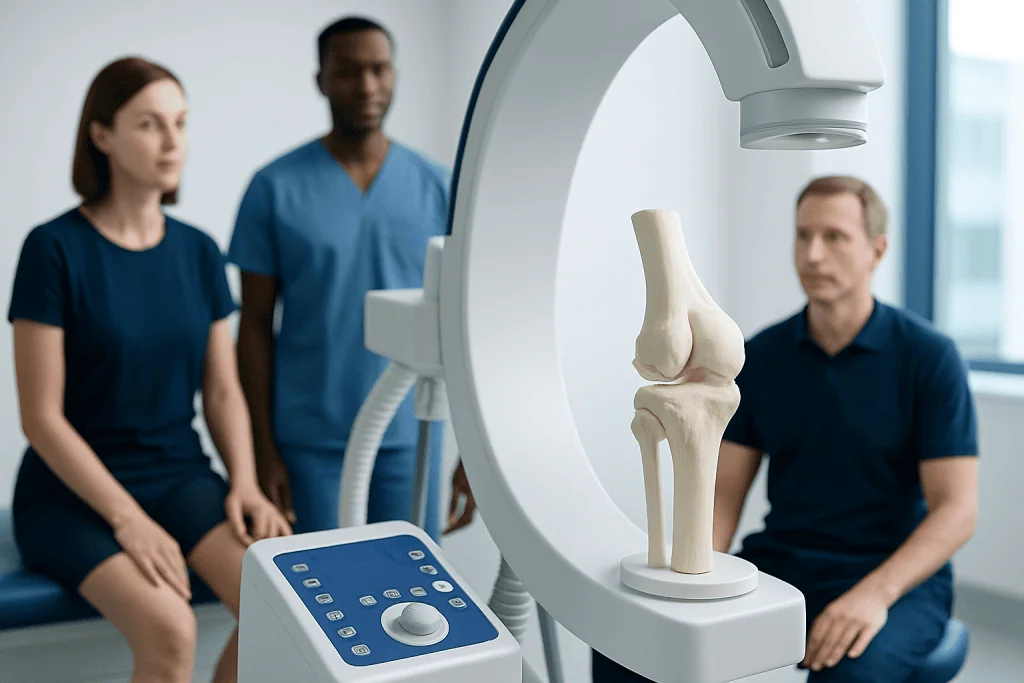
The knee connects the thigh bone, shin bone, and kneecap. Smooth cartilage covers the bone ends so they glide with less friction. Two menisci, which are crescent-shaped cartilage pads, act like shock absorbers. Strong ligaments stabilize the joint, while muscles and tendons help it bend and straighten.
Symptoms happen when one or more of these structures becomes irritated, injured, inflamed, or worn down. For example, a ligament sprain may cause instability, a meniscus tear may cause clicking or locking, and osteoarthritis may lead to pain, stiffness, and reduced mobility.
Not all sounds from the knee mean disease. Popping or crackling without pain is often harmless. However, noise together with swelling, catching, pain, or loss of movement deserves medical attention because it can point to a mechanical problem inside the joint.
It is also important to remember that not all “knee pain” starts in the knee. Problems in the hip, lower back, foot alignment, or weak thigh and gluteal muscles can change how the knee moves and increase strain on the joint.
Common knee symptoms and what they may suggest
Knee symptoms are often described in everyday terms, but these details can help guide evaluation. Pain in the front of the knee may relate to the kneecap or patellofemoral joint. Pain on the inner or outer side may come from ligaments, meniscus, or local tendon irritation. Pain at the back of the knee can be linked to muscle strain, joint swelling, or a fluid-filled cyst.
Swelling can appear quickly after an injury, suggesting bleeding or major joint irritation, or it can build gradually over time with inflammation or arthritis. Stiffness is common in arthritis, while a feeling that the knee “gives way” may be related to ligament injury, muscle weakness, or pain-related inhibition.
Other symptoms may include:
- Clicking, popping, or grinding
- Locking or inability to fully bend or straighten the knee
- Pain with stairs, squatting, kneeling, or running
- Tenderness along the joint line or around the kneecap
- Warmth or redness
- Difficulty bearing weight
These patterns do not diagnose a condition by themselves, but they help doctors narrow the possibilities. In some people, symptoms point to knee osteoarthritis, while in others they suggest a sports injury such as a meniscus or ligament tear.
Main causes and risk factors
Knee problems are often grouped into three broad categories: overuse, injury, and degenerative or inflammatory conditions. Overuse causes include patellofemoral pain, tendon irritation, and bursitis. These are more likely when training changes suddenly, movement technique is poor, or muscles around the hip and thigh are weak.
Injuries may happen during sports, exercise, falls, or twisting movements. Common examples include sprains of the anterior cruciate ligament, collateral ligament injuries, meniscus tears, and kneecap dislocation. A direct blow can also cause bruising, swelling, or fracture.
Degenerative causes become more common with age but can occur earlier after previous injury or repeated heavy joint loading. Osteoarthritis of the knee is one of the most frequent long-term causes of pain and stiffness. Less commonly, inflammatory arthritis, crystal arthritis such as gout, or infection can affect the knee.
Risk factors include older age, previous knee injury, excess body weight, occupations involving repetitive kneeling or squatting, sudden increases in physical activity, poor footwear, reduced muscle strength, and participation in pivoting sports. Having one risk factor does not mean a person will develop a serious problem, but it may increase the need for prevention and early care.
How doctors diagnose knee problems
Diagnosis begins with a careful history. A doctor will ask when symptoms started, whether there was a twist or fall, where the pain is located, what makes it worse, and whether there is swelling, locking, fever, or instability. This often gives important clues before any test is ordered.
The physical examination usually looks at walking, range of motion, tenderness, swelling, ligament stability, kneecap tracking, and muscle strength. Examining the hip, ankle, and lower back may also be helpful because knee mechanics are influenced by the whole leg.
Imaging is used when it will change management. X-rays can show fractures, alignment issues, and arthritis. MRI is more useful for soft tissues such as ligaments, cartilage, and menisci. Ultrasound may help in some tendon or fluid-related problems. In selected situations, doctors may order blood tests or remove a sample of joint fluid to look for infection, crystals, or inflammation.
Accurate diagnosis matters because treatment for one condition may not help another. For example, a temporary overuse problem is managed differently from advanced arthritis, and a locked knee or major ligament tear may require prompt orthopedic assessment. In some cases, advanced imaging supports planning for knee replacement or other procedures if conservative measures are not enough.
Treatment options based on the cause
Treatment depends on the specific diagnosis, symptom severity, age, activity level, and personal goals. Many knee problems improve with non-surgical care. Early measures often include temporary activity modification, ice, compression, elevation, and simple pain-relieving medicines when appropriate and advised by a doctor.
Exercise therapy is central to recovery for many conditions. Strengthening the quadriceps, hamstrings, gluteal muscles, and core can improve knee alignment and reduce strain. Flexibility, balance work, and a gradual return to activity are also important. Formal physical therapy and rehabilitation may be especially helpful after injury, in chronic pain, or after surgery.
Some people benefit from braces, taping, shoe adjustments, or weight management support if excess body weight is increasing joint load. Injections may be considered in selected cases, such as arthritis or inflammation, after a doctor reviews risks and likely benefit. If an inflammatory disease is suspected, specialist input is needed because treatment targets the underlying process rather than only the pain.
Surgery is not the first step for most knee symptoms, but it can be important for certain injuries or advanced joint damage. Procedures may include arthroscopic surgery for selected internal knee problems or joint replacement surgery for severe arthritis that limits daily life despite comprehensive non-surgical care.
Self-care and prevention strategies that support knee health
Prevention is not about protecting the knees from all movement. In fact, regular movement helps nourish joint structures, maintain strength, and support function. The key is to build activity gradually and use good movement habits rather than doing too much too soon.
Helpful self-care and prevention steps include:
- Warming up before sport or exercise
- Increasing intensity and distance gradually
- Strengthening the hips, thighs, and core regularly
- Using supportive footwear suited to the activity
- Maintaining a weight that reduces unnecessary joint stress
- Taking recovery time after high-impact activity or injury
- Addressing pain early rather than pushing through worsening symptoms
For people who sit for long periods, simple mobility breaks can reduce stiffness. For athletes, technique training and neuromuscular exercises may reduce the risk of some injuries. For older adults, balance and strength training can support stability and reduce falls.
If symptoms keep returning, it is sensible to review training patterns, posture, work demands, and daily movement habits. Persistent pain should not be ignored, especially if it changes how a person walks or avoids activity, because secondary problems can develop over time.
When to seek medical care
Medical care is recommended if knee pain lasts more than a few days, keeps returning, or interferes with walking, sleep, work, or exercise. A person should also seek assessment if the knee repeatedly swells, feels unstable, or cannot fully bend or straighten.
Urgent evaluation is important after a major injury, if there is sudden deformity, inability to bear weight, rapid swelling, a locked knee, fever, marked redness, or severe calf swelling. These features may suggest a fracture, major ligament injury, infection, or another condition that should not be managed at home.
For ongoing symptoms, seeing a qualified clinician can help identify whether the problem is mechanical, inflammatory, degenerative, or related to another part of the leg. Early diagnosis often allows simpler treatment and a safer return to activity.
Near the end of the care pathway, some people may need coordinated specialist assessment. Acibadem International’s multidisciplinary specialists and JCI-accredited hospitals diagnose and treat knee conditions for international patients, particularly when imaging, rehabilitation, orthopedic opinion, or procedural care is needed.
Frequently asked questions
Is knee cracking always a sign of damage?
No. Knee cracking or popping without pain, swelling, or loss of movement is often harmless. If noise comes with locking, catching, pain, or repeated swelling, a medical assessment is a good idea.
How can someone tell if knee pain is serious?
Pain is more concerning when it follows a major twist or fall, causes inability to bear weight, leads to significant swelling, or prevents the knee from straightening. Fever, redness, or a visibly deformed knee also need prompt medical care.
Does resting the knee always help?
Short-term rest can calm an irritated knee, especially after overuse or minor injury. However, complete rest for too long may worsen stiffness and weakness, so gradual movement and guided exercise are often part of recovery.
What is the most common cause of long-term knee pain?
One of the most common causes is osteoarthritis, especially in older adults or people with prior knee injuries. Long-term pain can also come from tendon problems, patellofemoral pain, or chronic meniscus-related symptoms.
When is imaging such as MRI needed for the knee?
MRI is not needed for every person with knee pain. It is usually considered when symptoms suggest a soft tissue injury, when the knee locks or gives way, or when treatment decisions depend on seeing ligaments, cartilage, or menisci clearly.
Can exercise make knee problems worse?
The right exercise usually helps more than it harms. Problems tend to happen when activity increases too quickly, technique is poor, or exercise does not match the underlying condition, which is why professional guidance can be useful.
References
- American Academy of Orthopaedic Surgeons
- National Institute of Arthritis and Musculoskeletal and Skin Diseases
- National Health Service
- American College of Rheumatology
- Centers for Disease Control and Prevention
This article is for general information only and is not a substitute for professional medical advice. Please consult a qualified doctor about your individual situation.
Joint and spine care in Turkey — expert assessment & treatment
JCI-accredited · board-certified surgeons · reply within 24h
Add us as a Preferred Source to see more of our trusted health content across Google Search, AI Overviews and Discover.

More from the Health Library

What does strep look like without tonsils? A Doctor-Reviewed Answer

Coxane: An Evidence-Based Guide for Patients
Synovial Cyst — Explained by Medical Evidence, Not Myths

Pili Multigemini: What Patients Need to Know

Vasovagal Syncope: An Evidence-Based Guide for Patients

Oseltamivir: A Complete Medical Overview
Orthopedic Surgery & Traumatology Specialists at Acibadem

Dr. Abdullah Yener İnce
Orthopedic Surgery & Traumatology
Dr. Adnan Abbasoğlu
Orthopedic Surgery & Traumatology
Prof. Dr. Ahmet Alanay
Orthopedic Surgery & Traumatology
Ahmet Turan
Physical Medicine & Rehabilitation