Cognitive Test: A Complete Medical Overview

A cognitive test measures thinking skills such as memory, attention, language, and executive function. These tests can be brief screening tools or more detailed neuropsychological assessments.
Key Takeaways
- A cognitive test measures thinking skills such as memory, attention, language, and executive function.
- These tests can be brief screening tools or more detailed neuropsychological assessments.
- Test results must be interpreted alongside medical history, physical examination, mood, medications, and sometimes brain imaging or laboratory tests.
- A low score does not automatically mean dementia, because many reversible factors can affect cognition.
- Early assessment can help identify treatable causes and guide support, safety planning, and follow-up care.
A cognitive test is a structured way to evaluate memory, attention, language, problem-solving, and other thinking skills. It does not diagnose every condition on its own, but it helps doctors understand whether symptoms may reflect normal aging, stress, medication effects, mild cognitive impairment, dementia, or another medical issue.
What Is a Cognitive Test?
A cognitive test is a medical assessment used to measure how well a person thinks, remembers, understands, communicates, and solves problems. In practice, it may include simple questions, word recall tasks, drawing exercises, attention checks, and language tasks. Some are quick screenings done in a clinic, while others are longer and more detailed.
The purpose of a cognitive test is not only to look for memory loss. It can also help detect changes in concentration, planning, judgment, visual-spatial ability, and processing speed. These skills may be affected by aging, poor sleep, depression, anxiety, medication side effects, vitamin deficiencies, stroke, head injury, or neurodegenerative disease.
For many people, the most important point is that a cognitive test is one part of a broader medical evaluation. A score alone cannot explain why symptoms are happening. Doctors usually interpret the findings together with the person’s age, education, language background, daily function, and overall health.
Why Doctors Order Cognitive Testing
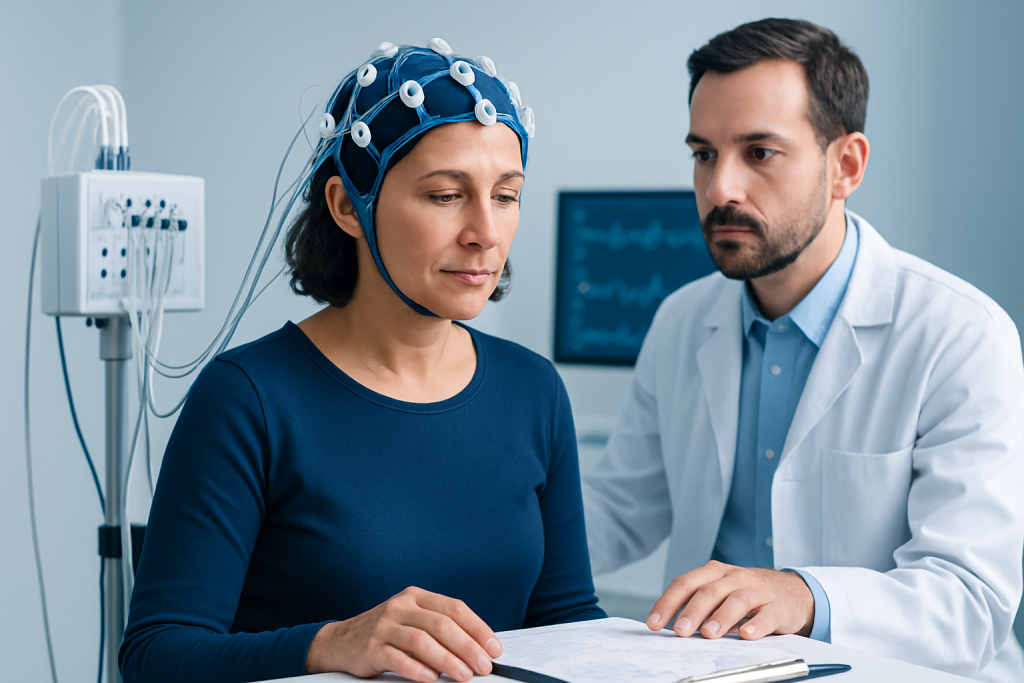
Doctors may recommend a cognitive test when a person, family member, or caregiver notices changes in memory or thinking. Common concerns include repeating questions, losing track of appointments, getting confused in familiar places, difficulty following conversations, or trouble managing finances, medication, or routine tasks.
Testing is also used when symptoms are subtle. Someone may still function independently but feel that thinking has become slower or less reliable. In these situations, assessment can help distinguish normal age-related changes from conditions such as Alzheimer’s disease, mild cognitive impairment, depression-related cognitive symptoms, or other neurological disorders.
Cognitive testing can also establish a baseline. This is useful after a stroke, traumatic brain injury, major illness, or before and after certain treatments. Repeat testing over time may show whether symptoms are stable, improving, or gradually changing.
- Evaluate memory complaints or confusion
- Monitor known neurological conditions
- Assess thinking after injury or illness
- Help plan treatment, rehabilitation, and support needs
What a Cognitive Test Measures

Cognition includes several different mental abilities. A cognitive test usually samples more than one area because a person may do well in some skills and struggle in others. The pattern of strengths and weaknesses often gives more useful information than any single number.
Memory is one key area, including the ability to learn new information and recall it later. Attention and concentration are also assessed, such as repeating numbers, staying focused, or switching between tasks. Language tasks may examine naming, understanding, repeating, reading, or word generation.
Other parts of the test may look at executive function, which includes planning, organizing, decision-making, and mental flexibility. Visual-spatial skills can be checked with drawing or copying shapes. Some tests also review orientation, such as awareness of the date, place, or current situation.
- Memory and learning
- Attention and concentration
- Language and communication
- Executive function and judgment
- Visual-spatial skills
- Orientation and processing speed
Common Types of Cognitive Tests
Brief cognitive screening tests are often used in primary care, neurology, geriatrics, and hospital settings. These screening tools are designed to identify whether further evaluation may be needed. They are practical, but they are not the same as a full diagnosis.
If symptoms are complex or if doctors need a more complete profile of thinking abilities, they may recommend formal neuropsychological testing. This is a longer evaluation performed by a trained specialist and can take several hours. It provides detailed information about memory, attention, language, problem-solving, mood, and daily functioning.
Doctors may combine testing with other diagnostic tools depending on the situation. For example, someone with symptoms suggestive of a brain disorder may also need blood tests, a neurological examination, or MRI scanning to look for stroke, structural changes, tumors, or other causes. In selected cases, neurological rehabilitation may be recommended if testing identifies deficits affecting daily life.
Different tests may be chosen based on age, education, language, hearing or vision status, and the type of symptoms. This is one reason why two people with similar concerns may not receive exactly the same assessment.
How to Prepare and What Happens During the Test
Most cognitive tests are simple, noninvasive, and do not require fasting or special preparation. It helps if the person brings a list of medications, glasses, hearing aids, and any relevant medical records. A family member may also be asked to share observations about changes in memory, behavior, or daily activities.
During the test, a healthcare professional asks questions and gives short tasks. These may include remembering words, naming objects, drawing a clock, following instructions, or answering orientation questions. The experience is usually calm and conversational, although some people may feel nervous if they are worried about their performance.
Stress, fatigue, pain, poor sleep, hearing loss, depression, anxiety, and language barriers can affect results. For that reason, doctors try to interpret the test in context. If the first test is unclear, they may repeat it later or recommend more detailed evaluation rather than making conclusions too quickly.
Understanding the Results
Cognitive test results show how a person performed compared with what would generally be expected for someone of a similar age and background. A normal result may be reassuring, but it does not always explain every symptom. If concerns continue, follow-up can still be important.
An abnormal or borderline result does not automatically mean dementia. Many potentially reversible problems can affect cognition, including medication effects, infections, thyroid disease, vitamin B12 deficiency, sleep disorders, alcohol use, and mood disorders. Doctors may recommend additional evaluation to look for these causes.
In some cases, testing supports a diagnosis such as mild cognitive impairment or a dementia syndrome. When this happens, the next step is usually a personalized care plan. This may include safety advice, treatment of contributing medical conditions, cognitive support strategies, and referral for therapies such as neuropsychological assessment or specialist rehabilitation.
Results are most helpful when they are shared clearly with the patient and family. Understanding what has changed, what remains strong, and what support is needed can make day-to-day planning easier and reduce uncertainty.
What Can Affect Cognitive Performance
Thinking skills can change for many reasons, and not all of them reflect a progressive brain disease. Temporary factors such as sleep deprivation, dehydration, uncontrolled blood sugar, recent surgery, infection, pain, or emotional stress may interfere with concentration and memory. Older adults can be especially sensitive to these changes.
Mood and mental health also matter. Depression and anxiety can slow processing speed and reduce concentration, sometimes creating symptoms that feel similar to memory loss. Hearing and vision problems may further lower test performance by making it harder to understand instructions or engage with tasks.
Medication review is another important step. Sedatives, some pain medicines, anticholinergic drugs, alcohol, and certain other substances may contribute to confusion or forgetfulness. This is why a complete medical assessment remains essential even when a cognitive test is the main reason for the visit.
When to Seek Medical Care
Medical advice should be sought if memory or thinking changes begin to interfere with work, driving, communication, medication management, finances, or personal safety. Evaluation is also important when symptoms are getting worse, when family members notice clear changes, or when confusion appears alongside personality or behavior changes.
Urgent medical care is needed for sudden confusion, new difficulty speaking, facial drooping, severe headache, weakness, or loss of balance, because these can be signs of a medical emergency such as stroke. A doctor should also be consulted promptly if cognitive changes follow a head injury, fever, or a new medication.
Early evaluation often makes a meaningful difference because some causes of cognitive decline are treatable, and support can be arranged sooner. At Acibadem International, multidisciplinary specialists in JCI-accredited hospitals evaluate cognitive symptoms for international patients using neurological examination, imaging, and tailored follow-up when needed.
Frequently asked questions
What is the difference between a cognitive test and a dementia diagnosis?
A cognitive test measures thinking skills such as memory, attention, and language. Dementia is a clinical diagnosis made after a doctor reviews symptoms, daily functioning, medical history, examination findings, and sometimes imaging or lab results. The test helps inform the diagnosis, but it is not usually enough on its own.
Can a cognitive test tell whether memory problems are normal aging?
It can help, but it may not give a complete answer by itself. Mild forgetfulness can occur with aging, while more significant changes may point to mild cognitive impairment, depression, medication effects, or another condition. Doctors look at the pattern of symptoms and whether daily life is affected.
How long does a cognitive test take?
A brief screening test may take about 10 to 20 minutes in a clinic visit. A full neuropsychological assessment is much more detailed and can take several hours, sometimes over more than one session. The length depends on the reason for testing and the level of detail needed.
Can stress or poor sleep affect cognitive test results?
Yes. Stress, anxiety, depression, fatigue, pain, and poor sleep can all reduce concentration and memory during testing. That is why doctors interpret results in context and may repeat testing or investigate other causes before drawing conclusions.
Do abnormal results always mean Alzheimer’s disease?
No. Abnormal cognitive test results can be caused by many different issues, including vitamin deficiencies, thyroid problems, medication side effects, depression, stroke, sleep disorders, or other neurological conditions. Alzheimer’s disease is only one possible explanation.
Should a family member come to the appointment?
Often, yes. A family member or close friend may notice changes that the patient does not recognize or may describe how symptoms affect daily life. Their input can help the doctor build a clearer and more accurate picture.
This article is for general information only and is not a substitute for professional medical advice. Please consult a qualified doctor about your individual situation.
Explore treatments in Turkey — costs, top hospitals & a free quote
JCI-accredited · board-certified surgeons · reply within 24h
Add us as a Preferred Source to see more of our trusted health content across Google Search, AI Overviews and Discover.

More from the Health Library

D Aspartic Acid: What Patients Need to Know

Anterolisthesis: An Evidence-Based Guide for Patients

Palpation: A Complete Medical Overview

And Noni Juice — Explained by Medical Evidence, Not Myths

Cholangiography: What Patients Need to Know