Third Nipple — Explained by Medical Evidence, Not Myths

A third nipple is a congenital variation, meaning it is present from birth. Most third nipples are harmless and do not require treatment.
Key Takeaways
- A third nipple is a congenital variation, meaning it is present from birth.
- Most third nipples are harmless and do not require treatment.
- They can look like a small mole, freckle, bump, or a more typical nipple.
- A doctor may recommend evaluation if there is pain, discharge, rapid change, or uncertainty about the diagnosis.
- Removal is usually done for comfort, irritation, or cosmetic reasons after medical assessment.
A third nipple is an extra nipple that develops before birth, most often along the "milk line" on the chest or abdomen. It is usually harmless and does not need treatment unless it causes symptoms, cosmetic concern, or changes that need medical evaluation.
Overview: what a third nipple really is
A third nipple is an extra nipple that forms during fetal development. The medical term is supernumerary nipple or polythelia. In most people, it is simply a normal anatomic variation rather than a disease, and many never need any treatment.
Third nipples most often appear along the embryonic milk lines, which run from the underarm area down toward the groin on both sides of the body. They may look like a tiny mole, a flat pigmented spot, a small raised bump, or a more clearly formed nipple. Some also have a small amount of underlying breast tissue, while others are only superficial skin changes.
Because a third nipple can resemble other skin findings, people may not realize what it is until a clinician examines it. It is often discovered incidentally during a routine check-up or after a person notices that the spot changes during puberty, pregnancy, or hormonal shifts.
How a third nipple looks and feels
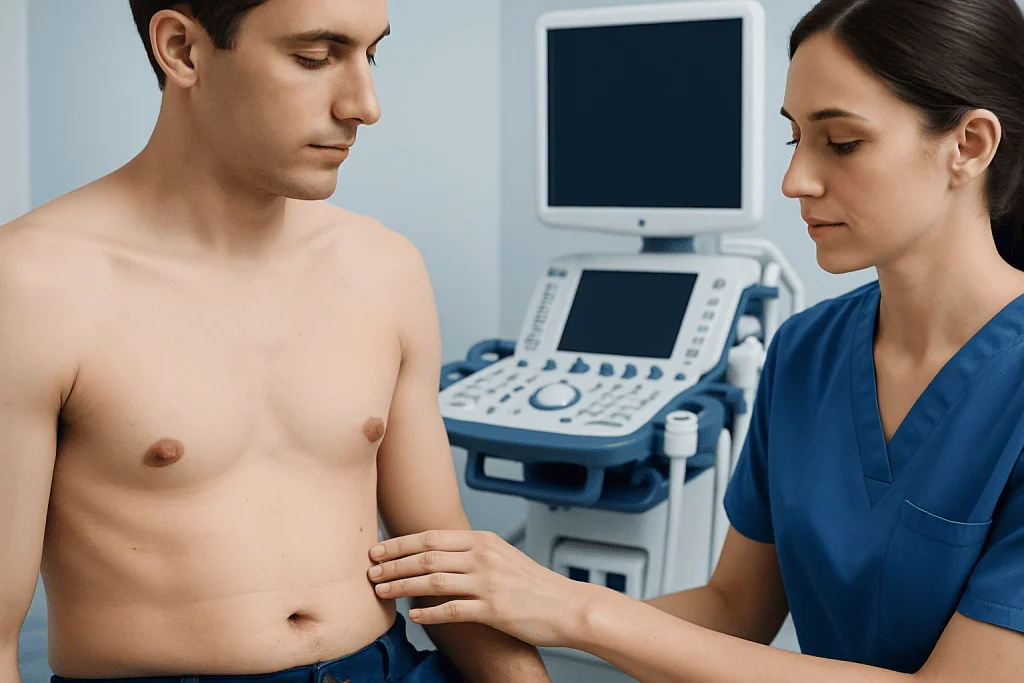
The appearance of a third nipple varies widely. Some are barely noticeable and look like a small freckle or mole. Others have a central depression, a tiny areola, or a nipple-like projection that makes the diagnosis more obvious.
It can occur in any sex and at any age, although it has been present since birth. Hormonal changes may make it more visible over time. For example, it may darken, become slightly raised, or feel more sensitive during puberty or pregnancy.
Most third nipples do not cause symptoms. When symptoms do occur, they may include:
- Mild tenderness or sensitivity
- Friction or irritation from clothing
- Cosmetic concern or self-consciousness
- Occasional swelling with hormonal changes
- Rarely, discharge if associated with breast tissue
If the spot is painful, becomes red, bleeds, or changes quickly, it should be examined. These features do not automatically mean something serious, but they do warrant a professional evaluation to confirm the cause.
Why it happens: causes and risk factors

A third nipple develops early in pregnancy, when the milk lines form. Usually, these lines regress except in the area where the normal nipples develop. If a small part of that tissue remains elsewhere along the line, an extra nipple can form.
This is not caused by anything a person did or did not do. It is a developmental variation, not a lifestyle-related problem. In many cases, there is no clear family history, although some families may have a tendency toward similar minor congenital features.
Most third nipples occur on their own and are not linked to any health problem. Historically, many myths have suggested that an extra nipple predicts illness, unusual hormone levels, or hidden disease. In reality, most are isolated findings. Very rarely, if a lesion is atypical or associated with broader congenital findings, a clinician may investigate further, but this is not the usual situation.
A third nipple is different from other breast-related changes such as breast cancer or inflammatory skin conditions. The key point is that an extra nipple is usually benign, but any new or changing chest lesion deserves proper assessment rather than assumption.
Diagnosis: how doctors confirm it
Diagnosis usually begins with a medical history and physical examination. A doctor looks at the lesion’s location, shape, pigmentation, and whether it has nipple or areolar features. The person’s age, symptoms, and any change over time also help guide the assessment.
In many cases, the diagnosis can be made clinically without complex testing. If the area is unusual, painful, or difficult to distinguish from a mole, cyst, skin tag, or other skin lesion, the doctor may refer the patient to a dermatologist, breast specialist, or surgeon.
Additional tests are not needed for everyone, but they may be considered in selected cases. These can include imaging of nearby tissue if there is a lump beneath the skin, or removal of the lesion for laboratory examination if the diagnosis is uncertain. When a breast-related lump is present, mammography or breast ultrasound may be used in the appropriate clinical setting.
The aim of diagnosis is not only to label the lesion correctly, but also to rule out more common skin or breast conditions that may look similar. Clear diagnosis can provide reassurance and help decide whether any treatment is needed.
Treatment options and when removal is considered
Most third nipples do not need treatment. If they are not causing discomfort and the diagnosis is clear, observation is often all that is required. Many people choose to leave them alone once they understand that they are generally harmless.
Treatment may be considered if the area is repeatedly irritated, becomes tender with hormonal changes, produces discharge, or causes cosmetic concern. In these cases, a doctor may discuss minor surgical removal. The exact approach depends on whether the lesion is only skin-deep or includes underlying glandular tissue.
When removal is chosen, the procedure is usually straightforward and planned after clinical evaluation. If there is uncertainty about the diagnosis, the removed tissue may be examined under a microscope. In selected cases involving tissue beneath the skin, breast biopsy may help clarify the nature of the change before or during management.
People should avoid trying to remove or treat a suspected third nipple at home. Home cutting, tying, or self-treatment can lead to bleeding, infection, scarring, or delayed diagnosis of another skin condition.
Myths, related conditions, and what it does not usually mean
Third nipples are surrounded by myths, but medical evidence is more reassuring than folklore. An extra nipple does not by itself mean that a person has a hormone disorder, cancer, or a serious internal disease. It is usually just a small developmental difference in the skin and breast line.
That said, a third nipple can occasionally contain breast tissue, so it may respond to hormones just like regular breast tissue. This explains why some people notice swelling, tenderness, or darkening at certain life stages. These changes are not necessarily dangerous, but they should be discussed with a clinician if they are new or bothersome.
A related but different condition is accessory breast tissue, where extra breast tissue develops with or without an obvious extra nipple. Some people confuse the two. Accessory tissue may create fullness or lumps, especially in the underarm area, and may need a different kind of assessment than a simple superficial third nipple.
If there is a distinct breast lump, skin thickening, or discharge from any breast-area tissue, clinicians may evaluate it in the same careful way they assess other breast lump concerns. This does not mean cancer is likely; it simply means proper diagnosis matters.
Self-care and when to seek medical care
Daily self-care is usually simple. If the area becomes irritated, wearing soft, well-fitting clothing and reducing friction can help. It may also help to monitor the spot casually for changes in size, color, tenderness, or discharge, especially during hormonal transitions.
Medical care should be sought if the lesion is new rather than lifelong, if it changes quickly, or if there are symptoms such as pain, bleeding, crusting, discharge, or a firm lump underneath. A doctor should also assess any lesion that is difficult to distinguish from a mole or another skin growth.
Parents may ask about a third nipple in a child. In most cases, it can simply be mentioned at a routine pediatric visit for confirmation. Urgent care is generally unnecessary unless the area is inflamed, infected, or associated with another concerning symptom.
For people who want expert assessment or removal, evaluation by dermatology, breast health, or surgical specialists can help define the best option. Acibadem International’s multidisciplinary specialists in JCI-accredited hospitals diagnose and treat this condition for international patients when assessment or management is needed.
Frequently asked questions
Is a third nipple normal?
Yes. A third nipple is usually a normal congenital variation, meaning it formed before birth. In most cases it is harmless and does not affect health.
Can a third nipple appear later in life?
A true third nipple is typically present from birth, even if it is small and not noticed at first. Hormonal changes during puberty, pregnancy, or adulthood can make it easier to see or feel.
Does a third nipple mean cancer?
No. A third nipple by itself does not mean cancer. However, any skin or breast-area lesion that is changing, painful, bleeding, or associated with a lump should be checked by a doctor.
Can a third nipple produce milk or discharge?
Sometimes, especially if there is underlying accessory breast tissue. Hormonal changes can affect this tissue similarly to normal breast tissue, so a clinician should assess any discharge.
Should a third nipple be removed?
Removal is not necessary in most cases. It may be considered if the area causes irritation, tenderness, recurrent symptoms, diagnostic uncertainty, or cosmetic concern.
How do doctors tell a third nipple from a mole?
Doctors use the location, appearance, and texture of the lesion, along with its history over time. If the diagnosis is not clear, they may recommend imaging, referral, or removal for examination.
This article is for general information only and is not a substitute for professional medical advice. Please consult a qualified doctor about your individual situation.
Explore treatments in Turkey — costs, top hospitals & a free quote
JCI-accredited · board-certified surgeons · reply within 24h
Add us as a Preferred Source to see more of our trusted health content across Google Search, AI Overviews and Discover.

More from the Health Library

Cerebellum and Cerebellar: A Complete Medical Overview

Poison Arsen: A Complete Medical Overview

Itching in Penile — Explained by Medical Evidence, Not Myths

Stupor: An Evidence-Based Guide for Patients

Infant Sleep Terrors: An Evidence-Based Guide for Patients