Butterfly Skin Rash on Face: Common Causes, Related Conditions, and When to See a Doctor

A butterfly-shaped facial rash is a pattern, not a diagnosis. Common causes include rosacea, seborrheic dermatitis, contact dermatitis, and sun-related skin reactions.
Key Takeaways
- A butterfly-shaped facial rash is a pattern, not a diagnosis.
- Common causes include rosacea, seborrheic dermatitis, contact dermatitis, and sun-related skin reactions.
- A classic malar rash can be associated with lupus, especially when paired with joint pain, fatigue, mouth ulcers, or sun sensitivity.
- Doctors diagnose the cause by examining the skin pattern, reviewing triggers and symptoms, and sometimes ordering blood tests or a skin biopsy.
- Gentle skin care, sun protection, and avoiding known triggers can help, but treatment depends on the underlying condition.
- Prompt medical advice is important if the rash is new, persistent, painful, blistering, or associated with fever or other systemic symptoms.
A butterfly skin rash on face usually refers to redness or a rash spreading across both cheeks and the bridge of the nose. It can be caused by common skin conditions such as rosacea or dermatitis, but in some cases it may be linked to autoimmune disease such as lupus, so medical evaluation is helpful when the rash is persistent, worsening, or accompanied by other symptoms.
What a butterfly skin rash on face usually means
A butterfly skin rash on face describes a reddish or pink rash that appears over both cheeks and the bridge of the nose, forming a shape similar to butterfly wings. This pattern is often called a malar rash. While many people associate it with lupus, the same facial distribution can also occur with more common conditions such as rosacea, seborrheic dermatitis, eczema, irritation from skin products, or reactions to sunlight.
The most important point is that a butterfly-shaped rash is a visible clue rather than a final diagnosis. Doctors look at the color, texture, borders, scaling, itching, flushing, and whether the folds beside the nose are involved. They also ask about symptoms beyond the skin, because the meaning of the rash changes when it occurs with joint pain, fatigue, fever, or unusual sensitivity to sunlight.
Some facial rashes are brief and harmless, especially if they follow heat, exercise, spicy foods, or a new cosmetic. Others persist for weeks, return repeatedly, or spread. If the rash does not settle with simple skin care or is accompanied by other unexplained symptoms, professional assessment can help identify whether the cause is dermatologic, allergic, infectious, or autoimmune.
How the rash can look and feel
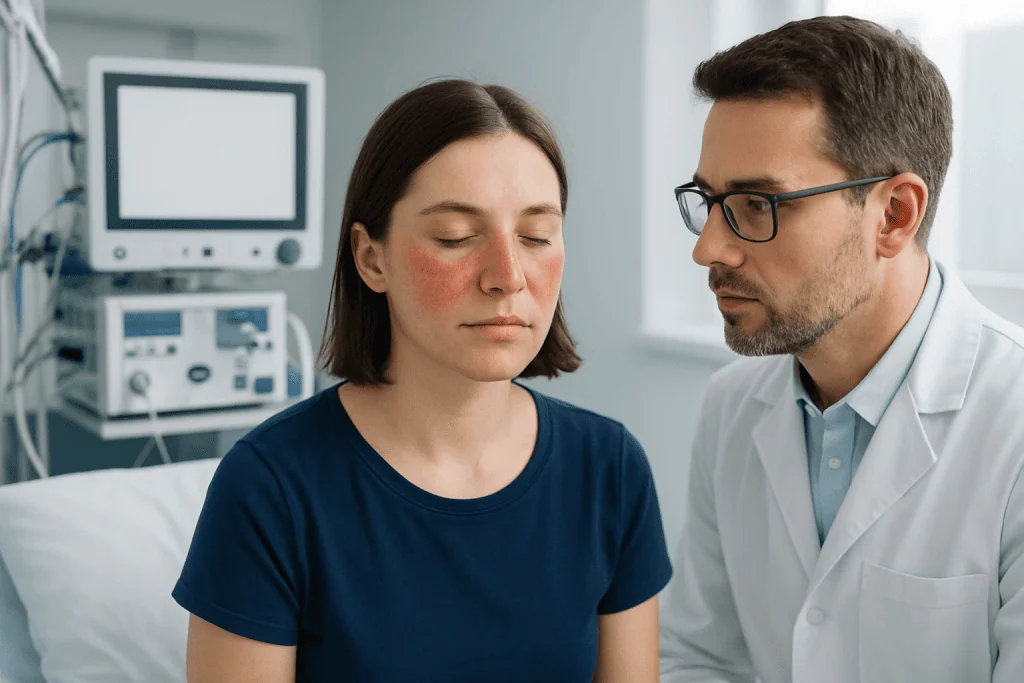
The appearance of a butterfly rash varies by cause. In some people it is a flat red patch with a smooth surface. In others it may be scaly, dry, itchy, bumpy, warm, or prone to flushing. The color can range from faint pink to deep red or violet, depending on skin tone and the level of inflammation.
A lupus-related malar rash often appears across the cheeks and bridge of the nose and may be triggered or worsened by sun exposure. It is usually not centered around pimples or visible blood vessels. By contrast, rosacea often causes redness with flushing, burning, visible tiny blood vessels, and sometimes acne-like bumps. Seborrheic dermatitis is more likely to cause greasy scale and involve the creases beside the nose, eyebrows, or scalp.
People may also notice symptoms such as:
- Burning, stinging, or skin sensitivity
- Itching or dryness
- Flushing after heat, alcohol, stress, or spicy foods
- Worsening after sun exposure
- Scaling around the nose, eyebrows, or hairline
- Associated mouth ulcers, fatigue, or joint aches
Photographs taken over time can be useful. They help show whether the rash is transient or recurring and whether it follows a pattern linked to triggers such as sunlight, skin products, or illness.
Common causes and related conditions

Several conditions can produce a butterfly skin rash on face. Rosacea is one of the most common explanations in adults. It tends to cause central facial redness, flushing, visible blood vessels, and sometimes small inflammatory bumps. Triggers often include sunlight, hot drinks, spicy foods, alcohol, emotional stress, and temperature changes.
Seborrheic dermatitis is another frequent cause. It can create redness with flaky or greasy scale around the nose, eyebrows, eyelids, ears, and scalp. Irritant or allergic contact dermatitis may also affect the same area, especially after use of new cosmetics, sunscreens, fragrances, masks, or topical medications. Eczema and photosensitive reactions can cause a similar distribution as well.
Doctors also consider autoimmune causes when the pattern and the rest of the history suggest them. A classic malar rash may be seen in lupus, particularly when there is marked photosensitivity or other systemic symptoms. Less commonly, dermatomyositis and other connective tissue diseases can affect the face. Infections are not the usual cause of a true butterfly pattern, but facial redness can sometimes be mistaken for conditions such as cellulitis if one side becomes painful, swollen, or warm.
In children and adults alike, the surrounding clues matter. Acne, telangiectasia, scale, itching, fever, body aches, hair loss, mouth ulcers, or muscle weakness each point in different diagnostic directions. This is why self-diagnosis based on appearance alone can be misleading.
When the rash may suggest lupus rather than a common skin problem
A butterfly rash receives special attention because it can be linked to lupus, an autoimmune condition in which the immune system mistakenly attacks healthy tissues. In lupus, the rash often appears after sun exposure and typically spans the cheeks and bridge of the nose. It may spare the folds beside the nostrils, which can help distinguish it from seborrheic dermatitis, although this is not a strict rule.
The rash becomes more concerning for lupus when it appears together with non-skin symptoms. These may include ongoing fatigue, joint pain or swelling, unexplained fevers, mouth or nose ulcers, chest pain with breathing, hair thinning, or swelling in the legs. Some people also develop other skin findings, such as round scaly lesions or unusual sensitivity to sunlight.
Not everyone with a facial butterfly rash has lupus, and not everyone with lupus develops this rash. Still, a clinician may recommend evaluation if the facial pattern is recurrent, photosensitive, or associated with symptoms elsewhere in the body. Depending on the findings, the doctor may explore autoimmune disease and related conditions with blood tests and, if needed, referral for rheumatology evaluation.
How doctors diagnose the cause
Diagnosis starts with a careful history and skin examination. A doctor asks when the rash began, whether it comes and goes, which products are used on the face, and whether sun exposure, heat, exercise, foods, or stress trigger it. They also ask about itching, burning, pimples, scale, fevers, joint symptoms, mouth ulcers, hair loss, and family history of autoimmune or skin disease.
The facial pattern itself offers helpful clues. Doctors note whether the rash is flat or raised, whether it involves the nasal folds, whether there are visible blood vessels or acne-like bumps, and whether the scalp, ears, eyelids, or chest are also affected. In many cases, these clinical features are enough to suggest rosacea, dermatitis, or another common inflammatory skin condition.
If lupus or another systemic illness is possible, blood tests may be ordered to look for inflammation or autoimmune markers. Some people also need urine tests or additional organ-specific checks if there are broader symptoms. When the diagnosis remains uncertain, a dermatologist may recommend dermatology assessment and occasionally a skin biopsy to examine a small sample under the microscope.
Because several conditions can overlap, diagnosis may take more than one visit. It is often useful to bring a list of skin products, medications, and supplements, along with photos of the rash during a flare.
Treatment options and everyday care
Treatment depends entirely on the underlying cause. Rosacea may be managed with trigger avoidance, prescription topical treatments, oral medication in selected cases, and daily sun protection. Seborrheic dermatitis often improves with medicated creams or cleansers and gentle moisturizers. Contact dermatitis is treated by identifying and avoiding the irritant or allergen, while short-term anti-inflammatory treatment may be used when appropriate.
If lupus is suspected or confirmed, care focuses not only on the rash but also on the whole person. Sun protection becomes especially important, and treatment may involve topical medicines, broader immune-modifying therapy, and follow-up with relevant specialists. People with persistent or unclear facial rash may benefit from coordinated care through internal medicine evaluation when skin findings are accompanied by fatigue, joint symptoms, or other general health concerns.
At home, patients are usually advised to keep skin care simple and non-irritating. Helpful steps may include:
- Using a gentle cleanser without fragrance or harsh scrubs
- Applying a bland moisturizer regularly
- Wearing broad-spectrum sunscreen every day
- Avoiding tanning and limiting direct midday sun exposure
- Stopping recently introduced cosmetics or active skin products until reviewed
- Not picking, rubbing, or over-cleansing the affected skin
Trying many products at once can worsen irritation and make diagnosis harder. A clinician can help choose a safer, simpler routine while the cause is being clarified.
When to seek medical care
Medical advice is appropriate if a butterfly skin rash on face lasts more than a short time, keeps returning, spreads, or does not improve with gentle skin care. Evaluation is also helpful when the rash is triggered by sunlight, appears with flushing and visible vessels, or follows the use of a new product or medication.
A more prompt assessment is recommended if facial rash occurs with fever, marked fatigue, joint pain, mouth ulcers, shortness of breath, chest pain, swelling, muscle weakness, or a general feeling of being unwell. Urgent care may be needed if the rash is painful, blistering, rapidly worsening, or associated with significant swelling or signs of infection.
Patients who need further investigation may be referred to specialists in dermatology, rheumatology, or internal medicine. Near the end of the diagnostic pathway, coordinated care can be valuable; Acibadem International’s multidisciplinary specialists and JCI-accredited hospitals diagnose and treat patients with complex skin and autoimmune conditions, including cases where facial rash may relate to broader disease.
Frequently asked questions
Is a butterfly skin rash on face always lupus?
No. Although a butterfly-shaped facial rash can occur in lupus, many cases are caused by more common conditions such as rosacea, seborrheic dermatitis, eczema, or skin irritation. The pattern is important, but the diagnosis depends on the full clinical picture.
How can someone tell rosacea from a lupus rash?
Rosacea often causes flushing, burning, visible small blood vessels, and sometimes acne-like bumps in the center of the face. A lupus malar rash is more often linked to sun sensitivity and may occur with symptoms such as joint pain, fatigue, or mouth ulcers. Because these conditions can overlap in appearance, a doctor should make the distinction.
Can sun exposure trigger a butterfly rash?
Yes. Sunlight can worsen several facial rashes, especially photosensitive conditions such as lupus, and it can also aggravate rosacea and some forms of dermatitis. Daily sun protection is usually recommended while the cause is being evaluated.
What should be avoided if there is a rash across the cheeks and nose?
It is usually best to avoid harsh scrubs, fragranced skin products, over-exfoliation, and any recently introduced cosmetic or topical treatment until the skin settles. Common personal triggers such as heat, alcohol, spicy foods, and direct sun exposure may also make some facial rashes worse.
Will a butterfly rash go away on its own?
Sometimes it can, especially if it is caused by temporary irritation or a mild trigger. However, persistent, recurring, or worsening rash should not be ignored because treatment depends on the specific cause. Medical advice is especially important if there are symptoms outside the skin.
What tests might a doctor order for a butterfly facial rash?
Many people need only a clinical skin examination and review of symptoms and triggers. If an autoimmune cause is suspected, a doctor may order blood tests and urine tests, and occasionally a skin biopsy if the diagnosis remains unclear.
References
- American Academy of Dermatology
- National Institute of Arthritis and Musculoskeletal and Skin Diseases
- Mayo Clinic
- MedlinePlus
- National Health Service
This article is for general information only and is not a substitute for professional medical advice. Please consult a qualified doctor about your individual situation.
Explore treatments in Turkey — costs, top hospitals & a free quote
JCI-accredited · board-certified surgeons · reply within 24h
Add us as a Preferred Source to see more of our trusted health content across Google Search, AI Overviews and Discover.