Vaccines for Meningococcal — Explained by Medical Evidence, Not Myths

Meningococcal vaccines protect against serious infections caused by Neisseria meningitidis. There are different vaccine types, mainly MenACWY and MenB, and they are used for different groups and situations.
Key Takeaways
- Meningococcal vaccines protect against serious infections caused by Neisseria meningitidis.
- There are different vaccine types, mainly MenACWY and MenB, and they are used for different groups and situations.
- Routine vaccination is common in adolescence, while some infants, adults, travelers, and higher-risk groups may need additional protection.
- These vaccines cannot prevent every cause of meningitis, but they can greatly reduce the risk from key meningococcal strains.
- Mild side effects such as arm soreness or tiredness are common, while severe reactions are rare and need urgent medical attention.
Vaccines for meningococcal are used to lower the risk of invasive meningococcal disease, a fast-moving bacterial infection that can cause meningitis or bloodstream infection. The best vaccine and timing depend on age, medical conditions, living situation, travel plans, and local public health guidance.
Overview: what vaccines for meningococcal do
Vaccines for meningococcal help protect against Neisseria meningitidis, a bacterium that can cause meningitis and severe bloodstream infection. These illnesses can progress quickly, which is why prevention is so important. Vaccination does not eliminate all risk, but it significantly lowers the chance of infection from the meningococcal groups covered by the vaccine.
There is not just one “meningitis vaccine.” Different vaccines protect against different germs, and meningococcal vaccines are only one part of meningitis prevention. The two main types used in many countries are MenACWY vaccines, which protect against four groups of meningococcal bacteria, and MenB vaccines, which protect against group B.
Recommendations vary by age and individual risk. Many adolescents receive routine vaccination, while infants, college students in shared housing, military recruits, travelers to certain regions, and people with specific medical conditions may also need protection. A clinician can help match the right vaccine schedule to the person’s age, health status, and exposure risk.
Who should consider meningococcal vaccination
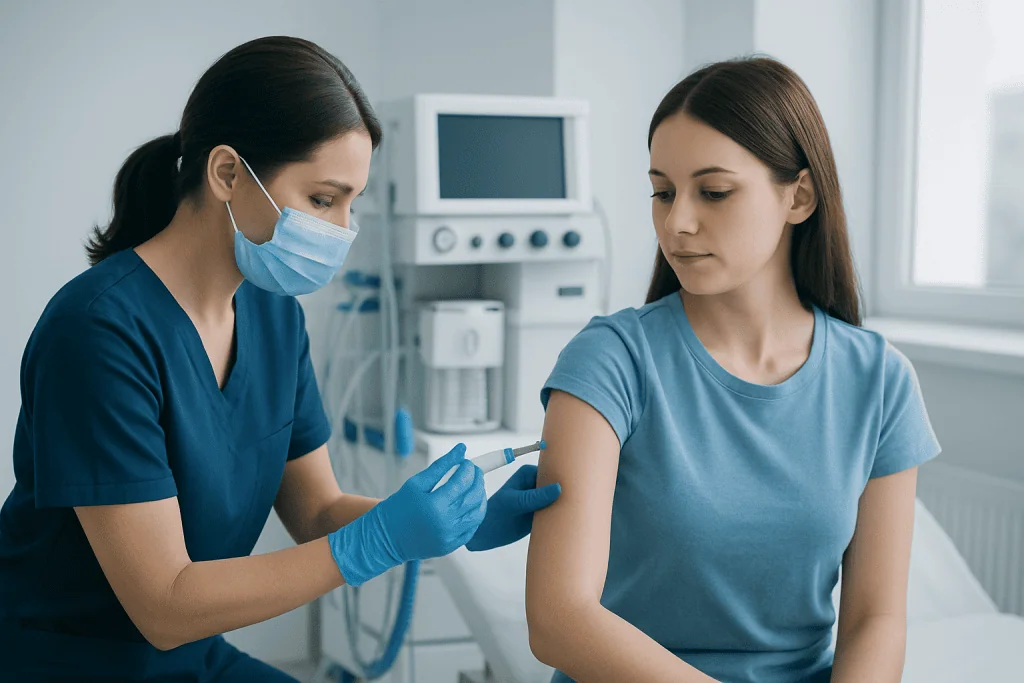
Routine meningococcal vaccination is commonly advised for adolescents because the risk of carrying and spreading the bacteria can increase during the teenage and young adult years. A booster dose may be recommended later in adolescence to maintain protection during the years of highest risk.
Some people need meningococcal vaccination outside the routine schedule. This includes those with certain immune system conditions, people without a functioning spleen or who have had the spleen removed, laboratory workers who handle meningococcal bacteria, and travelers to areas where meningococcal disease is more common or where vaccination is required for entry.
Vaccination may also be recommended during a local outbreak or for people living in close-contact settings such as dormitories or military barracks. Public health guidance can change depending on the type of outbreak, age group affected, and which meningococcal group is involved.
- Adolescents and young adults
- People with higher-risk immune conditions
- Travelers to high-risk regions
- College students in shared housing
- Military recruits
- People identified during an outbreak response
Types of meningococcal vaccines and how they differ

MenACWY vaccines target four meningococcal groups: A, C, W, and Y. These are widely used in routine adolescent immunization programs and for many travelers. Depending on age and risk, a person may need a primary series, a booster, or both.
MenB vaccines are different. They protect against group B meningococcal bacteria, which are not covered by MenACWY vaccines. In some countries, MenB vaccination is recommended for specific age groups or for people at increased risk. In others, it may be offered based on shared decision-making between the patient or family and a healthcare professional.
Some people may need both MenACWY and MenB because protection from one does not replace the other. Vaccine schedules differ by product, age, and reason for vaccination. For that reason, it is best not to assume that a prior “meningitis shot” covers all meningococcal risks.
For families comparing vaccines, the most helpful question is not which one is “stronger,” but which one is appropriate for the person’s age, health history, and exposure profile. A pediatrician, family doctor, or travel medicine specialist can clarify what is needed and when.
What medical evidence says about safety and effectiveness
Medical evidence shows that meningococcal vaccines are effective at reducing the risk of invasive disease caused by the groups they target. Like all vaccines, they are evaluated before approval and continue to be monitored after introduction into routine use. Public health agencies review safety data continuously and update recommendations when needed.
Common side effects are usually mild and short-lived. These may include pain or redness at the injection site, tiredness, headache, muscle aches, or a low fever. Fainting can happen after many types of injections, especially in adolescents, so clinics often ask patients to sit or lie down briefly after vaccination.
Severe allergic reactions are rare, but any vaccine can cause them. People should inform the clinician about prior vaccine reactions, severe allergies, pregnancy, current illness, or immune-related conditions before vaccination. This helps the care team decide whether to proceed, delay, or choose a different schedule.
Evidence-based guidance is especially useful because misinformation often focuses on isolated anecdotes instead of overall risk and benefit. For most eligible people, the known risks of meningococcal disease are more serious than the usually mild, temporary effects of vaccination.
Common myths and the evidence-based facts
One common myth is that meningococcal vaccines are unnecessary because meningococcal disease is rare. In reality, even though the disease is not common, it can become severe very quickly and may lead to life-threatening complications. Vaccination is recommended not because everyone will be exposed, but because the consequences of infection can be serious and prevention is safer than treatment alone.
Another myth is that one dose lasts forever. Protection can decrease over time, which is why booster doses are recommended for some age groups and higher-risk individuals. Following the advised schedule is part of getting the full benefit of vaccination.
Some people also believe that if they received a “meningitis vaccine,” they are protected against all forms of meningitis. This is not correct. Meningitis can be caused by different bacteria and viruses, and meningococcal vaccines only target certain meningococcal groups. Related information about serious infection affecting the brain and spinal cord can be found in meningitis.
A final myth is that healthy young people do not need vaccination. While overall health matters, meningococcal disease can affect previously healthy adolescents and young adults, particularly in close-living environments. Vaccine recommendations are based on population risk patterns, not only on chronic illness.
How doctors decide the right schedule
Doctors build the meningococcal vaccination plan around several practical questions: How old is the person? Do they have a higher-risk medical condition? Are they entering a shared living environment, traveling, or responding to an outbreak? The answers help determine whether MenACWY, MenB, or both are appropriate.
For children, clinicians follow pediatric immunization schedules that may differ from adult schedules. Adolescents are commonly reviewed at routine health visits for age-based doses and boosters. Adults are assessed more selectively, usually based on travel, work exposure, health conditions, or outbreak-related recommendations.
If a person is unsure of their vaccine history, a clinician may review records and decide whether catch-up vaccination is needed. In some cases, restarting the series is not necessary, but timing still matters. A consultation can also be a good moment to review other relevant preventive vaccines, such as those used in broader infection prevention and vaccination planning.
When symptoms raise concern for an active infection rather than prevention, doctors may use laboratory testing and check-up assessment to guide urgent care. Vaccines are preventive tools, not treatments for current meningococcal disease.
Prevention beyond vaccination
Vaccination is central, but it is not the only prevention strategy. Good respiratory hygiene, avoiding sharing cups or utensils during illness, and staying home when unwell can help reduce the spread of infections. In outbreak settings, public health teams may recommend antibiotics for close contacts of someone with confirmed meningococcal disease.
Travelers should check destination-specific vaccine requirements well before departure. Some countries or pilgrimage settings may require proof of MenACWY vaccination. Travel medicine advice is most useful when sought in advance because some vaccines need time to provide the best protection.
It is also important to recognize that meningococcal disease can sometimes resemble other infections early on. Knowing the warning signs of serious illness and seeking prompt care can be as important as prevention. Information about related severe blood infection may be helpful in sepsis, since invasive bacterial infections can sometimes progress rapidly.
Near the end of the care journey, some international patients choose evaluation at centers with coordinated infectious disease and pediatric or adult specialist support. Acibadem International’s multidisciplinary specialists and JCI-accredited hospitals diagnose and treat infectious conditions and provide vaccination-related assessment for international patients when appropriate.
When to seek medical care
Medical advice should be sought before vaccination if the person has a history of severe allergic reaction to a previous dose or vaccine component, is moderately or severely ill, or has a complex immune condition. A doctor can decide whether vaccination should proceed, be postponed, or be tailored.
Urgent medical care is needed after vaccination if there are signs of a severe allergic reaction, such as difficulty breathing, swelling of the face or throat, widespread hives, or severe dizziness. These reactions are uncommon, but they require immediate attention.
Emergency evaluation is also important if someone develops symptoms that could suggest meningococcal disease itself, regardless of vaccination status. Warning signs may include sudden fever, severe headache, neck stiffness, confusion, unusual sleepiness, sensitivity to light, vomiting, or a rapidly spreading rash. Vaccination greatly reduces risk, but no vaccine offers perfect protection, so concerning symptoms should never be ignored.
Frequently asked questions
What are vaccines for meningococcal used for?
They are used to help prevent invasive meningococcal disease, including meningitis and serious bloodstream infection caused by Neisseria meningitidis. Different vaccines protect against different meningococcal groups, so the correct choice depends on age and risk factors.
Is the meningococcal vaccine the same as all meningitis vaccines?
No. Meningitis can be caused by several bacteria and viruses, and meningococcal vaccines only protect against certain meningococcal bacteria. A person may still need other vaccines depending on age, health status, and local recommendations.
Who usually needs MenACWY and who may need MenB?
MenACWY is commonly part of routine adolescent vaccination and is also used for some travelers and higher-risk groups. MenB may be advised for certain adolescents, young adults, outbreak settings, or people with specific medical risks, depending on national guidance.
Can a vaccinated person still get meningococcal disease?
Yes, it is still possible, because no vaccine gives complete protection and not every strain is covered by every vaccine. However, vaccination significantly lowers the risk of severe disease from the targeted groups and remains an important preventive measure.
What side effects are common after meningococcal vaccination?
Most side effects are mild and temporary, such as soreness at the injection site, tiredness, headache, or a low fever. Serious allergic reactions are rare, but urgent medical care is needed if breathing difficulty, facial swelling, or severe dizziness occurs.
Do adults need vaccines for meningococcal?
Some adults do. Vaccination may be recommended for adults with certain immune conditions, those without a functioning spleen, laboratory workers, travelers to high-risk regions, or people involved in an outbreak response.
References
- World Health Organization
- Centers for Disease Control and Prevention
- American Academy of Pediatrics
- European Centre for Disease Prevention and Control
- National Institutes of Health
This article is for general information only and is not a substitute for professional medical advice. Please consult a qualified doctor about your individual situation.
Explore treatments in Turkey — costs, top hospitals & a free quote
JCI-accredited · board-certified surgeons · reply within 24h
Add us as a Preferred Source to see more of our trusted health content across Google Search, AI Overviews and Discover.

More from the Health Library

Nipple Clamps: A Complete Medical Overview

Measles: An Evidence-Based Guide for Patients

Water Retention: A Complete Medical Overview
Dextromethorphan — Explained by Medical Evidence, Not Myths

Calcium Channel Blockers List: An Evidence-Based Guide for Patients
Thrush — Explained by Medical Evidence, Not Myths
Infectious Diseases & Clinical Microbiology Specialists at Acibadem

Dr. Semra Kavas
Infectious Diseases & Clinical Microbiology
Prof. Dr. Serap Gençer
Infectious Diseases & Clinical Microbiology
Prof. Dr. Süda Tekin
Infectious Diseases & Clinical Microbiology
Prof. Dr. A. Çağrı Büke
Infectious Diseases & Clinical Microbiology