Small Red Dots on Skin — Explained by Medical Evidence, Not Myths

Small red dots on skin are a symptom, not a single diagnosis. Many causes are harmless, including cherry angiomas, heat rash, and mild irritation.
Key Takeaways
- Small red dots on skin are a symptom, not a single diagnosis.
- Many causes are harmless, including cherry angiomas, heat rash, and mild irritation.
- Non-blanching dots, easy bruising, fever, or bleeding need prompt medical assessment.
- A doctor may use the appearance, timing, and associated symptoms to narrow the cause.
- New, widespread, or unexplained spots should not be self-diagnosed if they persist or worsen.
Small red dots on skin can have many causes, from harmless cherry angiomas and heat rash to petechiae, allergies, or infections. The key is whether the spots blanch, itch, spread, or appear with other symptoms such as fever, bruising, or bleeding.
Overview: what small red dots on skin usually mean
Small red dots on skin are common, and in many people they are not dangerous. They may come from tiny blood vessels near the surface, blocked sweat ducts, skin irritation, insect bites, or harmless growths such as cherry angiomas. In other cases, they can reflect bleeding under the skin, inflammation, or an infection, which is why the pattern and accompanying symptoms matter.
A useful first distinction is whether the spots blanch, meaning they briefly fade when pressed. Spots caused by inflammation or dilated vessels often blanch. Spots caused by blood leaking under the skin, such as petechiae, usually do not blanch. This simple difference does not give a diagnosis on its own, but it helps explain why some red dots are minor and others deserve faster medical review.
Color, size, and distribution also help. Tiny pinpoint dots may suggest petechiae or heat rash, while dome-shaped red bumps may suggest cherry angiomas. Itching can point toward allergy, eczema, or bites; pain can suggest infection, inflamed follicles, or vascular causes. When red dots appear together with fever, weakness, unusual bruising, or bleeding from the gums or nose, a clinician should evaluate them promptly.
Common appearances and symptoms to notice
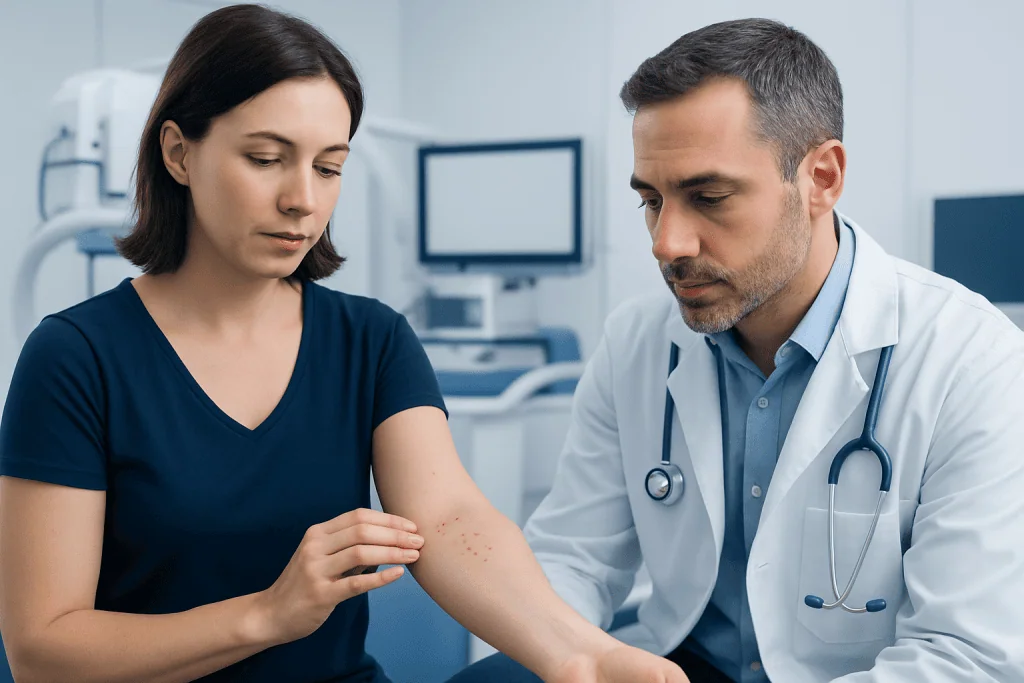
People often describe these spots in different ways: flat red pinpoints, slightly raised red bumps, bright-red moles, or a fine rash. Whether they are flat or raised can guide the next steps. Flat pinpoint spots are more concerning for petechiae or purpura if they do not blanch, while raised spots may be linked to inflamed hair follicles, bites, or benign vascular growths.
Other features to notice include itch, tenderness, scaling, warmth, or crusting. Itching is common with allergy, irritation, contact dermatitis, and heat rash. Tenderness or warmth may suggest infection or inflamed skin. Scaling can occur with eczema, psoriasis, or fungal problems. Crusting or pus may point to folliculitis or another superficial skin infection.
It is also helpful to note where the spots appear. Red dots on the trunk after exercise or overheating may fit heat rash. Spots on the legs can occur with irritation, vascular conditions, or pressure-related petechiae. Spots limited to areas under tight clothing, straps, or friction may reflect mechanical irritation. A doctor may also ask whether there was a new detergent, skin product, medication, illness, or recent travel.
- Blanching spots: often linked to inflammation, allergy, or dilated blood vessels
- Non-blanching spots: may indicate petechiae or purpura and need careful assessment
- Raised bright-red papules: often cherry angiomas, especially in adults
- Itchy clusters: can suggest bites, heat rash, or contact dermatitis
Possible causes, from harmless to more serious

Several common causes are benign. Cherry angiomas are small, bright-red vascular growths that are especially common with age. They are usually smooth, round, and harmless. Heat rash can create tiny red dots when sweat ducts become blocked, especially in hot weather or after heavy exercise. Mild irritation from friction, shaving, or new skin products can also produce small red spots.
Inflammatory and allergic conditions are another common explanation. Contact dermatitis may appear after exposure to cosmetics, soaps, fragrances, plants, fabrics, or metals. Eczema can cause itchy red patches or tiny bumps, while hives tend to form raised welts rather than fixed pinpoints. Insect bites may present as grouped itchy red spots, often on exposed skin.
Some causes involve the hair follicles or skin infection. Folliculitis can create small red or pus-filled bumps around hairs, often after sweating, shaving, or friction. Viral illnesses and some bacterial infections may trigger a fine red rash. In certain settings, clinicians also consider conditions such as vasculitis, where inflammation affects blood vessels and can produce red or purple spots.
More serious causes include petechiae and purpura, which happen when tiny blood vessels bleed under the skin. These can follow coughing, vomiting, or physical strain, but they may also be linked to low platelet counts, medication effects, clotting disorders, or infection. If the spots are non-blanching, spreading, or accompanied by fever, bruising, or bleeding, urgent medical evaluation is important.
Risk factors and triggers doctors consider
Age, environment, and skin sensitivity can all influence why small red dots appear. Cherry angiomas become more common over time. Heat, humidity, sweating, and tight clothing make heat rash more likely. Sensitive skin, eczema, and allergies increase the chance of irritation from products or fabrics. Shaving, waxing, and friction can trigger folliculitis or inflamed follicles.
Medication history matters as well. Blood thinners and medicines that affect platelets may increase the risk of bleeding into the skin. Some drugs can also cause allergic or inflammatory rashes. A clinician may ask about recent antibiotics, pain relievers, supplements, and new prescriptions because timing can provide valuable clues.
Recent illness and lifestyle context are also important. A viral infection, sore throat, fever, or new cough may point toward an infectious cause. Intense exercise, vomiting, or prolonged coughing can occasionally cause petechiae in localized areas from pressure changes. Travel, outdoor exposure, or insect contact may suggest bites or infection. If there is a history of easy bruising, nosebleeds, or heavy bleeding, the doctor may also consider an underlying blood or clotting problem.
How diagnosis is made
Diagnosis starts with a careful history and skin examination. A doctor looks at the size, color, shape, and distribution of the spots and asks when they started, whether they itch or hurt, and whether they come and go. They may gently press on the spots to see if they blanch. This often provides more useful information than trying multiple home remedies before a proper assessment.
The clinician also looks for signs outside the skin, such as fever, swollen glands, joint symptoms, bruising, mouth ulcers, or signs of bleeding. If the cause seems clearly benign, such as cherry angiomas or mild heat rash, no extensive testing may be needed. If the appearance is less typical, if the rash is widespread, or if there are warning signs, blood tests may be recommended to check platelets, clotting, inflammation, or infection.
In some cases, a dermatologist may use dermoscopy or perform a small skin biopsy to confirm the diagnosis. This is more likely when the spots are persistent, changing, recurrent, or difficult to classify. If there is concern about an allergy, patch testing may be useful. When symptoms suggest a deeper medical issue, imaging or specialist referral can be part of the workup, and check-up and diagnostic services may help organize a broad evaluation.
Treatment options depend on the cause
There is no single treatment for all small red dots on skin because management depends on the diagnosis. Harmless cherry angiomas often need no treatment unless they bleed, catch on clothing, or are cosmetically bothersome. Heat rash usually improves with cooling the skin, wearing loose breathable clothing, and reducing sweating. Irritant or allergic causes are managed by identifying and avoiding the trigger and using doctor-recommended soothing or anti-inflammatory treatments.
If infection is suspected, treatment may include topical or oral medicines depending on the type and severity. Folliculitis may improve with gentle skin care and reducing friction, while more significant skin infections need medical treatment. People with eczema or contact dermatitis may benefit from a tailored skin-care plan, and persistent inflammatory conditions may be assessed within dermatology services.
When petechiae or purpura are present, treatment focuses on the underlying reason rather than the spots themselves. That may involve reviewing medications, treating infection, or investigating blood-related conditions. If symptoms suggest a bleeding disorder or abnormal platelet count, a doctor may coordinate care with specialists, including hematology, to identify the cause and guide treatment safely.
Self-treatment should be cautious. Scratching, harsh exfoliants, and unnecessary creams can worsen irritated skin and make diagnosis harder. If spots are new, unusual, or accompanied by systemic symptoms, it is safer to seek medical advice before trying multiple over-the-counter products.
Self-care and prevention
Good skin habits can reduce many minor causes of red spots. Using fragrance-free cleansers and moisturizers, avoiding very hot showers, and wearing loose breathable fabrics can help protect the skin barrier. Showering after heavy sweating and changing out of damp clothing may lower the risk of heat rash and folliculitis. If shaving seems to trigger bumps, gentler technique and reduced friction may help.
It can also be useful to keep a simple record of triggers. New detergents, lotions, medications, foods, exercise routines, or travel may all provide clues. Photos taken over a few days can help a doctor see whether the spots are spreading, changing color, or fading. This is particularly helpful because some rashes look different at different stages.
Prevention is not always possible. Cherry angiomas usually cannot be prevented, and petechiae from an underlying medical problem will not improve with skin care alone. The goal of self-care is not to replace diagnosis, but to reduce common irritants and make patterns easier to recognize. For persistent or unexplained skin findings, specialist input may be needed. Acibadem International’s multidisciplinary specialists and JCI-accredited hospitals evaluate and treat skin and blood-related causes of these symptoms for international patients.
When to seek medical care
Medical review is advisable if small red dots on skin are new, widespread, keep returning, or do not improve within a reasonable time. An appointment is also appropriate if the spots are painful, infected-looking, or associated with other skin changes such as scaling, crusting, or rapid spread. A doctor can often narrow the cause quickly by examining the pattern and checking for associated symptoms.
Prompt or urgent care is important if the spots do not blanch when pressed, or if they appear with fever, severe illness, confusion, shortness of breath, easy bruising, gum bleeding, nosebleeds, or blood in urine or stool. These features can suggest petechiae, purpura, infection, or a blood-related condition rather than a simple rash. Infants, older adults, and people with weakened immune systems should be assessed early if they develop unexplained red spots.
If a person already has a known condition that affects clotting, platelets, or blood vessels, new red spots should be discussed with the treating doctor. The same is true after starting a new medication. A careful, timely medical assessment is the safest way to separate harmless skin findings from signs that need treatment.
Frequently asked questions
Are small red dots on skin always a rash?
No. Some are inflammatory rashes, but others are tiny blood vessel changes or small amounts of bleeding under the skin. That is why doctors look at whether the spots blanch, itch, or come with symptoms such as bruising or fever.
How can someone tell if red dots might be petechiae?
Petechiae are usually very small, flat, and do not fade when pressed. They may appear in clusters and can occur with bruising, bleeding, or illness. Because they can have important medical causes, unexplained non-blanching spots should be assessed by a clinician.
What are cherry angiomas, and are they dangerous?
Cherry angiomas are common, harmless growths made of small blood vessels. They are often bright red, round, and slightly raised, especially in adults. They usually do not need treatment unless they bleed easily or are bothersome.
Can heat or exercise cause small red dots on skin?
Yes. Heat, sweating, and friction can lead to heat rash or inflamed follicles, which may look like tiny red spots or bumps. These often improve with cooling, loose clothing, and gentle skin care.
Should someone worry if the spots are itchy?
Itch often points toward irritation, allergy, bites, or eczema rather than bleeding under the skin. Even so, persistent, worsening, or widespread itchy spots should still be reviewed, especially if there is swelling, infection, or a new medication involved.
When should a child with small red dots on skin see a doctor?
Children should be checked promptly if red dots are unexplained, non-blanching, spreading, or appear with fever, tiredness, bruising, or bleeding. Many childhood rashes are mild, but it is safest not to assume the cause without medical assessment when warning signs are present.
References
- American Academy of Dermatology
- National Health Service
- Mayo Clinic
- Merck Manual Consumer Version
- World Health Organization
This article is for general information only and is not a substitute for professional medical advice. Please consult a qualified doctor about your individual situation.
Explore treatments in Turkey — costs, top hospitals & a free quote
JCI-accredited · board-certified surgeons · reply within 24h
Add us as a Preferred Source to see more of our trusted health content across Google Search, AI Overviews and Discover.

More from the Health Library

Douche: A Complete Medical Overview

Sea Lice Bites: An Evidence-Based Guide for Patients

HPV in Men: What Patients Need to Know

Allergy Testing: What Patients Need to Know

Paraffin Wax — Explained by Medical Evidence, Not Myths