Elastic Band Exercises for Abs — Explained by Medical Evidence, Not Myths

Elastic bands can effectively train the abdominal and deep core muscles when exercises are performed with controlled movement and breathing. These exercises are most useful for core stability, posture, and functional strength rather than directly burning fat from the abdomen alone.
Key Takeaways
- Elastic bands can effectively train the abdominal and deep core muscles when exercises are performed with controlled movement and breathing.
- These exercises are most useful for core stability, posture, and functional strength rather than directly burning fat from the abdomen alone.
- The safest approach is to begin with light resistance, maintain a neutral spine, and progress gradually.
- Pain, numbness, dizziness, or worsening back symptoms during core exercise should be evaluated by a qualified clinician.
- People with recent surgery, hernia, pregnancy-related concerns, or spinal conditions may need individualized medical advice before starting.
Elastic band exercises for abs can help strengthen the core, improve trunk control, and support posture when they are performed with proper technique and progressive resistance. Medical evidence supports resistance-based core training for function and stability, but it does not support the myth of "spot reduction" for belly fat.
Overview: what elastic band exercises for abs can and cannot do
Elastic band exercises for abs can be a useful way to strengthen the muscles of the abdomen, sides of the trunk, lower back, and deeper stabilizing muscles around the spine and pelvis. Compared with some floor-based abdominal routines, bands add adjustable resistance through movement, which may improve muscle engagement and make exercises easier to adapt for beginners or more challenging for experienced exercisers.
From a medical perspective, the main benefits are improved core strength, trunk stability, movement control, and support for daily activities and exercise performance. Stronger core muscles may also help some people manage mild, non-specific back discomfort when training is part of a broader program that includes mobility, technique, and gradual progression.
However, elastic band exercises for abs do not selectively remove fat from the stomach area. Research does not support the idea of spot reduction. Body fat changes depend on overall energy balance, nutrition, sleep, activity level, and individual factors such as age and hormones. This distinction is important because it sets realistic expectations and helps people choose safer, more sustainable exercise habits.
How the abdominal muscles work during band exercises
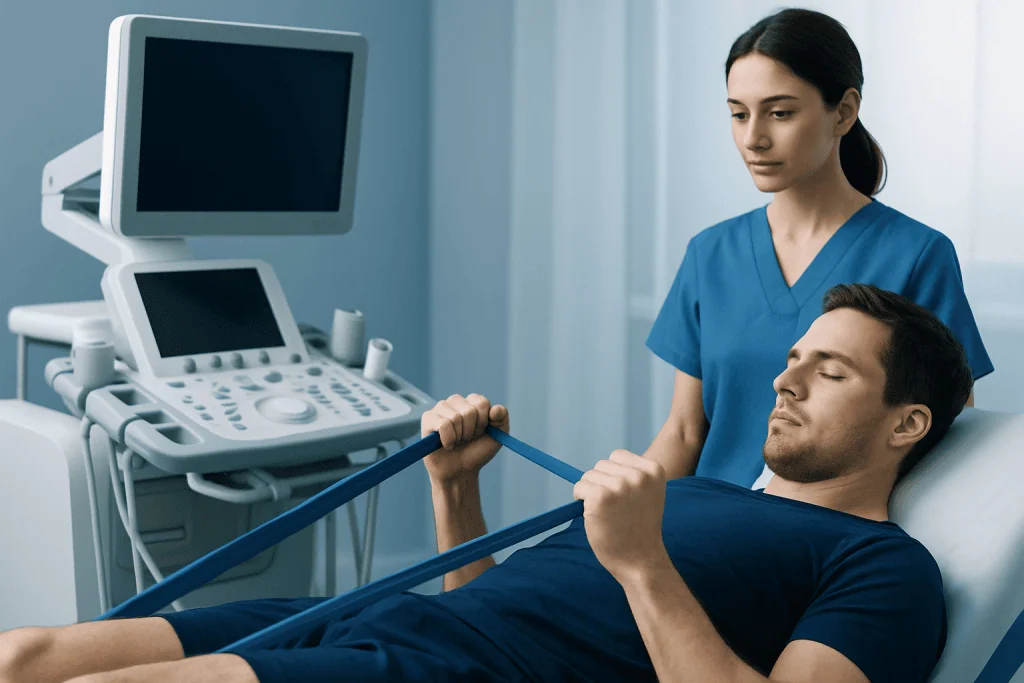
The abdominal wall includes several muscle groups with different roles. The rectus abdominis helps flex the trunk, the internal and external obliques assist with rotation and side bending, and the transversus abdominis contributes to abdominal bracing and spinal stability. During most resistance band movements, these muscles do not work alone; they coordinate with the diaphragm, pelvic floor, hip muscles, and spinal stabilizers.
Many band exercises challenge the core by creating forces that the body must resist rather than by simply lifting the head and shoulders in a crunch. This includes resisting extension, rotation, or side bending. Evidence from rehabilitation and sports medicine increasingly emphasizes these anti-movement patterns because they reflect how the core functions in everyday life—stabilizing the trunk while the arms and legs move.
This is one reason resistance bands can be practical. A band anchored safely to a fixed point can create tension in multiple directions, making exercises such as anti-rotation presses, resisted marches, wood-chop patterns, and standing trunk control drills both functional and scalable. For people with a history of strain, exercises that focus on control rather than repeated spinal bending may sometimes be better tolerated, although individual assessment still matters.
What medical evidence says about effectiveness

Clinical and exercise science evidence supports resistance training as part of a general program for muscular strength and endurance, including the trunk muscles. Band-based exercise can improve core activation and functional stability when done consistently and with correct form. It is especially useful because resistance can be increased gradually without heavy equipment, and many exercises can be performed in standing, kneeling, seated, or lying positions.
That said, no single exercise method is universally superior for every person. The best abdominal program depends on the goal. For general fitness, bands can be effective when they challenge the core through controlled resistance. For rehabilitation after injury, the exact exercise choice should be tailored to symptoms, medical history, and movement quality. For athletic performance, bands are often one part of a larger strength and conditioning plan.
Evidence also supports a balanced view: stronger abs do not automatically mean a healthier spine, a flatter stomach, or freedom from injury. Outcomes improve most when abdominal training is combined with full-body strength work, regular aerobic activity, flexibility where needed, and healthy lifestyle habits. People with persistent back pain or suspected herniated disc should not rely on online routines alone and may need individualized assessment.
Examples of safe and useful elastic band exercises for abs
Well-chosen exercises usually emphasize control, breathing, and alignment rather than speed. Examples include a standing anti-rotation press, a banded dead bug, a resisted march, a kneeling chop or lift, and a side-stepping hold with trunk bracing. These movements can target the abdominal and oblique muscles while also teaching the body to stabilize the pelvis and spine.
General technique matters more than the name of the exercise. A person should keep the ribcage and pelvis aligned as comfortably as possible, avoid holding the breath, and move slowly enough to resist the band rather than letting it pull the body off balance. The resistance should be strong enough to create effort but not so strong that posture collapses or the movement becomes jerky.
A simple structure is often enough. Many people begin with 1 to 3 sets of a small number of well-performed repetitions or timed holds, two or three times per week, with rest days as needed. Because resistance bands are common in rehabilitation settings, some individuals recovering from musculoskeletal issues may also benefit from medically guided physical therapy and rehabilitation to learn proper form and progression.
- Start with lighter resistance and shorter holds.
- Exhale during the effort phase.
- Stop if sharp pain develops.
- Anchor the band securely and inspect it for wear.
- Progress one variable at a time: resistance, repetitions, or complexity.
Common myths, mistakes, and who should be careful
A frequent myth is that more repetitions always mean better abdominal results. In reality, quality matters more than quantity. Repeating poorly controlled crunch-like motions against resistance may overload the neck, hip flexors, or lower back without effectively training the intended muscles. Another myth is that soreness is required for progress. Mild muscle fatigue can be normal, but significant pain is not a sign of success.
One common mistake is choosing resistance that is too strong, causing the lower back to arch, the shoulders to shrug, or the pelvis to twist excessively. Another is using momentum instead of muscular control. People also sometimes overlook breathing, but breath-holding can unnecessarily increase pressure and may be inappropriate for some individuals, including those with certain cardiovascular or pelvic floor concerns.
Extra caution is important for people with an abdominal wall or hernia, recent abdominal or spinal surgery, osteoporosis, pregnancy-related concerns, uncontrolled high blood pressure, or ongoing neck and back symptoms. In these settings, seemingly simple exercises may need modification or temporary avoidance. If there is uncertainty about what is safe, a physician or rehabilitation professional can help identify suitable movements and warning signs.
How to build a realistic core program
An evidence-based core routine usually works best as part of a broader exercise plan rather than as a stand-alone abdominal challenge. For most adults, this means combining core strengthening with regular walking or other aerobic activity, lower- and upper-body resistance training, and adequate recovery. This whole-body approach supports better function and may contribute more to long-term health than isolated abdominal work alone.
Progress should be gradual. A person might begin with two or three exercises that train different functions, such as anti-rotation, anti-extension, and controlled trunk movement. Once technique is reliable, the next step can be a slightly stronger band, a longer lever position, slower tempo, or more time under tension. Sudden jumps in resistance or volume increase the chance of strain.
For people with back pain, postural concerns, or movement limitations, structured support may be especially helpful. A tailored plan can identify whether the issue relates to flexibility, motor control, breathing patterns, or underlying spinal conditions. In some cases, medical evaluation may lead to broader treatment such as spine surgery for severe structural problems, but many people improve with conservative care and guided exercise.
When to seek medical care
Medical care is advisable if abdominal or core exercise causes sharp pain, radiating leg pain, numbness, weakness, loss of balance, or symptoms that continue after stopping activity. New bowel or bladder changes, severe back pain, fever, unexplained weight loss, or pain after a significant injury require prompt evaluation because these are not typical exercise-related effects.
People should also seek advice before starting elastic band exercises for abs if they have had recent abdominal surgery, a diagnosed hernia, persistent low back pain, pregnancy-related pelvic or abdominal symptoms, or a known spine disorder. Professional assessment can help distinguish routine muscle fatigue from a problem that needs treatment.
Near the end of a care pathway, some people benefit from specialist evaluation to clarify the cause of ongoing pain or weakness. Acibadem International’s multidisciplinary specialists and JCI-accredited hospitals diagnose and treat musculoskeletal and spinal conditions for international patients, including advanced imaging, rehabilitation, and when needed neurosurgery.
Frequently asked questions
Are elastic band exercises for abs effective?
Yes, they can be effective for strengthening the core, especially when the exercises are performed with good form and enough resistance to create controlled effort. They are most useful for trunk stability, posture, and muscular endurance rather than for reducing belly fat in one specific area.
Can resistance bands help get a flatter stomach?
Resistance bands can strengthen the abdominal muscles underneath the skin and may improve posture, which can change how the midsection looks. A flatter stomach, however, depends mainly on overall body composition, nutrition, physical activity, sleep, and other health factors rather than abdominal exercise alone.
Are band exercises safer than crunches for the lower back?
They can be for some people, especially when they focus on resisting movement rather than repeated spinal flexion. However, safety depends on the specific exercise, the amount of resistance, and the person's medical history, so one style is not automatically safer for everyone.
How often should a person do elastic band exercises for abs?
For many adults, two or three sessions per week is a reasonable starting point, with at least some recovery between challenging sessions. The exact frequency should match the person's fitness level, overall training load, and any symptoms or medical conditions.
Who should avoid or modify these exercises?
People with a hernia, recent abdominal or spinal surgery, significant low back pain, pregnancy-related pelvic or abdominal symptoms, or uncontrolled medical conditions may need changes to their routine. It is best for them to ask a physician or rehabilitation professional which movements are appropriate.
What is the most important technique point?
The most important point is controlled movement with a stable trunk and steady breathing. A lighter band used with correct alignment is usually more beneficial than a stronger band that causes twisting, arching, or breath-holding.
This article is for general information only and is not a substitute for professional medical advice. Please consult a qualified doctor about your individual situation.
Joint and spine care in Turkey — expert assessment & treatment
JCI-accredited · board-certified surgeons · reply within 24h
Add us as a Preferred Source to see more of our trusted health content across Google Search, AI Overviews and Discover.
Check your numbers in seconds
BMI, calories, due date, blood pressure and 30+ more clinical calculators — free, instant, doctor-reviewed ranges.

More from the Health Library

Nail Psoriasis: A Complete Medical Overview

Recovery After Gallstones Operation — Explained by Medical Evidence, Not Myths

Breast S: Procedure, Recovery and Results

Zanubrutinib — Explained by Medical Evidence, Not Myths

Hemoglobin high: Symptoms, Causes, and Treatment — Complete Patient Guide