Sutures: An Evidence-Based Guide for Patients
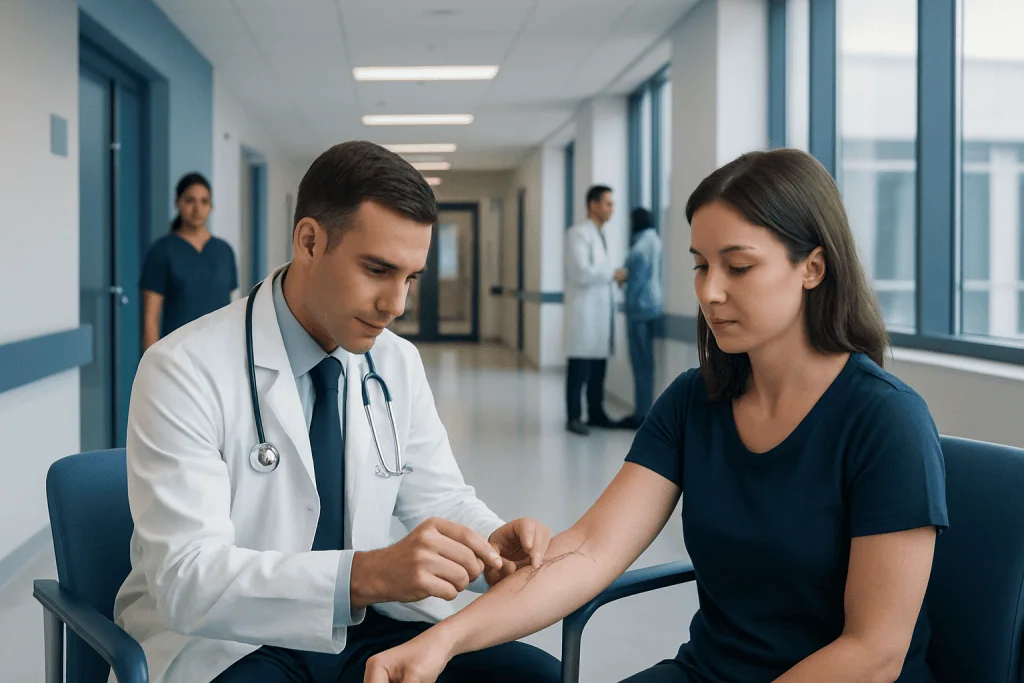
Sutures help hold wound edges together, reduce bleeding, and support healing. Some sutures dissolve on their own, while others need removal by a clinician.
Key Takeaways
- Sutures help hold wound edges together, reduce bleeding, and support healing.
- Some sutures dissolve on their own, while others need removal by a clinician.
- Good wound care lowers the risk of infection, delayed healing, and noticeable scarring.
- Redness that spreads, pus, fever, or worsening pain should be assessed by a medical professional.
- Not every wound should be closed with sutures; the best method depends on the wound and its location.
Sutures are medical stitches used to close cuts or surgical incisions so tissue can heal in a controlled way. Understanding the types of sutures, how to care for them, and when to seek medical attention can help support safer healing and better cosmetic results.
Overview: what sutures are and why they are used
Sutures are sterile medical threads used to close wounds or surgical incisions. They bring the edges of the skin or deeper tissues together so the body can repair itself more efficiently. In everyday language, sutures are often called stitches. When used appropriately, they can help reduce bleeding, protect underlying tissues, and improve the final appearance of healing.
Not every cut needs sutures. Small, shallow, and clean wounds may heal well with simple dressings, adhesive strips, or skin glue. Deeper cuts, wounds with separated edges, injuries over joints, and surgical incisions often need a more secure closure. The decision depends on the wound’s depth, location, shape, contamination level, and the person’s overall health.
Sutures may be placed in the skin, under the skin, or in deeper tissues such as muscle. Some are designed to dissolve over time, while others are removed after the wound has gained enough strength. The main goal is not only to close the wound, but to create the best conditions for healing with the lowest practical risk of infection and scarring.
Types of sutures and other wound-closing methods
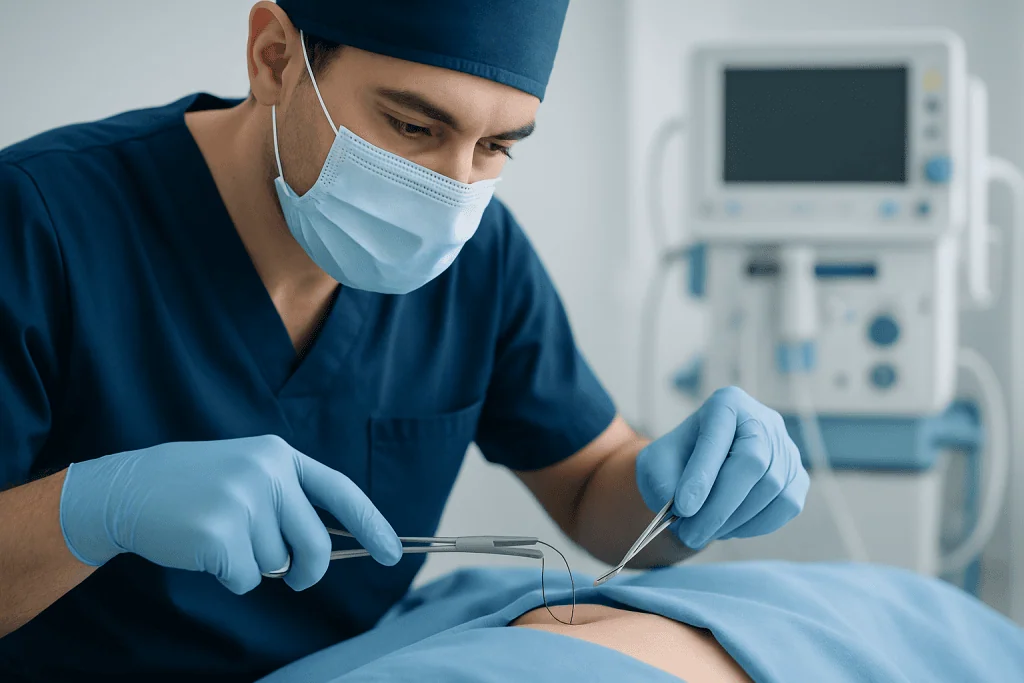
Sutures are commonly divided into two broad groups: absorbable and non-absorbable. Absorbable sutures gradually break down in the body and do not usually require removal. They are often used under the skin or in deeper tissues. Non-absorbable sutures stay in place until a healthcare professional removes them, and they are frequently used on the skin surface.
Suture material also varies. Some sutures are made from a single smooth strand, while others are braided. Smooth sutures may move through tissue more easily and can reduce bacterial trapping in some situations. Braided sutures can offer secure knot handling. Clinicians choose the material based on the body area, the tension on the wound, the need for support, and the chance of contamination.
Sutures are only one option for wound closure. Depending on the injury, a doctor may use:
- Skin adhesive glue for small, clean, low-tension wounds
- Adhesive strips for very superficial cuts
- Staples for some scalp wounds or surgical incisions
- Dressings alone for minor wounds that can heal naturally
For some complex wounds, closure may be part of broader care involving cleaning, debridement, or reconstruction. In selected cases, specialists may combine sutures with procedures such as plastic surgery techniques to restore both function and appearance after injury.
When sutures are needed and what happens during placement
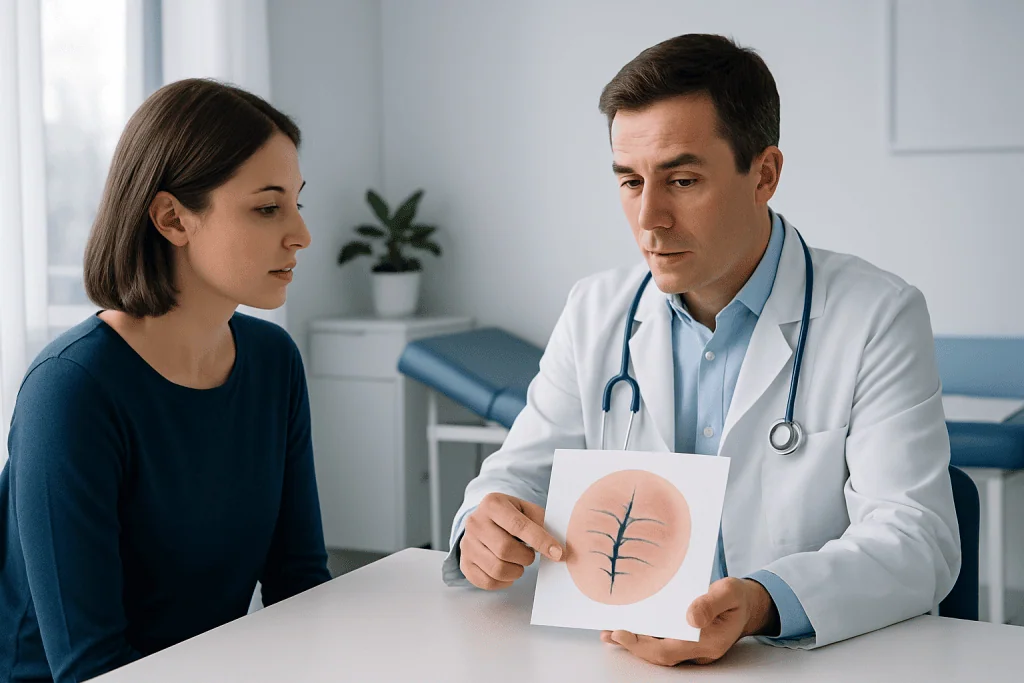
Sutures are often recommended when a wound is deep, gaping, actively bleeding, or located in an area where movement may pull the skin apart. Cuts on the face, hands, over joints, or near delicate structures often deserve careful assessment because accurate closure can affect both healing and function. Animal bites, puncture wounds, and dirty wounds need especially thoughtful evaluation because the closure decision must be balanced against infection risk.
Before placing sutures, the clinician usually examines the wound for depth, contamination, foreign material, and possible injury to nerves, tendons, or blood vessels. The area is cleaned thoroughly, and local anesthetic may be used to reduce pain during the procedure. If needed, the wound is irrigated to lower the bacterial load and remove debris. In some situations, imaging is used to check for glass or other hidden foreign bodies.
The stitches are then placed in a pattern that brings the wound edges together without excessive tension. Wounds should usually be approximated, not tightly squeezed shut, because too much tension can affect blood flow and worsen scarring. After closure, the wound is covered and the patient receives instructions about cleaning, activity, dressing changes, and follow-up. If a facial wound, tendon injury, or more complex soft-tissue problem is suspected, referral to a surgical team may be appropriate, sometimes with input from hand surgery specialists or other relevant experts.
How to care for sutures at home
Proper home care supports healing and helps prevent complications. Patients should follow the instructions given by their own clinician, since advice may vary by body site and the type of closure used. In general, the area should be kept clean and protected. Some wounds need to stay dry for a short initial period, while others may be gently washed sooner. Scrubbing, soaking in baths, and swimming are usually avoided until healing is well underway.
Dressings should be changed as directed. Hands should be washed before touching the wound. It is best not to pick at scabs, trim sutures, or apply unapproved creams or antiseptics. If clothing or movement irritates the area, a protective dressing may help. Wounds over joints may heal better when excessive stretching is limited for a time.
It is normal to have mild tenderness, a small amount of swelling, and a light pink rim around the wound in the early days. Some itching can also occur as the skin heals. However, worsening pain, increasing redness, bad odor, cloudy drainage, or separation of the wound edges is not considered routine healing.
Scar care begins with protecting the healing wound. Once the skin surface has fully closed, some people are advised to use moisturizers, silicone products, or gentle massage, depending on the clinician’s recommendations. Sun protection is also important because healing skin can darken more easily. If a person has a history of problematic scars such as keloid scars, follow-up guidance may be tailored more carefully.
Healing time, removal, and possible complications
Healing time depends on the size and depth of the wound, where it is on the body, the closure method, and the person’s health. Areas with good blood supply, such as the face, may heal faster than areas under tension or with slower circulation. Children and healthy adults often heal more quickly than people with diabetes, poor nutrition, smoking exposure, or immune system problems.
Non-absorbable sutures are removed after a number of days that varies by location. Facial sutures are often removed sooner than sutures on the trunk, scalp, or limbs, because the balance between support and scar minimization differs by site. Sutures should not usually be removed at home unless a clinician has specifically instructed and trained the patient to do so. Removing them too early may cause the wound to reopen, while leaving them too long may make track marks more noticeable.
Possible complications include infection, wound dehiscence (reopening), bleeding, allergic or inflammatory reactions, and scar changes. Deeper injuries may also lead to nerve or tendon problems that are not obvious at first. In rare cases, retained suture material can cause irritation or a small localized reaction.
Medical review is especially important if healing is slow or if the wound shows signs of infection. Some wound problems may overlap with other skin conditions, including skin cancer when a lesion was mistaken for a simple sore or when a wound does not heal as expected. Persistent or unusual wounds should always be assessed by a qualified doctor.
Factors that affect healing and scar appearance
Wound healing is influenced by more than the stitches themselves. The body area matters because movement, moisture, and blood supply vary from place to place. A wound across a joint or in a high-tension area may need more support than a wound on a relatively still surface. The way the wound occurred also matters. Clean cuts usually heal differently from crush injuries, bites, or wounds with contamination.
General health plays a major role. Diabetes, poor circulation, smoking, malnutrition, steroid use, and some chronic illnesses can slow healing or raise infection risk. For this reason, wound care is not only local care. Good hydration, adequate protein intake, and managing chronic conditions can support recovery. Patients should also tell their clinician about medicines that affect bleeding or immune function.
Scar appearance depends on genetics, skin type, wound tension, infection risk, and how well the wound is protected after closure. The face, chest, shoulders, and upper back can behave differently during healing. Some people naturally form thicker scars than others. In certain cases, doctors may recommend scar-management strategies after the wound has closed, especially if the scar is functionally limiting or cosmetically significant.
For patients who develop difficult scars or have facial injuries, specialist follow-up can be useful. This may include assessment by teams experienced in dermatology care or reconstructive approaches when appropriate.
When to seek medical care
Medical care should be sought promptly for any wound that is deep, wide, contaminated, caused by an animal or human bite, or associated with numbness, weakness, or difficulty moving a nearby joint or finger. Facial wounds, wounds near the eyes, and injuries with persistent bleeding also deserve timely evaluation. In general, wounds that may need sutures should be assessed as soon as possible because delayed closure is not always appropriate.
After sutures are placed, patients should contact a healthcare professional if they develop spreading redness, increasing warmth, worsening pain, pus, a bad smell, fever, or if the wound opens. A bandage soaked with blood, blue or pale skin beyond the wound, or new loss of sensation should be treated urgently. These signs do not always mean there is a serious problem, but they need professional review.
Tetanus protection may also need attention after some injuries, especially dirty or puncture wounds. A clinician can advise whether a booster is needed based on the wound type and vaccination history. Seeking care early often makes treatment simpler and can improve healing results.
For international patients with wounds, scars, or surgical closures that need expert review, Acibadem International’s multidisciplinary specialists and JCI-accredited hospitals diagnose and treat these conditions with individualized care planning.
Frequently asked questions
What are sutures used for?
Sutures are used to close wounds or surgical incisions by holding tissue edges together during healing. They can help reduce bleeding, protect deeper tissues, and support a better functional and cosmetic result.
Are sutures and stitches the same thing?
Yes. In patient education, the terms sutures and stitches are commonly used to mean the same thing. More precisely, a suture is the sterile material and technique used to stitch tissue together.
Do all sutures need to be removed?
No. Some sutures are absorbable and gradually dissolve in the body over time. Others are non-absorbable and need to be removed by a healthcare professional when the wound has healed enough.
Can a person shower with sutures?
Often yes, but the timing depends on the wound and the clinician’s instructions. Some wounds should stay dry for an initial period, and soaking in baths, pools, or hot tubs is usually avoided until healing is more advanced.
How can someone tell if sutures are infected?
Possible signs of infection include increasing redness, warmth, swelling, worsening pain, pus, bad odor, or fever. Mild soreness and slight redness can be normal early on, so any change that seems to be getting worse should be reviewed by a clinician.
What happens if sutures stay in too long?
If non-absorbable sutures remain longer than advised, they may leave more visible marks or become harder to remove. The wound may still be stable, but follow-up with a healthcare professional is the safest next step.
This article is for general information only and is not a substitute for professional medical advice. Please consult a qualified doctor about your individual situation.
Explore treatments in Turkey — costs, top hospitals & a free quote
JCI-accredited · board-certified surgeons · reply within 24h
Add us as a Preferred Source to see more of our trusted health content across Google Search, AI Overviews and Discover.

More from the Health Library

Daikon Radish: A Complete Medical Overview

Phalen Test: A Complete Medical Overview
Hypopyon: What Patients Need to Know

Cyst Inside the Stomach: A Complete Medical Overview
Aching Lungs and Back — Explained by Medical Evidence, Not Myths