Teste — Explained by Medical Evidence, Not Myths

Teste commonly refers to the testis, an organ involved in sperm production and hormone balance. Pain, swelling, a new lump, heaviness, or sudden change in one testicle should be medically assessed.
Key Takeaways
- Teste commonly refers to the testis, an organ involved in sperm production and hormone balance.
- Pain, swelling, a new lump, heaviness, or sudden change in one testicle should be medically assessed.
- Common causes range from infection and injury to varicocele, hydrocele, torsion, and tumors.
- Sudden severe testicular pain is urgent because testicular torsion needs immediate treatment.
- Examination, ultrasound, and sometimes blood or urine tests help identify the cause accurately.
Teste usually means the testis, one of the male reproductive glands that make sperm and testosterone. Understanding what is normal, what symptoms matter, and when to seek medical care can help people respond promptly and avoid myths or unnecessary worry.
What “teste” means and why it matters
The word teste is commonly used to refer to the testis (plural: testes), also called a testicle. The testes are part of the male reproductive system. They sit in the scrotum and have two main jobs: producing sperm and making testosterone, the hormone that supports sexual development, fertility, muscle and bone health, and other body functions.
Many online searches for teste are driven by symptoms such as pain, swelling, a lump, or concern about size and shape. In many cases, these symptoms are caused by conditions that are treatable and not dangerous. At the same time, some problems need urgent care, so it helps to know which changes are normal and which deserve medical attention.
Normal testes are often not perfectly identical. It is common for one to hang slightly lower or feel a little different from the other. What matters most is noticing a new change, especially a lump, persistent discomfort, sudden pain, or visible swelling. A clinician can usually sort this out with a physical exam and, when needed, an ultrasound.
How the testes work and what is considered normal
Each testis contains tiny structures where sperm are produced. The sperm then move to the epididymis, a coiled tube at the back of the testis where they mature and are stored. Testosterone made by the testes circulates through the bloodstream and supports libido, sperm production, facial and body hair, muscle mass, and other male characteristics.
The scrotum helps keep the testes slightly cooler than body temperature, which supports sperm production. That is why the testes are located outside the body cavity. Everyday factors such as cold, heat, exercise, and stress can temporarily change how the scrotum looks or how firm the testes feel.
A person may notice natural differences in size, position, or sensitivity. However, a hard new lump, marked tenderness, sudden enlargement, or a feeling of heaviness that does not go away is not something to ignore. Even when a change turns out to be benign, getting it checked can provide reassurance and guide proper treatment.
Symptoms linked to teste problems

Symptoms can vary depending on the cause. Some people notice a dull ache in the scrotum or groin, while others find a lump during washing or dressing. Swelling, redness, warmth, or tenderness may suggest inflammation or infection. A feeling of fullness or dragging in the scrotum may occur with fluid collection or enlarged veins.
Symptoms that commonly lead to evaluation include:
- Sudden or gradual testicular pain
- Swelling of one or both testes
- A lump or area of firmness
- Heaviness in the scrotum
- Redness or warmth of the scrotal skin
- Pain with urination or ejaculation
- Lower abdominal or groin discomfort
Some conditions cause symptoms outside the scrotum too. Fever can occur with infection. Nausea and vomiting may happen with severe pain, especially in testicular torsion. Fertility concerns may be the first clue in conditions such as varicocele or hormone-related problems. A medical assessment helps connect symptoms to the right diagnosis rather than relying on myths or self-diagnosis.
Common causes and risk factors
There are several possible reasons for teste symptoms. Infections and inflammation are common causes of pain and swelling. These may involve the epididymis or the testis itself and can follow a urinary infection, sexually transmitted infection, or, less commonly, a viral illness. Injury from sports or trauma can also lead to pain, bruising, or swelling.
Other causes are structural rather than infectious. A hydrocele is fluid around the testis, while a varicocele is enlargement of veins in the scrotum. An inguinal hernia may create a bulge extending into the scrotum. A spermatocele is a usually benign cyst near the epididymis. These conditions may cause heaviness, swelling, or discomfort rather than severe pain.
One urgent cause is testicular torsion, where the spermatic cord twists and reduces blood supply to the testis. This often causes sudden severe pain and swelling and needs emergency treatment to protect the testis. Another important cause of a testicular lump is testicular cancer, which may not always be painful. Although many lumps are benign, a firm new lump should always be checked promptly.
Risk factors depend on the condition. A history of undescended testis can raise the risk of testicular cancer. Recent urinary infection, unprotected sex, trauma, heavy lifting, and some congenital anatomical differences can also increase the chance of certain testicular problems. Age matters too, because some conditions are more common in adolescents and young adults, while others are seen across adulthood.
How doctors diagnose testicular problems
Diagnosis begins with a careful history. The doctor will usually ask when the symptom started, whether the pain was sudden or gradual, whether there was an injury, fever, urinary symptoms, or sexual health concerns, and whether the person has noticed a lump or change in size. These details help narrow down whether the problem is urgent and what tests are most useful.
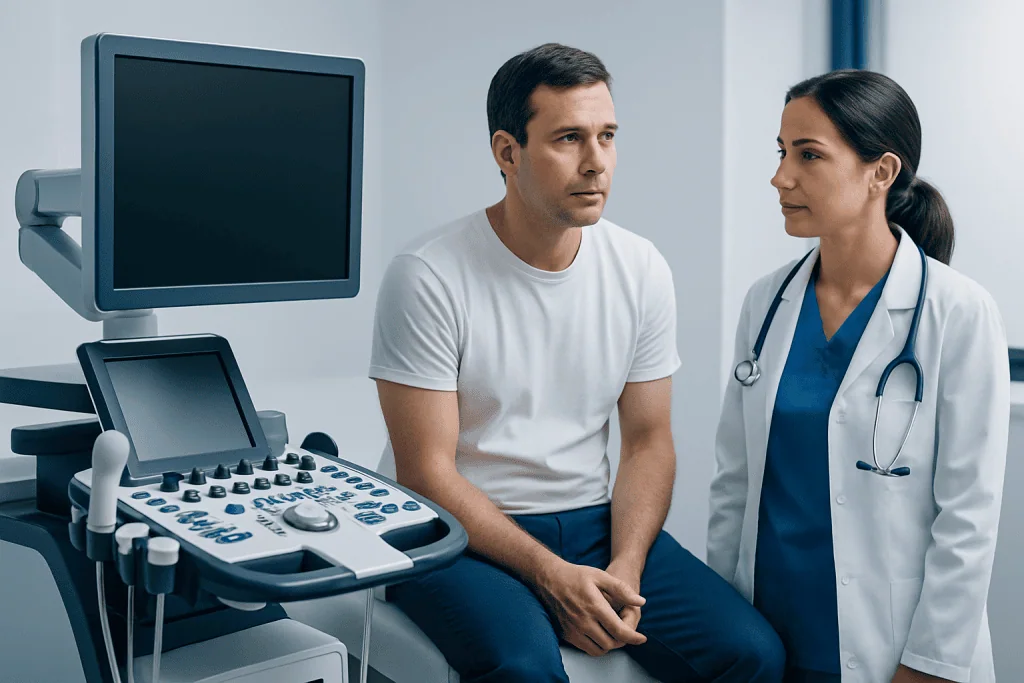
A physical examination is the next step. This may include examining the scrotum, testes, groin, and lower abdomen. In many cases, a scrotal ultrasound is the most helpful imaging test because it can show blood flow, fluid, cysts, inflammation, and solid masses. It is painless and widely used to distinguish between common causes of pain or swelling.
Additional tests may include a urine test, blood tests, or tests for sexually transmitted infections when infection is suspected. If a tumor is a concern, blood tumor markers and imaging may be used as part of a broader evaluation. In urgent situations such as suspected torsion, doctors may move quickly to treatment rather than delay for extensive testing. When needed, further urologic assessment or urology care can guide the next steps.
Treatment options based on the cause
Treatment depends on what is causing the symptom. Infections may be treated with antibiotics when bacteria are involved, along with rest, scrotal support, fluids, and pain relief as advised by a clinician. Viral causes and minor inflammation may improve with supportive care. Traumatic injury may need observation, ice, support, or, in some cases, surgical evaluation if there is concern about internal damage.
Structural conditions are managed according to severity and symptoms. A hydrocele or spermatocele may only need monitoring if it is small and not bothersome. A symptomatic varicocele may be assessed for its effect on pain or fertility, and some people may benefit from varicocele treatment. Hernias that extend into the scrotum often need surgical review.
Sudden torsion is an emergency. If the spermatic cord twists, restoring blood flow quickly is crucial to help save the testis. Surgical treatment may be required without delay, and this can overlap with testicular surgery and related treatment pathways when specialists are evaluating a mass or other serious problem. For proven cancer, management may include surgery and further treatment depending on the type and stage.
Fertility or hormone concerns may call for additional testing and specialist care. If low testosterone, sperm abnormalities, or past surgery affect reproductive health, a clinician may recommend follow-up with specialists in male reproductive medicine. The goal is to treat the underlying problem while also protecting long-term hormone function, comfort, and fertility whenever possible.
Self-care, prevention, and routine awareness
Not every testicular symptom can be prevented, but practical steps may lower risk and support earlier diagnosis. Wearing appropriate protective gear during contact sports can help reduce injury. Safer sex practices can lower the risk of some infections. Prompt treatment of urinary symptoms may also help prevent complications involving the epididymis or testis.
Many clinicians encourage people to become familiar with their own normal anatomy. This is less about rigid monthly routines and more about noticing new changes such as a firm lump, persistent heaviness, or a visible increase in size. A warm shower may make the scrotum more relaxed and help a person notice differences more clearly.
Healthy lifestyle habits also matter. Avoiding tobacco, managing chronic conditions, and seeking care for fertility concerns can support overall male reproductive health. If symptoms recur, do not rely only on internet advice or over-the-counter remedies. Recurrent pain or swelling should be assessed to avoid missing a treatable underlying cause such as varicocele or infection.
For people traveling for specialist assessment, coordinated care can be helpful. Acibadem International’s multidisciplinary specialists and JCI-accredited hospitals diagnose and treat testicular and urologic conditions for international patients, including access to imaging, surgery, and follow-up planning when needed.
When to seek medical care
Medical care is recommended for any new lump, persistent pain, swelling, or change in the size or shape of a testis. Even when symptoms seem mild, an assessment can distinguish a benign condition from one that needs treatment. People should also seek care if they have pain with urination, fever, discharge, or discomfort after injury.
Urgent or emergency care is needed for sudden severe testicular pain, especially when it comes with swelling, nausea, vomiting, or abdominal pain. These symptoms can suggest testicular torsion, which requires prompt treatment. Immediate evaluation is also important after major trauma, if the scrotum becomes rapidly enlarged, or if there is severe tenderness and redness.
Persistent reproductive concerns also deserve attention. A person should speak with a doctor if they are worried about fertility, past undescended testis, repeated infections, or hormone-related symptoms such as reduced libido or unexplained fatigue. Early assessment often leads to simpler treatment and more reassurance.
Frequently asked questions
Does teste mean testicle?
Usually, yes. In health-related searches, teste most often refers to the testis or testicle, one of the male reproductive organs in the scrotum. If someone is unsure about a term used in a report or article, a doctor can clarify the exact meaning.
Is it normal for one testicle to be lower than the other?
Yes, that is commonly normal. Many people naturally have one testis that hangs a little lower or feels slightly different in size. What matters more is whether there is a new change, a hard lump, swelling, or pain.
What causes testicular pain?
Testicular pain can be caused by infection, inflammation, injury, torsion, hernia, fluid collection, enlarged veins, or less commonly a tumor. The timing and severity of the pain are important clues. Sudden severe pain should be treated as urgent.
Can a painless lump in the testicle still be serious?
Yes. Not all serious testicular conditions cause pain, and some testicular cancers present as a painless lump or firmness. Any new lump should be examined by a qualified doctor as soon as possible.
How are testicular problems usually checked?
Doctors usually begin with a history and physical examination. A scrotal ultrasound is commonly used because it can show blood flow, cysts, fluid, inflammation, and masses clearly. Urine or blood tests may also be ordered depending on the suspected cause.
When is testicular pain an emergency?
It is an emergency when pain is sudden, severe, or associated with swelling, nausea, vomiting, or abdominal pain. These symptoms can suggest testicular torsion, in which blood supply to the testis may be reduced. Immediate medical evaluation is important.
This article is for general information only and is not a substitute for professional medical advice. Please consult a qualified doctor about your individual situation.
Explore treatments in Turkey — costs, top hospitals & a free quote
JCI-accredited · board-certified surgeons · reply within 24h
Add us as a Preferred Source to see more of our trusted health content across Google Search, AI Overviews and Discover.

More from the Health Library

Types of Mental Illness — Explained by Medical Evidence, Not Myths

Sneakers Diabetes: What Patients Need to Know

Antihistamine for Stress Hives — Explained by Medical Evidence, Not Myths
Nipple Shield: What Patients Need to Know

Teeth: A Complete Medical Overview